

Recently, I have received many inquiries from fellow turtle keepers: How to properly “dry-dock” a sick turtle? I have also encountered many keepers who have a major misconception about “dry-docking,” believing it means keeping the turtle out of water for long periods. This can lead to situations like dehydration, catching a cold, and refusal to eat, which can easily worsen the turtle’s condition.
This article will show you how to correctly perform “dry-docking” for a turtle.
What is “Dry-Docking”
Incorrect Understanding
The term “dry-docking” is most often heard when treating sick turtles. Many turtle keepers interpret “dry-docking” as “keeping the turtle away from water and not providing drinking water for a long time.”

This understanding is actually incorrect. This erroneous method of care can cause severe dehydration or even death in turtles.
Correct Understanding
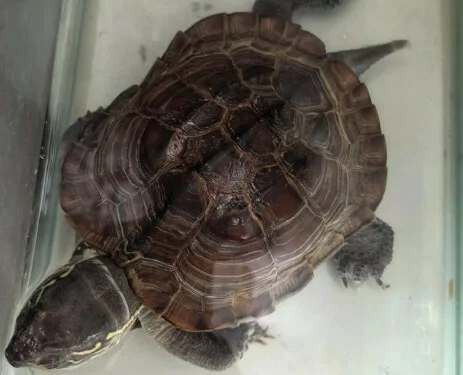
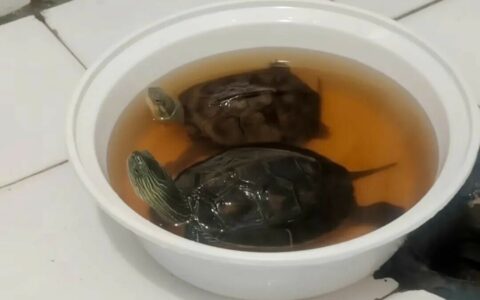
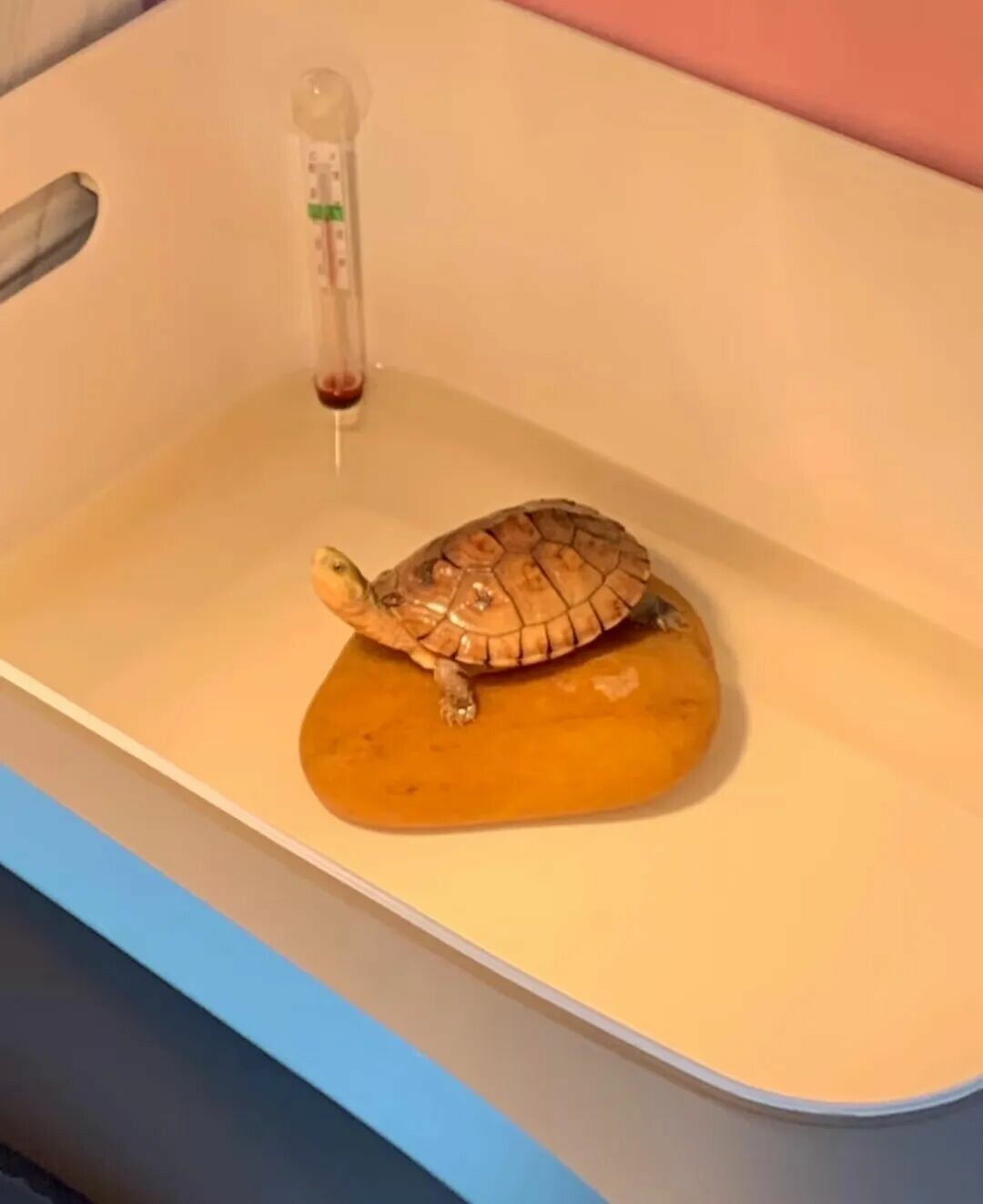
It means taking the turtle out of the water to keep it dry and placing it in a dry environment to rest and heal. At the same time, we must provide suitable temperature and humidity, and also soak the turtle in water 1 to 3 times a day for 10 to 60 minutes each time, while also feeding it appropriately. This method allows the turtle to keep its body dry while being rehydrated and fed in a timely manner, maintaining its bodily vitality.

Ailments Suitable for “Dry-Docking”
When a turtle has external injuries (such as bite wounds, external bleeding), “dry-docking” can effectively prevent further infection of the wound and promote healing.
For turtles with skin rot or shell rot, being soaked in water for long periods is not conducive to the recovery of the lesions and can easily cause secondary infections (a second infection caused by the primary infection). Therefore, “dry-docking” is recommended.
“White Eye Disease” is generally caused by bacterial infections. When this occurs, it is essential to perform “dry-docking” to avoid further aggravating the infection.
Methods of “Dry-Docking”
For newly-emerged hatchlings (young turtles that have just hatched) whose umbilical cords have not yet fully detached, putting them in water too soon can easily cause difficulty in the cord detaching, infection, drowning, etc. Therefore, “dry-docking” is generally recommended until the umbilical cord has completely detached.
Elevated “Dry-Docking”
When some turtles have lesions on their plastron (the bottom shell of the turtle), if the body is not completely dried or the “dry-docking” container is not dry, the plastron area will remain constantly wet, and the effect of “dry-docking” may be poor. Moreover, because the plastron is in contact with the bottom of the container for a long time, poor ventilation is also not conducive to wound recovery.

At this time, you can use bottle caps, flower pots, or similar items to elevate the turtle, as long as it can stay propped up for a long time without falling. This can keep the plastron dry and well-ventilated, which helps with the recovery of the turtle’s wounds.
“Dry-Docking” Precautions
Never withhold water for long periods. During “dry-docking,” the turtle needs to be rehydrated 1 to 3 times a day, for 10 to 30 minutes each time, to ensure it gets enough water.
Do not let the turtle sunbathe during “dry-docking,” especially not in intense sun. This can cause the turtle to rapidly dehydrate or even die, and often there is no time for rescue.

If the indoor temperature is below 20 degrees Celsius during “dry-docking,” it is recommended to warm up the “dry-docking” environment before starting, to prevent situations like catching a cold.
When soaking the turtle for rehydration during “dry-docking,” it is advisable to add nutritional supplements like an electrolyte and multivitamin supplement (a nutritional supplement containing electrolytes and various vitamins). This can effectively replenish the energy the turtle needs, improve its resistance, and help with wound recovery.
In summary: There are many precautions to take during a turtle’s “dry-docking”period; it is absolutely not about long-term separation from water. During “dry-docking,” the turtle still needs to be rehydrated 1 to 3 times a day to ensure it does not become dehydrated.
Original article by 搬运工, if reproduced, please cite the source: https://www.kaipet.com/en/correctly-dry-dock-sick-turtle-read-beginners-avoid-misconceptions-dehydration






Comments(2)
Great advice, especially on rehydration! What specific electrolyte and multivitamin brands do you recommend for turtles during dry-docking?
@CriticX:Thank you for your kind words! We’re glad the rehydration advice was helpful. For specific electrolyte and multivitamin brands, we always recommend consulting an experienced reptile veterinarian or a trusted pet store specializing in turtles. They can provide tailored recommendations for your turtle’s unique needs.