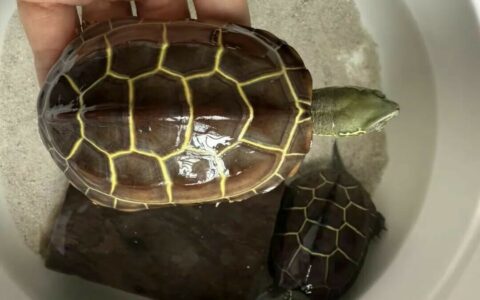
Hilaire’s Toadhead Turtle (Scientific name: Phrynops hilarii) is a member of the genus Phrynops in the family Chelidae. It also has a more formal name—Hilaire’s Side-necked Turtle, but turtle hobbyists prefer to affectionately call it the “Disco King” because “this guy” will rapidly shake its head to confuse prey when hunting.

The most striking feature of this turtle is its massive size. As the largest species in the Chelidae family, the carapace length of adult individuals can reach around 40 centimeters. They can grow about 1.5~2 centimeters in 1 month and 20 centimeters in 1 year, growing even faster than snapping turtles. Their native habitat ranges from subtropical to temperate zones; healthy individuals can hibernate, or be kept warm through the winter.
Native Distribution of Hilaire’s Toadhead Turtle
Hilaire’s Toadhead Turtle is native to southern South America, mainly distributed in southern Brazil, Uruguay, northern Argentina, and Paraguay, with some areas extending into eastern Bolivia.
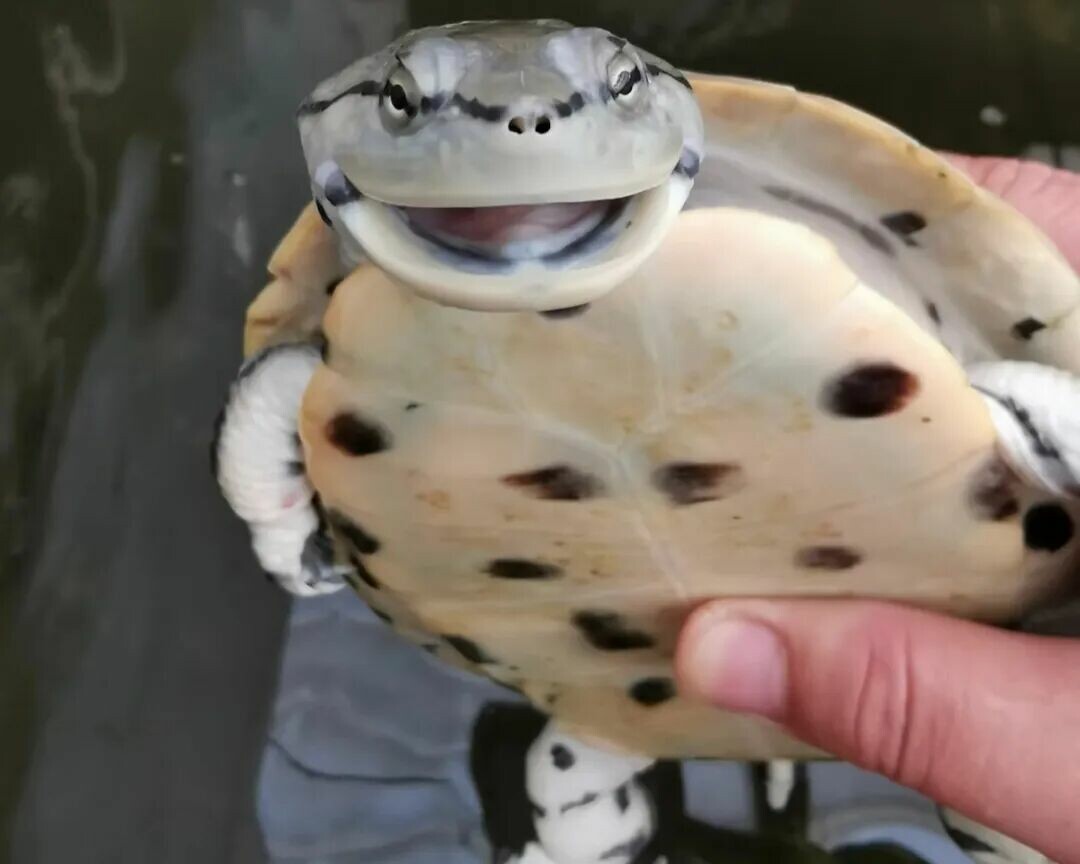
They prefer to inhabit slow-moving rivers, lakes, swamps, and wetlands. These water bodies usually have soft bottoms and abundant aquatic vegetation. The climate in these regions ranges from subtropical to temperate, with winter temperatures dropping to 10-15℃, while summers are warm and humid.
It is worth noting that the latitude of the Hilaire’s Toadhead Turtle’s native habitat is similar to that of the southern provinces of China, which means they have good adaptability to subtropical climates.
Behavior and Habits of Hilaire’s Toadhead Turtle
They are active in the water foraging during the day and rest underwater or on the shore at night, making them diurnal; they require basking. They are excellent swimmers and are considered a predominantly aquatic turtle species that can be kept in deep water. Their personality is very lively with strong interactivity, but they possess aggression, especially individuals exceeding 10 centimeters in size.
Environment Setup
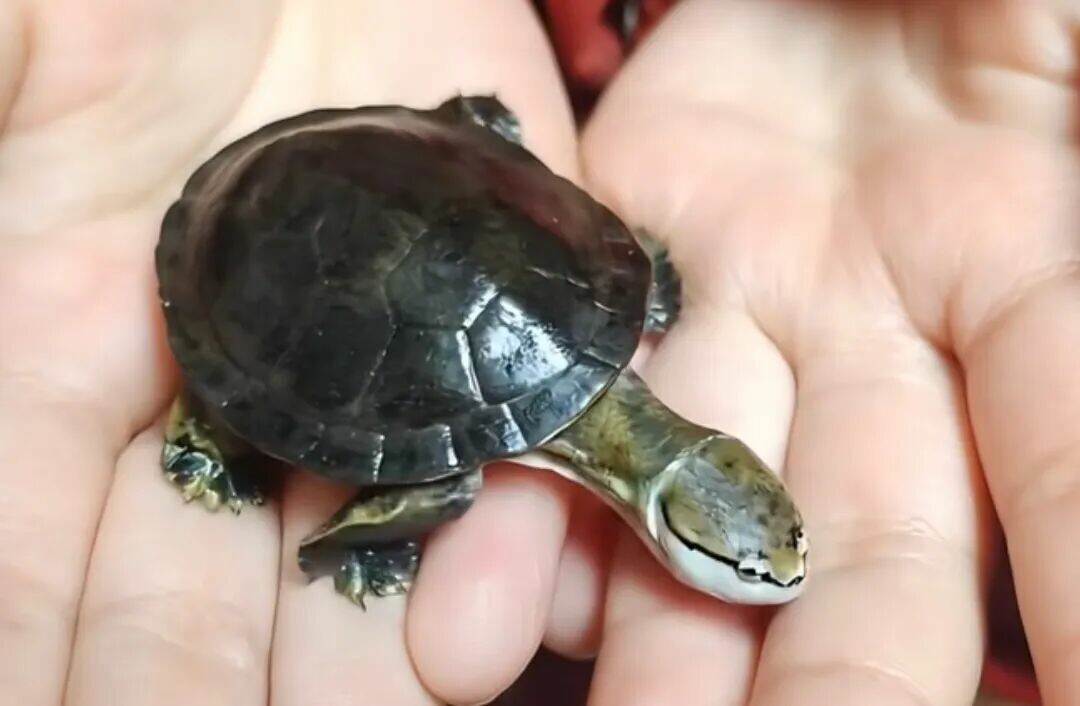
The most critical factor to consider when keeping Hilaire’s Toadhead Turtles is their rapid growth. After 1 year of raising from a hatchling, the carapace length can exceed 20 centimeters, which means the enclosure space needs to be constantly upgraded, or you can choose a 1.2-meter large tank straight away. Keeping tropical turtles is generally low in difficulty; Hilaire’s turtles have low requirements for water quality and are very easy to keep. Basically, they will not show significant stress responses, and under normal circumstances, a filter is sufficient to handle them.
Dietary Management
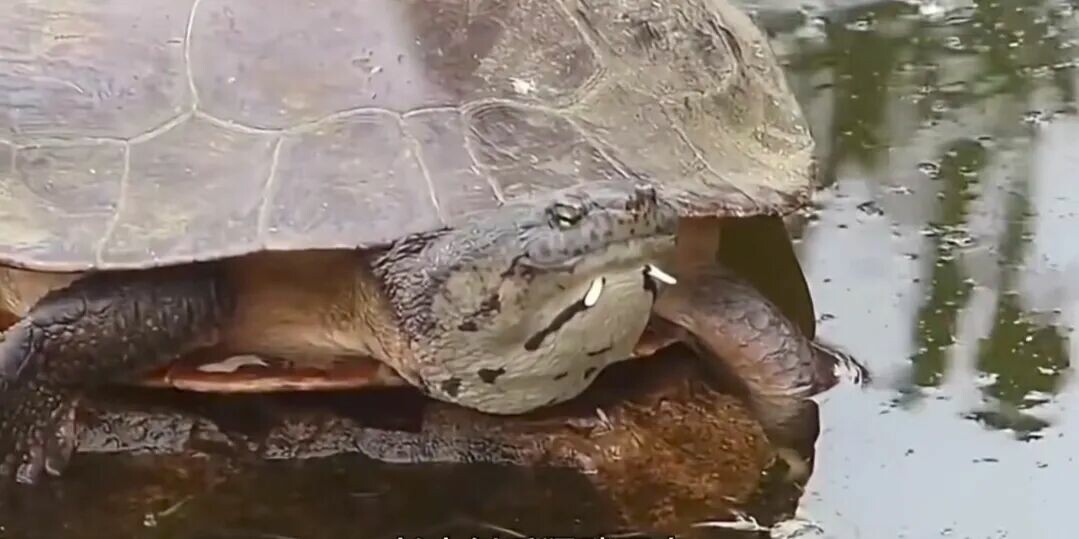
In the wild, Hilaire’s Toadhead Turtles mainly feed on aquatic insects, crustaceans, small fish, and mollusks. They also consume some aquatic plants and carrion. In captivity, the diet can be more diversified.
Suitable foods include:
- Animal-based foods: Small fish, small shrimp, earthworms, crickets, snails
- Plant-based foods: Moderate amounts of fruits and vegetables, such as pumpkin and banana
Regularly add calcium powder and vitamins to prevent metabolic diseases.

Feeding frequency should be adjusted according to the turtle’s age: hatchlings once daily, sub-adults once every 2 days, and adults once every 3 days. The amount fed should be what they can finish in 5-10 minutes to avoid overeating leading to obesity and health problems.
Breeding
Hilaire’s Toadhead Turtles take a considerable amount of time to reach sexual maturity. Females typically require 5 – 7 years, while males require 4 – 6 years.
- Laying season: Mid-May to August, with the peak period in June – July
- Clutch size: 2 – 4 clutches per year, with 15-20 eggs per clutch
- Egg characteristics: Spherical, approximately 31 mm in diameter
- Incubation conditions: Temperature 28-30℃, humidity 80-90%
- Incubation period: Approximately 70-90 days; temperature will influence the sex of the hatchlings
Hibernation
There has always been controversy regarding whether Hilaire’s Toadhead Turtles should hibernate. In reality, healthy sub-adults and adults can hibernate, but it is recommended to keep hatchlings warm through the winter to reduce risks.
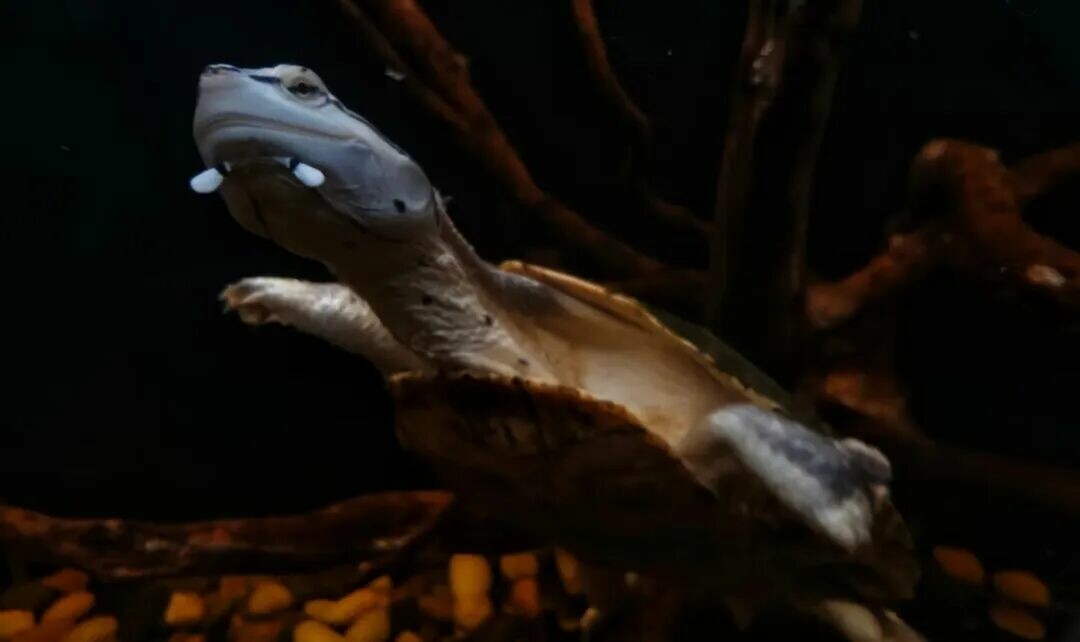
The native habitat of Hilaire’s Toadhead Turtle is subtropical waters, and they can tolerate low temperatures above freezing. However, they are prone to illness if kept in water temperatures below 10℃ for extended periods. In regions of China where winter temperatures are above freezing, Hilaire’s Toadhead Turtles can be allowed to hibernate naturally, whereas in northern regions, heating is required for overwintering.
Original article by 搬运工, if reproduced, please cite the source: https://www.kaipet.com/en/hilaires-toadhead-turtle-easy-deep-water-disco-king-grows-20cm-year