Chinese Pond Turtle: The King of National Turtles, A “No-Brainer” for Beginners
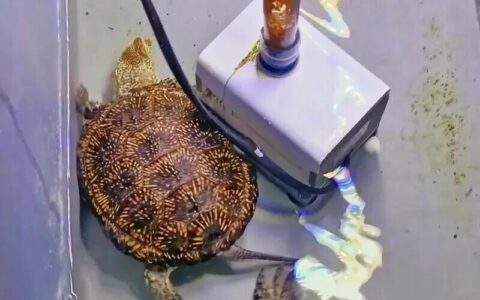
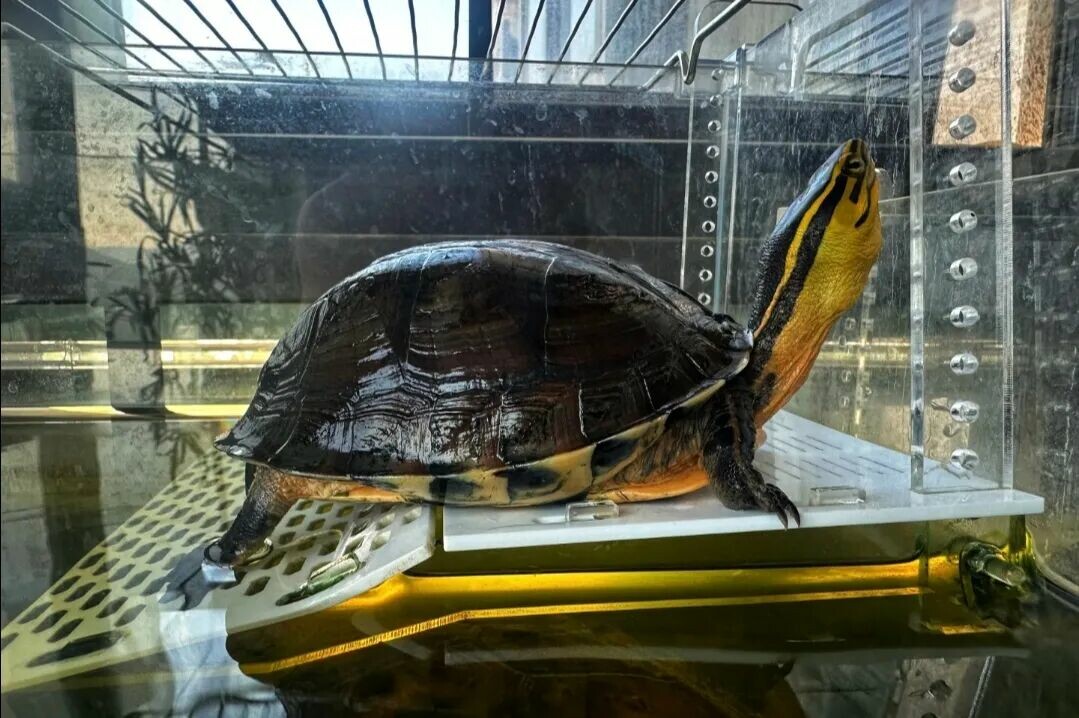
The Chinese Pond Turtle (Reeve’s Turtle) is absolutely the “gold standard”of domestic entry-level turtles. Don’t let its drab, greyish appearance when young fool you; once raised, the shell patterns grow increasingly beautiful. Moreover, the price is budget-friendly, with small seedlings of 6-8 centimeters costing only around 20 RMB. Its greatest advantage is being cold-tolerant; it can hibernate in winter without heating, making it worry-free and money-saving. It’s not a picky eater either—turtle pellets, frozen shrimp, and diced lean meat all work. Just keep the water level barely covering the carapace and provide a basking platform for occasional sunbathing, and you basically won’t encounter any problems.
Red-Eared Slider: High Aesthetics But Do Not Release
The Red-eared Slider (Brazilian Tortoise) is the most widespread pet turtle globally. With red ears and a green carapace, they are particularly delightful when young. The price is similar to the Chinese Pond Turtle; a small seedling can be bought for just 15 RMB. It has tenacious vitality and low requirements for water quality, but there is a major premise: absolutely do not release them into the wild! It is an invasive alien species; once it enters the wild, it will severely damage the local ecology. Keep it if you want, but if you no longer wish to keep it, give it to other turtle enthusiasts—never just toss it away.

Hybrid Pond Turtle (Hua Za Cao): Fast Growing and Rarely Sick
The “Hua Za Cao” is a hybrid offspring of the Chinese Striped-neck Turtle and the Chinese Pond Turtle, combining the strengths of both. It possesses the endurance of the Pond Turtle and the patterns of the Striped-neck Turtle, and its growth speed is a notch faster than purebred Pond Turtles. The price is cheap, available for 20-30 RMB, and its constitution is stronger than the Striped-neck Turtle, making it less prone to skin rot and shell rot. The only thing to note is that the plastron (belly shell) of the hybrid is relatively fragile. Avoid large temperature differences when changing water, and let it sunbathe more to make the shell color brighter.
Florida Red-Bellied Cooter (Flame Turtle): The “Little Flame” That Gets Redder with Sun
The Flame Turtle is green when young, but as it ages, the carapace will slowly turn red, like a “little flame,” looking particularly pleasing to the eye. Its biggest characteristic is being vegetarian; sweet potato leaves are its favorite, though turtle pellets and fish or shrimp are also fine. It doesn’t have high demands for water quality, rarely gets sick, and has excellent interactivity, capable of recognizing people. If you want its color to be more vivid, more sun exposure and feeding some dried shrimp will show immediate results.
Razor-Backed Musk Turtle: Mini “Rooftop” with a Unique Shape
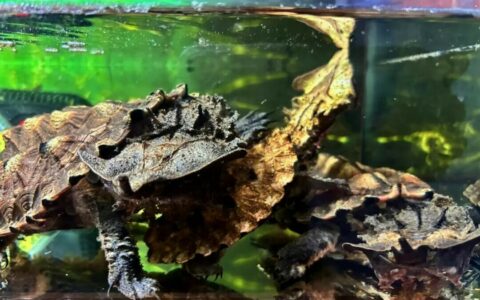
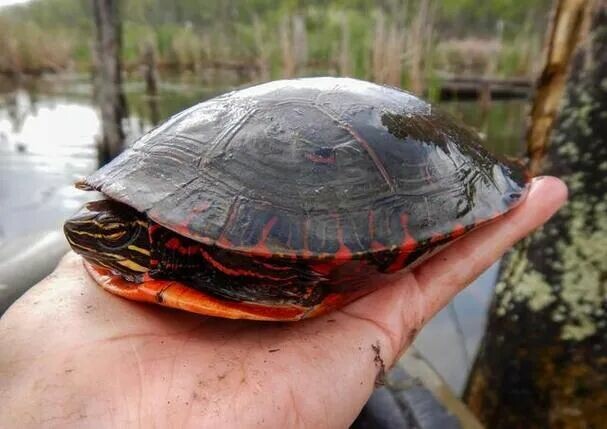
The Razor-backed Musk Turtle has a high-domed carapace, like a “rooftop,” making it recognizable at a glance. It has a petite body size, reaching just 10-15 centimeters as an adult, suitable for raising in small spaces. It has a lively personality and strong bite force, with top-tier interactivity. The price is slightly more expensive than the Common Musk Turtle, with small seedlings available for 130-150 RMB. It is best to use a black background for the enclosure to highlight its radiating patterns, though the patterns rely more on genetics; postnatal care can only add icing on the cake.
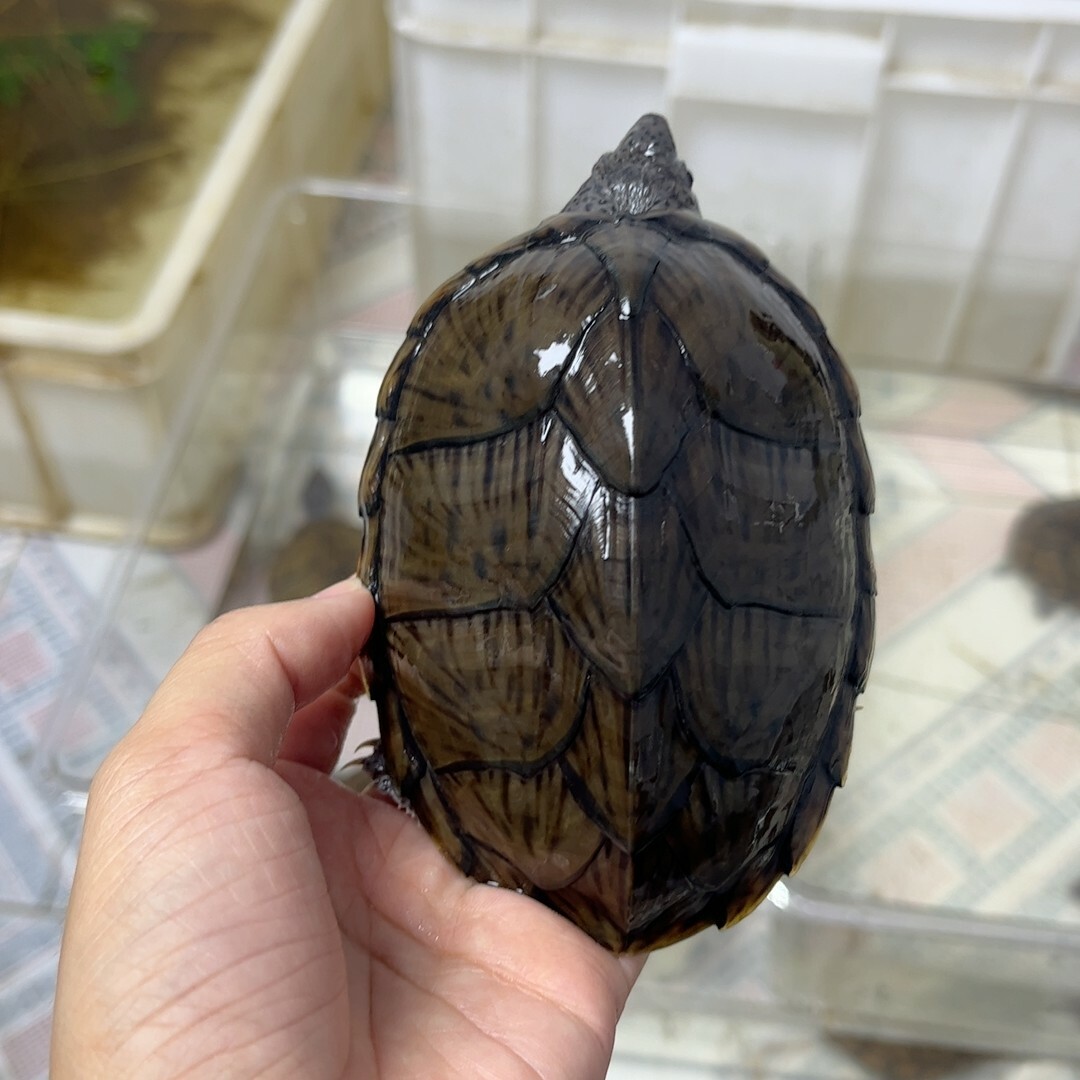
Common Musk Turtle: Mini “Stinky Tofu”, Cheap and Easy to Raise
The Common Musk Turtle is the cheapest in the Mud/Musk Turtle (Kinosternidae) family, with small seedlings costing around 70 RMB. It has a mini body size of 8-14 centimeters; raising it in deep water is no problem, and it can also hibernate. It has a lively personality and likes to bite randomly, offering very good interactivity. Rumor has it that it releases a foul odor when threatened, but in the 5 years I’ve raised them, I’ve never smelled it. Colors include black, grey, brown, and light yellow; I personally recommend black, as it shows more texture when placed in a black environment.
Mississippi Mud Turtle (Helmeted): Ugly Duckling Turns into a White Swan
The Mississippi Mud Turtle (often called Helmeted Mud Turtle) looks drab and grey when young, but as it ages, it will turn a bright yellow, achieving a reversal in aesthetics. The head pattern is key; seedlings with good patterns can command a much higher price. It has extremely strong interactivity and is full of fun, but its swimming skills are average, so water quality needs to be stable. It can hibernate, but deep water rearing is not recommended. Feeding should mainly consist of fresh shrimp meat to promote color development, but be careful not to let them bite each other’s tails.
White-Lipped Mud Turtle: Mango Head, Glowing Yellow
The head color of the White-lipped Mud Turtle is its signature trademark; the cheeks are yellowish with uniform color, earning it the nickname “Mango Head.” The price for juveniles is 300-400 RMB, and those with good color development are even more expensive. It is not cold-tolerant; heating is mandatory in winter, and it cannot hibernate. The breeding environment is best kept in a white, opaque container, using yellow wax stones for the basking platform to help it develop color. Genetics determine everything, so when choosing a seedling, try to pick one whose head color has already started to turn yellow; it’s never too late to put in effort postnatally.
Red-Cheeked Mud Turtle: Appearance Determines Value
The head color of the Red-cheeked Mud Turtle is its biggest highlight; the more brilliant the red, the higher the value. There is a huge price difference between domestic and imported ones; domestic small seedlings are under 200 RMB, while imported ones cost 1500-2000 RMB. It requires heating for rearing and cannot hibernate, and it has high demands for water quality. Feeding should focus on shrimp meat and dried shrimp to intensify the head color. Although the price is high, if raised well, it becomes your “desktop art piece.”
Map Turtle: Mini “Husky”, The Contour Line Turtle
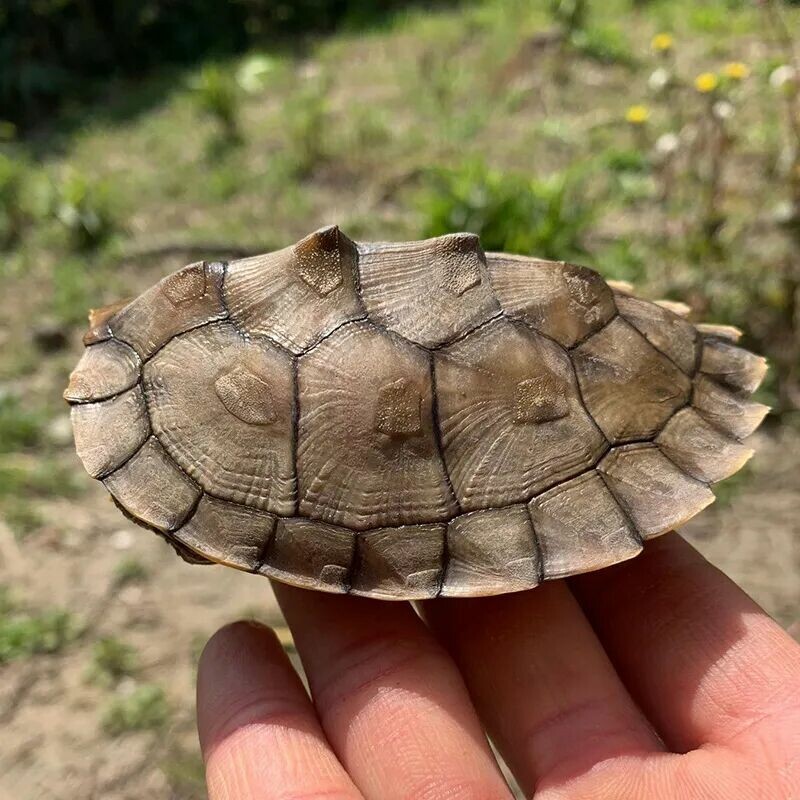
The plastron of the Map Turtle looks like a “topographic map with contour lines,” and the carapace has protrusions, resembling an ancient mythical beast. It has an outgoing personality and is omnivorous; it can survive on turtle pellets and isn’t a picky eater. The price is budget-friendly, with small seedlings at 30-40 RMB, and the color won’t darken with age, keeping its aesthetics constant from small to large. It is suitable for beginners who like petite turtles; a 40-centimeter glass tank is enough to raise one, making it an easy purchase even for renters.
Don’t just look at aesthetics when choosing a turtle; consider price, difficulty, and interactivity comprehensively. The Chinese Pond Turtle, Red-eared Slider, and Hybrid Pond Turtle are the top choices for beginners, while the Razor-backed, Musk, and Mississippi Mud Turtles are suitable for those who want something special. High-end players can consider the White-lipped or Red-cheeked Mud Turtles, but must ensure a legal source. Raising turtles is a slow-paced affair; choose the right breed, and you will discover that this “little healing” experience is something only those who have raised them can understand.
Original article by 搬运工, if reproduced, please cite the source: https://www.kaipet.com/en/suitable-beginners-top-10-popular-turtle-breeds-ranking