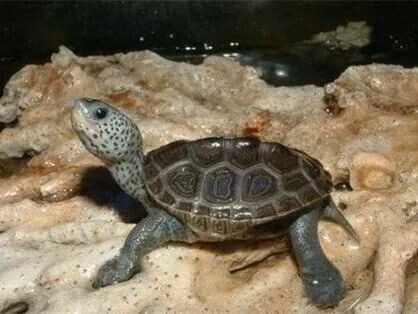
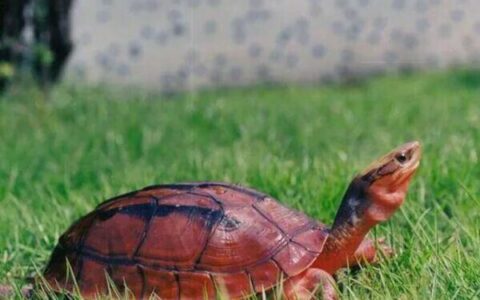
The turtle that looks like a “dead leaf”, the Mata Mata turtle (Leaf Turtle), is a member of the *Chelus* Genus in the Snake-necked Turtle Family (Chelidae), naturally distributed in northern South America.

Introduction to Mata Mata Turtles
There are 2 independent species in the *Chelus* genus of the Chelidae family, namely the Amazon Mata Mata (Black Mata) and the Orinoco Mata Mata (Red Mata).
The Mata Mata turtle was first described by a French naturalist in 1741. In 1783, the German naturalist Johann Gottlob Schneider established its scientific name. In the following two centuries, it was renamed 14 times, and it was not until 1992 that the current scientific name *Chelus fimbriata* was settled upon. Just recently in 2020, the two types of Mata Mata turtles split up into the Black Mata (Amazon Mata Mata) and the Red Mata (Orinoco Mata Mata). Studies analyzing their genomes revealed differences, showing that the two diverged 13 million years ago.
Differences in Appearance
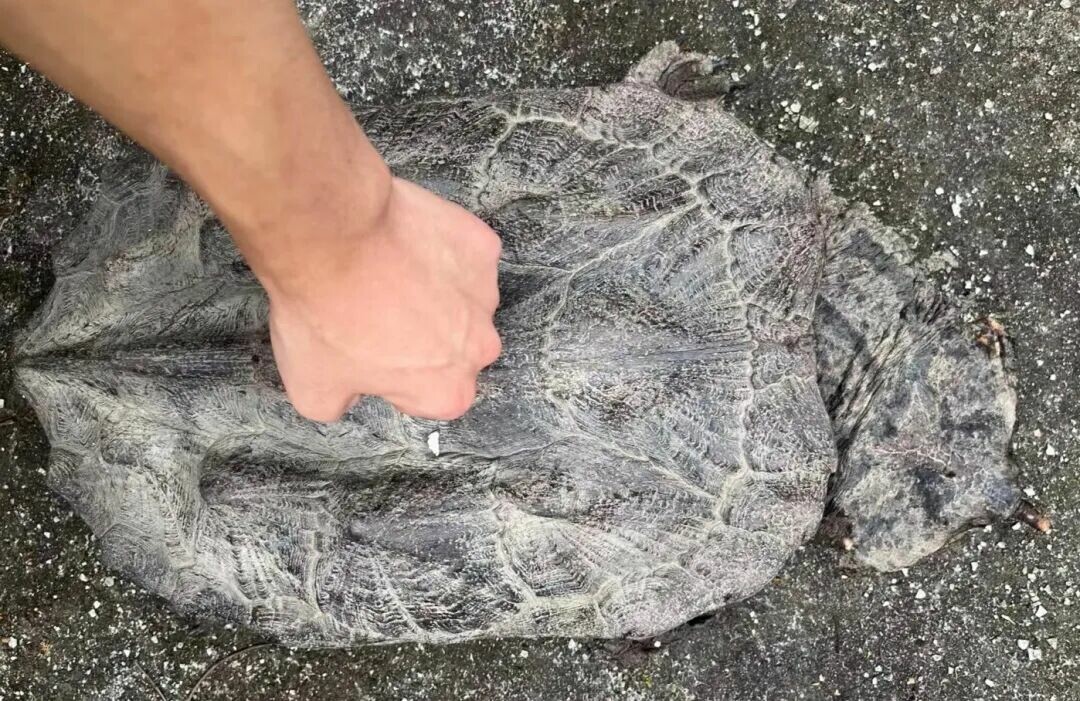
Black Mata: The adult carapace is nearly rectangular. The male carapace can reach a maximum straight-line length of 42.8 cm (approx. 16.9 in), and the female can reach up to 43.7 cm (approx. 17.2 in). The carapace is brown or black, and the plastron is relatively narrow and “cross-shaped”, large and flat without ligaments. The head and neck are gray-brown with many tubercles and skin flaps. There are 2 conical barbels on the chin and 2 filamentous feelers at the corners of the mouth. The overall form resembles a dead leaf, appearing withered yellow.

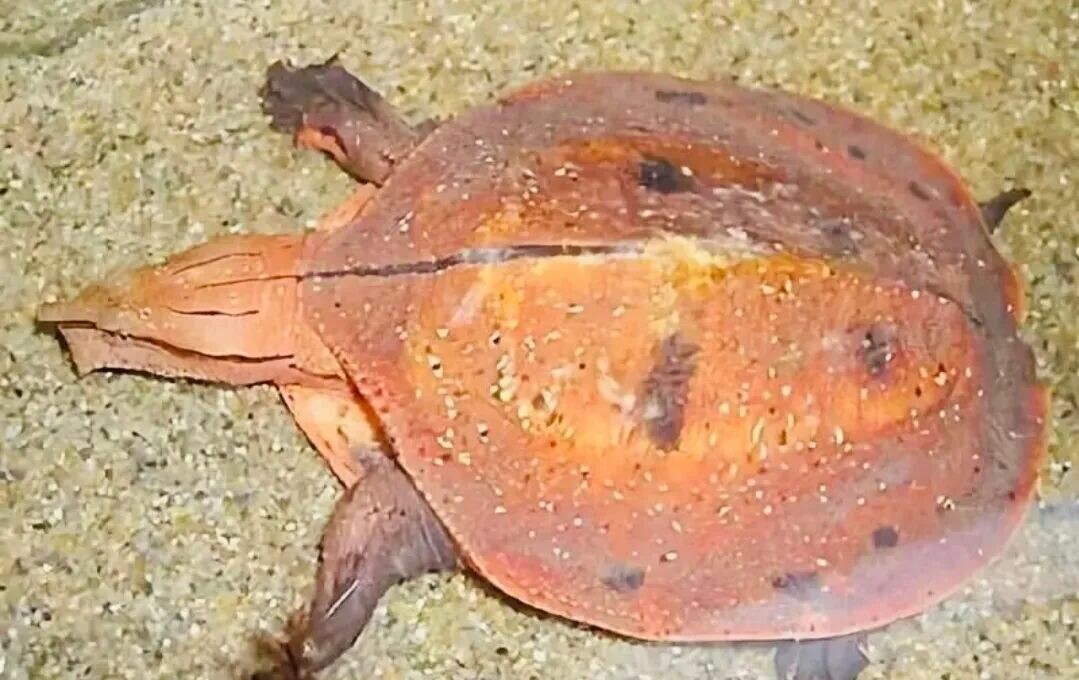
Red Mata: The male carapace can reach a maximum straight-line length of 48.5 cm (approx. 19.1 in), and the female can reach up to 52.6 cm (approx. 20.7 in). The carapace has 3 distinct longitudinal keels. The head is flat and forms a wide triangle, with small eyes and a wide mouth. The neck is thick and long, and both head and neck possess skin flaps.

Distinction: The Orinoco Mata Mata (Red Mata) has an oval carapace; the shell and skin colors are lighter, and the plastron is yellow without variegation. In contrast, the Amazon Mata Mata (Black Mata) mostly has a dark plastron with large patches of black.

The Mata Mata turtle’s shell is very solid. When attacked, it can retract its legs into the shell, but the head and tail cannot be retracted and can only be bent to the side. They have poor eyesight and forage by sensing surrounding vibrations through wrinkled skin, head bumps, and barbels.
Native Distribution
Just like Chongqing Chicken Pot “is not from Chongqing” (it was invented by a man named Zhang Chongqing), and Xinjiang Fried Rice Noodles “are not from Xinjiang” (created by two people from Guizhou), the Mata Mata turtle does not come from Matamata. Matamata is a small town in New Zealand and one of the filming locations for *The Lord of the Rings*. Mata Mata turtles originated in northern South America, including the Orinoco and Amazon river basins, and are widely distributed in Brazil, Guyana, Peru, etc., as well as on the island of Trinidad.

Among them, the Amazon Mata Mata (Black Mata) is mainly distributed in Bolivia, Brazil, Colombia, Ecuador, French Guiana, Peru, and Suriname.
The Orinoco Mata Mata (Red Mata) is mainly distributed in Brazil, Colombia, Guyana, Trinidad and Tobago, and Venezuela.
Habits
The Mata Mata is a highly aquatic turtle that prefers to stay in shallow water, such as stagnant pools and lakes in the Amazon basin. Although they are highly aquatic, their swimming skills are actually poor. Adult Mata Mata turtles rarely bask and almost never leave the water to go on land. Their long necks are sufficient for them to extend their pointed snorkel-like snout (a tubular structure protruding from the nostrils) out of the water to breathe. Their eyesight is also poor, but they can use their unique body structure as an auxiliary tool for hunting. The bumps on both sides of their triangular heads, including the barbels on the chin and small bumps on the neck, all conceal sensory nerves that can detect vibrations caused by the movement of potential prey nearby.
Environment Setup
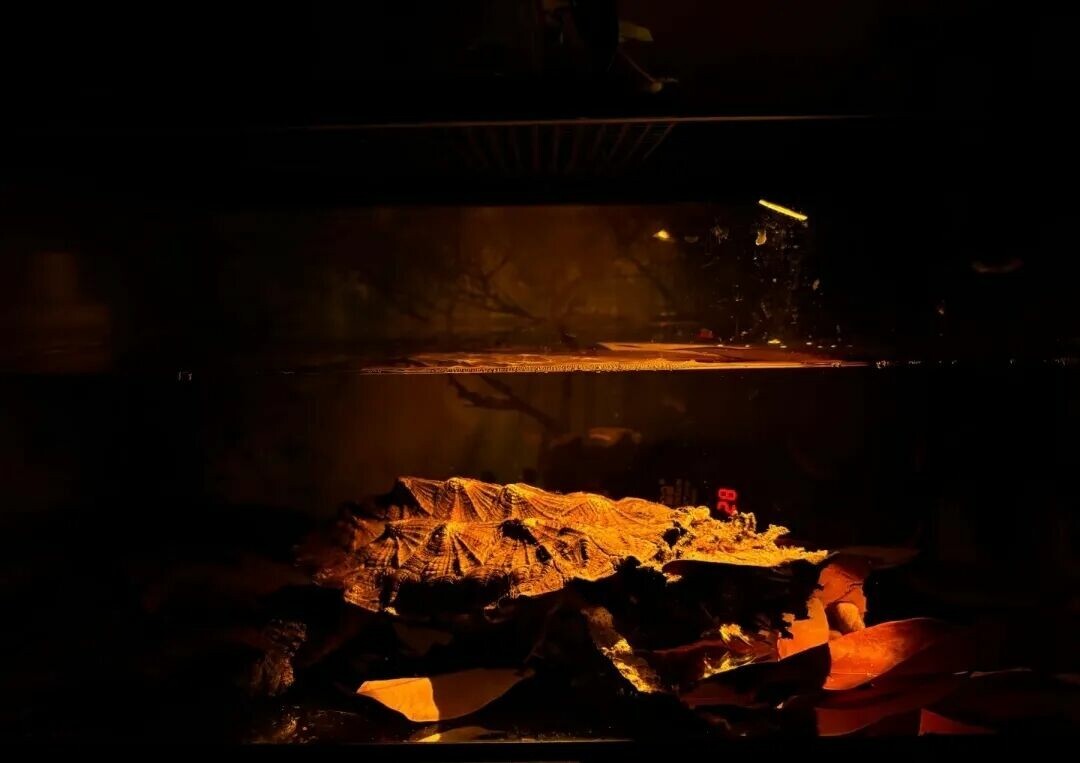
No basking platform is needed, and deep water rearing is not suitable. The water level is appropriate when the turtle can expose its snorkel snout above the surface by fully extending its neck. It adapts to acidic water quality with a pH of 5.5 – 6.5. Driftwood and other landscaping decorations can be appropriately placed in the water to create different hunting angles and environments. Turbulent water flow must be avoided, otherwise, it will affect their hunting success rate and even cause choking.

Diet
They are carnivores, feeding on fish and other invertebrates. However, they cannot chew; their mouths are very wide, and their necks can contract and expand freely. Upon sensing prey approaching, they will open their large mouths, rapidly expanding their throats to suck the prey directly into their mouths, and then contract their throats to expel the water.

Mata Matas kept as pets can be fed various small fish and shrimp, insects, loaches, feeder goldfish, etc. Usually, they only eat live food, and since they prefer crawling at night, directly throwing turtle pellets into the water will certainly not work.
Reproduction
The maturity period is over 5 years. During mating, the male will repeatedly extend his head toward the female, open and close his mouth, hyperextend his legs from the shell, and also spread his limbs and lunge his head at the female.
Egg-laying mostly occurs from October to December. Nests are built in rotting vegetation at the edge of the forest. One nest may contain 12 – 28 eggs. The incubation period is relatively long; captive individuals require about 200 days to hatch at 28 – 29°C (82.4 – 84.2°F). The eggshells have a requirement for weak acid, which helps decompose the shell, enabling the hatchlings (newly hatched small turtles) to break out. In captivity, they can live up to 15 years; information on their lifespan in the wild is scarce.
Hibernation
They are tropical turtles, so a warm environment is very important to them; a rearing temperature of 26~29°C (79-84°F) is recommended. Heating is needed to survive the winter. Attention must be paid to the temperature difference between the air and the water body; the method of using heated air to warm the water body is recommended. Although some hobbyists (referring to enthusiasts who keep turtles) have reported successful hibernation of Mata Mata turtles, the author of this article still suggests maintaining a constant temperature in winter, as they are, after all, tropical turtles.
Conservation Status
The survival status is not optimistic. Due to overfishing, water pollution, and habitat destruction, their numbers are decreasing sharply. They have been listed in Appendix II of the Convention on International Trade in Endangered Species of Wild Fauna and Flora (CITES). Although China has not ratified specific domestic protocols, import and export trade is already executed according to Appendix II.
Original article by 搬运工, if reproduced, please cite the source: https://www.kaipet.com/en/mata-mata-turtles-distinguish-black-red-varieties-environmental-requirements-3-minutes