In the world of turtles, some varieties may not be eye-catching when they are young, but as time passes, their appearance undergoes earth-shaking changes. Conversely, some turtles are beautiful and cute when small, but their looks decline as they grow up. Therefore, these turtles that get better looking as they age seem to have great potential.
Here are 10 types of turtles that are average when young but become increasingly moving as they grow up. Take a look to see if you are raising any of them.
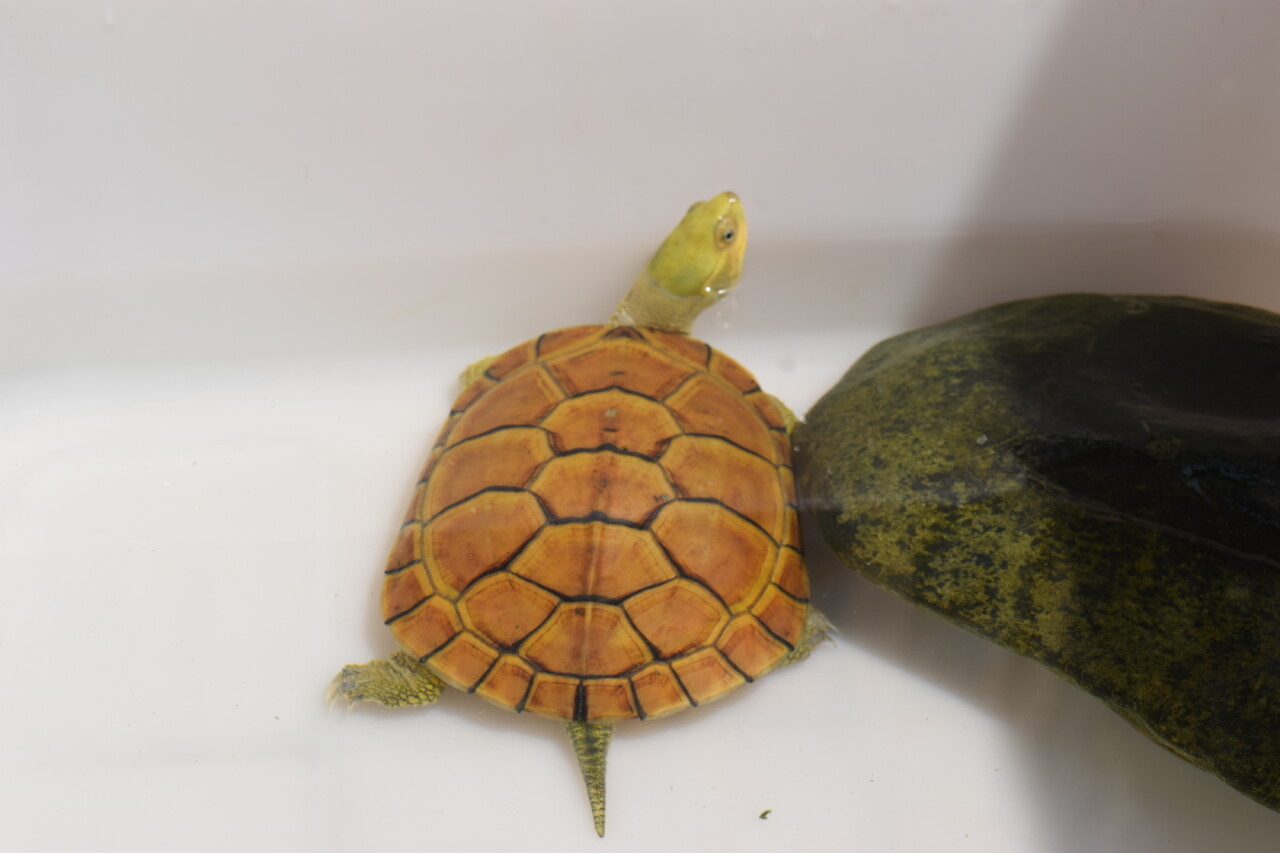
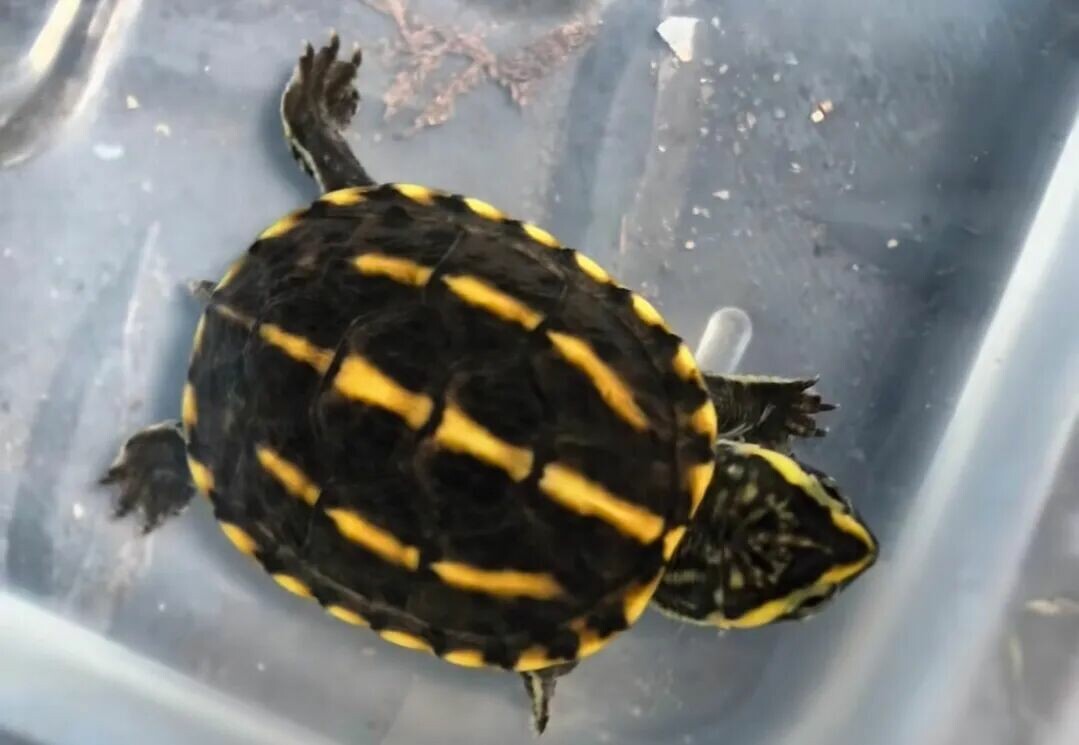
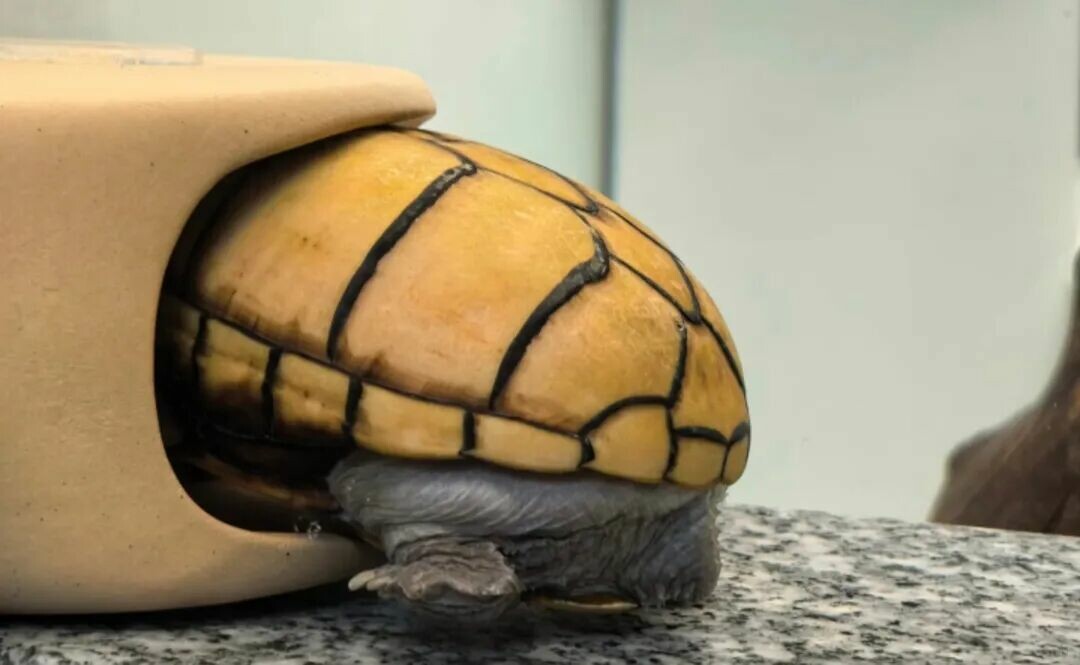
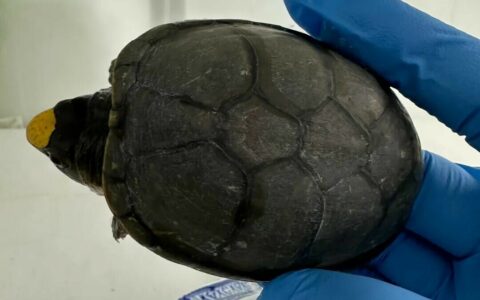
Striped Mud Turtle (Kinosternon baurii)
As juveniles, they are completely black, resembling a small “fruit pit” (hence their Chinese name “Guo He”). After reaching adulthood, Striped Mud Turtles are divided into two types: Southern and Northern. The Southern type is yellowish in color with clear head patterns resembling “tiger stripes”; the Northern type has golden yellow ridges on the back and is generally brownish-black. The grown-up Striped Mud Turtle is still “pretty good.”
Mississippi Mud Turtle (Kinosternon subrubrum hippocrepis)
As juveniles, they are predominantly black and look “plain.” After reaching adulthood, their head patterns become unpredictable, delicate, and accompanied by a high-yellow carapace, making them extremely ornamental.
Eastern Mud Turtle
As juveniles, their shell color is dull, predominantly black. After reaching adulthood, their head patterns become complex and varied, with fine dots or worm-like shapes, paired with an “eagle-hook beak,” making them look domineering.
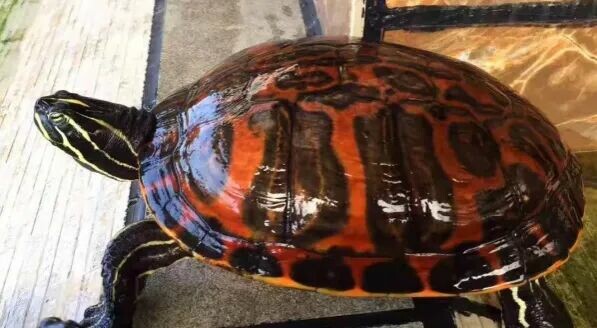
Florida Mud Turtle
As juveniles, they are entirely black. After reaching adulthood, the carapace may develop radial patterns. They have a V-shaped head, and if accompanied by red cross eyes or snowflake eyes, they appear even more domineering.
Tabasco Mud Turtle
As juveniles, they are predominantly gray and “unremarkable.” After reaching adulthood, their head color becomes bright, usually red, accompanied by red and yellow spotted patterns, making them overall enchanting.
European Pond Turtle
As juveniles, they are a “grayish-black blob” with “no ornamental value.” The young European Pond Turtle really has “no highlights” and is “very ordinary.” After reaching adulthood, body surface patterns emerge, and the carapace becomes covered with pale yellow radial lines or dotted patterns, “beautiful as a meteor shower.” However, not every European Pond Turtle turns out “that good looking,” and there are unsatisfactory ones. Nevertheless, they definitely look better than when they were young.
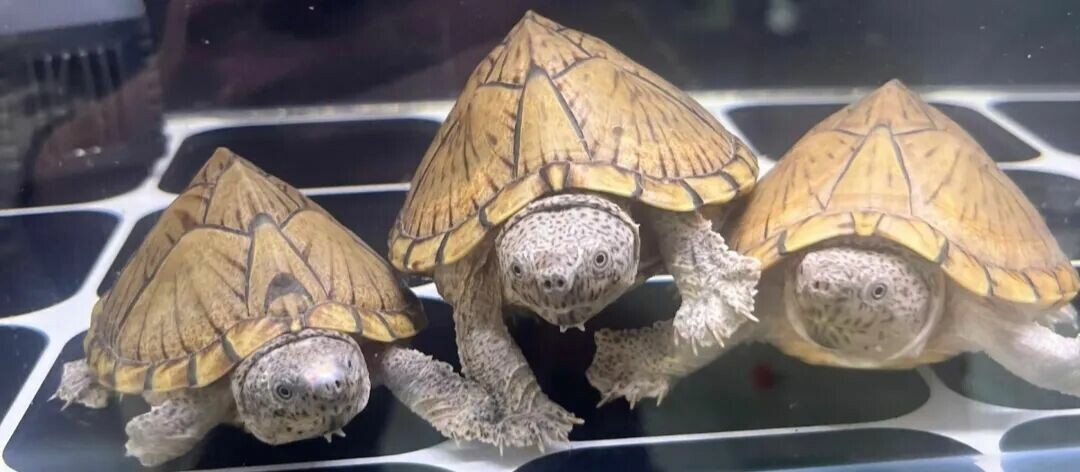
Mexican Giant Musk Turtle
As juveniles, they are predominantly black with “not that many highlights.” After reaching adulthood, the head features irregular white patterns on a black background. The patterns gradually spread out with growth, forming beautiful radial lines. The beauty of the “Mexican” truly “reveals itself more as it grows.” Its only downside is that the adult size is too large.
Red-Cheeked Mud Turtle
As juveniles, they are predominantly black and “ordinary.” After reaching adulthood, the head develops fiery red bands, resembling the red face of “Guan Yu” (a historical figure), which fits aesthetics very well. If paired with a “Golden Armor” (shell), it is even more enticing. However, that would count as a premium Red-Cheeked Mud Turtle.
Painted Terrapin (Watermelon Turtle)
As juveniles, they have no special characteristics. Adult male turtles possess a carapace with “watermelon-like stripes” and the unique “Dan Ding Bai Lian” (a unique white patch pattern on the head and carapace), becoming the most dazzling individual in the turtle group. But only male turtles exhibit this performance.
Eastern Box Turtle
As juveniles, they are predominantly dark yellow with no obvious patterns. After reaching adulthood, the carapace, head, and limbs all feature brilliant and bright patterns, worthy of being called living art.
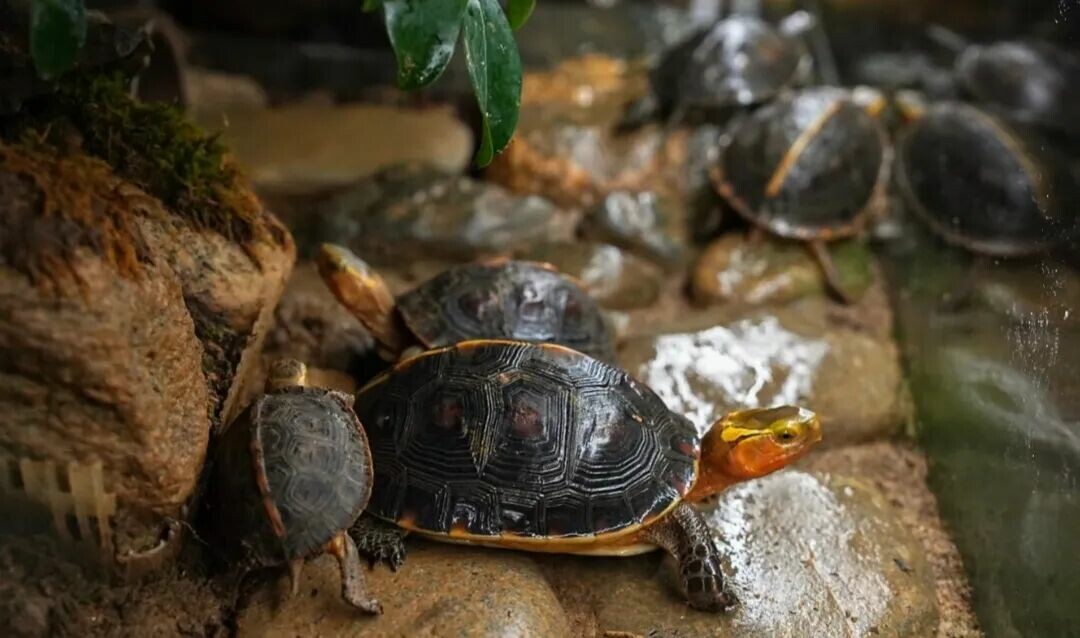
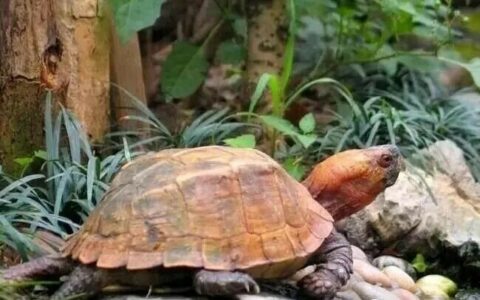
Of course, some people ask why there is no Yellow-Margined Box Turtle; that is because the Yellow-Margined is beautiful from a young age, so it doesn’t need to get prettier. To be honest, “Xiao Qing” (Yellow Pond Turtle) is also ordinary when young and gets prettier as it grows. Come to think of it, that counts as 11 species.
During the growth process of these turtles, their appearance undergoes significant changes, from ordinary to stunning, making one help but marvel at the wonder of life and nature’s “uncanny workmanship.”However, general “common stock”(referring to ordinary quality merchandise) might not have changes “as big” as you expect. Therefore, even if turtle prices drop, the price of premium turtles can still be significantly higher.
Original article by 搬运工, if reproduced, please cite the source: https://www.kaipet.com/en/turtles-grow-10-premium-varieties-glow-life