

Get to know a turtle a day. Today, we’re introducing one of the most consistently popular species in the turtle-keeping community: the Flame Turtle. At the end of the article, we will also share tips on how to select a Flame Turtle with good appearance quality.
Flame Turtle Appearance and Color Development
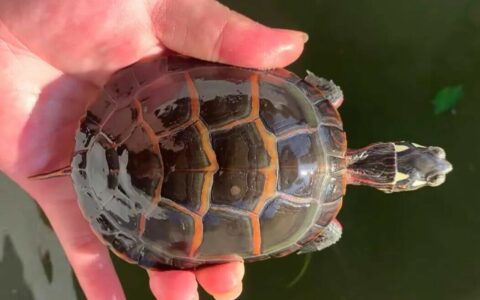
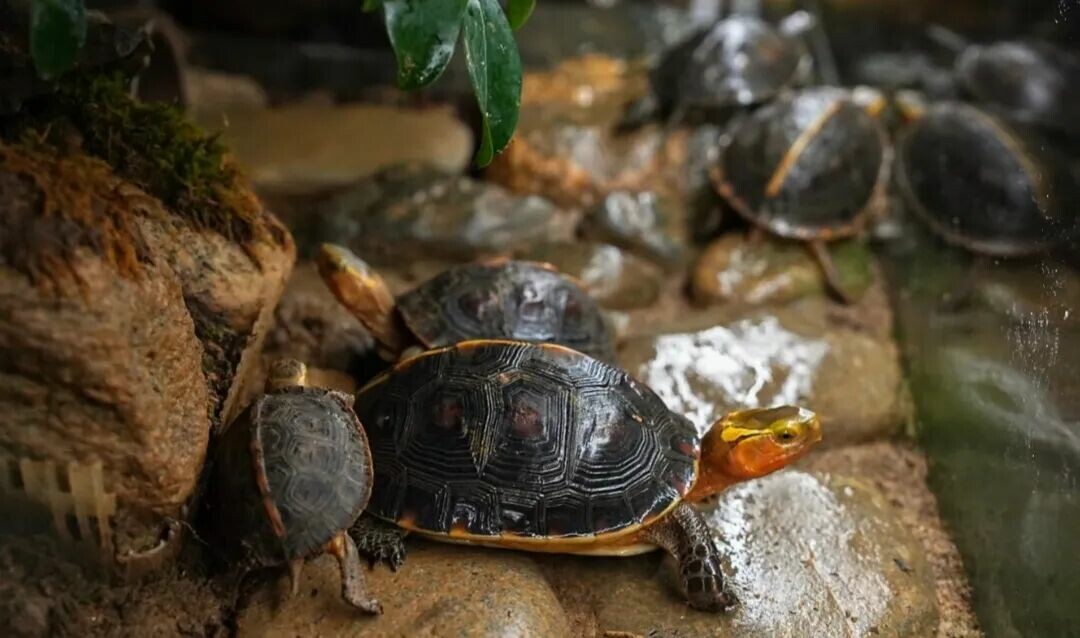
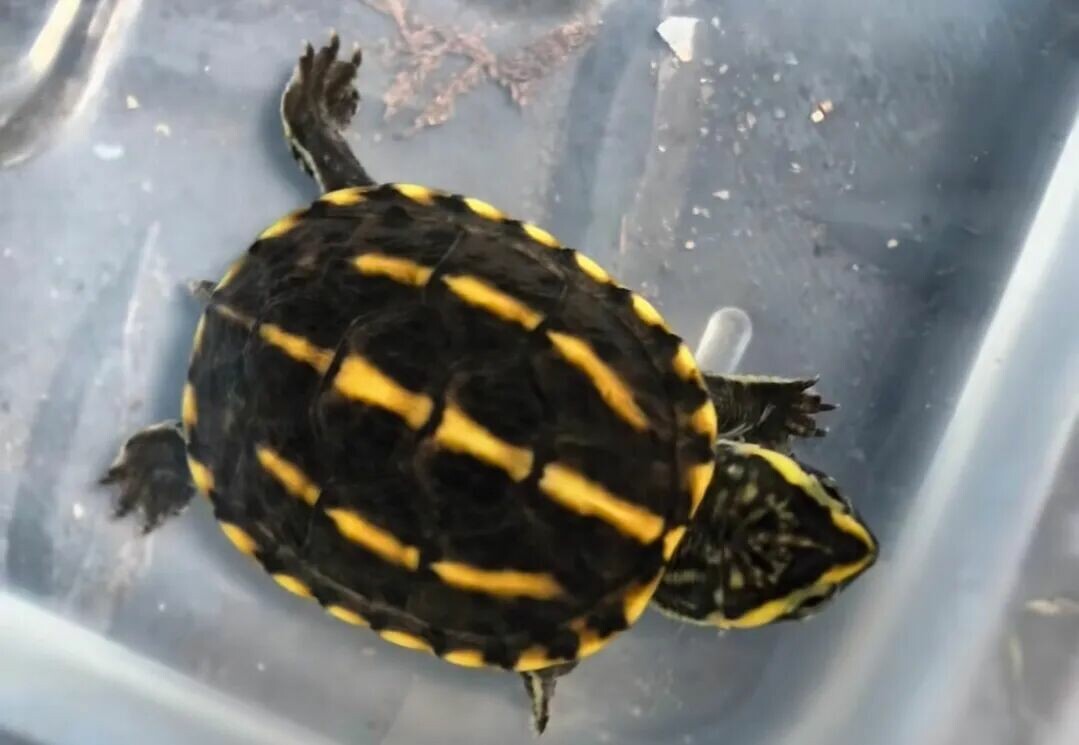
The Flame Turtle gets its name because the patterns and colors on its carapace are highly similar in appearance to the shape of “flames.” However, as juveniles, Flame Turtles have carapaces that are mostly light green or yellowish-green. Each marginal scute (the hard plates on the edge of the carapace) has curved, thick stripes, which are surrounded by thin yellow and green stripes. As the turtle ages, red or orange markings gradually appear on the carapace. These markings spread from the edge of the carapace toward the center, resembling burning flames. Therefore, the Flame Turtle is a prime example of a species that gets more aesthetically pleasing as it gets older.
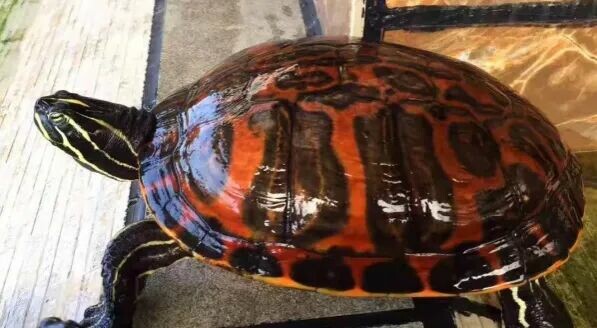
Habitat and Temperament
The color development of the Flame Turtle indicates that it requires a habitat with sunlight for basking. Flame Turtles are not very aggressive and are considered a docile species, making them suitable for cohabitation with other turtle species. Due to their need for basking, in the pet turtle community, Flame Turtles are often kept with Red-eared Sliders and Yellow-throated Turtles (Note: Yellow-throated Turtle, scientific name Trachemys scripta scripta), and you can see scenes of them stacking on top of each other.
Size and Care Considerations
Unlike common pet turtles, the Flame Turtle is a medium-to-large sized aquatic turtle. Its growth rate is faster than that of other small to medium-sized turtle species, and it reaches a larger adult size, with a typical adult length of 35-45 centimeters. When keeping them, although cohabitation is possible, attention must be paid to size differences and feeding to avoid competition for food, which can lead to turtle loss.
Although the Flame Turtle’s size deters some hobbyists from acquiring them, their color development and flame-like patterns after being raised are still widely appreciated. In the market, Flame Turtles are categorized into three appearance grades based on their carapace patterns: Wide-striped Flame Turtle, Winged Flame Turtle, and Golden-edged Flame Turtle.
Wide-striped Flame Turtle
The carapace stripes of a Wide-striped Flame Turtle are more than twice as wide as those of a common Flame Turtle. The stripes extend along the direction of the carapace, giving it a neater overall appearance. A few super wide-striped Flame Turtles have an even better visual effect as adults.

Winged Flame Turtle
The biggest difference between the Winged Flame Turtle and the common grade or Wide-striped Flame Turtles is that the carapace patterns and the spots on the marginal edge are not connected. The marginal edge is the edge of the carapace. This distinction leads to the names Big Wing and Small Wing Flame Turtle. The “Big” and “Small” designations are not based on the size of the patterns but are determined by the number of spots on the marginal edge. The Small Wing Flame Turtle still has a few spots on its marginal edge, while the Big Wing Flame Turtle has a clean marginal edge with only the flame patterns, more closely resembling open wings, hence its name. In terms of visual impact, the Winged Flame Turtle is more striking than the common and Wide-striped Flame Turtles.
The wing patterns of the Winged Flame Turtle can be further categorized into types such as Flat Wing, Round Wing, Pointed Wing, and Golden-edged.

Tips for Selecting a Flame Turtle
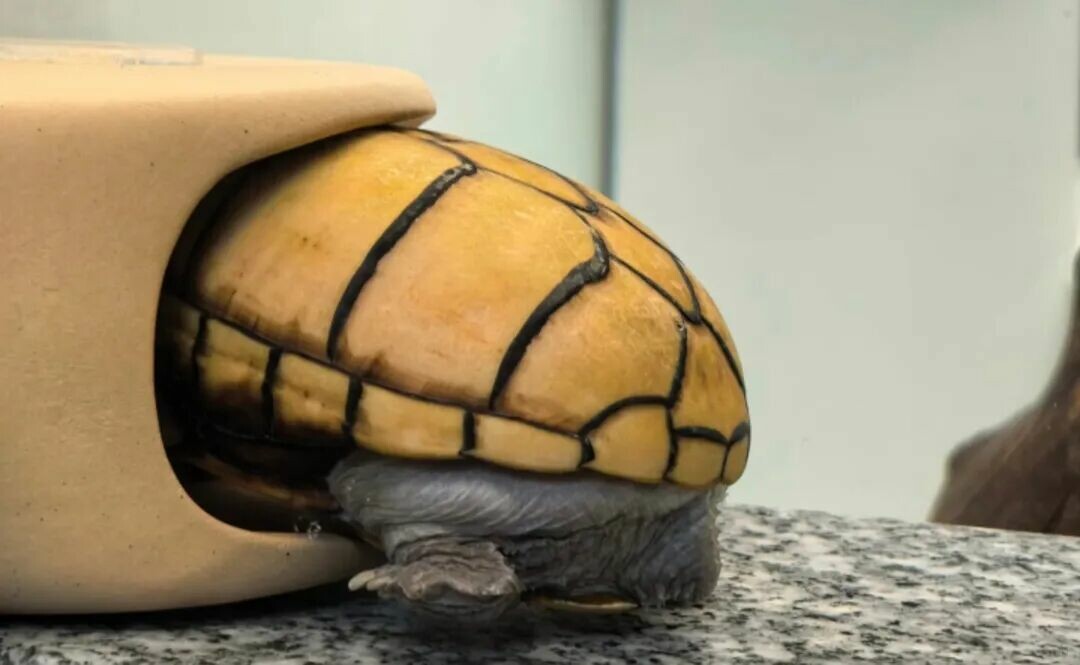
The appearance quality of a Flame Turtle is linked to its shell color and patterns. The plastron of a newly-hatched Flame Turtle is mostly yellow or orange. When selecting, you should prioritize those that are orange-red, as they will have better color development later on. In terms of the patterns on the marginal scutes, prioritize those with wide, separated, and symmetrical patterns, as the effect will be better when the patterns develop and spread out later. A small number of hatchlings already begin to show red shell coloration during their juvenile stage; these hatchlings will develop deeper and richer red colors later.

Original article by 搬运工, if reproduced, please cite the source: https://www.kaipet.com/en/guide-keeping-flame-turtles-complete-analysis-size-color-development-cohabitation




Comments(2)
It’s amazing how their colors develop! Owners, what age did your Flame Turtle’s ‘flames’ really start to pop?
@CriticX:It’s wonderful you’re observing their beautiful color development! That’s a fantastic question for our community. Fellow Flame Turtle owners, please share your experiences on when those ‘flames’ started to pop!