

The Yellow Pond Turtle (*Mauremys mutica*) belongs to the *Mauremys* genus of the small water-dwelling freshwater turtle family (Geoemydidae). Named in 1842, the male carapace can reach a maximum length of 19.6 cm, and the female up to 19.5 cm. Native to China, Vietnam, and the Ryukyu Islands, the wild populations are classified as Class II National Protected Animals. In China, they are mainly distributed in the southeast and central-south regions, such as Jiangsu, Zhejiang, Anhui, Fujian, Guangxi, Yunnan, Hainan, and Taiwan.
Subspecies Distinction
The Yellow Pond Turtle has two geographical subspecies: the nominate subspecies Yellow Pond Turtle and the Ryukyu Yellow Pond Turtle.
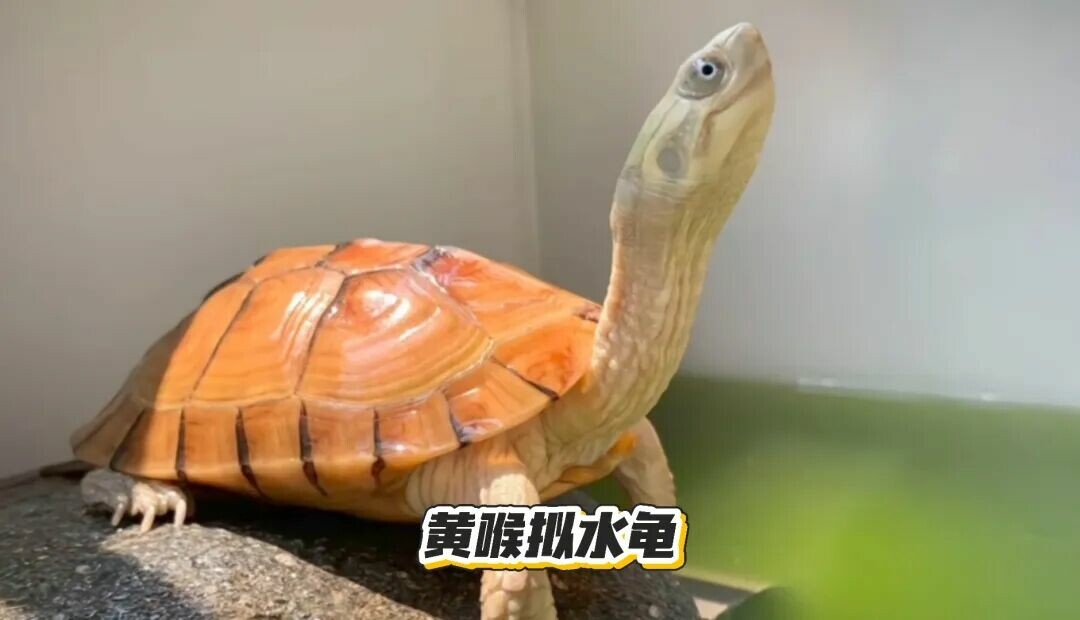
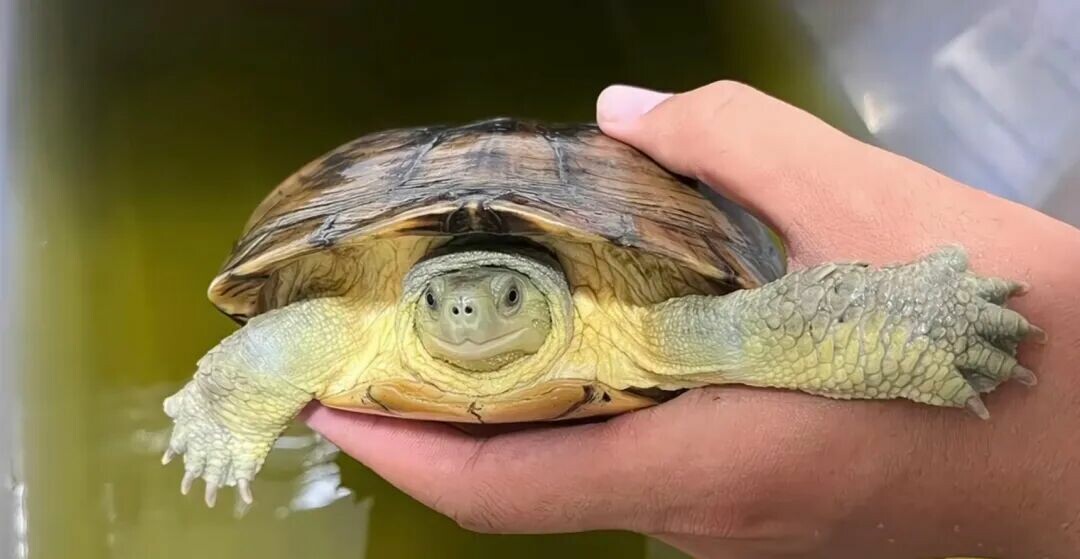
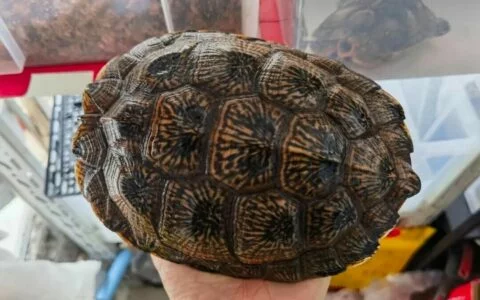
Named in 1996, with a maximum carapace length of 18.9 cm, the carapace ranges from pale yellow or grayish-brown to light brown. Compared to the nominate subspecies, its body shape is flatter, and its limbs are broader and more robust. The light-colored stripe behind the eye is relatively blurred. Its habits are similar to the nominate subspecies, and it originates from the Yaeyama Islands in Okinawa Prefecture, Japan.
Common Hobbyist Classifications
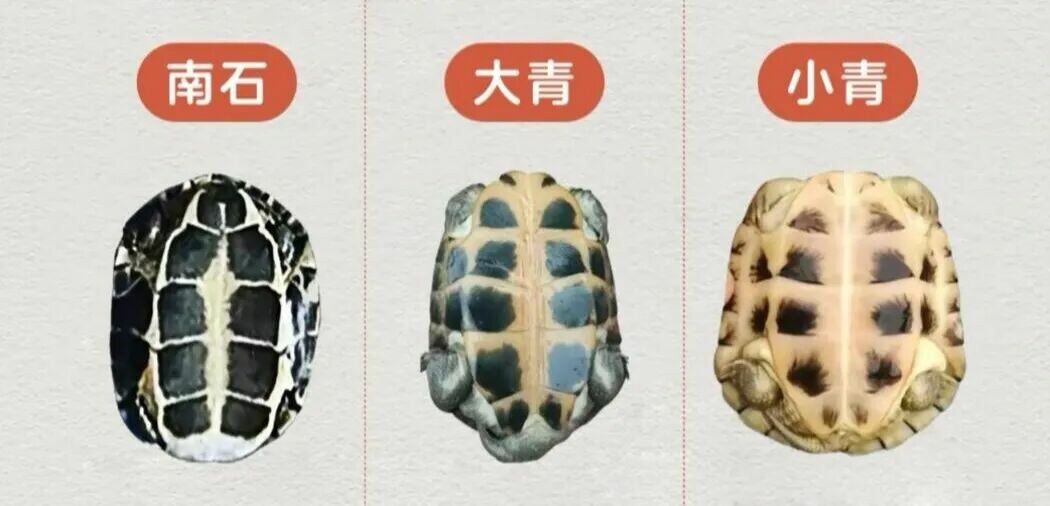
In the pet market, hobbyists further classify Yellow Pond Turtles based on their external characteristics and origin into: *Nanshi* (Southern Stone), *Daqing* (Big Green), *Xiaoqing* (Little Green), and Yaeyama.
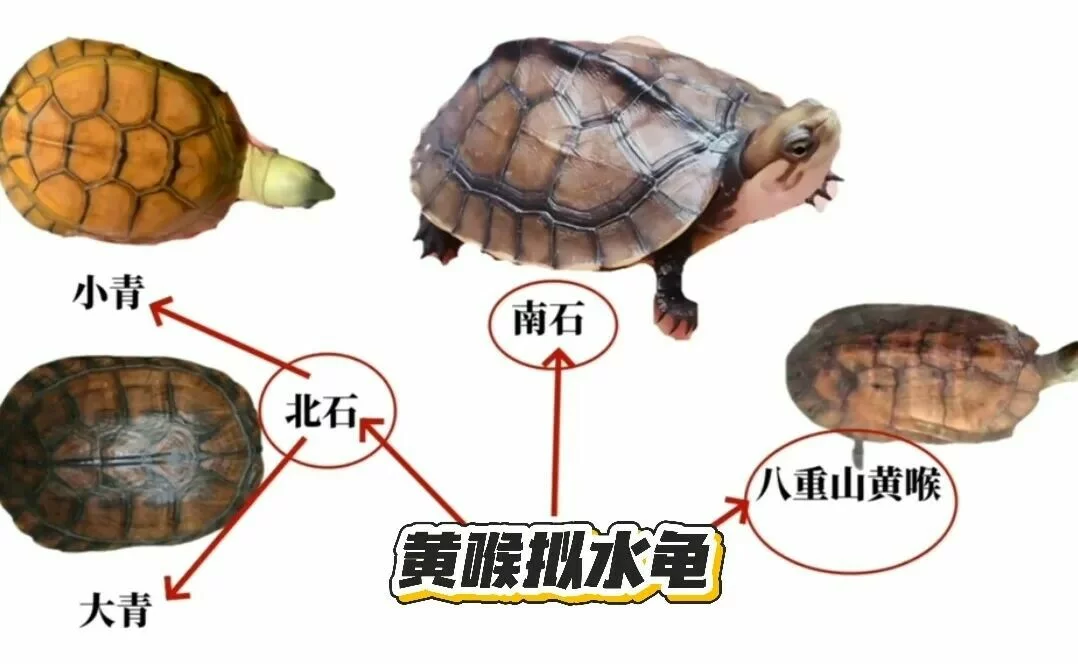
Nanshi (Southern Stone)
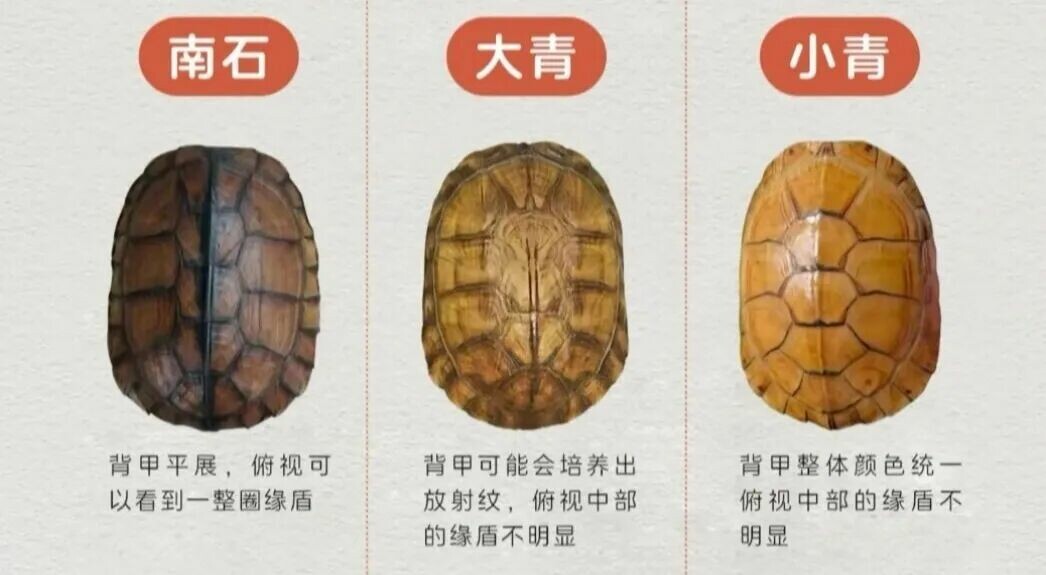
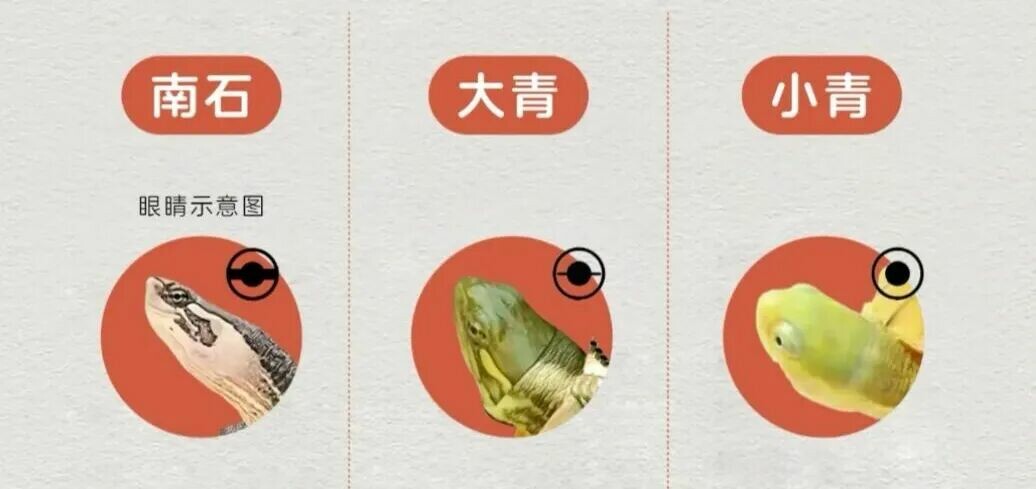
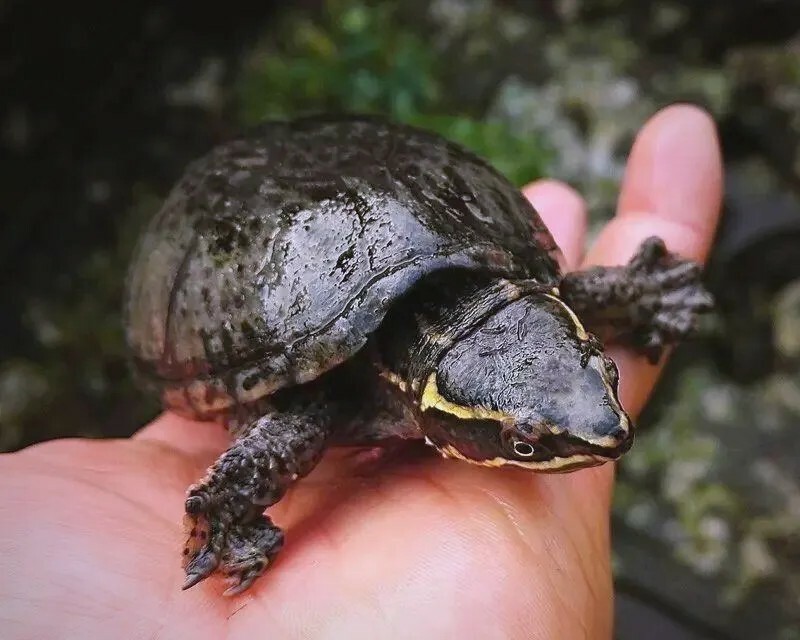
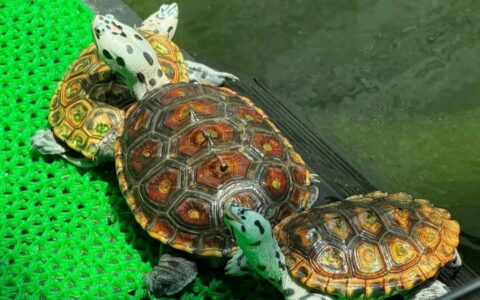
*Nanshi* (Vietnam Stone Turtle), also known as the Vietnam Pond Turtle, has become very scarce in terms of wild resources. The carapace is brownish-black; premium specimens appear apple red. They have distinct eye lines and a larger body size, with old turtles reaching over 5 Jin (2.5 kg).
Xiaoqing (Little Green)
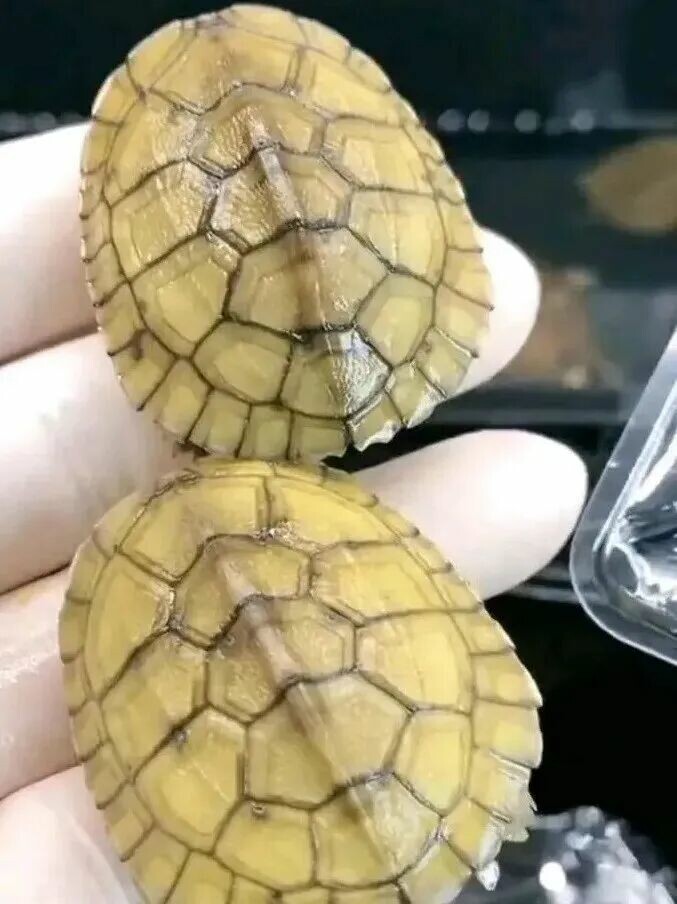
The carapace of *Xiaoqing* tends to be yellowish, and the eyes generally do not have an eye line. The plastron has few black spots, or even none. When the carapace, head, and limbs are all yellow, it is what hobbyists often call “Three Yellows”. The body size is smaller, with old turtles weighing just over 1 Jin (0.5 kg). They are mainly produced in the Jiangsu, Zhejiang, and Anhui regions.
Daqing (Big Green)
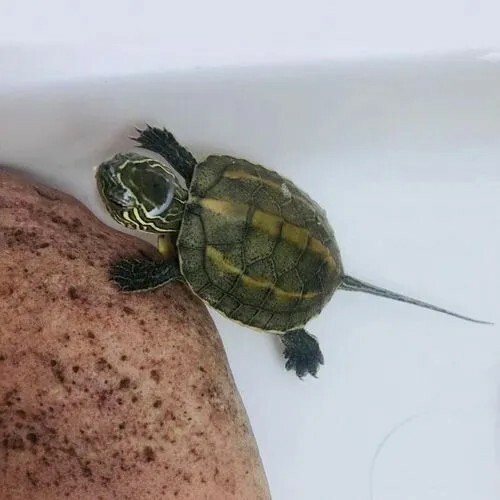
The body size of *Daqing* is between that of *Nanshi* and *Xiaoqing*. The carapace is pale brown, and the head is greenish-black with a faint eye line. The black spots on the plastron are small and scattered. The body size is relatively large, with old turtles reaching over 3 Jin (1.5 kg). They are mainly produced in Fujian, Taiwan, and other places.
Living Habits
Activity patterns of the “Smiley Face Throat” (a common name for the Yellow Pond Turtle): During the day, they mostly play and forage in the water. On sunny days, they like to climb to the shore to bask in the sun. When the weather is hot, they are more active in the morning and evening; at noon and night, they often hide in dark places in the water or bury themselves in the sand, retracting their heads and remaining motionless. They are relatively timid.
Keeping Tips
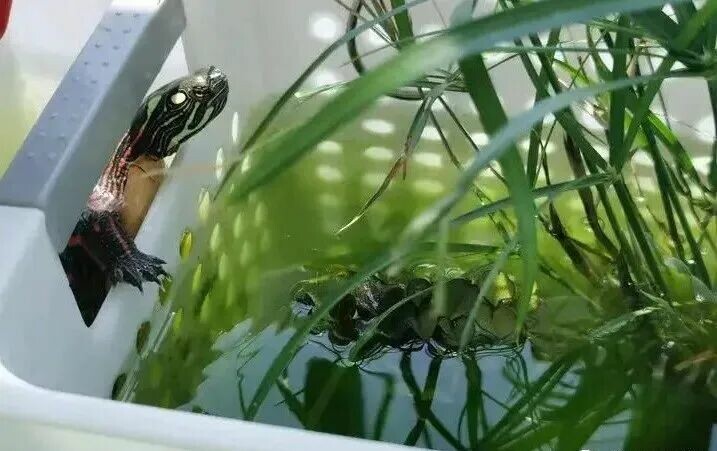
The rearing environment should be primarily light-colored. Sunlight is a crucial factor for the color development (referring to the animal’s body color becoming vibrant or showing specific colors) of the Yellow Pond Turtle. Reasonable lighting can make the body color brighter. Furthermore, when basking, it is best to use scattered light without glass; direct sunlight has excessive ultraviolet rays, while basking through glass blocks a large amount of the ultraviolet spectrum, equivalent to not basking at all. A white container plus a yellow wax stone basking platform—such a combination is more helpful for the turtle’s color development.
Breeding
The age of sexual maturity for the “Smiley Face Throat” is 5-6 years. Males reach sexual maturity at a weight of 250 grams, and females at 300 grams. The mating season is from April to the end of October, with mating mostly occurring in the evening or early morning. The egg-laying period is mostly from May to September, with July being the peak period. Female turtles mostly lay eggs at night or before dawn, laying 4-7 eggs each time.
Original article by 搬运工, if reproduced, please cite the source: https://www.kaipet.com/en/yellow-pond-turtle-keeping-guide-variety-distinction-hibernation-appearance-selection-analysis


Comments(1)
Great guide! The title mentions ‘Hibernation’. Could you share more about their hibernation process and how keepers should prepare?