


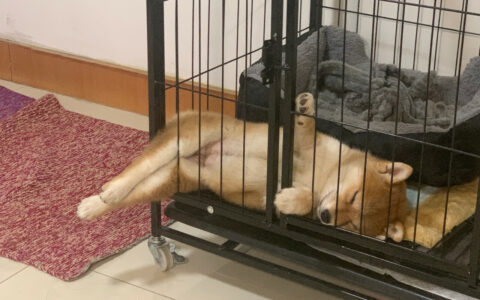
Recently, many people have been leaving messages asking whether it’s better to cage train or free-range a puppy after bringing it home. I have a suggestion: use cage training in the early stage, semi-free-range in the middle stage, and full free-range in the later stage.
Reasons for Early Cage Training
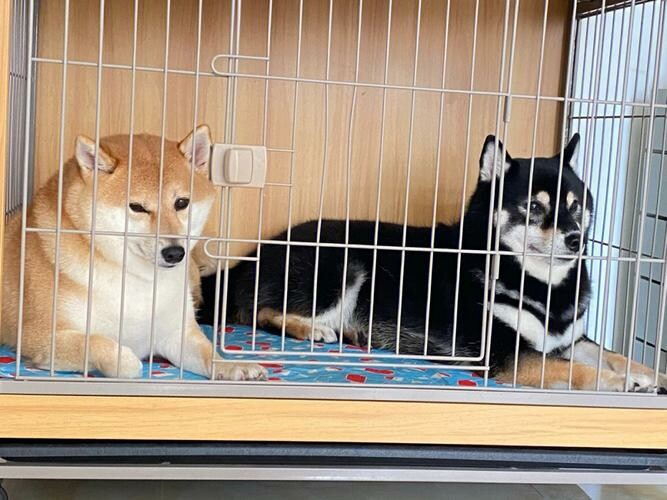
When a puppy first arrives at home, it hasn’t yet developed good behavioral habits. At this stage, if we don’t confine it in a cage, it is likely to develop bad habits such as urinating and defecating indiscriminately, rummaging through trash bins, destroying furniture, and chewing on electrical cords. Moreover, keeping a puppy in a cage helps it better undergo designated potty training. Once our puppy has learned to use the designated spot for its bathroom needs, it can then transition to a semi-free-range state.
Implementation of Semi-Free-Range
When we, the dog owners, are at home, we can let it out of the cage; when we are not at home, we keep it in the cage.
When we are at home, we can let the puppy out to play. At this time, we can observe the puppy’s behavior. If it exhibits bad habits such as destroying furniture, chewing on table or chair legs, or rummaging through trash bins, we can correct it in a timely manner.
Conditions for Entering Full Free-Range
When the puppy truly understands which places it can go to, which places it cannot, which places it can chew on, and which places it can play in, we can then fully transition it to a free-range state.

At this point, I suggest that all dog owners consider purchasing a surveillance camera and placing it in a corner of the house to monitor the dog’s activity range. If you continuously free-range your dog for several days, the puppy will be able to find the toilet, will no longer destroy furniture or rummage through trash bins, and will instead play with its toys at home, sleep in its cage when tired, and use the toilet when it needs to go. At this time, we can officially enter the full free-range state.
Remember, the early cage training is for the puppy to better adapt to free-range in the future.
Original article by KPTer, if reproduced, please cite the source: https://www.kaipet.com/en/cage-training-semi-free-range-full-free-range-essential-dog-raising-tips-beginners








Comments(2)
Great phased approach! For owners without a camera, how do you best assess readiness for full free-range?
@CriticX:Thank you for your insightful question! For owners without a camera, consistent observation during the semi-free-range phase is crucial. Look for reliable potty habits, no destructive behavior, and independent play with toys before transitioning to full free-range.