

Get to know a new turtle every day. Today, we’re introducing a favorite among turtle pet hobbyists, a species that is not only a long-standing recommendation for beginners but also a top pick for the best keeping experience: the Razor-backed Musk Turtle. At the end of the article, we will also share how to select a good Razor-backed Musk Turtle hatchling.
Overview of the Razor-backed Musk Turtle
The Razor-backed Musk Turtle, with the formal name Dao Bei She Xiang Gui (Razor-backed Musk Turtle), belongs to the musk turtle species, as indicated by the word ‘musk’ in its name. They are known for being hardy and easy to care for, much like our friend the Common Musk Turtle. The chances of them dying are extremely low, allowing you to essentially bid farewell to the worries of the turtle-keeping community.
Physical Characteristics
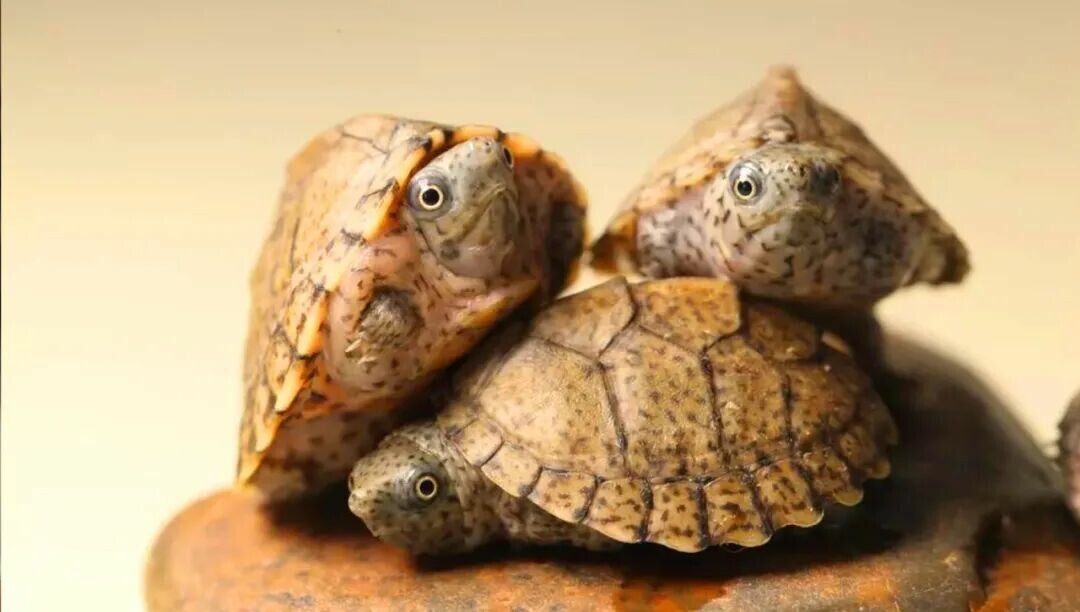
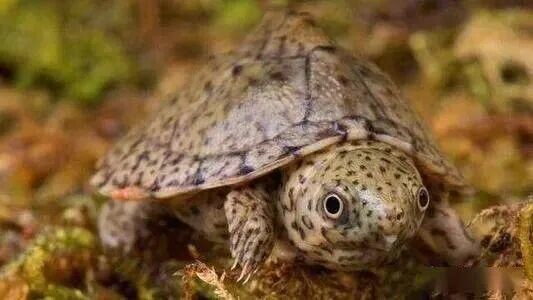
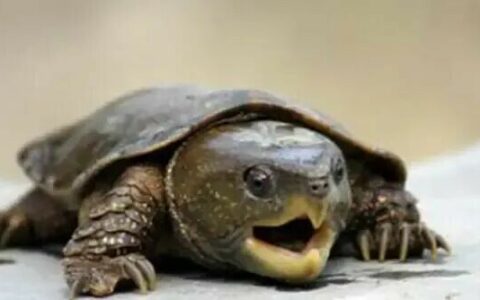
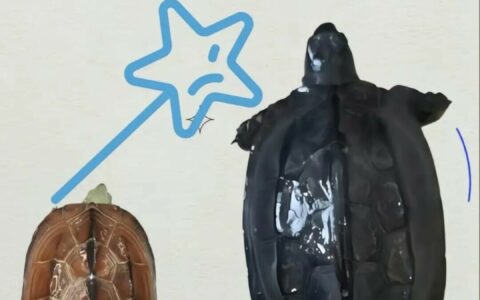
Compared to other ‘egg turtles,’ the Razor-backed Musk Turtle has the most unique carapace. It is triangular in shape with a high, prominent keel running from front to back across the entire carapace, resembling a sharp razor, which is how it got its name. The carapace is typically brown, black, or yellow, often with irregular black spots or radiating lines. The head is triangular with large, protruding eyes, and its color is similar to the carapace, usually brown or black, though the sides of the head and neck may have light yellow or orange stripes. The plastron is mostly yellow or beige with black spots or markings, may have notches at the front and rear, and has no particularly distinctive features.
Temperament and Interactive Experience
Keepers’reviews of the Razor-backed Musk Turtle are polarized, mainly regarding the interactive experience. Being hardy and easy to care for is an inherent trait; it is rare for a musk or Razor-backed Musk Turtle to die from being poorly kept. The reason for the polarization is the Razorback’s ‘Buddha-like’ personality, which can also be described as timid. For keepers with landscaped turtle tanks, a newly arrived Razor-backed Musk Turtle is almost ‘invisible,’ especially hatchlings, as they will frequently hide under driftwood or near filter media. If the aquatic plants are dense, a keeper might even mistakenly think the turtle has escaped the tank. In a bare tank, when the owner approaches, the Razor-backed Musk Turtle will quickly retract into its shell or sink to the bottom of the tank and remain motionless. During feeding, it will also wait for the owner to leave before slowly starting to eat, and immediately return to a motionless state after finishing, like an ‘aloof and distant’ sculpture. When stressed, it may even refuse to eat, at which point there is virtually no interaction.
The Active Razor-backed Musk Turtle
While some are timid, there are naturally active ones as well. A Razor-backed Musk Turtle with a personality as playful as a dog’s is highly prized. Because they can be kept in deep water, they can move freely in a landscaped glass tank and interact with their owner, for example, by chasing a finger from the water’s surface to the tank wall and joyfully splashing in the water to remind their owner it’s feeding time.
Keeping Experience and Price
Regardless of whether they are timid during the juvenile stage, with a certain period of familiarization, even a timid Razor-backed Musk Turtle will become active and a favorite of its keeper. The only drawback is that the price of Razor-backed Musk Turtles is generally a little over 200 yuan, which is slightly lower than the market price of a people-friendly musk turtle.
Guide to Selecting a Razor-backed Musk Turtle
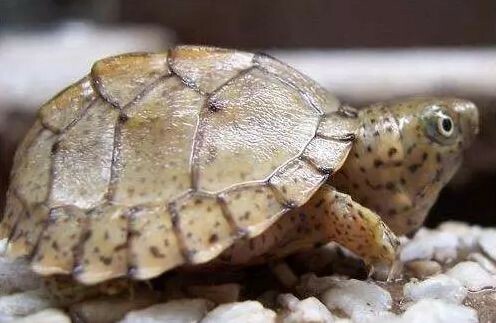
When selecting a Razor-backed Musk Turtle, first focus on the characteristic razor-like keel. Specifically, choose one where the spinal ridge is a continuous, raised protrusion from the front to the back of the carapace, and check for any breaks or collapses. Some hatchlings are born with a flat spinal ridge that is unlikely to become prominent later, thus losing the ‘razor’ characteristic. For the carapace color, deep brown or black is preferable as it is less likely to fade over time. The black spots or radiating lines on the carapace should be clear and symmetrical; messy, chaotic patterns will reduce its aesthetic appeal.
Original article by 搬运工, if reproduced, please cite the source: https://www.kaipet.com/en/complete-guide-keeping-razor-backed-musk-turtles-temperament-appearance-interactive-experience





Comments(2)
Fascinating guide! I’m curious about their ‘Buddha-like’ temperament. Have your Razorbacks become interactive, and what was your experience?
@CriticX:Thank you for your insightful comment! The ‘Buddha-like’ temperament is indeed a key characteristic. As the article mentions, while some start timid, many keepers find their Razorbacks become quite interactive with time and familiarization. We encourage other keepers to share their experiences too!