

We have marveled at the ferocity and monstrous presence of the alligator snapping turtle, reminiscent of an ancient beast. While hobbyists crazily pursue the alligator snapping turtle’s ugly and violent aesthetic, among Chinese native turtle species, there is also a uniquely fierce species that, when pitted against a snapping turtle, can display a perfectly overwhelming dominance.
Appearance and Naming
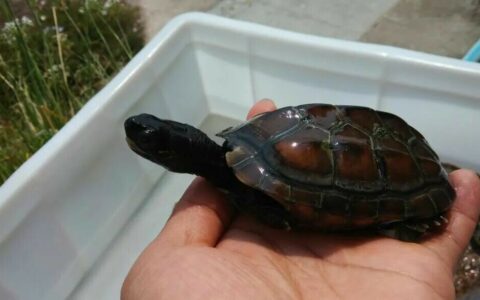
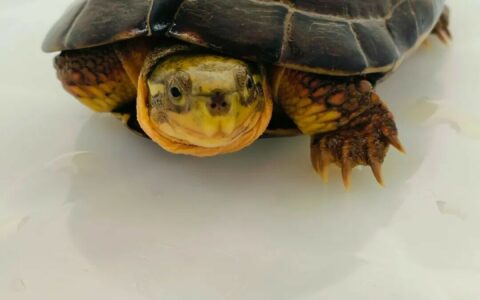
The Big-headed Turtle (Note: a freshwater turtle characterized by its beak-like mouth, scientific name “Platysternon megacephalum”), scientifically named “Platysternon megacephalum” (literally “flat-chested turtle”), has a large, triangular head covered with large keratinous scutes on top. Unlike other turtle species whose heads are convex, its head is relatively flat, earning it the nickname “Flathead” in the turtle-keeping community. The most prominent feature of the Big-headed Turtle is, without a doubt, its hooked, eagle-like beak.

Juvenile Appearance and Predatory Instincts
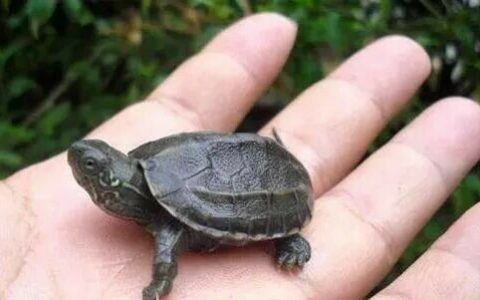
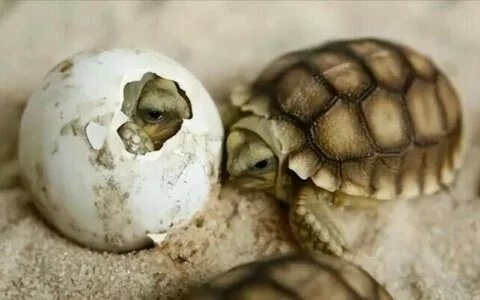
As an equally fierce species, the juvenile Big-headed Turtle often appears adorably dopey due to its large, round eyes and simple facial features. Aside from its unique beak, it seems to have no offensive capability, but the hatchling is actually a natural hunting expert.
While its eagle-like beak is similar to that of the alligator snapping turtle, the Big-headed Turtle has a different predatory instinct. The alligator snapping turtle prefers to keep its mouth wide open and wait for food to drift by, seeking a single fatal strike. In contrast, the Big-headed Turtle often prefers to actively hunt live prey in the wild. When faced with potential “prey” or an object it deems a threat, it will rapidly open its mouth and tear at it with its hooked “eagle beak.” Its bite force is significant, and its beak is hard and sharp. Once it bites down on prey or a foreign object, it will clamp on tightly, accompanied by head-shaking movements, making it difficult for the prey to escape.
Keeping Difficulties and Diseases
Some might ask why such an excellently fierce pet turtle is not as widely kept as the alligator snapping turtle. This brings us to another nickname for the Big-headed Turtle—“The King of Sudden Death.”

If the alligator snapping turtle is a species that is hardy no matter how you treat it, able to adapt to various temperature differences and water qualities, and will even refuse nothing, including leftovers, then the Big-headed Turtle is “The King of Sudden Death” that you might see floating on the tank’s surface after a moment of negligence.
The keeping requirements for the Big-headed Turtle are extremely high. It has strict demands for water quality, which requires keepers to install professional filtration equipment and still perform frequent water changes. Otherwise, it is very susceptible to aquatic diseases such as skin rot (Note: rotting of the skin), shell rot (Note: rotting of the shell), and white eye disease.
Temperature and Heating Requirements
A keeper who is a neat freak might have the patience for regular water changes, but this species is also extremely sensitive to temperature. It will stop eating below 20°C (68°F) and may catch a cold or die during hibernation below 15°C (59°F). Yes, you read that right—death after hibernation. Therefore, keepers of Big-headed Turtles have no choice but to install a heating system and keep it running 24/7, because if this species experiences a significant temperature change, it will be floating on the water for you to see in no time.
Feeding and Diet
As for feeding, turtle pellets? Sorry, that’s basically not on the Big-headed Turtle’s menu. It much prefers live prey, with common foods including: small fish, river shrimp, snails, earthworms, crickets, etc. Moreover, you cannot feed it a single type of food; you need to periodically offer different foods to maintain the Big-headed Turtle’s interest in live prey. Even if keepers try to feed them turtle pellets from the hatchling stage, the Big-headed Turtle will refuse to eat, preferring to starve rather than consume artificial feed.
Conservation Status and Cultural Records
It is precisely because of these extremely demanding keeping issues that this species has managed to make itself a National Class II Protected Animal in the wild. Among protected animals, besides the Giant Panda which can “play” its way into becoming a protected species, this one is pretty much it.
Coincidentally, just as the panda has a mythological story as Chiyou’s mount, the Big-headed Turtle also has its own chapter in Chinese mythology.
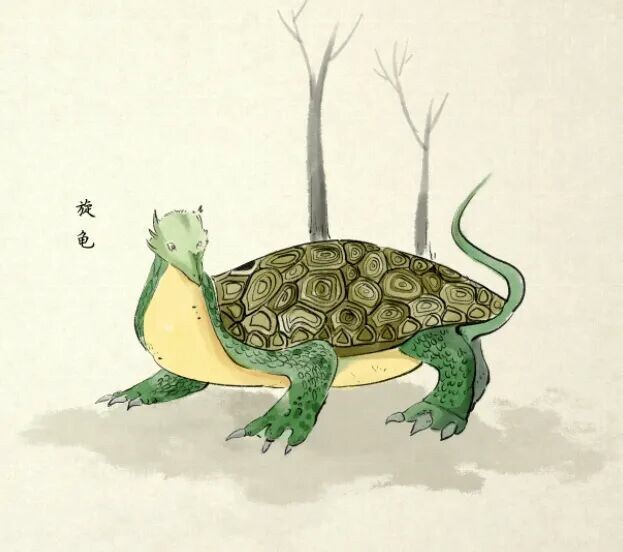
The Classic of Mountains and Seas: Classic of the Southern Mountains records: “The Guai River rises here and flows east into the Xianyi River. It is full of Xuan Gui (Mysterious Turtles). They have the body of a turtle but the head of a bird and the tail of a viper. Their name is the Xuan Gui (Whirl Turtle). Their cry sounds like splitting wood. Wearing one prevents deafness and can be used to treat calluses.”
This record means that this Xuan Gui (Whirl Turtle) has the shape of a turtle but with a bird’s head and a snake’s tail. Doesn’t this image immediately bring to mind the appearance of the Big-headed Turtle?
Original article by 搬运工, if reproduced, please cite the source: https://www.kaipet.com/en/difficult-big-headed-turtle-uncovering-king-sudden-death



Comments(2)
Wow, ‘The King of Sudden Death’ truly fits! I’m curious for insights from experienced keepers on successfully managing their extremely particular live prey diet.
@CriticX:Thanks for your insightful comment, CriticX! The Big-headed Turtle’s specific live prey diet is indeed a major challenge. We hope experienced keepers in our community will share their tips here. It’s truly fascinating how particular they are!