

Learn about a new tortoise every day. Today, we bring you a dream species that has been a hot topic in the pet tortoise market recently: the Sulcata.
An Introduction to the Sulcata Tortoise
The Sulcata is a species of tortoise, with its full name being the Sulcata tortoise, also known as the Sulcata giant tortoise. Although it’s a “giant tortoise,”it’s not the kind mentioned by Minamoto no Genji in *Dragon Raja*.
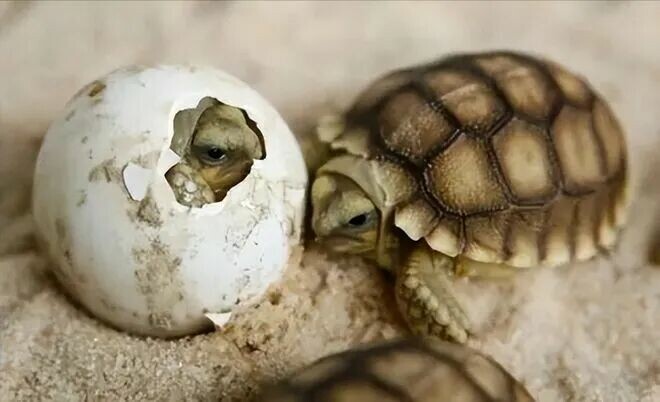
Appearance and Size of the Sulcata
Looking at the picture, you might think the Sulcata is small and very cute, but the reality is harsh. The Sulcata is the world’s third-largest tortoise and the largest among continental tortoise species. An adult can easily exceed 80 cm in size and weigh more than an adult man. Yet, despite its enormous size, the Sulcata has captured many lookists with its endearingly goofy appearance. The Sulcata’s head and carapace are yellow or grayish-white, with a hooked upper beak and a light yellow neck. Adult carapaces are brown, while juveniles are crimson, with light yellow patches on each scute. The carapace is highly domed, and both the anterior and posterior marginal scutes are serrated. The plastron is light yellow with no markings and has a deep posterior notch. Its limbs are a pale grayish-brown; the forelimbs are stout and flat with large scales on the front edge, while the hind limbs are cylindrical with well-developed small, hard spurs on the thighs.
Below is a look at the massive visual scale of an adult Sulcata.
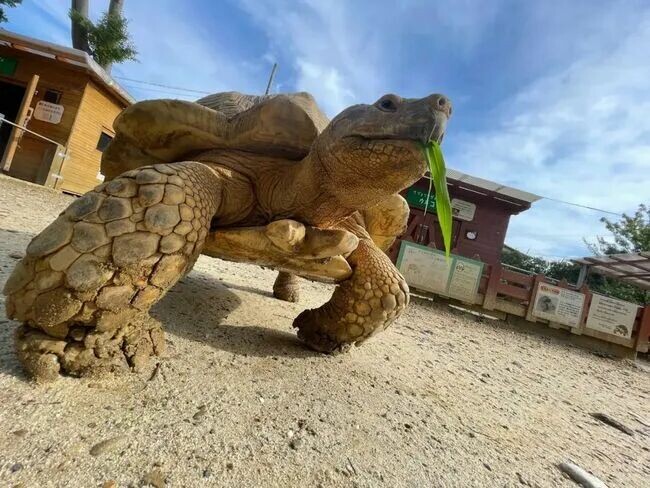
Reasons for the Sulcata’s Popularity
After introducing its appearance, let’s understand why the Sulcata has garnered widespread attention from tortoise hobbyists.
While adult Sulcatas are massive, it must be said that during their hatchling stage, they can melt your heart more than other pet tortoises. Juvenile Sulcatas are small, only 4-6 centimeters, and their carapaces are crimson with light yellow patches, making them more distinctive than other tortoise species.
In addition to the bonus points from their juvenile appearance, Sulcatas have a naturally sociable personality. Since they are tortoises, they are not kept in water tanks. They will actively explore their environment, react to their owner’s feeding actions, and can even recognize their keeper by smell, viewing them as their owner. This is a trait that many other tortoise species lack. Moreover, once familiar with a home environment, a Sulcata can distinguish the functions of different areas in the residence and will not trespass into forbidden places.
Difficulties in Keeping Sulcatas
Reading this, have you also become interested in such a highly intelligent Sulcata? This is why many tortoise keepers purchase them after a brief introduction. However, in reality, many keepers cry out in misery after raising them.
The reason is that Sulcatas grow too fast. While it might take other tortoises ten years to reach a size of 18-20 cm as adults, a Sulcata can easily reach that size in just one or two years—and that’s just its juvenile size. A subadult Sulcata can reach a length of 50 cm, which is already unsuitable for keeping in a typical home, not to mention its nearly 1-meter length upon reaching adulthood. And growing fast naturally means eating a lot. Then the keepers are in for a treat, having to work part-time as pooper-scoopers. Otherwise, their homes would probably be filled with a certain smell every day.
This is also the reason why many keepers, after careful consideration, choose to give up on raising Sulcatas. Even the Common and Alligator Snapping Turtles, which are popular in the tortoise hobbyist community, only reach about 50 cm in adulthood. Furthermore, their temperaments are not as active as the Sulcata’s, so keepers only need a water tank to raise them. In contrast, the active Sulcata is gradually being abandoned by keepers precisely because it is too active and grows to a massive size.
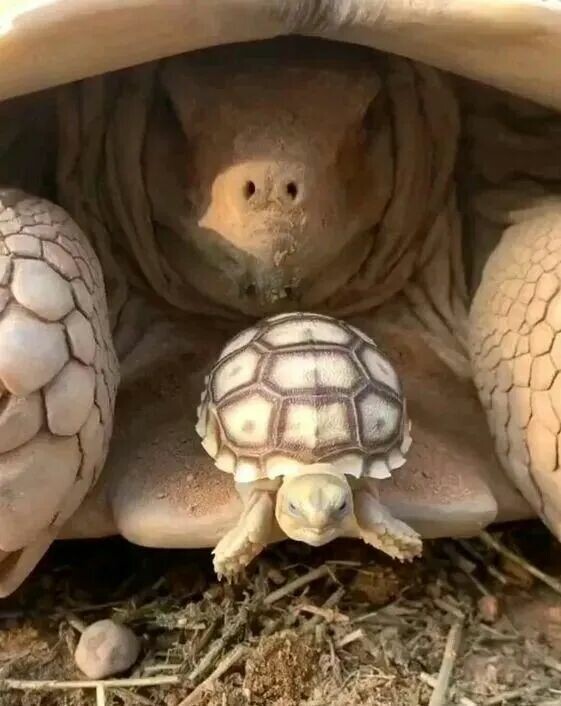
Suitable Environments for Keeping Sulcatas
Despite these issues, some areas in China are suitable for raising Sulcatas, such as rural villages in the south with sufficient space for activity or residences with their own small yards.
And recently, Sulcatas have seen a major price drop. The Sulcata, which used to have a starting price in the four-digits, has seen its price drop almost daily this month. From 300-plus to now 200-plus, you can own a juvenile Sulcata. Are there any tortoise keepers who are tempted?
Original article by 搬运工, if reproduced, please cite the source: https://www.kaipet.com/en/sulcata-tortoise-favorite-tortoise-hobbyists






Comments(2)
The recent price drop is interesting! What’s the most crucial advice for someone new considering a juvenile Sulcata?
@CriticX:您好!很高兴您关注到苏卡达陆龟。对于考虑饲养幼年苏卡达的新手,最关键的确实是它们快速的成长速度和巨大的成年体型。文中也强调了充足的饲养空间是必不可少的考量。感谢您的提问!