

The Chinese Pond Turtle (草龟), known as the “National Turtle”, exhibits significant variations across different regions. The same carapace and head stripes can display the chiseled toughness of Hubei, the gentle gold-lined elegance of northern Jiangsu, or the dark-red antiquity of Jiangxi…… These differences hold the “growth imprints” left by their distinct regional environments.

Hubei Pond Turtle: Comes with “Heavy Armor”
The Hubei Pond Turtle is the “power-type player” among pond turtles. Anyone who has seen an adult female turtle will be struck by it—the carapace is as thick and heavy as an old stone slab, with prominent ridges. The lines on each scute are deep and straight, as if repeatedly chiseled with a carving knife, hence the name “knife-carved lines.”
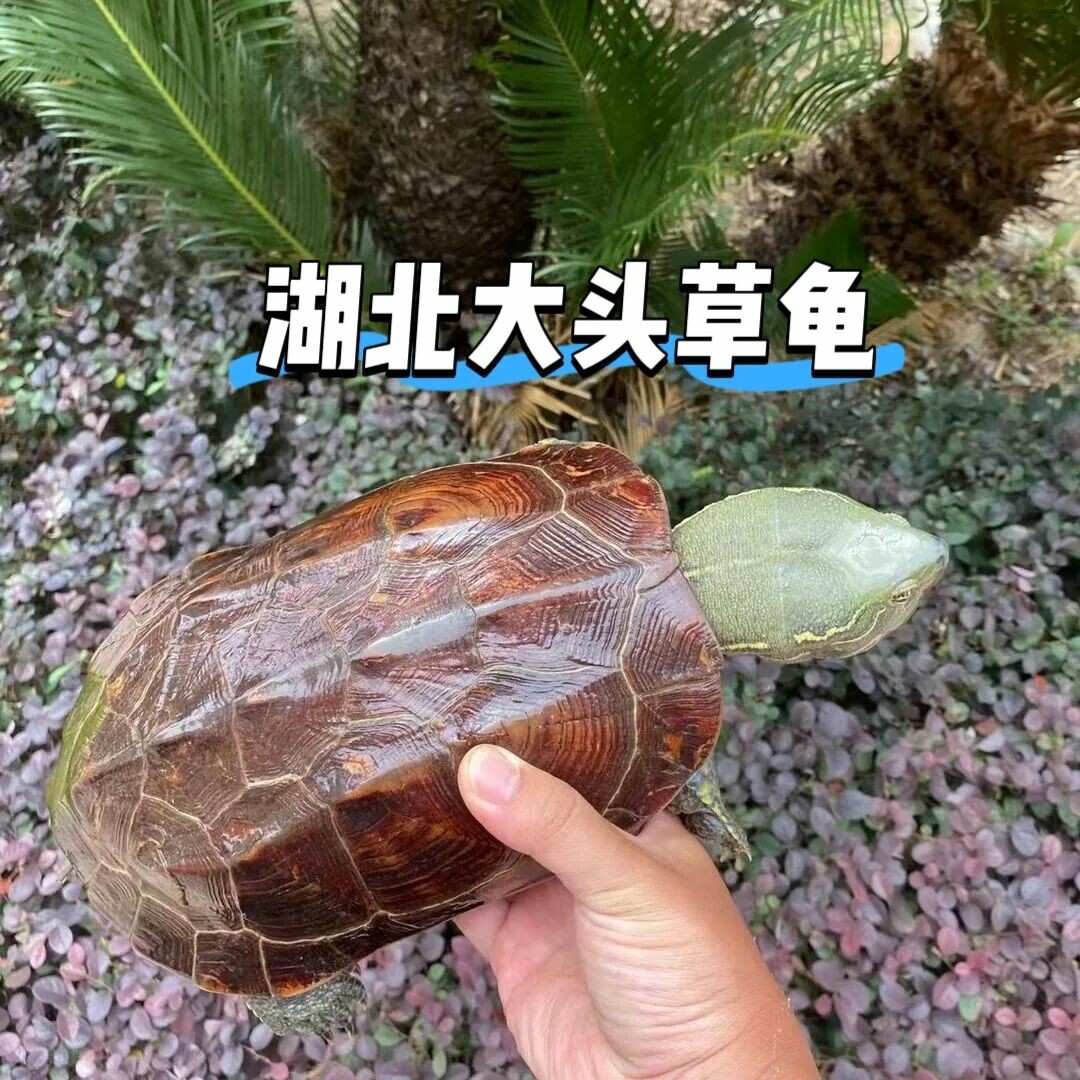
This is especially true for the female turtles. Their heavy heads, paired with a grayish-green crown, have faint head stripes that look washed out, which paradoxically makes them appear more composed. This “big-headed and thick-shelled” appearance is said to be related to Hubei’s mountainous stream environment—the rapid water flow and numerous rocks require a thick shell to resist impacts, while a large head is convenient for gnawing on algae and snails attached to stones.
Northern Jiangsu Pond Turtle: The Waterside Beauty with a “Golden-Banded” Back
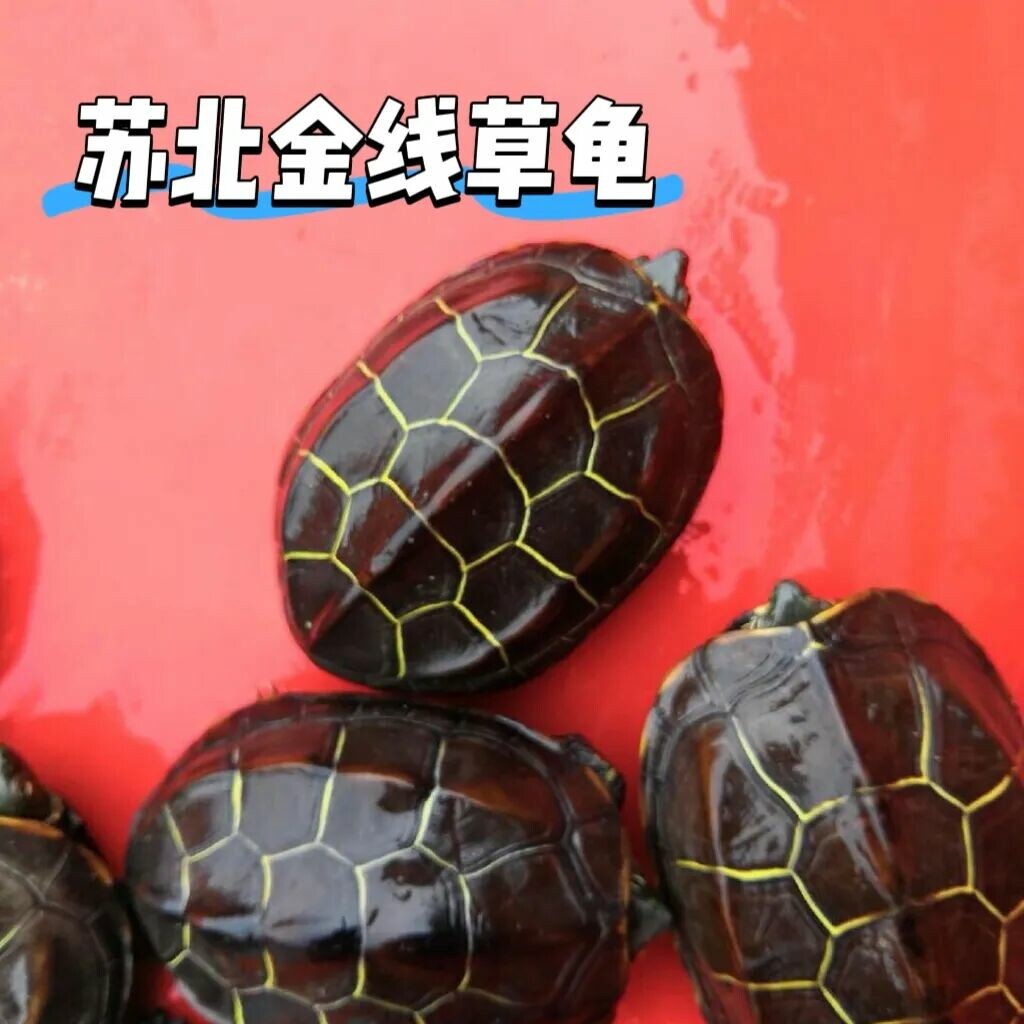
The Northern Jiangsu Pond Turtle is relatively petite. Its carapace is as round as a pebble (hobbyists call it an “egg-shaped carapace”), its growth rate is slow, and the adult is a size smaller than the Hubei Pond Turtle, but its strength lies in its refinement. The most eye-catching feature is its “golden lines.” These vibrant golden lines are inseparable from the slow-moving waters of the Northern Jiangsu plains—shallow water and ample sunlight cause pigments on the turtle shell to more easily precipitate into bright yellow under strong light. This serves as both protective coloration and a unique distinctive aesthetic marker.
Jiangxi Pond Turtle: The Mountain Hermit Cloaked in “Red Rust”
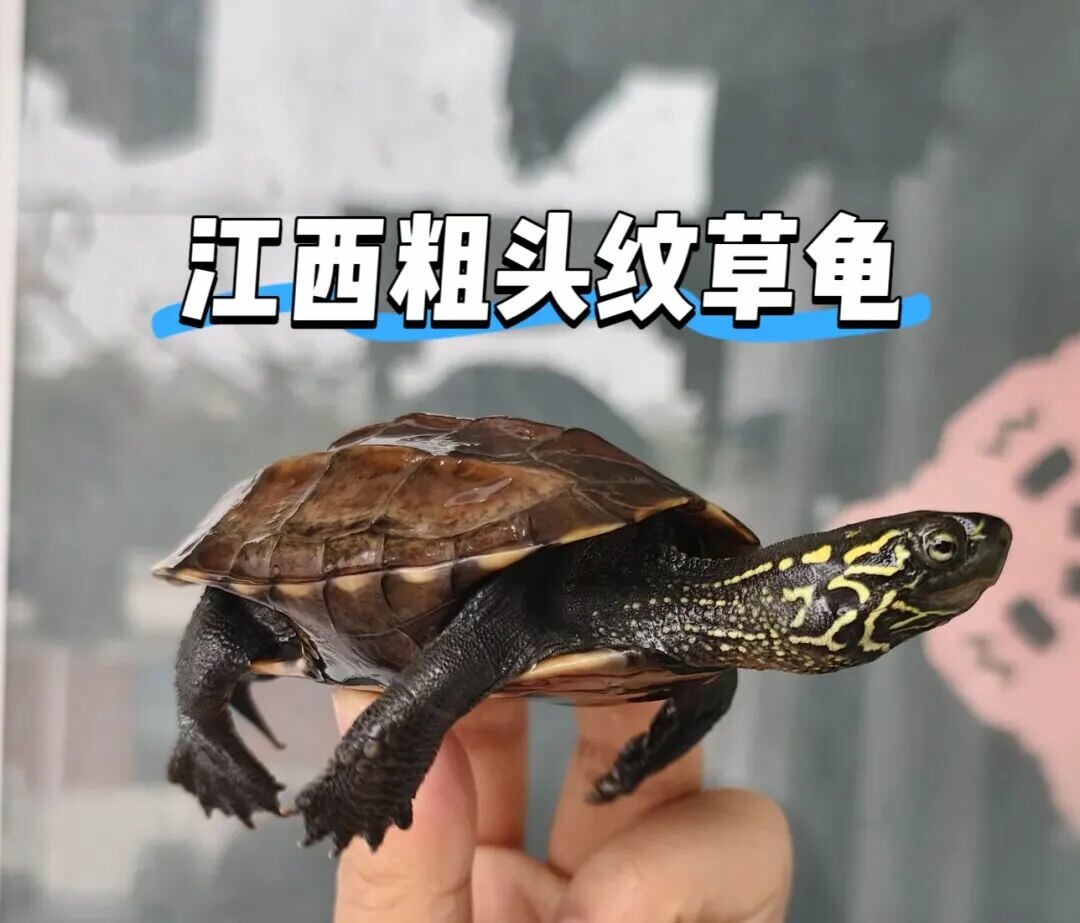
The Jiangxi Pond Turtle comes with a natural “vintage filter.” Its carapace is mostly dark brown, even with a hint of dark red, as if dyed by the red soil of the mountains. Many individuals are also covered in natural “water rust” (patterns formed by algae growth), looking from a distance like an old turtle shell buried in the earth, exuding a sense of mystery. Its head stripes are of the “rugged style”: the dark brown stripes are thick and straight. This “red and black combination” aesthetic is related to Jiangxi’s hilly terrain and hard water quality—the fast-flowing water and abundant humus cause the turtle shell to more easily precipitate dark pigments, and the head stripes are clearer to adapt to the mottled light and shadow of the mountain forests.
Anhui Pond Turtle: The Southern Anhui Beauty with a “Reddish Charm”
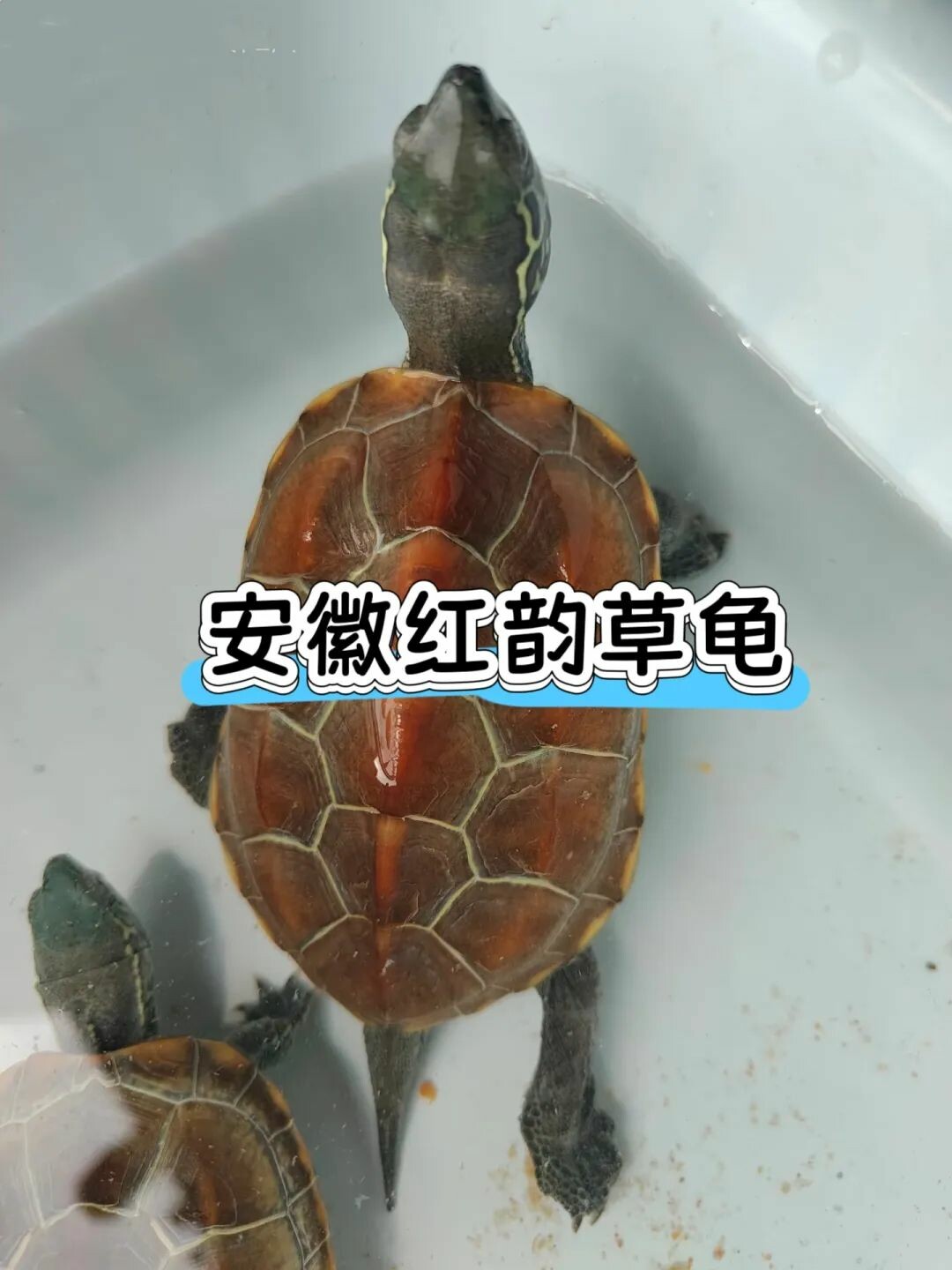
The Anhui Pond Turtle hides a touch of “cinnabar color.” The base color of its carapace is reddish-brown, with uniform, fine, deep lines, resembling a meticulously crafted wood carving. Some individuals also have a faint layer of water rust, creating a reddish-brown hue, reminiscent of the brick carvings in the ancient villages of Southern Anhui. Its “big-headed” individuals are also famous. Although the head proportion is not as exaggerated as the Hubei Pond Turtle’s, the head shape is more slender, and the head stripes are light red with yellow. Paired with the red-brown shell color, it exudes an air of “elegance.” This aesthetic is inseparable from the climate of Southern Anhui—with moderate temperature and humidity and rich vegetation, the turtle shell more easily develops a uniform reddish-brown color in a stable environment, and the lines are also more regular.
Sichuan Flat Pond Turtle: The Pebble that Blends into the Riverbed
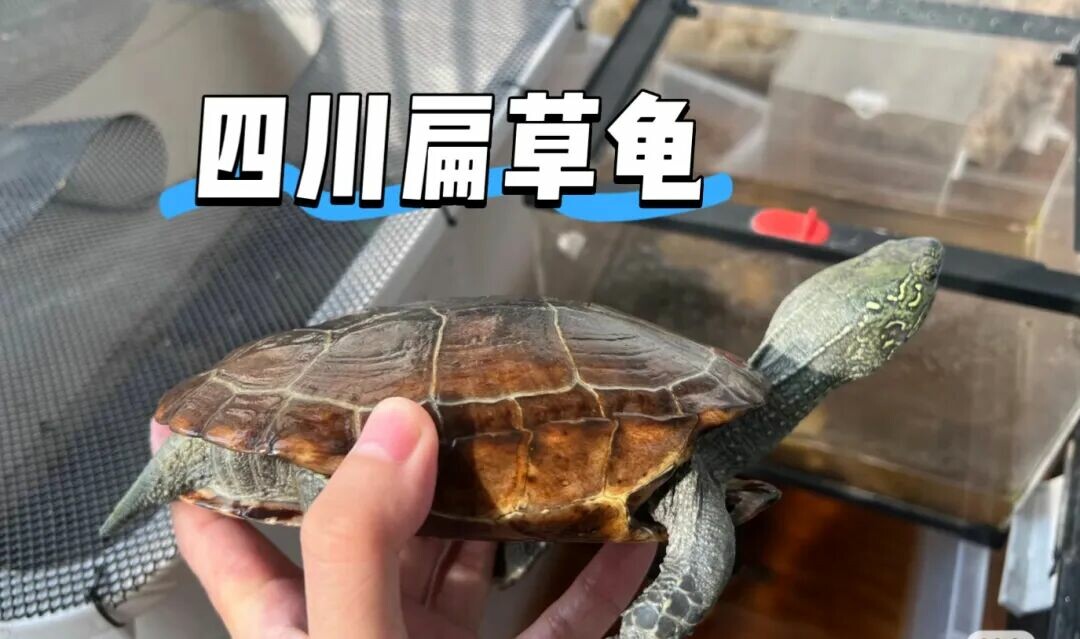
The Sichuan Flat Pond Turtle. Sichuan has many streams and shallows with moderately flowing water. The flat and round carapace reduces resistance, making it easy to navigate through aquatic plants; the continuous ridges enhance the shell’s hardness, allowing it to withstand collisions with rocks while cleverly blending into the mottled underwater environment. The Sichuan Flat Pond Turtle looks like a flat, round pebble picked from a riverbank, radiating an aquatic charm.
Guangdong Pond Turtle: The Southern Big Shot with an “Exotic Feel”
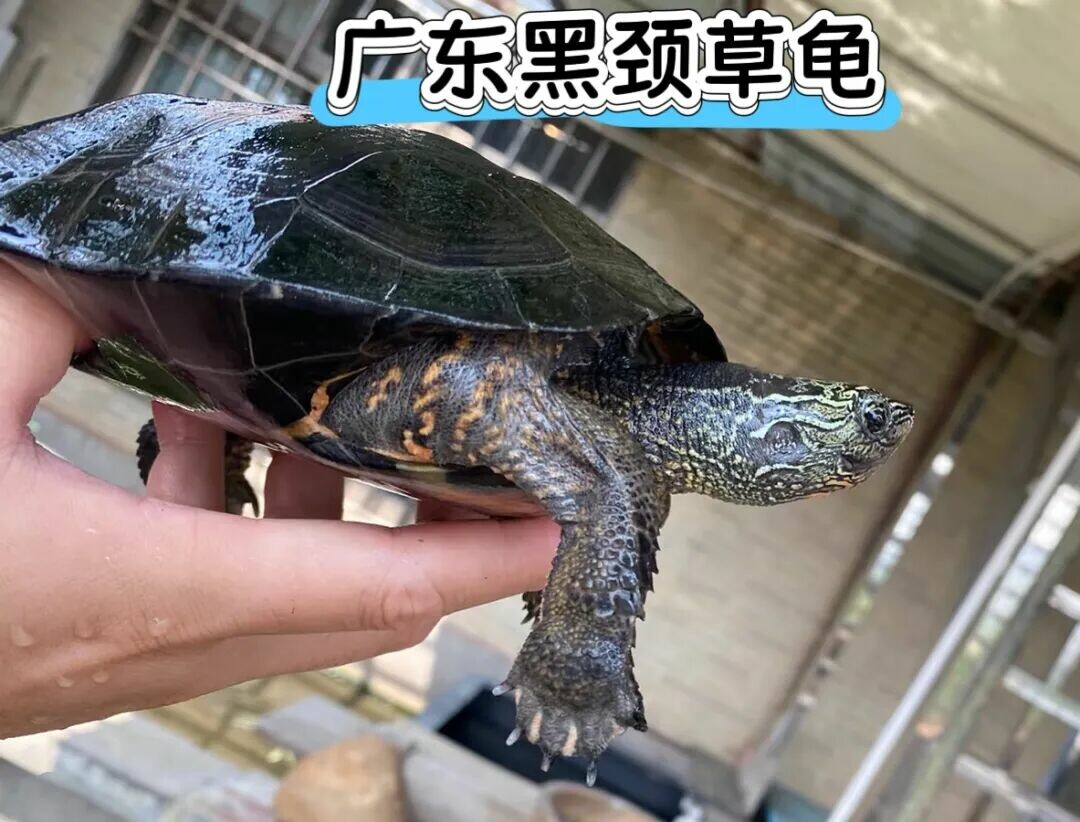
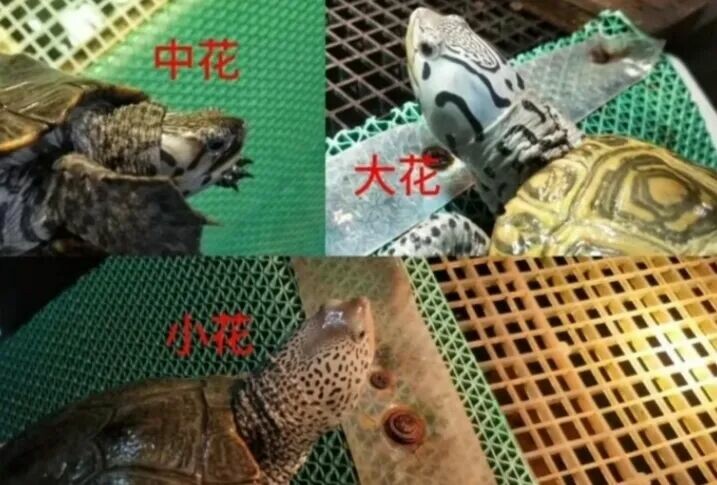
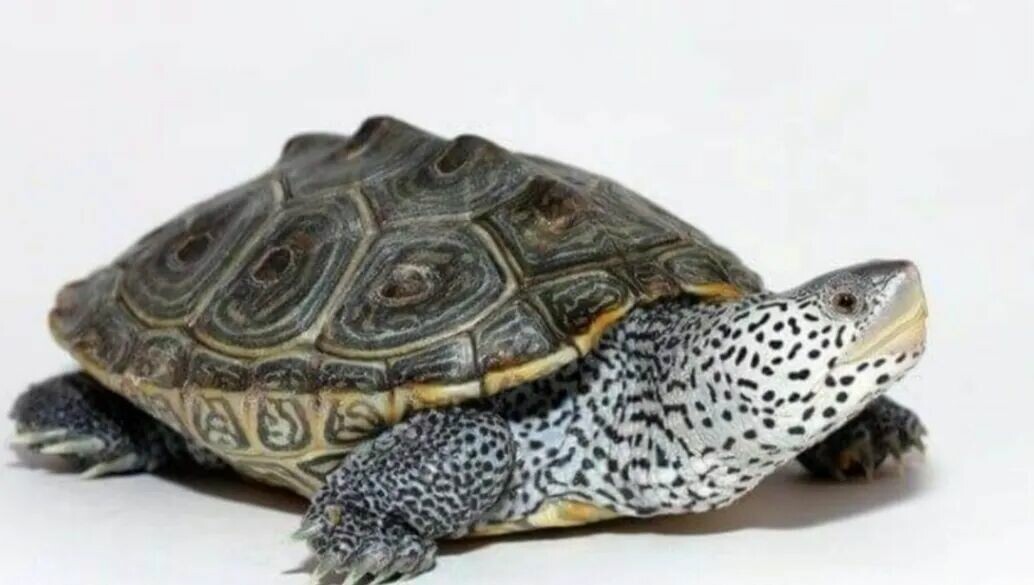
The Guangdong Pond Turtle (Black-necked Pond Turtle) is, strictly speaking, a closely related species to the pond turtle, yet it lives with a “sense of contrast.” Both males and females can become big-headed, especially the female turtles, whose heads are large and wide with black patches on the sides of their necks, as if wearing a “black scarf,” making them distinctly different from pond turtles in other regions. The Guangdong Pond Turtle’s shell is a dark brown color, and its head stripes are thick and sparse, exuding a “calm and commanding presence.” Due to its southern distribution, the Guangdong Pond Turtle is adapted to warm waters, grows quickly, and has a robust adult size. Coupled with its relative rarity, its price is higher, making it a “high-end target” for many hobbyists.
The “Survival Diary” Behind Regional Variations
Hubei’s knife-carved lines, Northern Jiangsu’s golden lines, Jiangxi’s red rust, Anhui’s red patterns…… these are all, in fact, the “survival diary” quietly written by pond turtles to adapt to different environments. The joy of keeping pond turtles perhaps lies in understanding the principle that the unique environment of a region nurtures its own unique turtles through these regional variations. You don’t need to be fixated on “which one is the best,” because every pond turtle carries the sunshine, water flow, and soil of its hometown on its back. Which region’s pond turtle do you like? When buying a turtle hatchling, you might as well take a quiet look at the shipping location and raise a turtle with its own regional characteristics.
Original article by 搬运工, if reproduced, please cite the source: https://www.kaipet.com/en/chinese-pond-turtle-comparison-6-major-varieties-understanding-regional-characteristics-aesthetics






Comments(2)
This article is truly eye-opening! Each pond turtle carries its hometown’s unique imprint. I’m curious, which regional characteristic do you find most appealing?
@CriticX:感谢 CriticX 的精彩评论!草龟的地域特色确实引人入胜。每种都因环境而生,各具独特美感,网站方认为其多样性正是最大的魅力。欢迎大家继续交流和分享各自的偏爱!