

When it comes to Red-eared Sliders, what’s everyone’s first reaction? “They’re everywhere,””nothing special,””cheap goods,””invasive turtle,””unkillable,””prone to skin rot,””prone to white eye disease”…… Actually, my first reaction is—it carries so many memories. Why do I say that? When I was a child, I really wanted to raise a turtle, but my family wouldn’t let me. Later, I traded good grades for the first turtle in my life, which was a Red-eared Slider. The Red-eared Slider holds so many memories for me.

Today, let’s have a good talk about how to raise a Red-eared Slider. I hope everyone can have a turtle full of stories and memories, and I hope it can accompany you for a little longer.
Care and Management of Red-eared Sliders
Introduction to Red-eared Sliders
To raise a Red-eared Slider well, you must first understand it. The Red-eared Slider is also known as the “Mississippi Red-eared Slider.” It is an aquatic turtle, and the carapace length of an adult is typically around 15-25 centimeters, with female turtles generally being larger than males. Their lifespan can reach 20-30 years.
How Much Water Do Red-eared Sliders Need?
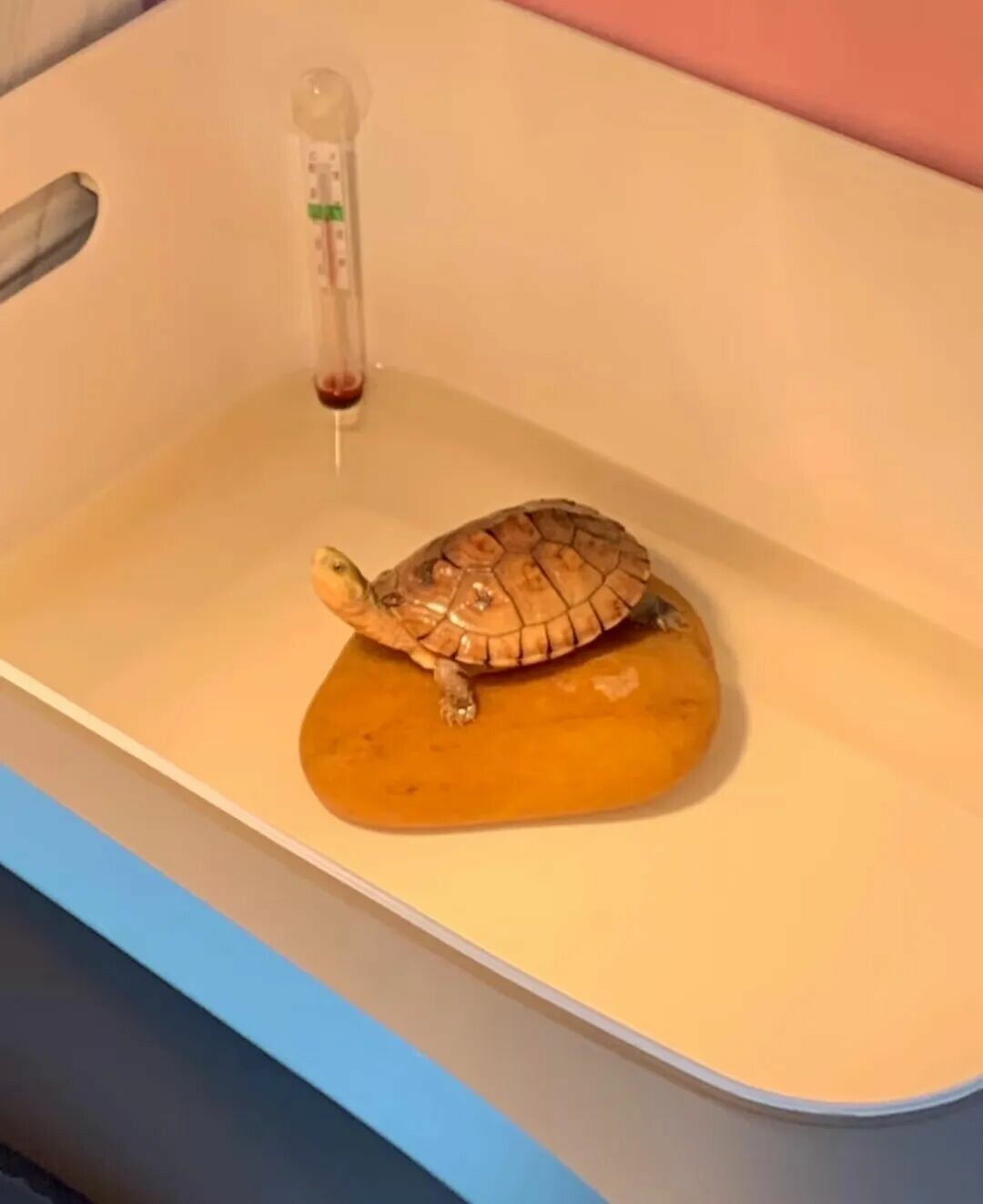
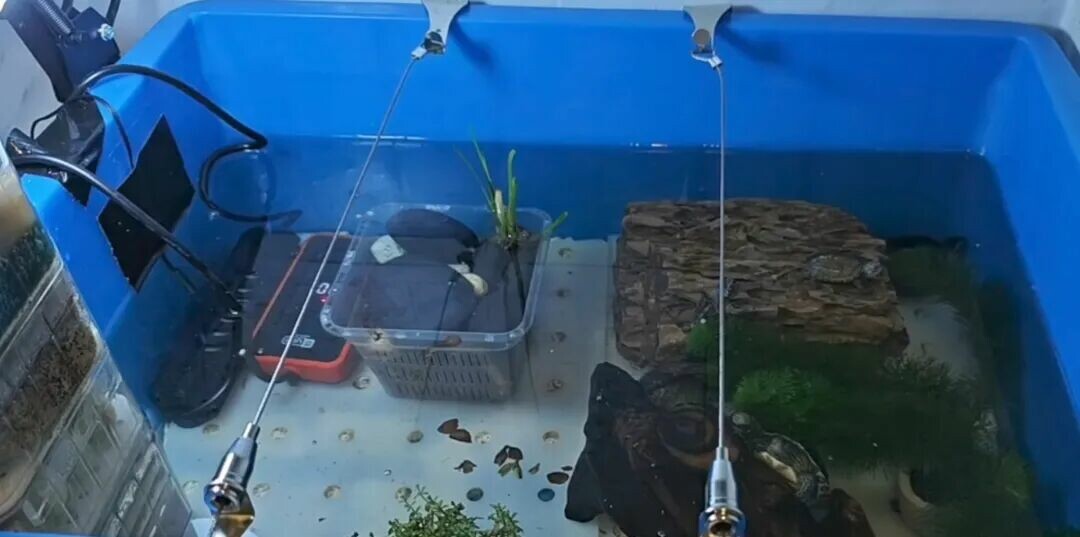
The water level for raising a Red-eared Slider at home can actually be quite flexible, but note that the water must at least cover the Red-eared Slider‘s carapace. Otherwise, if the water is too shallow, it can easily cause the shell to deform, which is detrimental to the Red-eared Slider‘s healthy growth. If you are using a bare tank setup, a suitable water level is one where the turtle can reach the surface to breathe by just slightly lifting its legs. For those keeping Red-eared Sliders in a deep water setup, you need to provide enough basking rocks so it can use them for support to reach the surface and breathe at any time. It is not recommended to keep juvenile turtles in deep water to avoid drowning due to lack of stamina.

What Do Red-eared Sliders Eat?
Red-eared Sliders are omnivorous turtles, which means they eat meat, vegetables, insects, and fruits. For example, meats: fish, shrimp, river snails, lean pork, chicken, loaches, earthworms, etc. Insects: crickets, grasshoppers, cicadas, centipedes, etc. Vegetables: lettuce, cabbage, water spinach, sweet potato leaves, etc. Fruits: bananas, apples, papayas, etc.
In short, when a Red-eared Slider is extremely hungry, it will eat anything edible it sees, although it has a preference for meat. It’s important to note: do not feed any food containing salt. Dried fish and dried shrimp from the market that contain salt should not be fed. Foods high in oil and sugar, such as cake and chocolate, should also not be fed. The food needs to be natural and additive-free. Ham sausages are not allowed. The simplest feeding method is to directly buy turtle food; everything else can be considered a “treat.” It is recommended to feed juvenile turtles once a day and adult turtles once every two to three days.

How to Interact
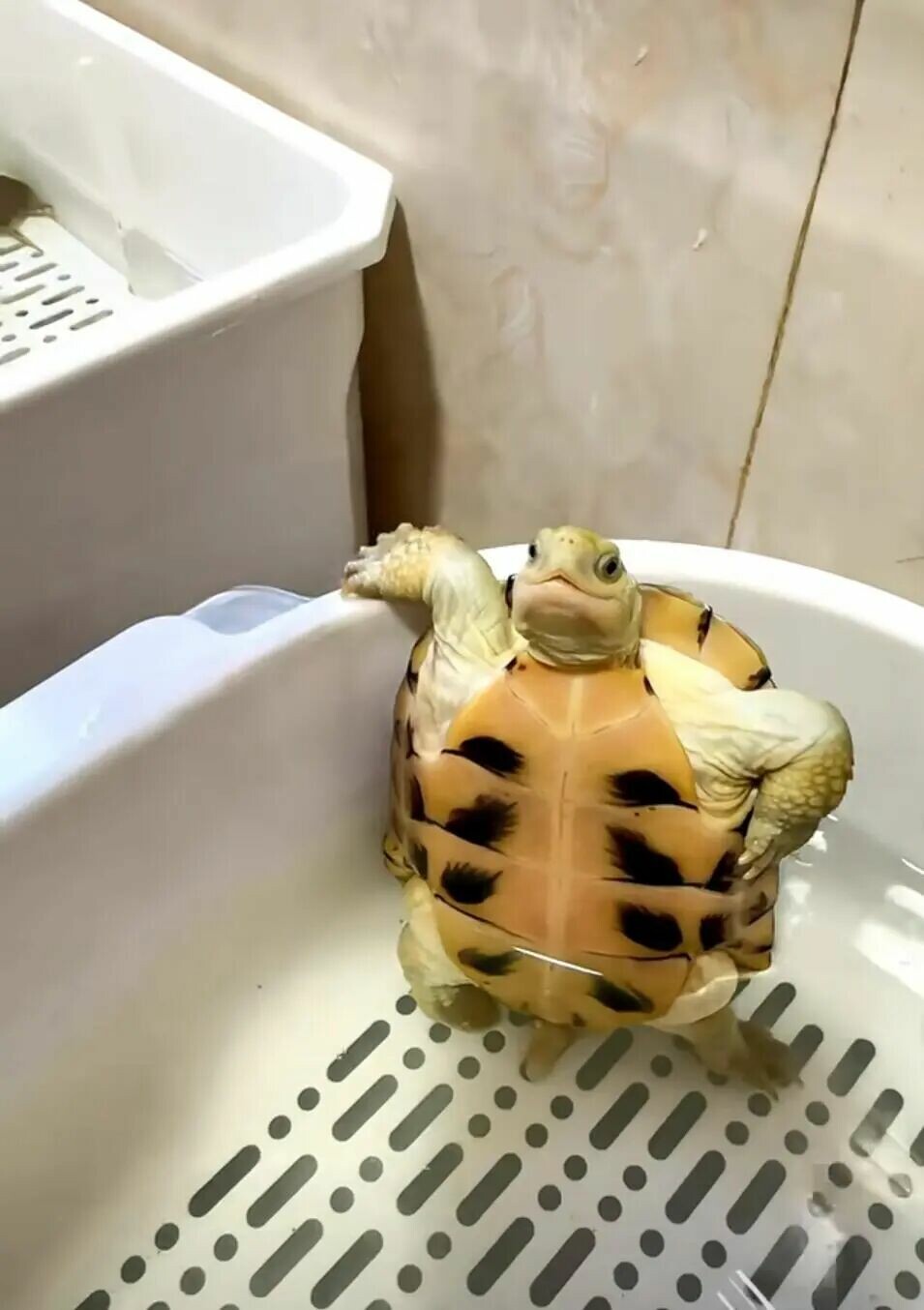
Anyone who has raised a Red-eared Slider knows that its interactivity is quite good. Mainly, the Red-eared Slider is a “little foodie”; it wants to eat when it’s hungry, so it gets very excited when its owner approaches. If you have an old turtle at home and want to make interactions more interesting, you can consider giving the Red-eared Slider a chance to freely leave its tank. This way, the Red-eared Slider can chase you on the ground to beg for food, allowing you to experience what it’s like to raise a tortoise.

Hibernation
Red-eared Sliders need to hibernate in the winter. You can use sand hibernation, which requires ensuring the sand’s moisture level is not too dry. Shallow water hibernation is also an option. During hibernation, the Red-eared Slider does not eat anything, so there is no need to feed it. Do not place it in an air-conditioned room; put it in a quiet, non-air-conditioned room instead, and do not disturb the Red-eared Slider.
Disease Prevention for Red-eared Sliders
The common ailments for Red-eared Sliders are white eye disease and skin and shell rot. These are mostly caused by poor water quality. Because Red-eared Sliders have a large appetite, are voracious eaters, and can eat and defecate a lot, this leads to deteriorating water quality. Therefore, it is essential to promptly clean the polluted water; prevention is very important. Pneumonia: The main symptoms are stretching its neck out long and breathing with its mouth open. Pneumonia is often caused by a cold resulting from large fluctuations in water temperature. In severe cases, nebulization therapy can be used. Enteritis: Manifests as diarrhea, soft and mucousy stool, and decreased appetite. It is mostly caused by feeding issues, such as overeating or indigestion due to low water temperatures. The key to preventing these diseases is to maintain clean water quality, keep the water temperature stable (suitable temperature is 25-30°C), and feed reasonably (avoid spoiled food, feed in fixed quantities). If any abnormalities are found, isolate the turtle immediately and take corresponding measures.
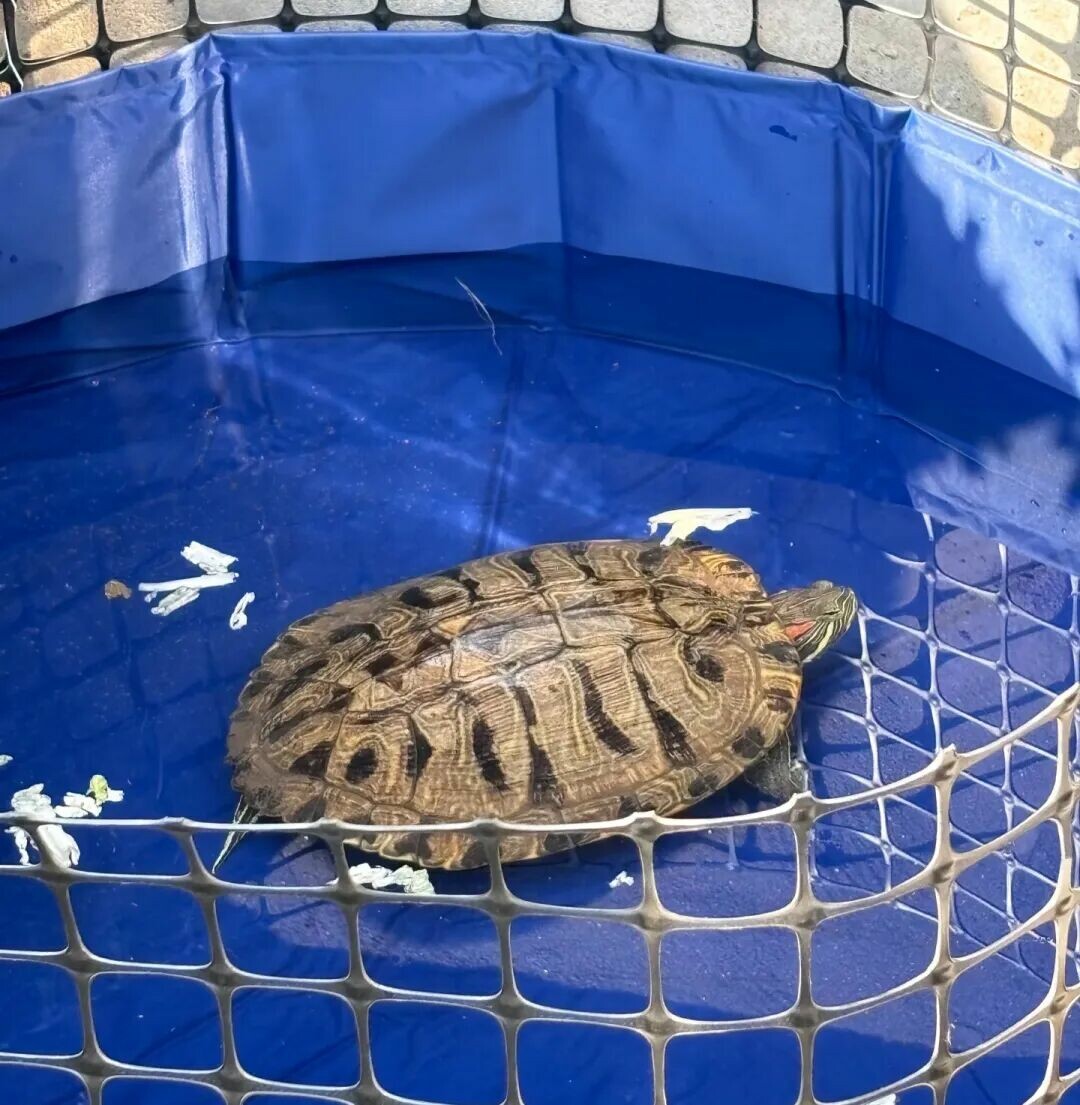
I have seen so many old Red-eared Sliders; some were bought by family members when they were children, others were gifts from a grandfather. What we’re raising isn’t just a turtle, but a beautiful emotional attachment! Note, the Red-eared Slider is an invasive alien species, so absolutely do not release it into the wild.
Past Related Article Recommendations
Teach you how to cure turtle’s shell rot, enteritis, and white eye disease without spending money—Forage these wild plants by the roadside to raise turtles for free? A list of 14 types of “natural live food,” more nutritious than turtle food. A must-read for turtle keepers—6 essential tips for raising Chinese Stripe-necked Turtles. A must-read for turtle keepers—6 essential tips for raising Chinese Pond Turtles. A must-read for turtle keepers—8 essential tips for raising Yellow-margined Box Turtles. A must-read for turtle keepers—9 essential tips for raising Yellow Pond Turtles. Avoid pitfalls when starting with turtles—A recommendation of 4 super hardy turtle species.
Original article by 搬运工, if reproduced, please cite the source: https://www.kaipet.com/en/raise-red-eared-slider-6-essential-tips-beginners-easily-raise-20-year-turtle





Comments(2)
Disease prevention is key! I’m curious about subtle early signs of pneumonia that beginners might overlook.
@CriticX:感谢您的提问!预防疾病确实非常重要。对于红耳龟肺炎,除了文中提到的伸长脖子张嘴呼吸,初期细微症状还可能包括食欲下降、精神不振或活动量减少。及时观察这些变化有助于早期发现。