

The intimidating presence of a behemoth and the impression of being a prehistoric monster—this is the most direct feeling the Florida Snapping Turtle and the Alligator Snapping Turtle give people. Keepers of snapping turtles are also perpetually faced with the choice of whether to raise a Florida Snapping Turtle or an Alligator Snapping Turtle. So, between these two snapping turtles, which one is the “King of Snapping Turtles” in your mind?
Characteristics of the Florida Snapping Turtle
The Florida Snapping Turtle, full name *Chelydra serpentina osceola*, is a reptile belonging to the genus *Chelydra* in the family Chelydridae.
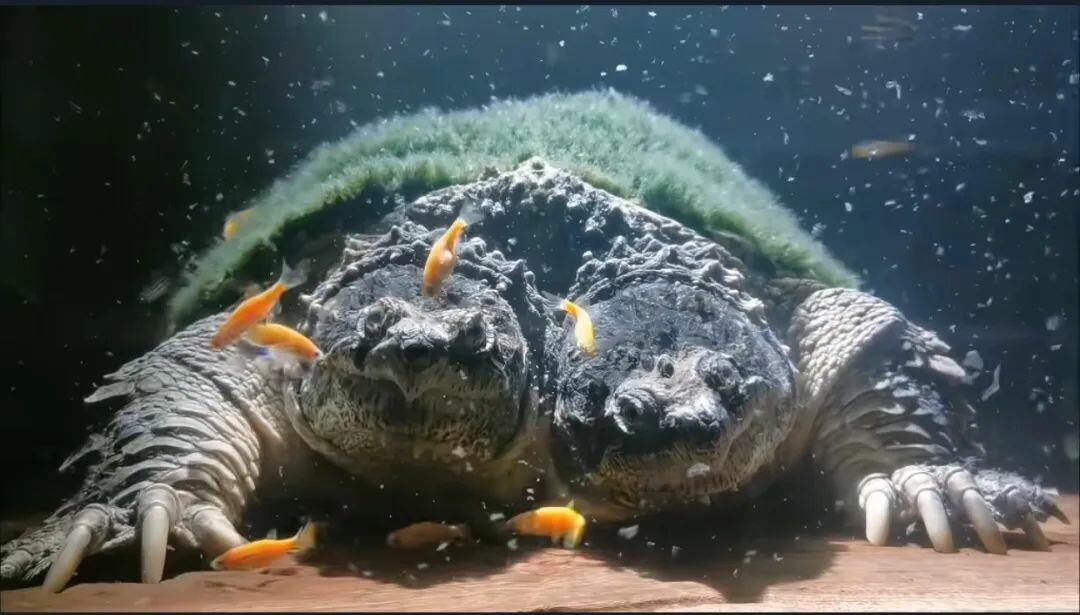
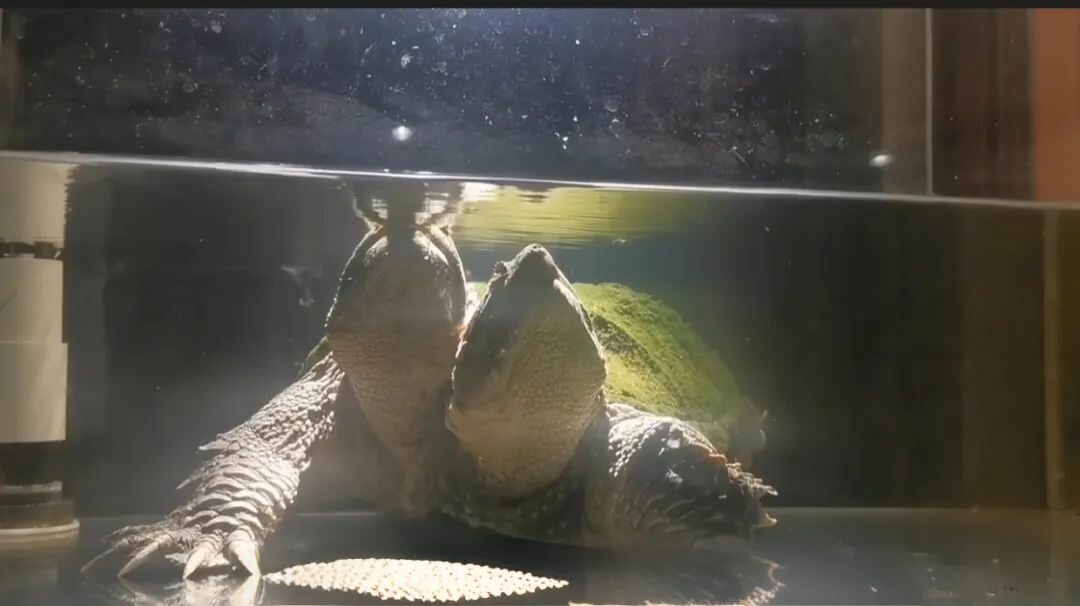
Appearance: The head is triangular, grayish-brown on top with scattered small black spots and several spiky tubercles. The sharp spikes on its head and neck are the most developed among the subspecies of the common snapping turtle. For an adult Florida Snapping Turtle in a tank, the dense head spikes create a more intimidating presence, which is one of its biggest selling points on the market today. The carapace is wide and short; adults have a brown carapace, while juveniles have a black one, with each scute having a spike-like protrusion. The plastron is pale yellow or white; juveniles have a black one. Its limbs cannot be retracted into the shell, and the ventral side has large scales. The toes and fingers have webbing and claws. The tail is long and covered with annular scales.

Characteristics of the Alligator Snapping Turtle
The Alligator Snapping Turtle, scientific name *Macrochelys temminckii*, is a reptile of the genus *Macrochelys* in the family Chelydridae, and it is one of the world’s largest freshwater turtles.
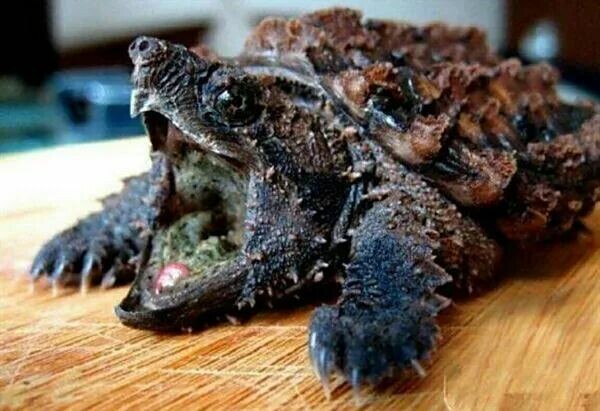
Appearance: The carapace can exceed 70 cm in length, ranging from brown to black, with three prominent longitudinal ridges (keels), and the edges of the scutes have serrated protrusions. The head is massive and triangular and cannot be fully retracted into the shell. Its mouth is beak-like and hooked, with an astonishing bite force of up to 455 kg. There are scattered yellow markings around the eyes. Its tongue has a bright red, forked, worm-like fleshy lure used to attract prey. The limbs are thick and powerful, with sharp, curved claws and webbed toes. The tail is long and thin, covered with annular scales, and forms spiky protrusions on its dorsal side.

Appearance Comparison
In terms of appearance, both have their pros and cons. Due to its head shape, the Florida Snapping Turtle gives the visual impression of having a large body and a small head. A Florida Snapping Turtle with poor appearance quality might have a triangular head that gives off a “mouse-like head” impression at first glance. In contrast, a high-quality Florida Snapping Turtle has a thick and noticeably curved beak, which is large and wide, and its facial features are more compact, highlighting its sharp eyes. This makes the head structure appear broad and thick with a beautiful curvature. Coupled with the dense head spikes, the overall visual impression shifts from “unimpressive” to dominating and majestic.
The Alligator Snapping Turtle is quite the opposite. Its head is extremely large, accounting for almost one-third of its body, and it cannot be fully retracted into its carapace. The front of its mouth is eagle-beak-like, with a sharp, hooked beak on the upper jaw that generates immense bite force when closed. It also has small, inward-pointing barbs on the inside of its lower jaw, giving it a natural advantage in appearance over the Florida Snapping Turtle. After all, its prominent mouth features are inherently intimidating to look at. However, compared to the sharp and piercing eyes of the Florida Snapping Turtle, the Alligator Snapping Turtle’s eyes are very small and located on the upper sides of its head. When viewed up close, the facial features and gaze of the Florida Snapping Turtle create a stronger intimidating presence, while overall, the physique of the Alligator Snapping Turtle is more aggressive.
Keeping and Interactivity
In terms of keeping, both the Florida Snapping Turtle and the Alligator Snapping Turtle possess a certain degree of aggressiveness. This indicates that neither is a timid species; rather, they are highly interactive (aggressive and prone to attack) turtle species. Due to their interactivity, there is a running joke in the turtle-keeping community:
A keeper has a total of 10 opportunities for close interaction with a Florida Snapping Turtle or an Alligator Snapping Turtle in their lifetime. As for why only 10, it’s because after 10 times, they’ll have no fingers left.
Comparing their interactivity in depth, the Florida Snapping Turtle is more active due to its hunting style. In addition to its thick beak, the Florida Snapping Turtle also likes to use its two ferocious front limbs to tear apart prey, providing a more impactful feeding experience.
The Alligator Snapping Turtle, on the other hand, prefers an ambush hunting style, aiming for a single fatal strike, thanks to the advantage of its eagle-beak-like mouth and the small, inward-pointing barbs on its lower jaw. This often results in the turtle just sitting with its mouth wide open during feeding, waiting until it is certain it can securely bite its prey before striking. This passive feeding method is undoubtedly slightly inferior to the impactful aesthetic of the Florida Snapping Turtle, which resembles a “monster tearing apart its prey.”
Original article by 搬运工, if reproduced, please cite the source: https://www.kaipet.com/en/florida-snapping-turtle-alligator-snapping-turtle-true-king-snapping-turtles










Comments(2)
This breakdown is fantastic! I’m personally drawn to the Florida’s fierce head spikes. Which turtle earns the ‘King’ title for you?
@CriticX:Thank you for your kind words! It’s great to hear you enjoyed the breakdown. The Florida’s head spikes certainly give it a unique look. As for the ‘King’ title, both turtles have compelling arguments based on their unique traits and intimidating presence, making the choice truly personal for each enthusiast!