

In the turtle-keeping community, there are always some “unique-looking” hybrid turtles that catch the eye. The hybridization of various turtle species, and the continued crossbreeding of their hybrid offspring, have caused turtles in the turtle market to lose their original characteristics.

Sometimes, when a fellow turtle keeper asks, “What kind of turtle is this?” you really have to take a close look. A turtle born from a hybrid that has been crossbred again can leave people baffled. That’s why I’m sometimes afraid of people asking me questions like, “What kind of turtle is this?”

Although hybridization is possible between turtle species, not just any two turtles can be paired up for successful crossbreeding; sometimes, “reproductive isolation” exists. The “King of Hybrids” in the turtle world—the Chinese Pond Turtle—is jokingly called the “master key” by hobbyists because it can hybridize with many other turtle species. Today, let’s dive into this topic.
The “Hybrid Family” of the Chinese Pond Turtle
Huacao Hybrid: The Most Common “Hybrid Star”
The Huacao hybrid (a cross between a Chinese Stripe-necked Turtle and a Chinese Pond Turtle) I have at home grew the fastest among its clutch mates. Furthermore, it’s not prone to shell rot or skin rot (diseases caused by bacterial or fungal infections of the carapace and skin), has never been sick, and is truly easy to raise.
Adult Huacao hybrids inherit the large size of the Chinese Stripe-necked Turtle, retain the gentle and smooth patterns of the Chinese Pond Turtle‘s carapace, and also feature the unique head stripes of the Chinese Stripe-necked Turtle. They have a gentle temperament and strong interactivity. They are highly adaptable and easy to keep alive.

Houzacao Hybrid: A Mix with a Natural Air of “Nobility”
The offspring of a cross between a Chinese Pond Turtle and a Yellow Pond Turtle (especially the “Xiaoqing” variant) can be called the “pinnacle of good looks.”
Their carapace often has faint “golden lines,” and the plastron has a lustrous yellow hue. The head patterns are brighter than those of a Chinese Pond Turtle. They possess the delicateness of the Yellow Pond Turtle and the steadiness of the Chinese Pond Turtle, and are often mistaken for a “rare variety” by novices.

Heizacao Hybrid: The Understated “Ink-black Beauty”
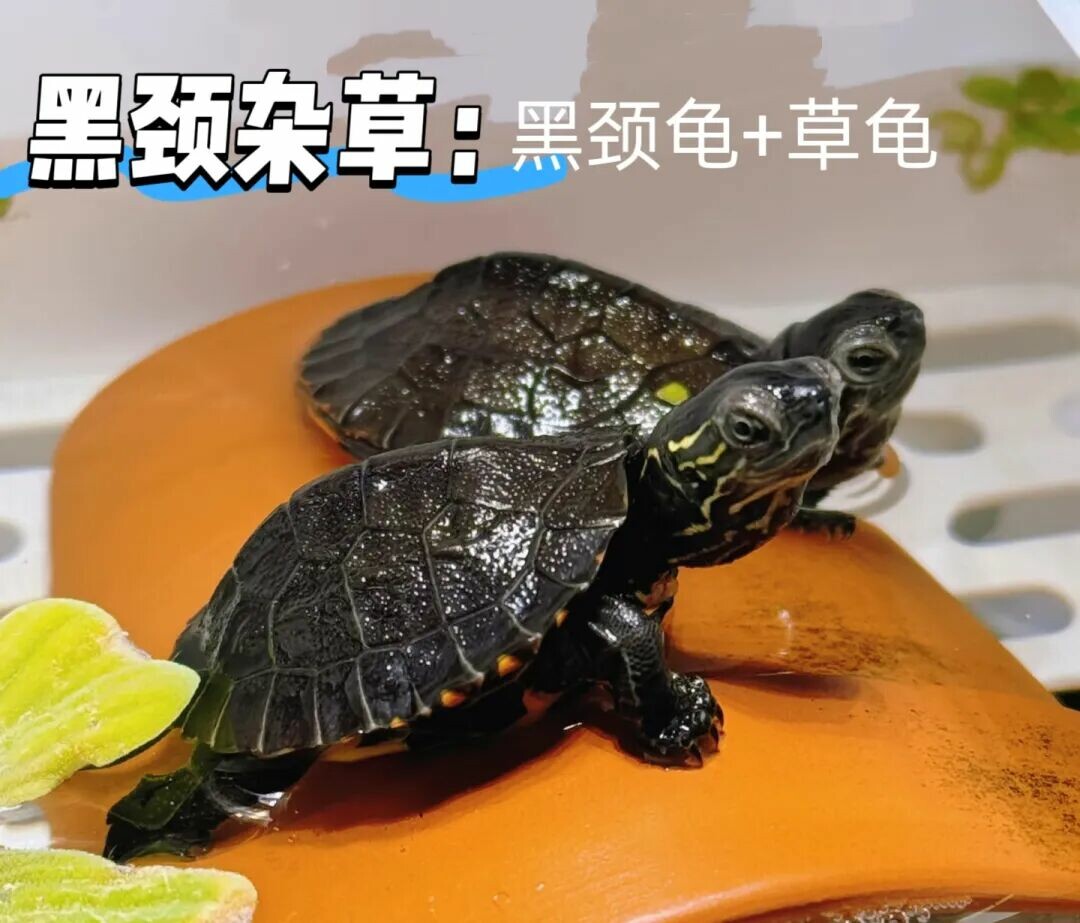
The offspring from a cross between a Chinese Pond Turtle and a Black-necked Pond Turtle has a natural “sophisticated look.”
As juveniles, they look like they are wearing a Chinese Pond Turtle‘s shell, but as they grow, their necks may reveal the unique ink-black color of the Black-necked Pond Turtle. Their skin is darker, and they have a calm demeanor, making them a “niche item” sought after by many enthusiasts.
Yuanzacao Hybrid: A Powerful Combination
The offspring from a cross between a Yellow-margined Box Turtle and a Chinese Pond Turtle. The Yellow-margined Box Turtle is a very popular species in the turtle community, with both its looks and interactivity being top-notch. The Yuanzacao hybrid‘s personality is inherited from the Yellow-margined Box Turtle, with first-class interactivity. It also inherits the semi-aquatic, semi-terrestrial survival instincts of the Yellow-margined Box Turtle.
Therefore, raising a Yuanzacao hybrid also requires a setup with a terrestrial environment. As juveniles, Yuanzacao hybrids aren’t that striking, but they become more beautiful as they grow.

The price for hatchlings is between 700 and 800 (RMB, approx. $97-$110 USD), which is quite expensive. In terms of looks, I feel they aren’t as beautiful as a Yellow-margined Box Turtle, but there are still plenty of people who like them.
Anzacao Hybrid: Not So Timid
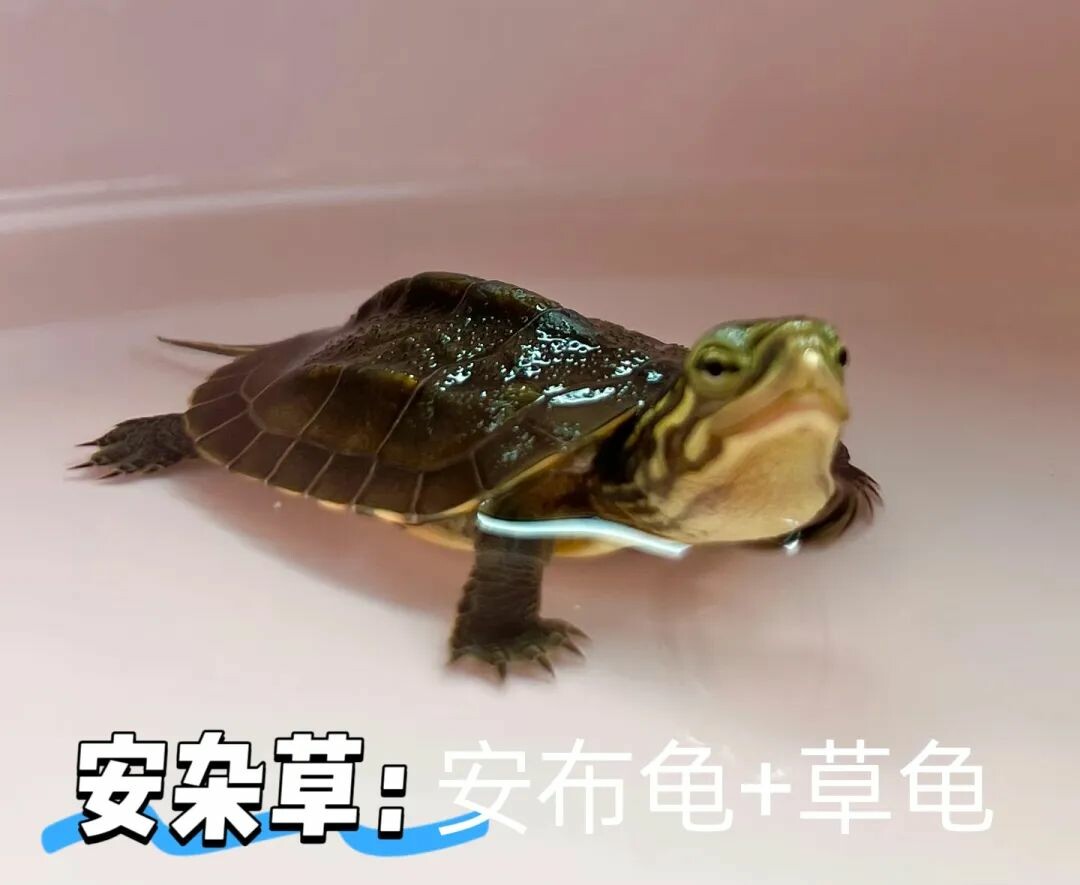
The offspring of a cross between an Amboina Box Turtle and a Chinese Pond Turtle. The Amboina Box Turtle is a rather timid box turtle. The offspring from the cross with a Chinese Pond Turtle inherits the boldness of the Chinese Pond Turtle, making it a good combination as well.
Rizacao Hybrid
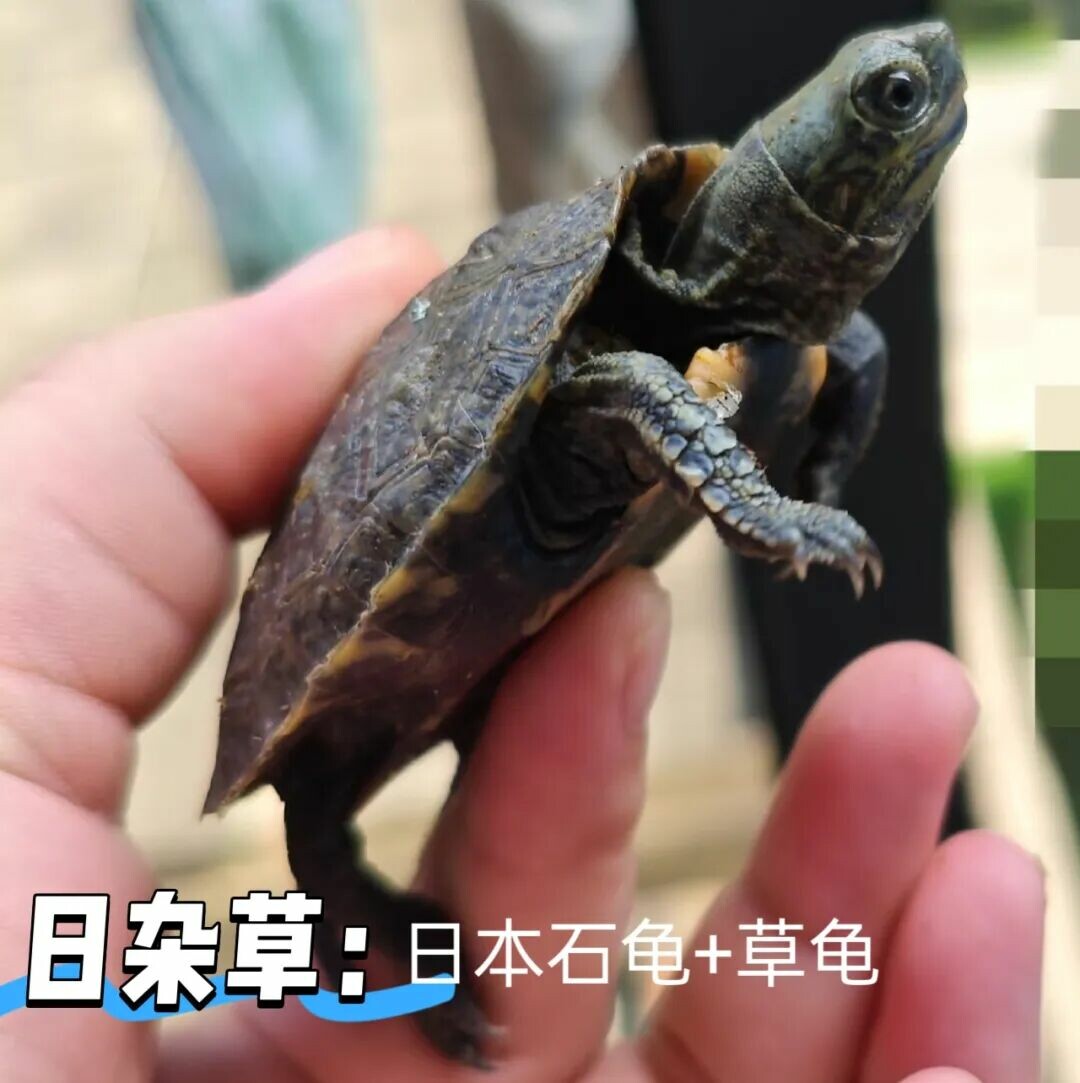
The offspring of a Japanese Pond Turtle and a Chinese Pond Turtle.
The Chinese Pond Turtle has strong tolerance to its environment, and the Japanese Pond Turtle is also a highly adaptable aquatic turtle. The offspring of their cross usually inherits strong environmental adaptability, with a certain tolerance for fluctuations in water quality and temperature, making them relatively easy for beginners to raise.
They have a gentle personality and good interactivity.
The frequent appearance of Chinese Pond Turtle hybrids is actually the dual result of “natural laws” and “human intervention.”
Driving Factors and Risks of Chinese Pond Turtle Hybridization
Some hybrid turtles, due to their unique appearance, are hyped by sellers as “rare varieties,” which stimulates intentional hybridization.
Although hybrid turtles are beautiful, there are quite a few “pitfalls” behind them, which beginners should be especially aware of:
- Health Risks: Hybridization may activate recessive pathogenic genes. For example, a breeder’s third-generation hybrid turtles all collectively suffered from Metabolic Bone Disease (MBD), and the treatment costs far exceeded the purchase price of the turtles.
- The Market is Murky: Be careful not to fall for “schemes.” There was a case where someone colored a common Huacao hybrid to pass it off as a Golden-headed Box Turtle worth hundreds of thousands of yuan, and beginners can be easily deceived.
- Genetic Stability: The genetic stability of hybrid turtles can still vary among individuals, so it’s necessary to monitor their health status during husbandry.
- Avoid Releasing into the Wild: Avoid releasing them into the wild to prevent impacting native ecosystems.
Non-Hybrid Variation Types of the Chinese Pond Turtle
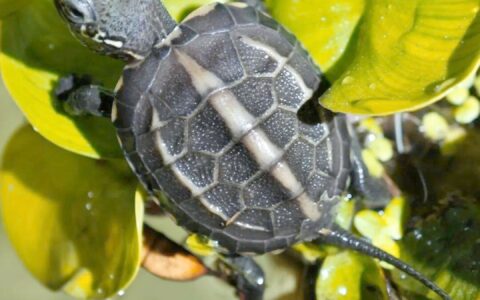
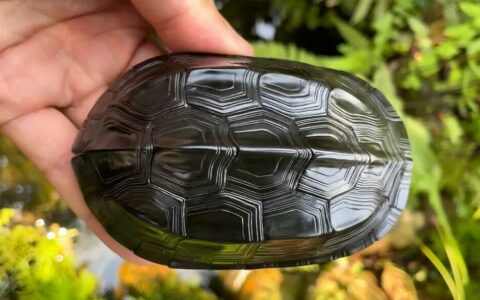
Besides the various hybrid Chinese Pond Turtles, there are other classifications of Chinese Pond Turtles, such as the Albino Chinese Pond Turtle, Tiger-striped Chinese Pond Turtle, Patterned Chinese Pond Turtle, etc. These Chinese Pond Turtles are not the result of hybridization but are more likely due to mutation.
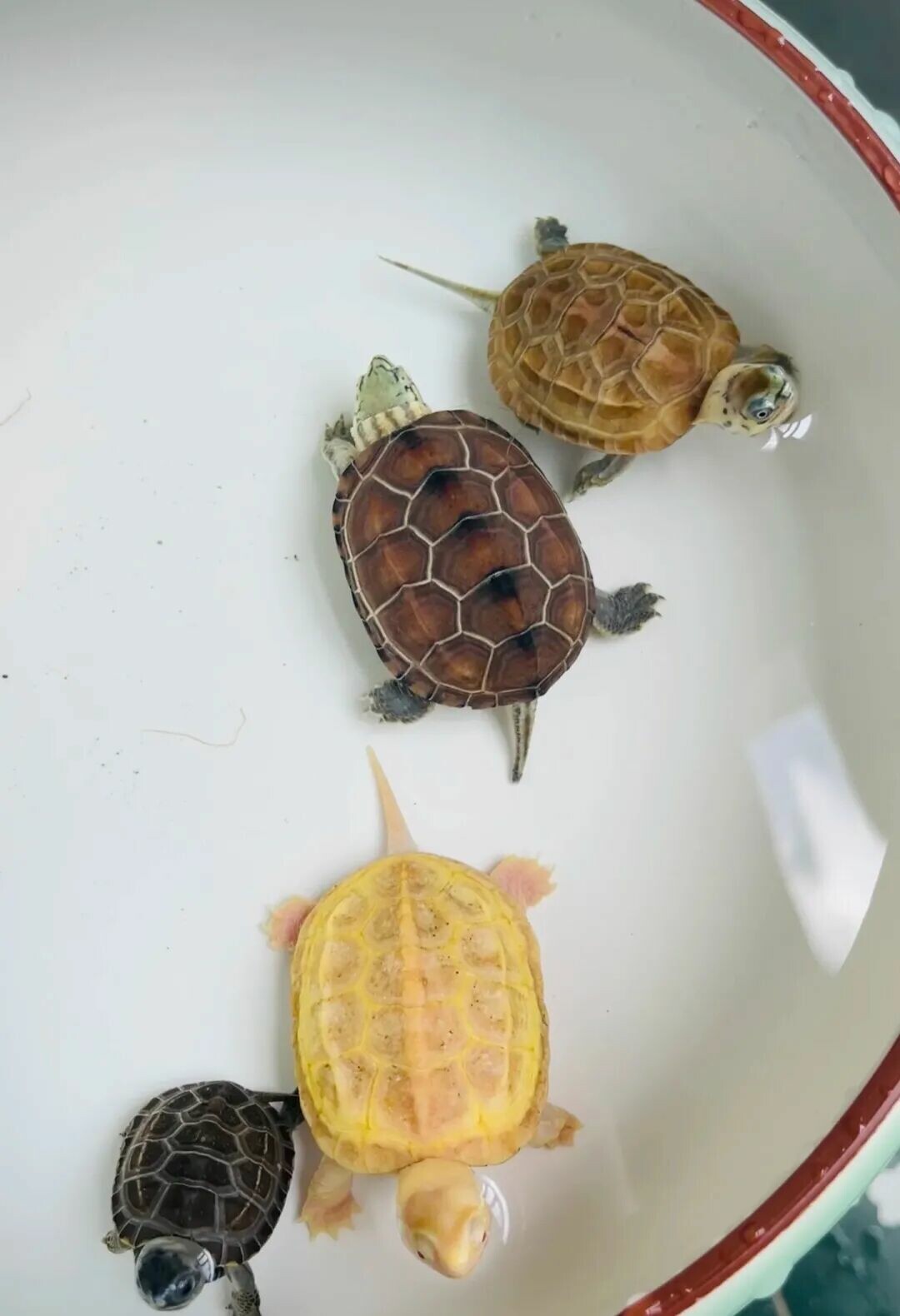
For example, the common Tiger-striped Chinese Pond Turtle is a naturally occurring variant individual of the Chinese Pond Turtle, not a product of hybridization.
The patterns on its carapace or head exhibit a unique form similar to “tiger stripes.” This is a difference in appearance caused by genetic mutation. Essentially, it is still a purebred Chinese Pond Turtle, just with a special appearance, and is therefore favored by some enthusiasts.
Attitude Towards Hybrid and Mutant Chinese Pond Turtles
If you just want to keep an “aesthetically pleasing” pet, you could try a rare hybrid turtle.
However, don’t blindly believe claims that “hybrid turtles will appreciate in value.”A “rare hybrid species” hyped to 30,000 yuan (approx. $4,138 USD) last year might drop to 300 yuan (approx. $41 USD) this year.
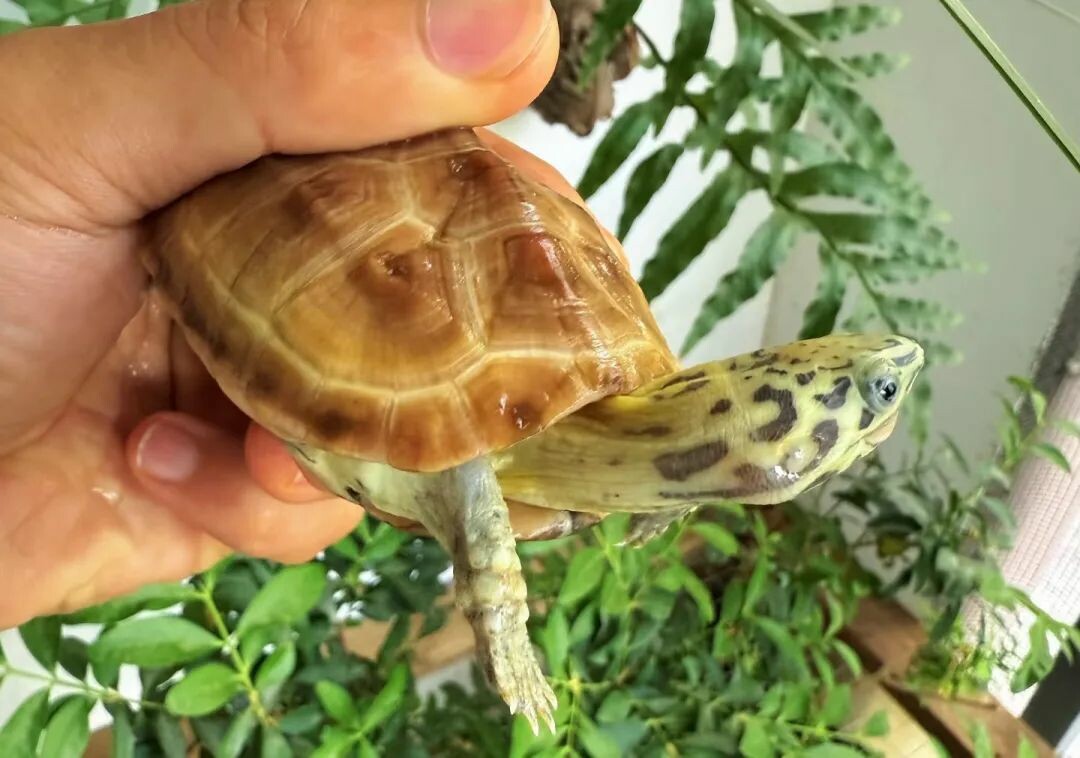
Ultimately, the value of a hybrid turtle doesn’t lie in its “rarity,”but in whether you truly like it. After all, the joy of keeping turtles has never been about “showing off status” with a certain species, but about watching it crawl slowly and grow up healthy every day.
It’s true what they say: all roads in turtle keeping lead to the Chinese Pond Turtle! From the regional variations of the Chinese Pond Turtle to its hybrids and mutations, there’s enough for us to study for a long time.
What’s the most special hybrid turtle you’ve ever seen? Let’s chat in the comments section.
Original article by 搬运工, if reproduced, please cite the source: https://www.kaipet.com/en/chinese-pond-turtle-king-hybrids-hybrid-offspring-recognize








Comments(2)
Great insights on CPT hybrids! I’m curious, have you encountered any unexpected health issues with your own hybrid turtles?
@CriticX:Thank you for your comment, CriticX! The article’s author mentioned their Huacao hybrid has been very healthy. While their specific turtle hasn’t faced issues, the post does emphasize the importance of monitoring hybrid turtles for potential health risks. Continued care is key!