

Melanism (the phenomenon of melanin deposition throughout the body of a male Chinese Pond Turtle after reaching sexual maturity) is a phenomenon caused by hormonal changes in male turtles after they reach sexual maturity. It is a unique rite of passage for male turtles; female turtles do not experience melanism. Of course, not all male Chinese Pond Turtles will become melanistic. Melanism is the result of genetics, environment, and feeding. It cannot be forced, so you can only follow my guide to learn the scientific methods to increase the probability.
The 3 Core Prerequisites for Melanism
Melanistic Genes are the Foundation
First, the turtle itself needs to carry the melanistic gene. The gene is the seed of melanism; without this foundation, all your efforts in raising it will be all for naught.
“Dragons beget dragons, phoenixes beget phoenixes, and the son of a mouse knows how to dig holes.”
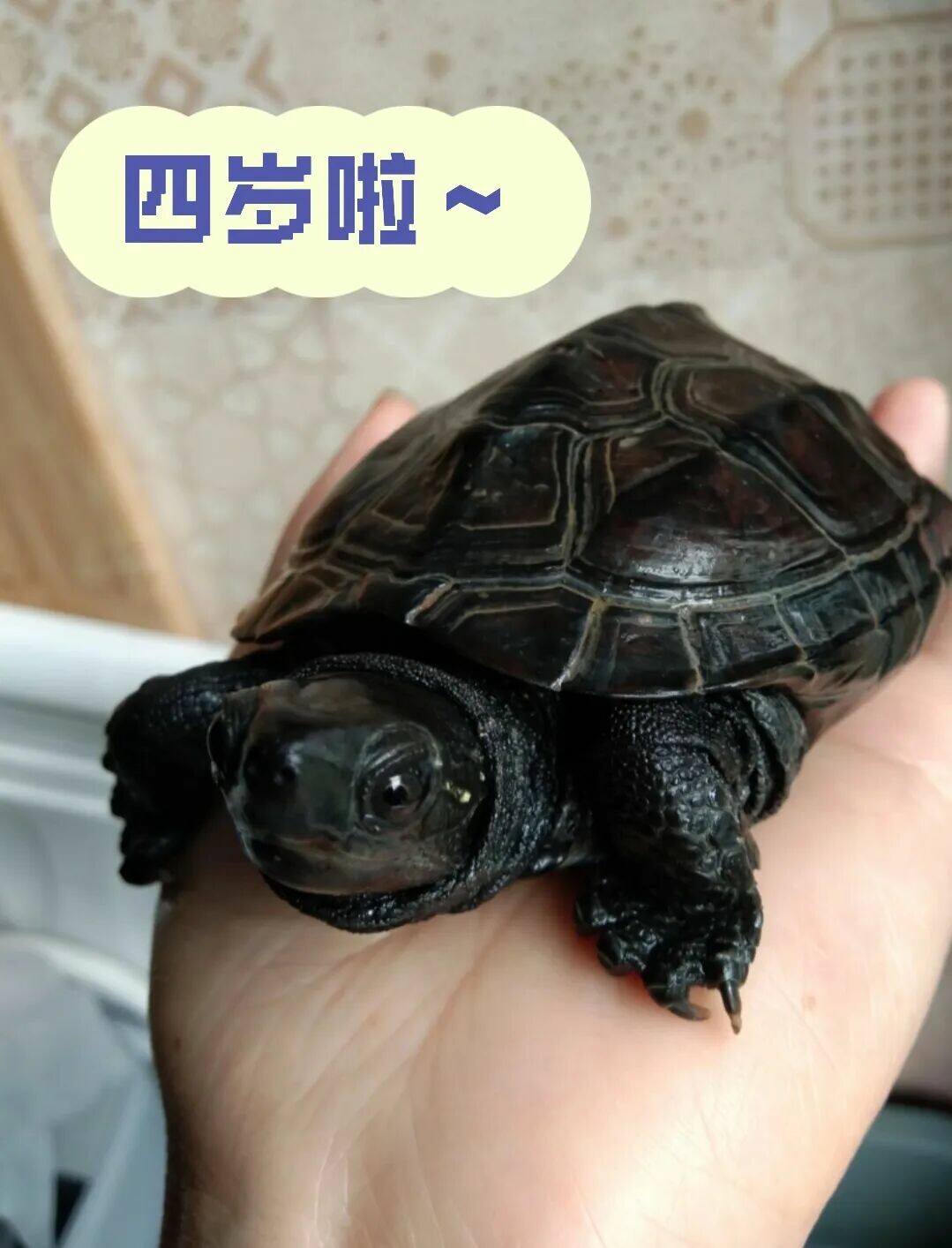
Give priority to the offspring of melanistic turtles. When selecting a juvenile turtle, you can choose a male whose iris is black instead of the usual yellow-green, and whose head patterns are lighter. Based on personal experience, the probability of melanism is higher for these.
Follow the Natural Growth Cycle
The natural growth cycle requires waiting for the male turtle to reach sexual maturity, when its testosterone (a steroid hormone, primarily secreted by the testes in males) levels rise, for the process to begin. Using a heating rod for constant temperature rearing too early will cause the turtle to “only grow in size, not maturity,” which can actually delay or even prevent melanism. So, let it hibernate when it’s supposed to hibernate.
Provide a Suitable Environment
A suitable environment, with ample sunlight, appropriate temperatures, and good water quality, can promote calcium absorption and enhance melanin deposition in the turtle. This will promote coloration, making the turtle’s body shape and color more beautiful. This is also the key area where we can apply human intervention.
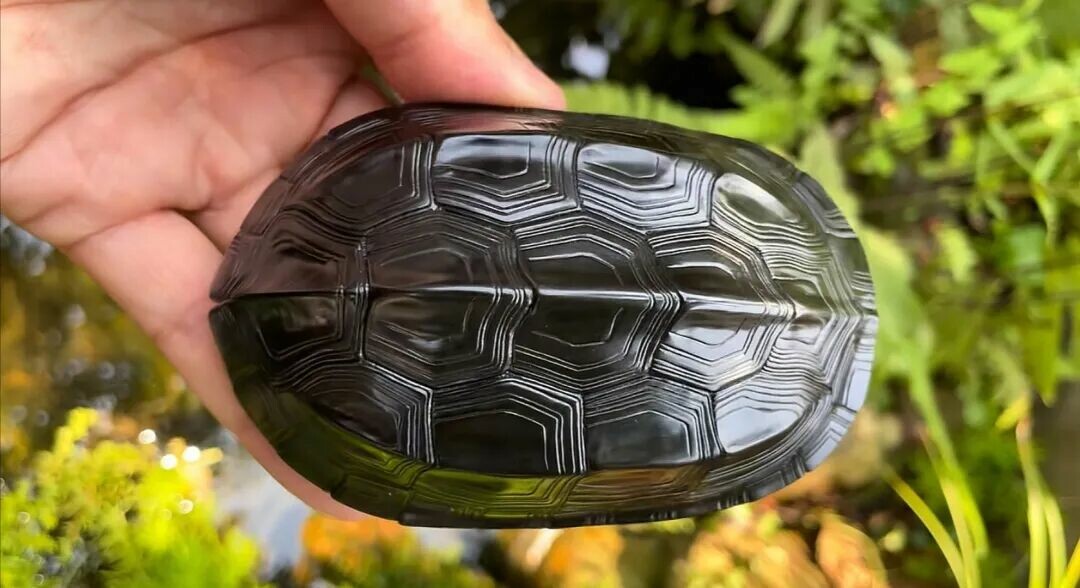
A Practical Guide to Cultivating a ‘Black Jade General’
The Environment Should Be ‘Rough’, Not Too ‘Pampered’
Simulate natural temperature variations. It’s not recommended to use a heating rod in spring, autumn, and winter. You can let the turtle hibernate naturally, allowing it to experience natural temperature fluctuations. Temperature differences can stimulate the turtle’s endocrine secretion and promote sexual maturity.
Provide 2 – 3 hours of natural light daily. Sunlight helps the turtle synthesize Vitamin D3 (a fat-soluble vitamin whose main function is to regulate calcium and phosphorus metabolism), which promotes calcium absorption and also regulates hormones. It’s best to have a shaded area so the turtle can choose for itself.
Raising turtles in green water makes melanism more likely. The Chlorella (a type of single-celled green algae often used in aquaculture to stabilize water quality) in green water can stabilize the water body, reduce skin and shell rot, and provide a sheltered environment for the turtle, which alleviates stress—stress (a series of non-specific physiological responses of an organism to internal or external stimuli) will inhibit melanism.
Feeding Should Be Varied, Not Just Turtle Pellets
In terms of diet, there should be a balance of meat and plant-based foods. While feeding turtle pellets, you can also provide live food such as small fish, shrimp, and loaches. This not only supplements nutrition but also increases the turtle’s activity level, since they eat fish and shrimp naturally.
The Precursors of Melanism in Turtles
After reaching sexual maturity, the first sign is the iris turning from yellow-green to pure black. Next, the skin on the neck and limbs begins to lose its color, with patterns gradually disappearing and turning grayish-black. The patterns on the carapace slowly fade, changing from brownish-tan to a deep, dark green. The yellow patterns on the plastron will also gradually disappear, turning grayish-black, and the edges will start to darken. The entire process may take 2 – 3 years, or even longer. The key is to avoid frequent disturbances and let the turtle grow naturally in a quiet environment.
Original article by 搬运工, if reproduced, please cite the source: https://www.kaipet.com/en/complete-guide-melanism-chinese-pond-turtles-3-practical-steps-raise-imposing-black-jade-general


Comments(2)
Great guide! The ‘rough’ environment strategy is insightful. What are your specific methods for simulating natural temperature changes for melanism?
@CriticX:感谢您的肯定!关于模拟自然温度变化,我们建议主要通过让乌龟自然经历四季,例如在春秋季不使用加热棒,并引导其在冬季自然冬眠。保持其生活环境的自然通风与温度波动,就能很好地实现这一点。