

Slider-Type Turtles: The “Short-Lived Representatives” of the Turtle World
The commonly mentioned Slider-type turtles mainly include varieties such as Brazilian Turtles (Red-eared Sliders), Cooters (Donut Turtles), and Florida Red-bellied Cooters (Fire Turtles). These are currently popular starter turtles for beginners in the market. Most importantly, Brazilian Turtles are also the cheapest turtle species. However, Brazilian Turtles are also the shortest-lived turtles in the turtle world. Their natural lifespan generally ranges from 15 to 25 years. Even with expert professional care, their lifespan reaches 30 years at the very most.
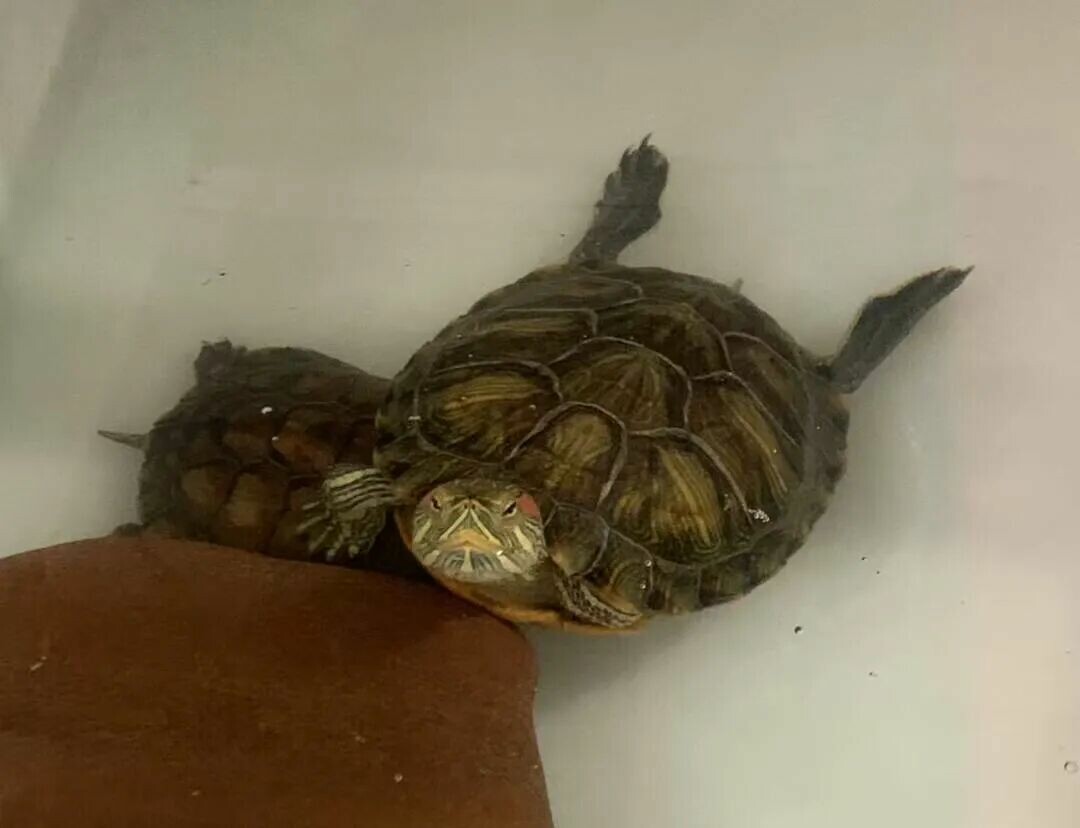
Brazilian Turtles are very sensitive to water quality. If beginners raise them directly using tap water, it will cause diseases such as White Eye Disease (a turtle eye infection characterized by swollen eyes and increased discharge) and Skin Rot (a turtle skin infection characterized by ulcerated, whitening skin). It is best to expose the tap water used for the turtles to the sun for a few days to remove chlorine; in addition, excessive feeding of meat will also cause harm to the Brazilian Turtle’s body.
If you want a Brazilian Turtle to live a long life, you must adhere to the care mode of “shallow water environment + regular water changes + plant-based feed as the primary diet.”
Some varieties like the Florida Red-bellied Cooter and Yellow-bellied Slider can also approach a lifespan of 30 years, barely reaching the “passing mark.”
The Mid-Range Lifespan Tier: Chinese Pond Turtles, Chinese Stripe-necked Turtles, and Asian Yellow Pond Turtles
Compared to the Slider-type turtles, China’s native Chinese Pond Turtles (Reeves’ Turtles), Chinese Stripe-necked Turtles, and Asian Yellow Pond Turtles belong to the “mid-range longevity tier.” The average lifespan of these three local turtles is generally around 30 years. If raised with meticulous scientific care, individuals breaking the 40-year mark are not uncommon. Some physically robust Chinese Pond Turtles and Asian Yellow Pond Turtles can even survive for more than 50 years. These three local turtles are excellent choices that balance being “easy to raise” with “longevity.”
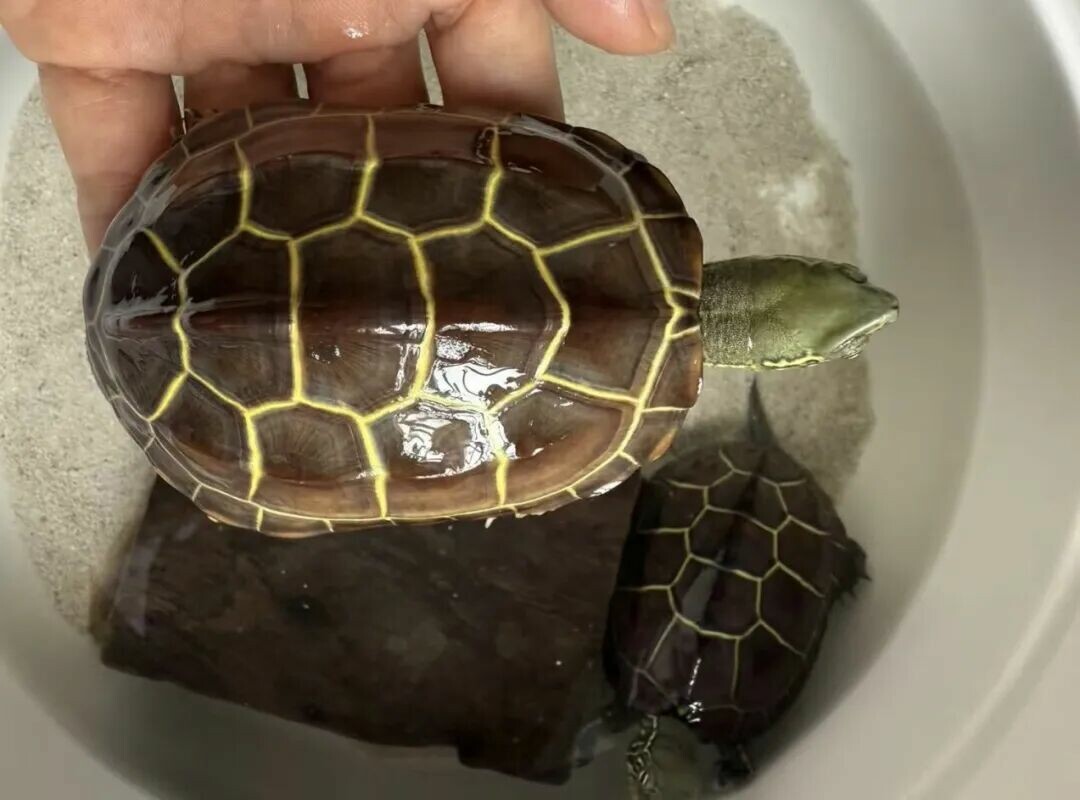
Care Points for Chinese Pond Turtles
Specifically regarding different varieties, differences in care details directly affect the upper limit of their lifespan. As the representative “National Turtle” (referring to common native Chinese turtle species, beloved for their adaptability and ease of care), the Chinese Pond Turtle has extremely strong adaptability to the environment. It can survive in both deep and shallow water environments, but attention must be paid to “hibernation care”—maintaining a hibernation environment of 5-10°C during winter dormancy can prevent repeated waking which consumes energy, and their lifespan will be significantly extended.
Care Points for Chinese Stripe-necked Turtles
Chinese Stripe-necked Turtles prefer to stay in warm waters of 25-28°C. However, attention must be paid to water cleanliness. The skin of the Chinese Stripe-necked Turtle is relatively sensitive; once the water quality is unclean, it will trigger skin rot. It is best for beginners to use a filtration system and change 1/3 of the water weekly.
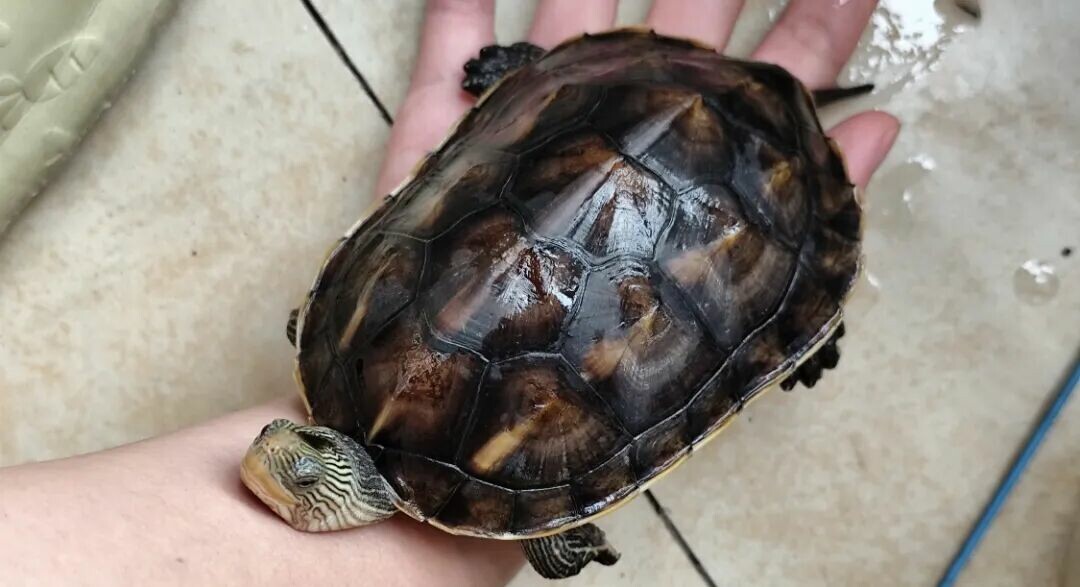
Care Points for Asian Yellow Pond Turtles
Asian Yellow Pond Turtles (divided into populations such as “Southern Rock” and “Little Green”; “Southern Rock” refers to one of the common strains of Asian Yellow Pond Turtle, characterized by yellow stripes on the sides of the head; “Little Green” refers to another common strain, usually referring to individuals with a greenish body color) have higher dietary requirements. It is necessary to balance animal protein (such as frozen shrimp, earthworms) with plant-based feed (such as pumpkin, lettuce). Avoiding a monotonous diet that leads to nutritional imbalance and maintaining a good dietary structure can allow their lifespan to easily exceed 35 years.
Snapping Turtles: Coexistence of Longevity and “Dominance”
Snapping turtles are the “longevity dark horses” (a metaphor for being unexpectedly long-lived) among the no-permit-threshold turtle species (referring to turtle species that national laws and regulations do not restrict individuals from keeping and do not require special permits). They are divided into two varieties: Common Snapping Turtles and Alligator Snapping Turtles, with a significant gap in lifespan between the two. The average lifespan of the Common Snapping Turtle is 40-60 years. After adulthood, their body length can reach 40-50 centimeters. Although the Common Snapping Turtle is smaller than the Alligator Snapping Turtle, its temper is by no means small; it has a fierce personality.
The Alligator Snapping Turtle is larger in volume than the Common Snapping Turtle, and its lifespan is also superior, generally able to reach 60-80 years. Some records show that artificially raised Alligator Snapping Turtles can even survive for more than 90 years, making them “longevity standouts” among non-permit turtle species.
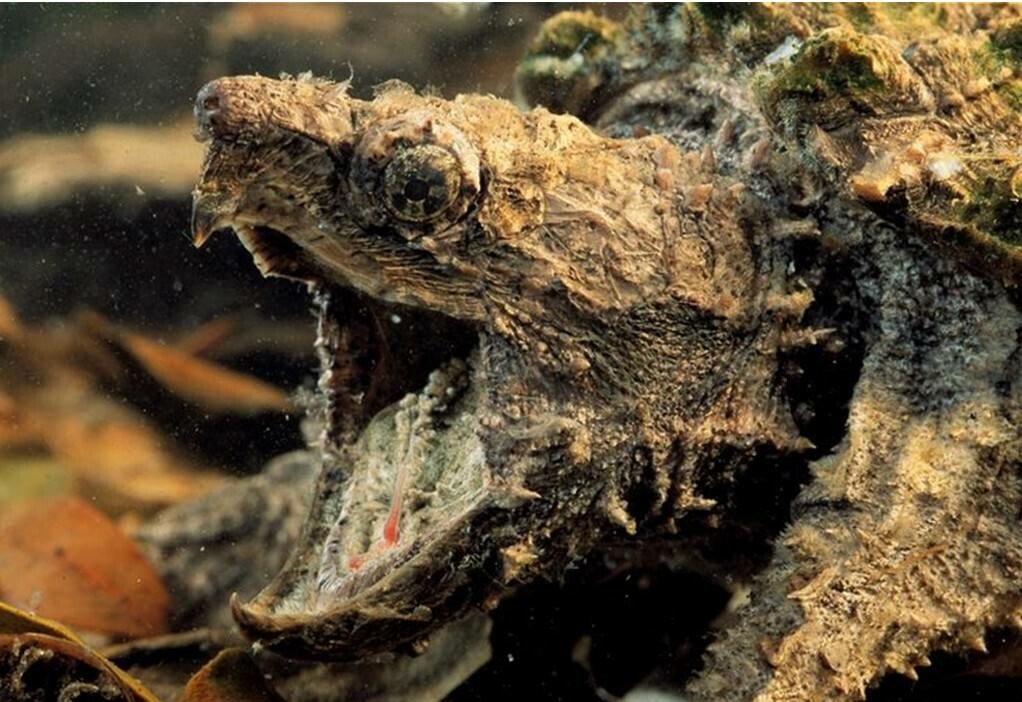
The Secret to Raising Snapping Turtles
The secret to raising Snapping Turtles for longevity lies in “space and diet control.” Whether it is a Common Snapping Turtle or an Alligator Snapping Turtle, their body size after adulthood is relatively large (Alligator Snapping Turtles can reach a body length of 70-80 centimeters). A breeding tank or pool at least 1.2 meters long must be provided so that small spaces do not lead to insufficient activity and developmental deformities. In terms of diet, Snapping Turtles are carnivorous. However, attention must be paid to feeding frequency; feeding hatchlings 2-3 times a week is sufficient, and adults should be fed once every 10-15 days. Otherwise, excessive feeding will make the Snapping Turtle obese, leading to burden on internal organs that affects lifespan.
Snapping Turtles are relatively sensitive to temperature. In winter, a heater is needed to maintain the water temperature at 20-25°C (hibernation is not recommended as they easily die from low temperatures). A stable temperature environment is the key to the longevity of Snapping Turtles.
Asian Giant Pond Turtles: Century-Level Longevity
Among all turtle species, the variety I like is the Asian Giant Pond Turtle (Asian Giant Turtle). Their average lifespan can reach 80 years, and some individuals can even survive for 90-100 years. They are a rare “near-century level” long-lived turtle species under the no-permit threshold.
The body size of the Asian Giant Pond Turtle is also the largest among many turtle species. An adult Asian Giant Pond Turtle can reach a carapace length of 50-60 centimeters, with the maximum breaking 80 centimeters, and a weight exceeding 30 kilograms.
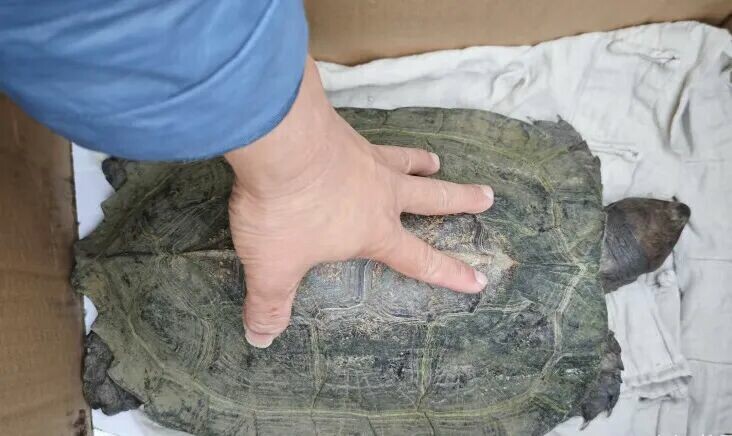
Key Points for Raising Asian Giant Pond Turtles
The focus of raising Asian Giant Pond Turtles lies in “environmental humidity and dietary structure.” As a semi-aquatic and semi-terrestrial turtle species, Asian Giant Pond Turtles need a habitat that combines “water and land.” The recommended ratio of water to land is 2:1. The land portion needs to be paved with moist coconut coir or moss to maintain 60%-70% humidity, which can prevent the skin from drying out and cracking.
In terms of diet, Asian Giant Pond Turtles are different from Alligator Snapping Turtles; the Asian Giant Pond Turtle is an omnivorous turtle that leans towards vegetarianism. Their daily diet should mainly consist of high-fiber plants (such as romaine lettuce, carrots, bananas), supplemented with a small amount of shrimp meat or turtle chow 1-2 times a week. Excessive intake of meat can easily trigger gastroenteritis.
In addition, Asian Giant Pond Turtles like warm environments. The suitable temperature is 26-30°C. Heating is required in winter to keep warm. If a stable temperature environment is maintained for a long time, its lifespan can easily reach the average level of 80 years.
Original article by 搬运工, if reproduced, please cite the source: https://www.kaipet.com/en/legal-turtle-keeping-species-lives-longest-asian-giant-pond-turtles-live-100-years




Comments(1)
I’m considering a Chinese Pond Turtle! Any specific tips for managing their hibernation care to ensure a long, healthy life?