

Recently, I heard that in the turtle hobbyist circle, Water Hyacinth, Water Lettuce, and Salvinia are hailed as the “Three Treasures of the Turtle Tank.” These aquatic plants are highly regarded for their powerful water purification abilities and rapid reproduction characteristics. The blooming purple flowers of the Water Hyacinth add a touch of color to the turtle tank.
This is indeed a fact; Water Hyacinth not only grows fast and has a developed root system, but its flowers are also beautiful. As an environmental embellishment for ornamental turtles, it really is quite nice. But are they really the “Three Treasures of the Turtle Tank”? Something feels a bit off.
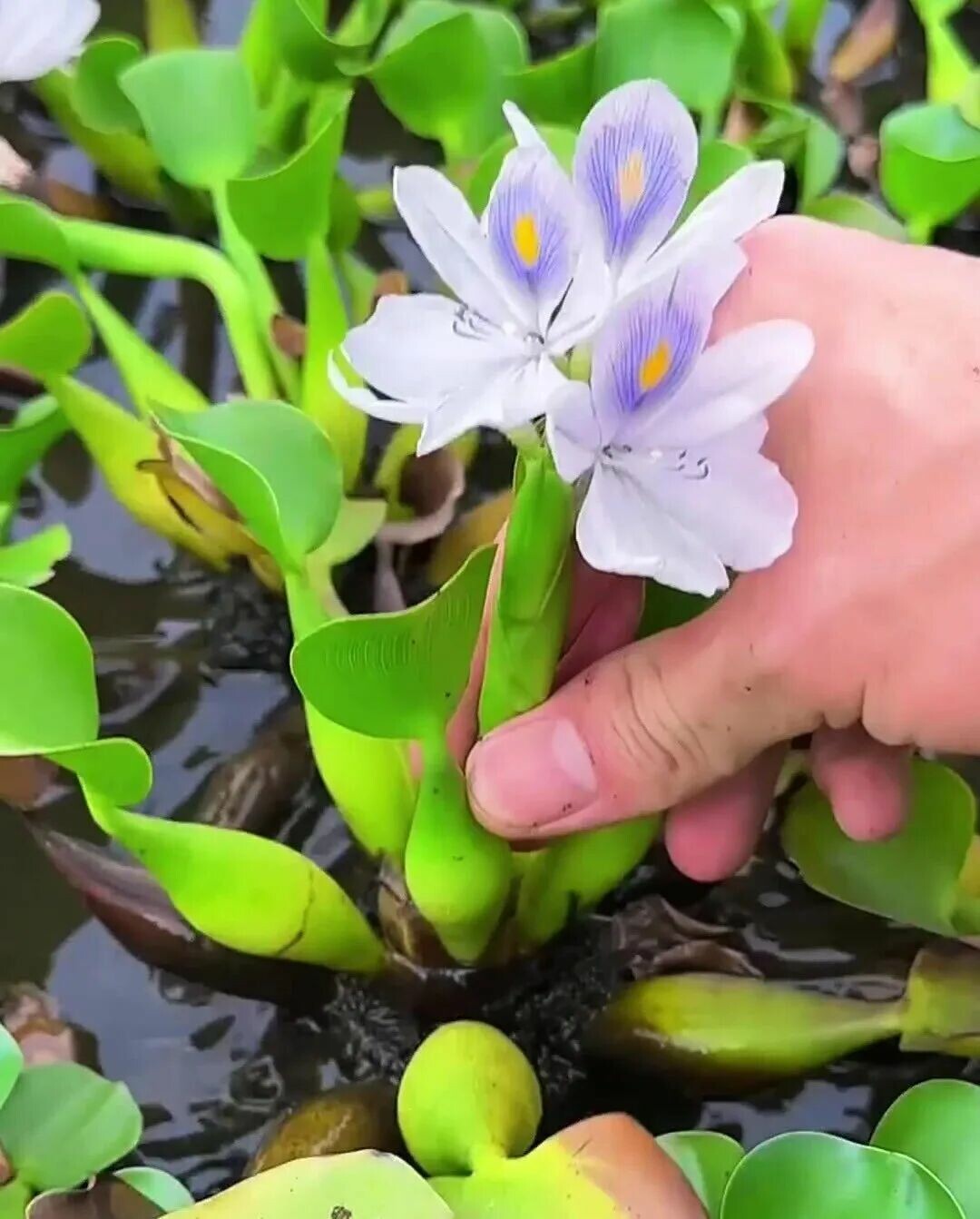
In practice, many turtle hobbyists find that these “treasures” often cannot escape the fate of being nibbled by turtles, and the broken branches and withered leaves actually pollute the water quality. This is also why many hobbyists, who excitedly added aquatic plants, remove them in discouragement. I personally have had this experience too. If Water Hyacinths are too dense, pest infestation is also an annoyance in summer.
Turtle Instincts and Plant Destruction
The destruction of aquatic plants by turtles stems from their nature. In the natural environment, turtles ingest various aquatic plants to supplement nutrition; this foraging behavior is a manifestation of their survival instinct. Especially in artificial breeding environments, where the turtle’s activity space is limited, aquatic plants easily become their “toys” and food.
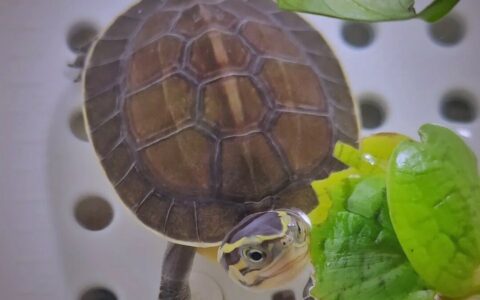
Those nice-looking floating plants, if they encounter herbivorous turtles, such as the Florida Red-bellied Cooter or the Giant Asian Pond Turtle, will be eaten clean in no time. Even turtles that don’t prefer a vegetarian diet cause significant destruction to them. Even if the aquatic plants reproduce quickly, they probably can’t keep up with the speed of destruction.
Solutions in Practice
To achieve harmonious coexistence between turtles and plants, scientific methods need to be adopted. First, choosing suitable aquatic plant varieties is crucial. Varieties with harder leaves like Anubias and Amazon Sword are better able to resist turtle nibbling.
Secondly, one can reduce the destruction of plants by setting up isolation zones or increasing feeding frequency. Many hobbyists find using planting baskets to be very effective. Furthermore, maintaining appropriate lighting and nutrient supply ensures healthy plant growth and improves their self-repair ability.
Of course, in environments with these plants possessing developed root systems, it is inconvenient to use filters, because the broken parts of the roots will quickly clog the filter’s water intake. Unless you add another layer of protection at the intake. That adds to your workload again.
The Way of Balance in Turtle Tank Landscaping
For small rearing environments, a bare tank paired with a basking platform is more practical. This setup is easy to clean and maintain, can effectively control water quality, and also provides sufficient activity space for the turtles.
I see some hobbyists whose rearing environments are clearly not large, yet they put in numerous Water Hyacinths and Water Lettuce, intending to purify the water, but the actual effect is minimal. It also leaves the turtles without enough space to move, making the whole thing look very crowded and disharmonious.
If you want to add greenery, you can choose to place potted plants above the basking platform, which can beautify the environment while avoiding the trouble of plants being destroyed.
The core of turtle tank landscaping lies in balance. One must consider aesthetics while placing even greater importance on practicality and maintainability. Through scientific planning and careful design, create an ideal turtle tank environment that is both beautiful and practical. If we cannot conveniently add plants due to space limitations or other reasons, there is actually no need to force it.
Personally, I still believe that the primary thing is for the turtle to be able to move freely, survive safely and healthily, and wait happily for you to feed it. This indicates the environment already suits the turtle. Then consider how to add the icing on the cake to make us like the current turtle-keeping environment even more.
It seems that these so-called “Three Treasures of the Turtle Tank” are not entirely treasures; it depends on how you use them.
Original article by 搬运工, if reproduced, please cite the source: https://www.kaipet.com/en/turtle-tank-landscaping-plant-selection-avoiding-pitfalls-nibbling-pollution-revealing-truth-treasures-turtle-tank


Comments(1)
Totally relate to plants becoming turtle toys! What are your most successful, truly ‘turtle-proof’ plant choices or clever protection methods?