

A turtle hobbyist (turtle enthusiast) vented:
“I clearly spent a high price to buy an albino turtle back then, but now, why does it get darker the longer I keep it, turning into its natural color? Is this even an albino turtle?”
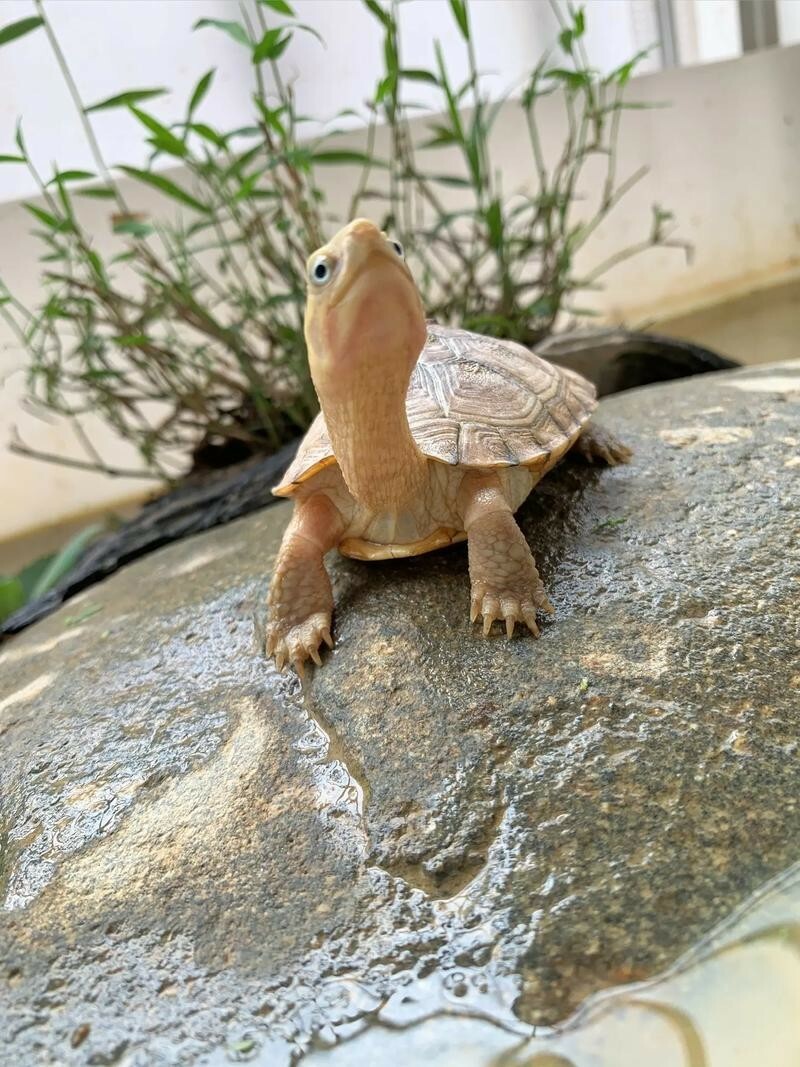
Obviously, what the hobbyist bought was merely a greenhouse turtle with a lighter body color; as it was raised, it turned into a normal-colored turtle. Another experience of being duped.
Differences Between Albino Turtles and Greenhouse Turtles
Albino Turtles
Albino turtles are the result of a genetic mutation that hinders melanin synthesis, resulting in a white or light yellow appearance. Their eyes are usually red or pink; this is because the lack of melanin allows the color of the blood vessels to show through. The color of an albino turtle is permanent and will not change due to changes in the environment or rearing conditions.
Greenhouse Turtles
Greenhouse turtles refer to turtles that grow rapidly in an artificially controlled environment with high temperatures and high humidity. This environment may cause the turtle’s color to temporarily lighten, creating the illusion of an albino turtle. However, once removed from the greenhouse environment, the turtle’s color will gradually revert to normal.

Reasons for Color Changes
In high-temperature and high-humidity environments, the color of a greenhouse turtle’s skin and shell may temporarily lighten. This is because, in such an environment, the turtle’s metabolism accelerates, and pigment deposition decreases.
When greenhouse turtles are transferred to a natural or semi-natural environment for rearing, their color will gradually revert to normal. This is because factors such as natural light, temperature, and humidity promote the redeposition of pigment, causing the greenhouse turtle’s appearance to trend toward its normal color.
Some unscrupulous sellers exploit the characteristic of greenhouse turtles temporarily having lighter colors to pass them off as albino turtles and sell them at high prices. This behavior not only deceives consumers but may also lead to health issues for the turtles, as greenhouse turtles may lack necessary nutrition and care during their rapid growth process. So, they are gambling on whether you can keep it alive; if you can’t, the secret naturally won’t be exposed. If you do keep it alive, the after-sales period will have passed by the time the truth comes out, leaving you with no choice but to accept it.
The trust within the turtle community (the community of turtle hobbyists) really cannot be eroded bit by bit like this.
Original article by 搬运工, if reproduced, please cite the source: https://www.kaipet.com/en/identify-real-fake-albino-turtles-exposing-greenhouse-turtle-scams-beware-true-colors-revealing-time



Comments(1)
Thanks for this vital insight! I’m curious, are there common health issues specifically linked to raising greenhouse turtles?