At the invitation of netizens, today I will introduce the Diamondback Terrapin, a turtle species with beautiful patterns and strong contrast, to everyone.
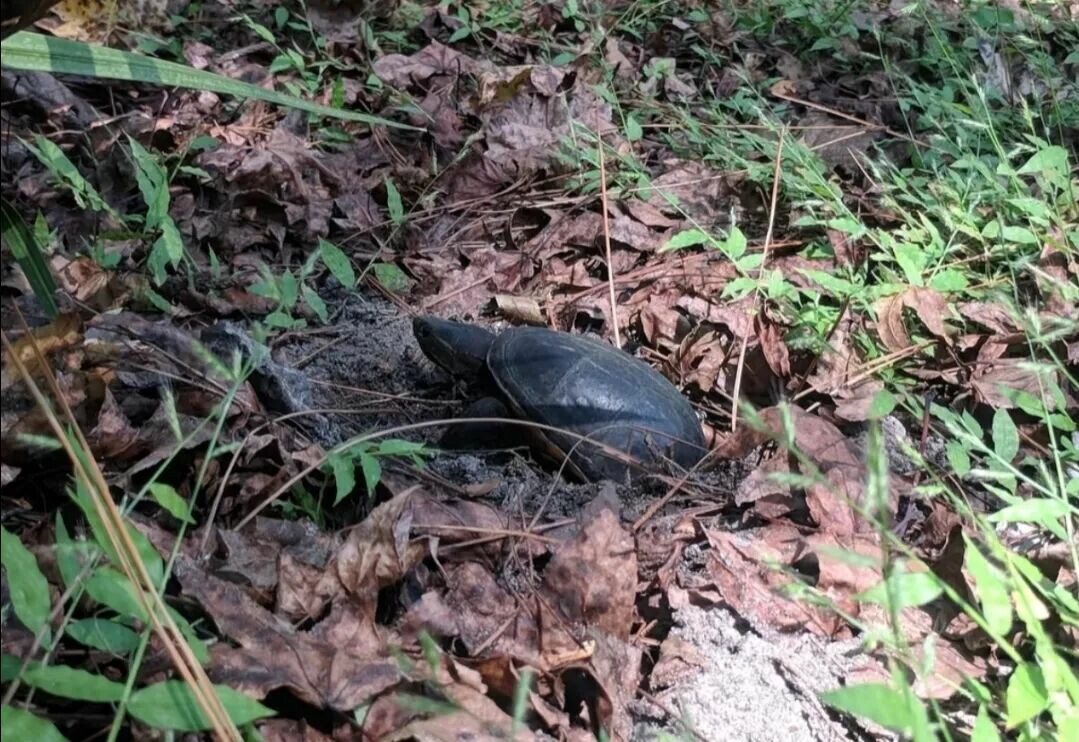
Diamondback Terrapins are distributed in the coastal waters of estuaries along the Atlantic Ocean and the Gulf of Mexico in the United States, ranging from Cape Cod in Massachusetts to Corpus Christi in Texas; they are also found in Bermuda. They belong to exotic turtles.
Body Size and Appearance Characteristics of Diamondback Terrapins
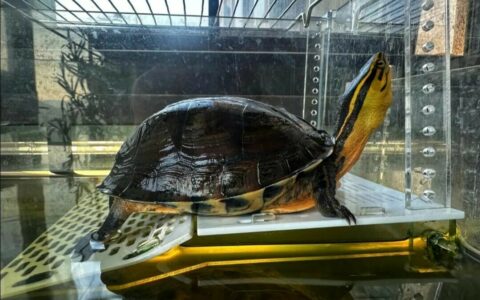
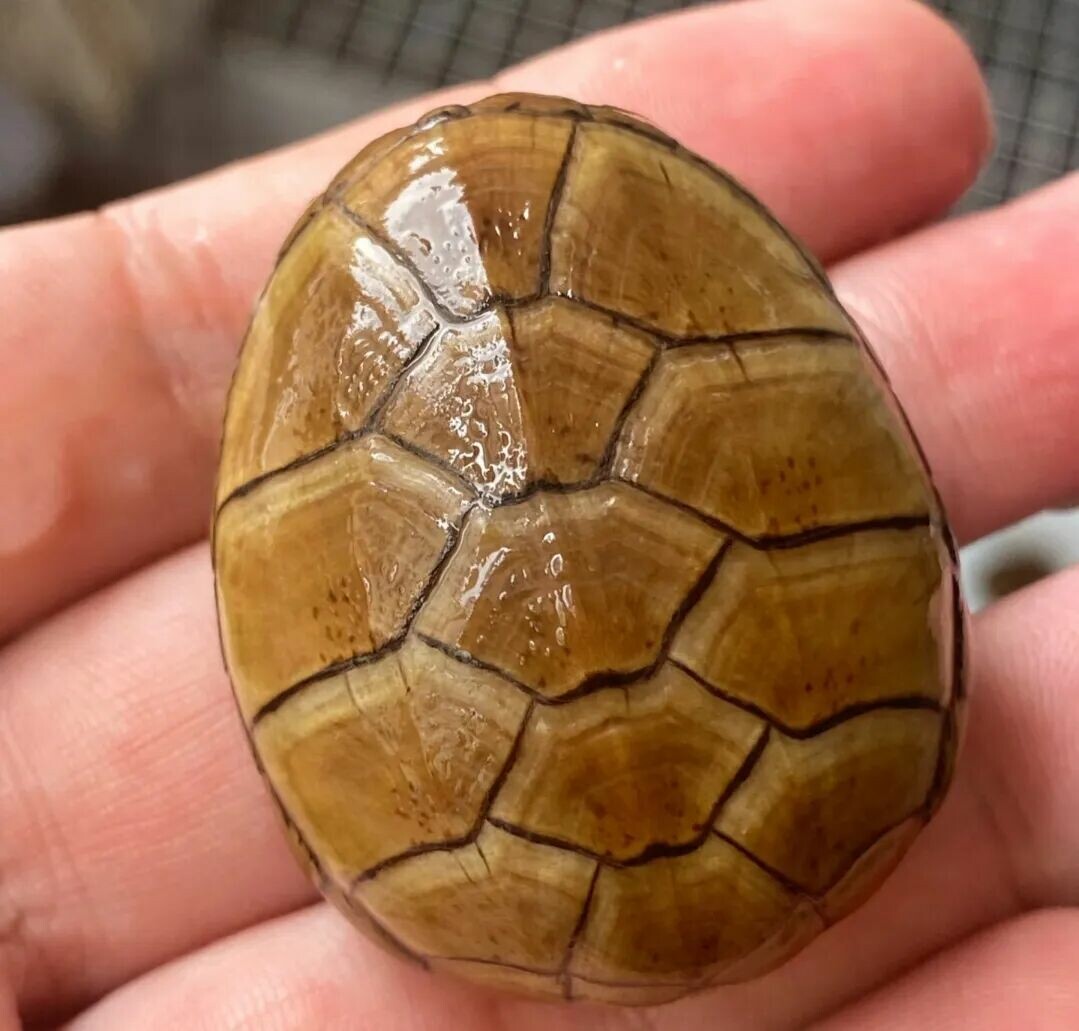
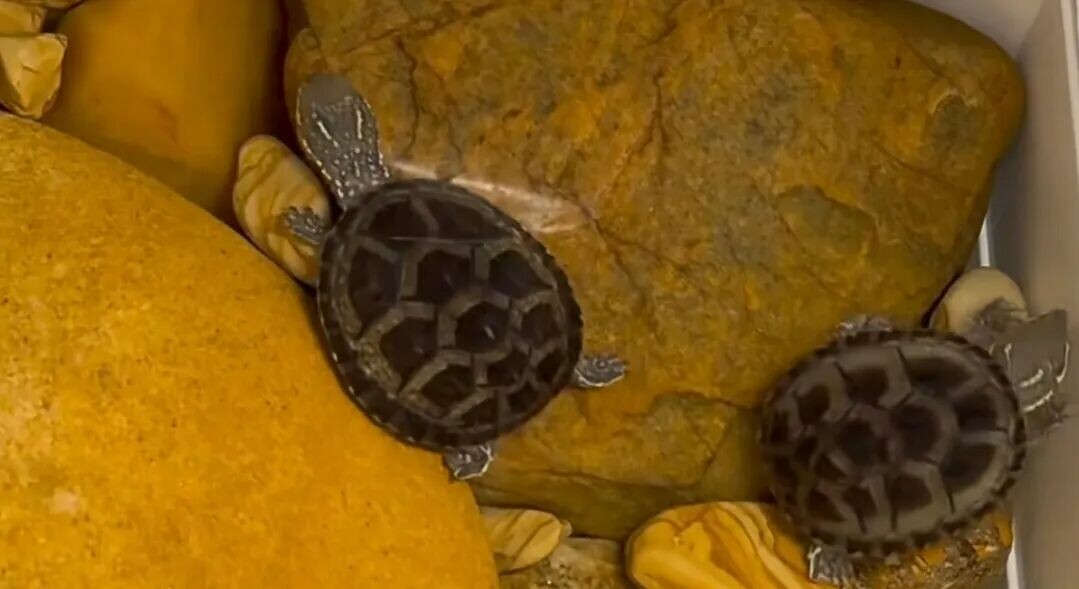
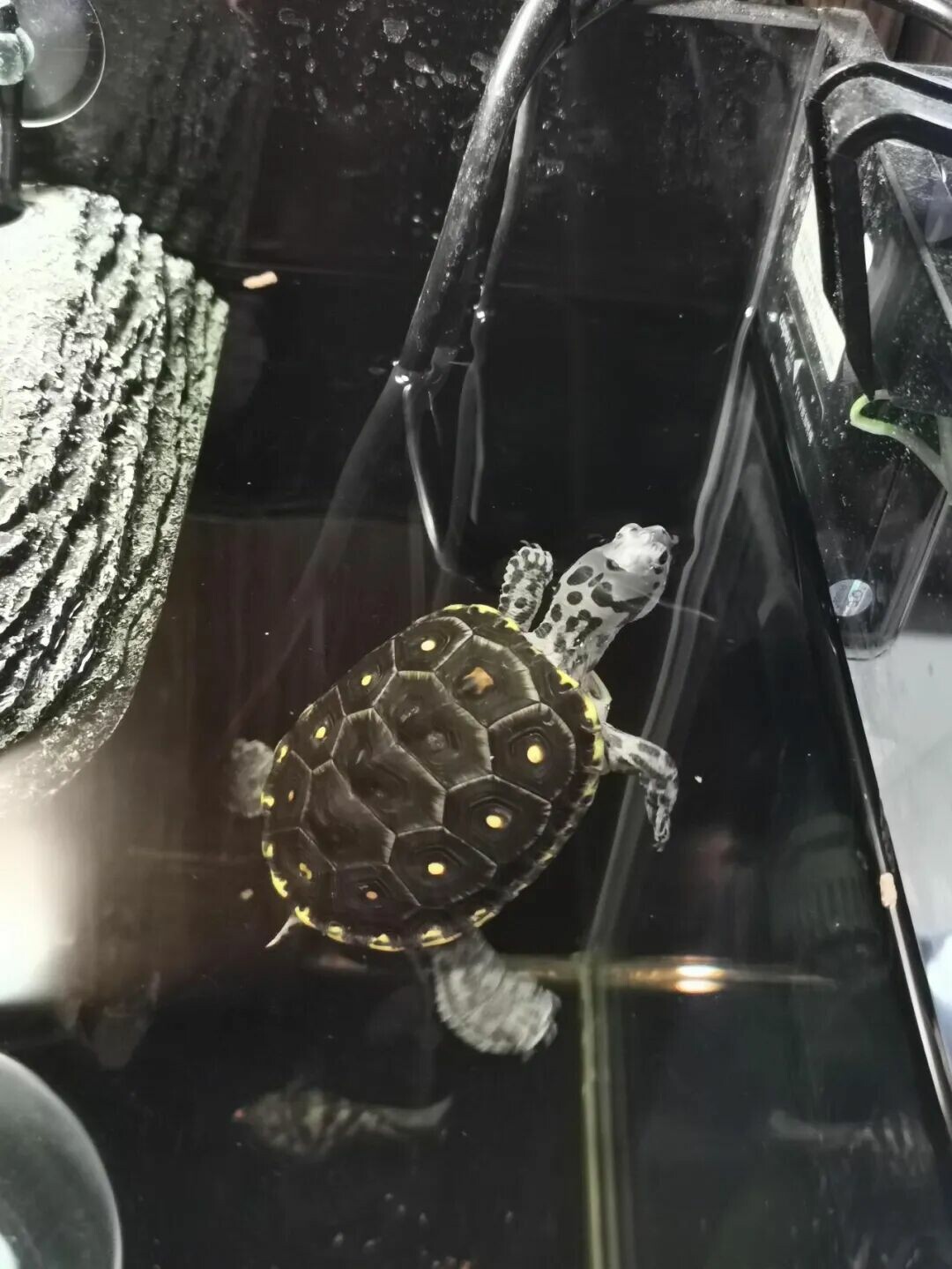
The carapace of the Diamondback Terrapin ranges from light gray to nearly black. It is oval, flat in the center, and each scute has black ring-shaped markings with a keel in the center. The plastron is pale yellow with black dots or blotches. The skin is gray with black spots or stripes. The forelimbs have 5 claws, and the hind limbs have 4 claws; the hind limbs are relatively larger, with webbing at the base of the toes. Diamondback Terrapins exhibit sexual dimorphism: males usually have smaller bodies and heads, with an average shell length of 13 cm; females are larger, with an average shell length of 19 cm, making their size relatively friendly for home hobbyists.
Market Value of Diamondback Terrapins
In China’s turtle pet market, Diamondback Terrapins are as gorgeous as their shell colors and head patterns. The price of hatchlings easily reaches three digits, and those with good appearance start at four digits. Rare variants have fetched glorious prices of tens of thousands of yuan, and as for the albino mutations, the price can reach hundreds of thousands, truly making them a “boss-level” pet.
Common Diamondback Terrapin Varieties in the Market
Nowadays, the main varieties of Diamondback Terrapins circulating in the market are as follows:
Northern Diamondback Terrapin
Northern Diamondback Terrapin: This is a relatively common variety. Its carapace color ranges from light gray to dark gray, and the patterns are classified into small flower, medium flower, and large flower. The small flower Diamondback Terrapin is darker in color with finer dorsal patterns; the large flower Diamondback Terrapin is brighter in color with coarser dorsal patterns. A high-quality large flower Northern Diamondback Terrapin holds high ornamental value, and this is also a variety widely kept in the domestic market.
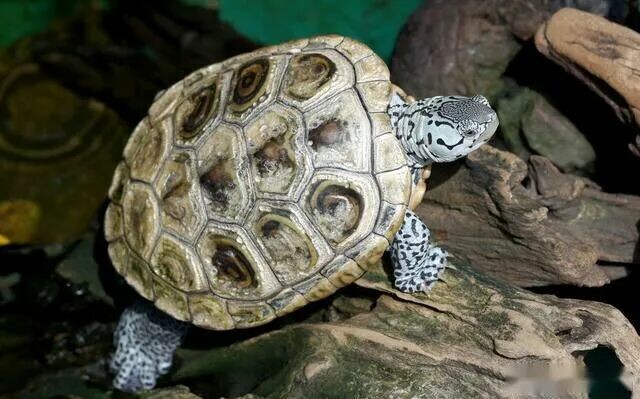
Ornate Diamondback Terrapin
Ornate Diamondback Terrapin: Also known as the Decorated Diamondback Terrapin, it is one of the most popular varieties among the public. The carapace color is vivid, mostly bright yellow. The black carapace protrusions and the pale yellow patterns in the center create a strong color contrast. There are three huge yellow knobs on the vertebral scutes. The head spots are very small, and the head skin of well-developed individuals is white with a reddish tint; among them, individuals with a “pink head” and no spots are considered top quality.
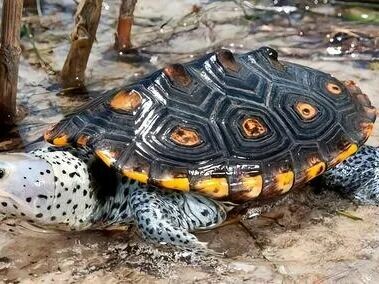
Texas Diamondback Terrapin
Texas Diamondback Terrapin: The carapace features bright yellow concentric circular patterns, which are very beautiful. Among them, there is a super white individual colloquially known as “Super Texan” (Chao De), where the carapace colors of black and yellow are distinct and the contrast is obvious, making it an object of pursuit for turtle enthusiasts.
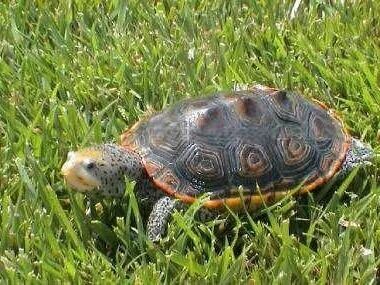
Florida East Coast Diamondback Terrapin
Florida East Coast Diamondback Terrapin: Usually darker in color, both the carapace and patterns are a rich black, forming a sharp contrast with the white skin. The upper and lower jaws are always black or dark brown, like “whiskers,” giving it a rather domineering overall appearance.
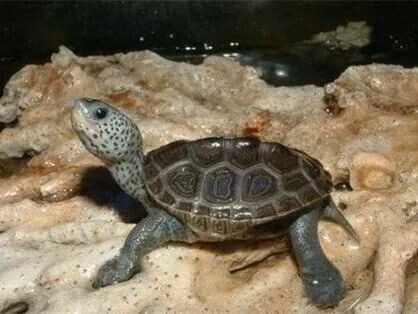
Mangrove Diamondback Terrapin
Mangrove Diamondback Terrapin: Small in number and extremely rare, it is the rarest variety of Diamondback Terrapin. The back is smooth with no protruding ridges, and the shell color is yellowish-brown. The concentric spots on the carapace do not expand as the shell enlarges, possessing a unique aesthetic.
History and Trivia of Diamondback Terrapins
To conclude, let’s talk about the interesting history of the Diamondback Terrapin. Although the Diamondback Terrapin has now entered the turtle pet circle and become a beloved pet in many people’s tanks, as early as the 18th century, due to their large numbers and delicious meat, Diamondback Terrapins were a food source for local residents, including Native Americans and the army, and could be said to be a famous delicacy. John Adams, the 2nd President of the United States, once used Diamondback Terrapin soup to celebrate the independence of Philadelphia, and Abraham Lincoln, the 16th President, also used Diamondback Terrapin soup to celebrate his second inauguration.
This led to the popularity of Diamondback Terrapin soup soaring continuously by the end of the 19th century, forcibly eating a massive population into an endangered species. So, it’s not just that “we can eat” (referring to the Chinese reputation for eating anything); foreigners are by no means inferior in this regard.
Original article by KPTer, if reproduced, please cite the source: https://www.kaipet.com/en/complete-guide-diamondback-terrapin-beginners-selection-rearing-identification-skills