

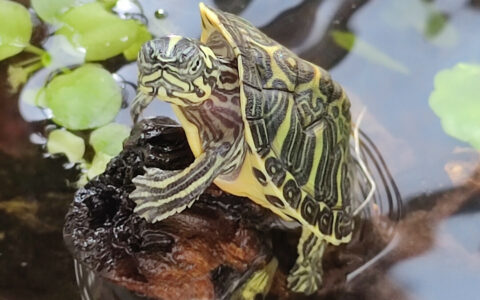
After getting a turtle, many people become curious whether their little turtle is a “boy” or a “girl.” Actually, telling the difference between male and female turtles isn’t difficult. As long as you grasp these three key features, even a beginner can quickly determine its sex.
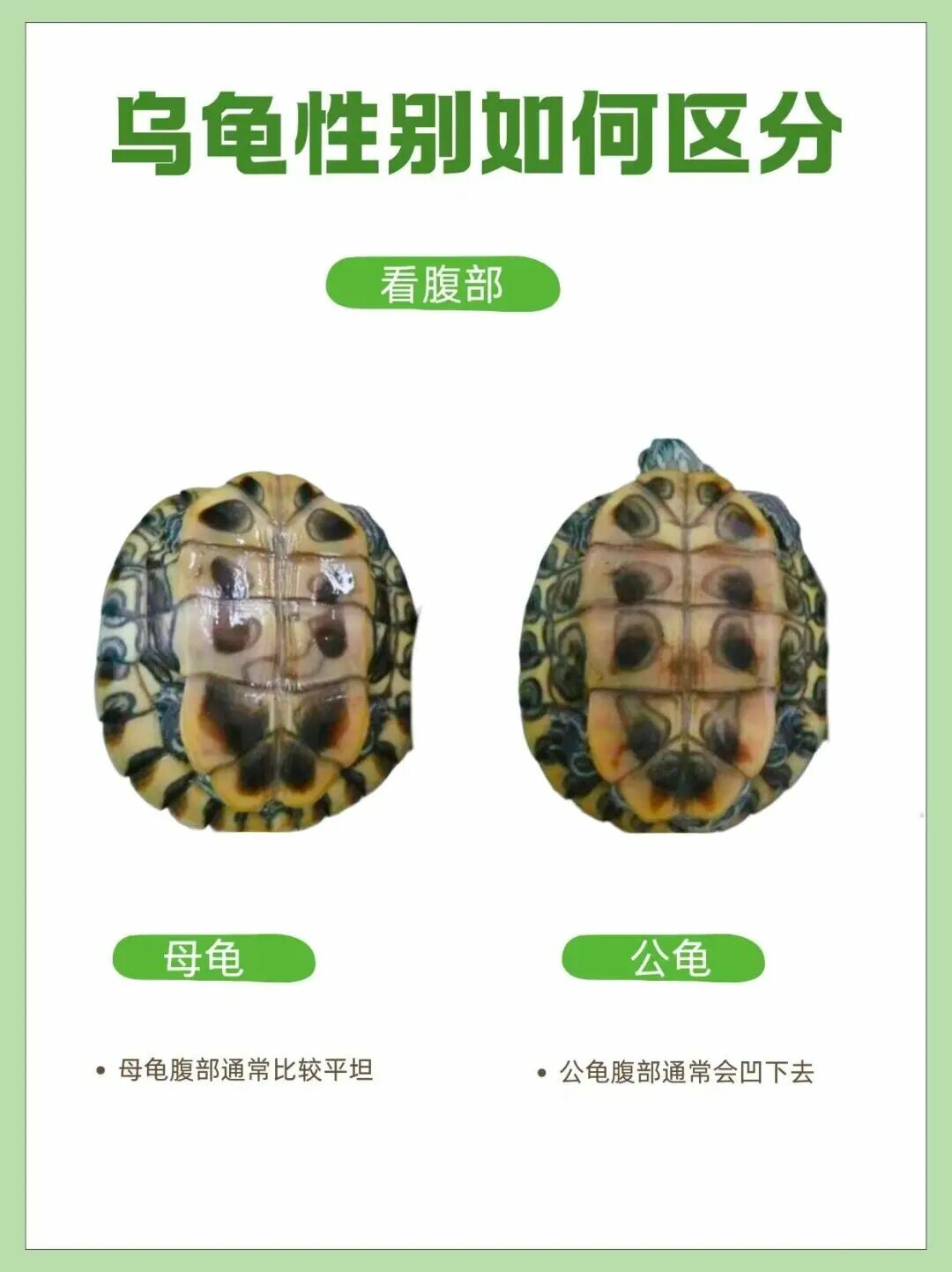
Look at the Plastron—The Most Direct “Gender Signal”
The plastron of a male turtle has a noticeable concave shape in the middle. This is because during mating, the male needs to mount the female’s back, and the indentation helps the male to secure his body more stably and prevent slipping.
The female turtle’s plastron is generally flat. This is because the female does not need to use her plastron to secure a position, and a flat plastron also provides more internal space for eggs.
Look at the Tail—The Secret is in its Thickness and Length
A male turtle’s tail is thick and long, and the base of the tail (the part closest to the body) is particularly wide. Viewed from the side, it looks like a “thicker version” of a small whip.
A female turtle’s tail is thin and short, and its base is also narrower. Overall, it looks more “delicate,” like a thin little string.

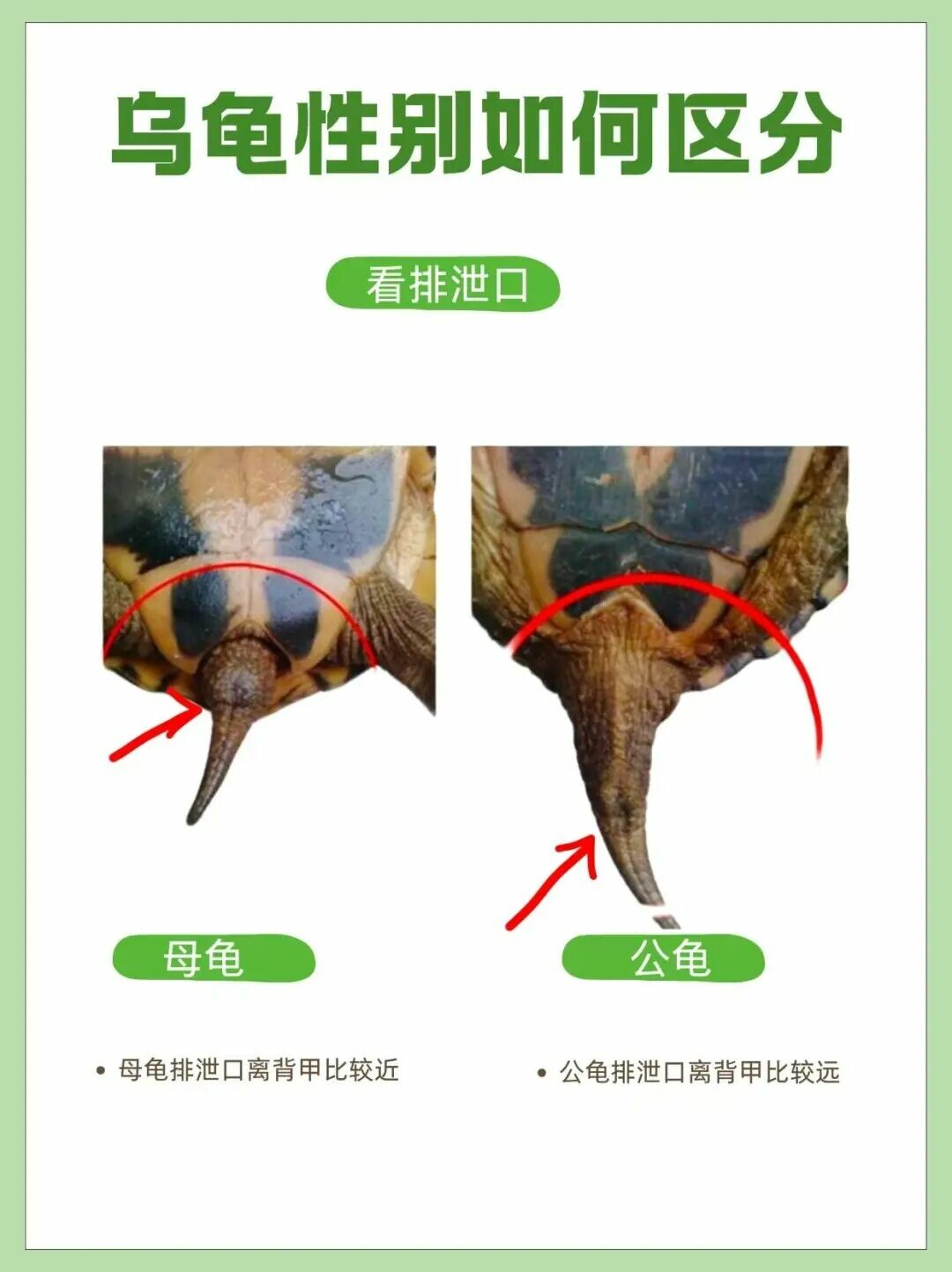
Look at the Cloaca—The Final “Confirmation Check”
A male turtle’s cloaca is located further back, extending beyond the edge of the plastron. Simply put, if you lay the turtle flat and look from the side, the male’s cloaca can “reach” outside the plastron.
A female turtle’s cloaca is located further forward, well within the edge of the plastron, and does not extend beyond its boundary.
Turtle Keeping Tips
Creating content is not easy, and every practical tip has been carefully organized. We hope this helps you in your turtle-keeping journey. If you found this useful, please give us a follow. We will be sharing more practical turtle-keeping advice in the future. Follow us so you don’t miss out, and let’s raise healthier turtles together.
Original article by 搬运工, if reproduced, please cite the source: https://www.kaipet.com/en/turtle-male-female-quick-tricks-sexing




Comments(2)
Great, clear tips! For beginners, what are common mistakes to avoid when trying to sex a turtle?
@CriticX:We appreciate your feedback and excellent question! A common mistake beginners make is relying on just one feature. For accuracy, it’s best to carefully cross-reference the plastron, tail, and cloaca as detailed in the article.