

Turtles are “old neighbors” from the “Age of Dinosaurs,” having written a legend of life’s evolution over hundreds of millions of years with their hard shells. Today, let’s explore the origin of turtles and the formation of their shells, lifting the evolutionary veil of this ancient species.
Exploring the Origin of Turtles
In ancient cultures, turtles are a symbol of longevity, but few people know that this species was already thriving on Earth as early as the Age of Dinosaurs. Their origin and evolution have long been a “long-standing puzzle” in the paleontological community, perplexing generations of scientists.
In 1914, a theory proposed that the earliest ancestor of modern Testudines might be the Pareiasaur from the Permian period, 280 million years ago. However, in the 1960s, research on Pareiasaur fossils by British paleontologists overturned this conjecture—it has no direct relationship with Testudines, being only a special type of Captorhinid, and is definitely not the ancestor of Testudines. With that, the origin of Testudines once again became a mystery.

Fast forward to 2015, the discovery of a 240-million-year-old ancestral turtle fossil in Germany provided us with a key piece of the turtle evolution puzzle. This ancestral turtle had teeth in its mouth, and possessed neither a carapace nor a plastron. It is regarded as a transitional form on the evolutionary path of Testudines, significantly different from modern Testudines.
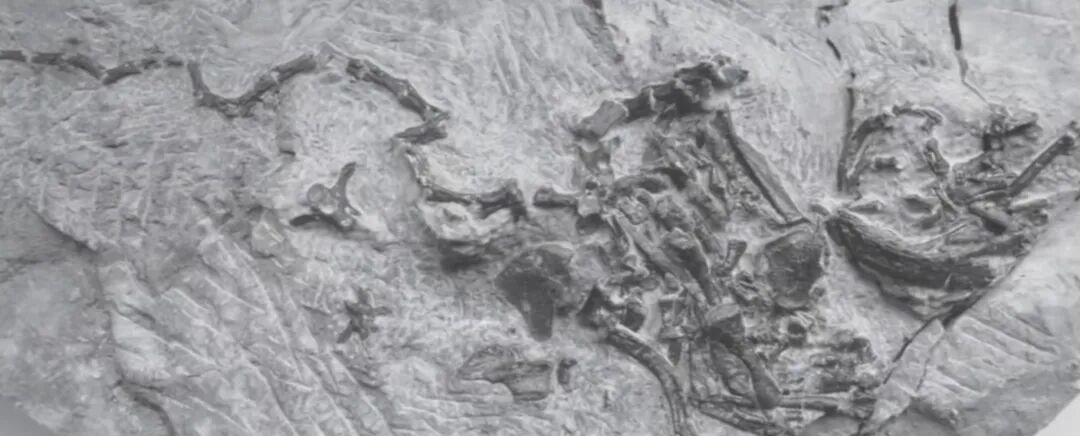
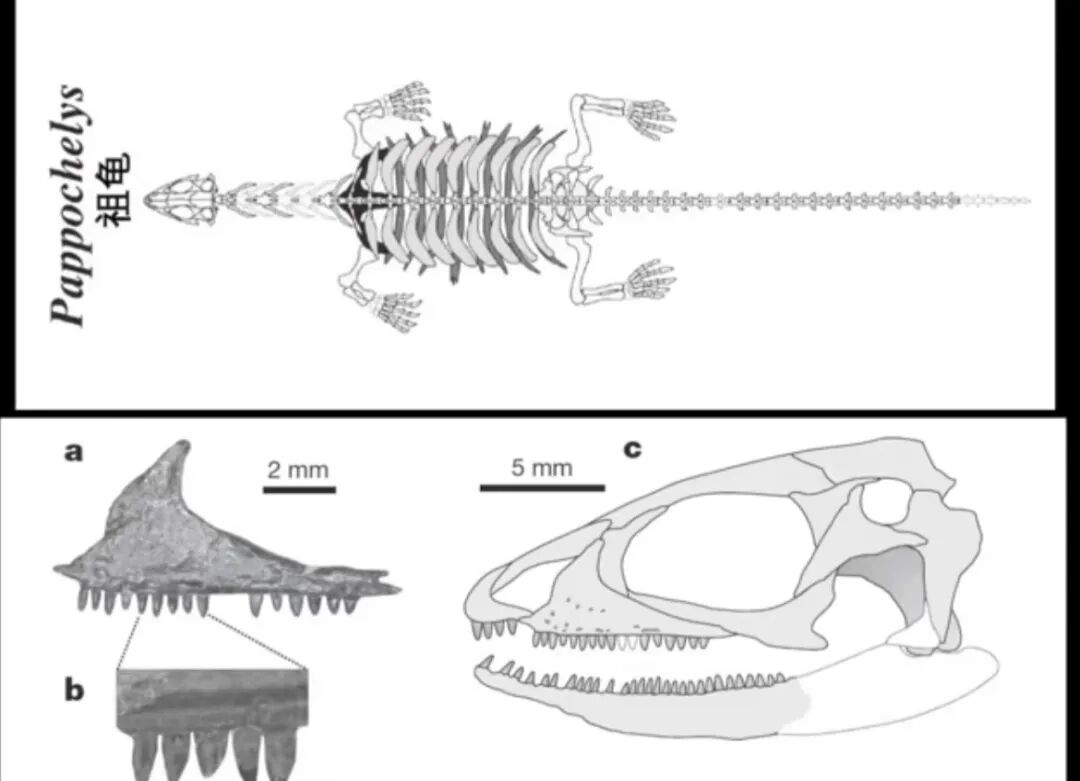
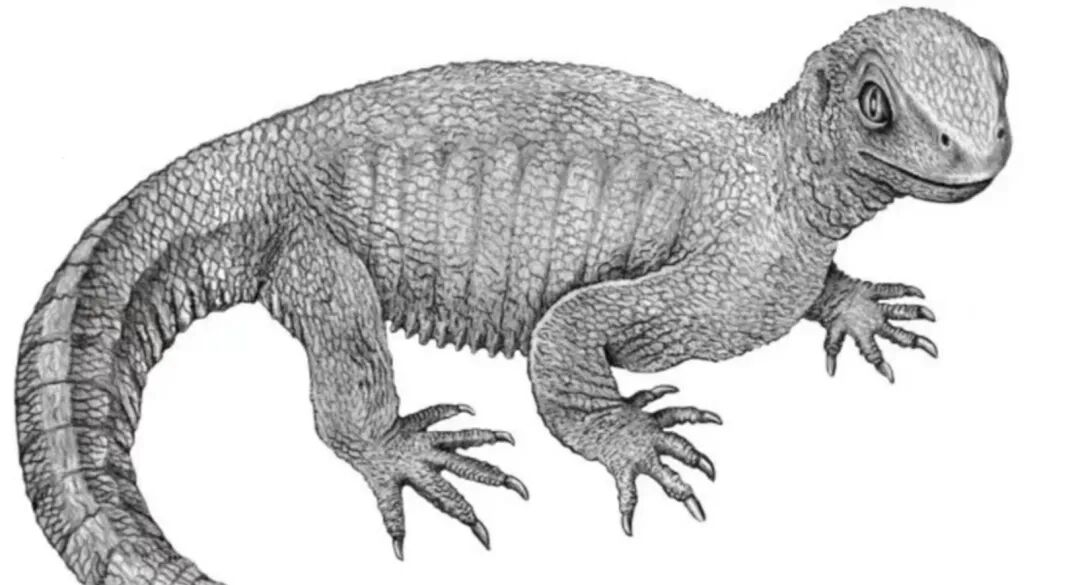
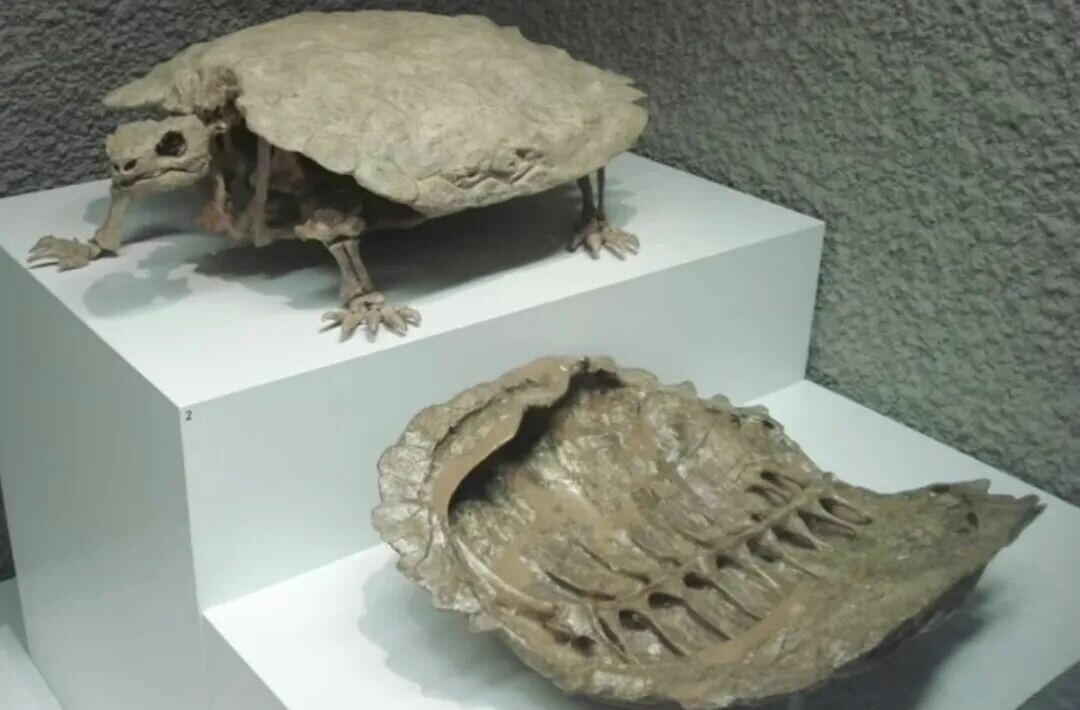
So how did the turtle’s iconic carapace and plastron form? In 2008, the discovery of a half-shelled toothed turtle fossil in Guanling, Guizhou, China, provided important clues. This creature, which lived in the late Triassic period 220 million years ago, was about 40 cm long, had teeth in its mouth—unlike the keratinous beak of modern turtles—and had only a plastron on its belly, with no carapace on its back. Chinese paleontologists Li Chun, Wu Xiaochun, and others named it the half-shelled toothed turtle. Based on this, scientists deduced that the turtle’s plastron evolved from the fusion of ribs. Through natural selection and long-term evolution, the turtles’ vertebrae and ribs completely fused, eventually forming a complete shell, and with it appeared the common ancestor of modern Testudines—the Proganochelys. Proganochelys lived in the late Triassic period 200 million years ago and, apart from having teeth in its jaw, most of its body structure was already consistent with that of modern turtles.

By the late Jurassic period, 140 million years ago, Proganochelys had evolved into two major branches: Pleurodira (side-necked turtles) and Cryptodira (hidden-necked turtles). In 2018, Chinese scientists made another new discovery: a fossil of a creature from 228 million years ago was named Eorhynchochelys sinensis. It had not formed a carapace or a plastron, but its teeth had begun to degenerate, and the form of a keratinous beak had appeared, adding another important piece to the puzzle of turtle evolution.

Based on the existing fossil evidence, the evolutionary sequence of turtles is roughly as follows: ancestral turtle from 240 million years ago (toothed, no carapace or plastron) → Eorhynchochelys from 228 million years ago (toothed, only plastron) → half-shelled toothed turtle from 220 million years ago → Proganochelys from 210 million years ago (toothed, with carapace and plastron) → modern Testudines (Cryptodira and Pleurodira).
Lessons from Turtle Evolution
Although many controversies still exist regarding the origin and evolution of turtles, the mystery and resilience of this ancient species are undeniable. Turtles have journeyed all the way from the Age of Dinosaurs, surviving to this day through hundreds of millions of years of environmental changes by relying on their unique evolutionary strategies.
Gliding Chinese Turtle
Protecting turtles is not just about safeguarding a species, but also about guarding the precious “living fossils” of Earth’s life evolution, allowing the ancient story of turtles to continue to be passed down through the long river of time.
Original article by 搬运工, if reproduced, please cite the source: https://www.kaipet.com/en/unveiling-evolutionary-history-turtles-turtles-dinosaur-age-evolve-hard-shells




Comments(2)
What an amazing evolutionary journey! I’m curious, what environmental pressures led to the plastron forming *before* the carapace?
@CriticX:That’s an excellent observation, CriticX! The article indeed shows the plastron evolved first in creatures like the half-shelled toothed turtle. While the exact environmental pressures aren’t explicitly detailed here, early ventral protection would have been a significant evolutionary advantage. We appreciate your insightful question!