

For us turtle keepers, choosing a suitable turtle species is crucial. This is our first step into the hobby; if it goes well, we naturally gain the confidence to continue. If the path is rugged and bumpy, who would willingly seek out unhappiness for themselves? Newcomers are the fresh blood in our turtle-keeping circle, so selling problematic turtles is like drinking poison to quench thirst (a metaphor for seeking temporary relief without regarding long-term harm), leaving fellow hobbyists with no confidence and even less willingness to keep turtles in the future.
Avoid Beginner “Traps”: Common Problematic Turtle Species
The Challenge of “The Street Stall Trio”
Nowadays, many people also recommend avoiding the so-called “Street Stall Trio” (referring to turtle species that are cheap and abundant in the market but prone to problems for beginners, such as Red-eared Sliders, Reeves’Turtles, and Chinese Striped-neck Turtles)—Red-eared Sliders, Reeves’ Turtles, and Chinese Striped-neck Turtles, as well as some turtles treated with paint. Although these turtles are relatively cheap, they often lead beginners into a predicament, causing them to lose interest in turtle keeping.

Red-eared Sliders: The Dilemma of the “King of White Eye”
Red-eared Sliders (Brazilian Turtles) are known as the “King of White Eye” (describing their susceptibility to white eye disease). In the wild, Red-eared Sliders may live freely and happily, but once they enter an artificial captive environment, they are prone to various problems. Especially those painted turtles; not only do they look unnatural, but their health condition is also worrying. They are basically in a state of “shell retraction” (referring to a severe state where the turtle retracts its head and limbs into the shell due to illness, remaining inactive and not eating), so caution is needed when purchasing.
Reeves’Turtles and Chinese Striped-neck Turtles: High Mortality Rate of the “King of Rotten Skin”
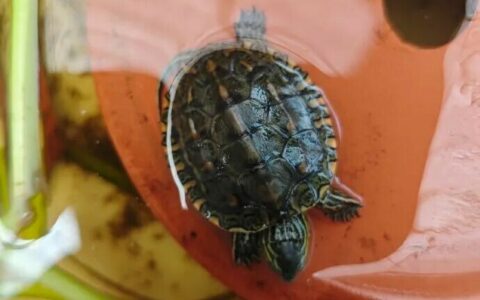
Reeves’Turtles (Grass Turtles) and Chinese Striped-neck Turtles (Flower Turtles) are known as the “King of Rotten Skin”(describing their susceptibility to skin rot disease), and their difficulty in care should not be ignored. Many beginners buy 5 Reeves’ Turtles, and in the end, perhaps only 2 might survive. Such a high mortality rate will undoubtedly cause beginners to lose confidence in turtle keeping.
Why Are They Still Widespread?
Reasons Behind the Large Ownership Volume
Okay, the above are indeed the shortcomings of Red-eared Sliders, Chinese Striped-neck Turtles, and Reeves’Turtles. Honestly, I personally feel that hatchlings of Chinese Striped-neck Turtles and Reeves’ Turtles are indeed harder to raise than some other turtle hatchlings. For example, the Yellow Pond Turtle (a common ornamental turtle) is easier to raise than Reeves’and Chinese Striped-neck Turtles. Nowadays, Nanshi (a common name for Yellow Pond Turtles) and Xiaoqing (common beginner aquatic turtle species, usually referring to juvenile Chinese Striped-neck Turtles) are also considered “street stall prices”, so calling them the “Street Stall Trio”wouldn’t be an exaggeration either. Actually, for starting out, raising Nanshi or Xiaoqing is the best choice.
However, the current ownership volume (quantity possessed in the market or by owners) of Red-eared Sliders, Reeves’Turtles, and Chinese Striped-neck Turtles is beyond our imagination. This shows that Red-eared Sliders, Reeves’ Turtles, and Chinese Striped-neck Turtles are not difficult to keep and breed. It is just that many of our fellow hobbyists are new to turtle keeping, so they are unfamiliar with turtles and do not handle some details perfectly. Coupled with the fact that there are too many turtles with poor constitutions nowadays, it makes things much harder for many hobbyists who are just starting out.
Care Points to Give the “Street Stall Trio” a Chance
Whether it is Red-eared Sliders, Reeves’Turtles, or Chinese Striped-neck Turtles, if they serve as your introductory “mentors”, the environment still needs to be stable. Do not care too much, handle them too much, and disturb them less. Initially, let the Red-eared Sliders, Reeves’ Turtles, and Chinese Striped-neck Turtles familiarize themselves with the environment and adapt first, then start feeding. Once they start developing growth lines, they are much more stable.
Beginner-Friendly Turtle Recommendations
Egg Turtles and Snapping Turtles: Options Requiring Caution
So, what other varieties can turtle-keeping novices choose? Nowadays, many people recommend Egg Turtles (a type of small aquatic turtle, usually referring to species in the Kinosternidae family) and Snapping Turtles (a large aquatic turtle, divided into Alligator Snapping Turtles and Common Snapping Turtles). Snapping Turtles are relatively easy to keep; as long as there is water and it is changed in time, they can grow healthily.
“Turtles that can survive with just water are rare, aren’t they?”
Personally, I don’t quite agree with this viewpoint. Snapping Turtle hatchlings are not easy to raise either and still require some patience. Among Egg Turtles, the Razor-backed Musk Turtle and the Common Musk Turtle are considered good choices; they are relatively worry-free to keep. But they are not completely without concerns. Therefore, basic knowledge and being attentive are still indispensable.
It inevitably feels a bit suspicious of using the “Street Stall Trio” to indirectly promote other species.
Helmet Turtles: Not Recommended for Beginners to Try
Of course, some might ask why Helmet Turtles (usually referring to some small mud turtles, such as the Striped Mud Turtle) are not recommended. In fact, the difficulty of keeping Helmet Turtles is relatively higher than that of Razor-backed Musk Turtles and Common Musk Turtles, making them unsuitable for beginners.
The Fun of Turtle Keeping: Don’t Chase High Prices, Choose What Suits You
Finally, beginner friends, do not blindly pursue high-end varieties, such as the Chinese Box Turtle (a rare semi-aquatic turtle) or the Narrow-bridged Musk Turtle (a more expensive Egg Turtle). These varieties are expensive, although the difficulty of care does not necessarily rise with the price. Choosing a turtle species that suits you and enjoying the fun of turtle keeping is what’s most important. Of course, if you are not short on money, none of this matters, haha. Money can solve 99% of your troubles.
Original article by 搬运工, if reproduced, please cite the source: https://www.kaipet.com/en/turtles-good-beginners-nanshi-xiaoqing-stable-chinese-striped-neck-reeves-turtles






Comments(1)
Excellent insights! Given Nanshi and Xiaoqing’s stability, what’s a top environmental tip for their beginner success?