

Yesterday, I saw a video discussing "foods you cannot feed to turtles." It mentioned that 40% of turtle deaths are caused by feeding them two types of food—shrimp and raw meat.

The video argued that shrimp is too high in protein and spoils easily, while raw meat carries too many parasites and bacteria, concluding that these two foods cannot be fed to turtles. But is this really the case? Today, let’s have a good talk about turtle diets: what can be fed, what cannot be fed, and what needs to be fed in moderation.
The Advantages of Commercial Turtle Food
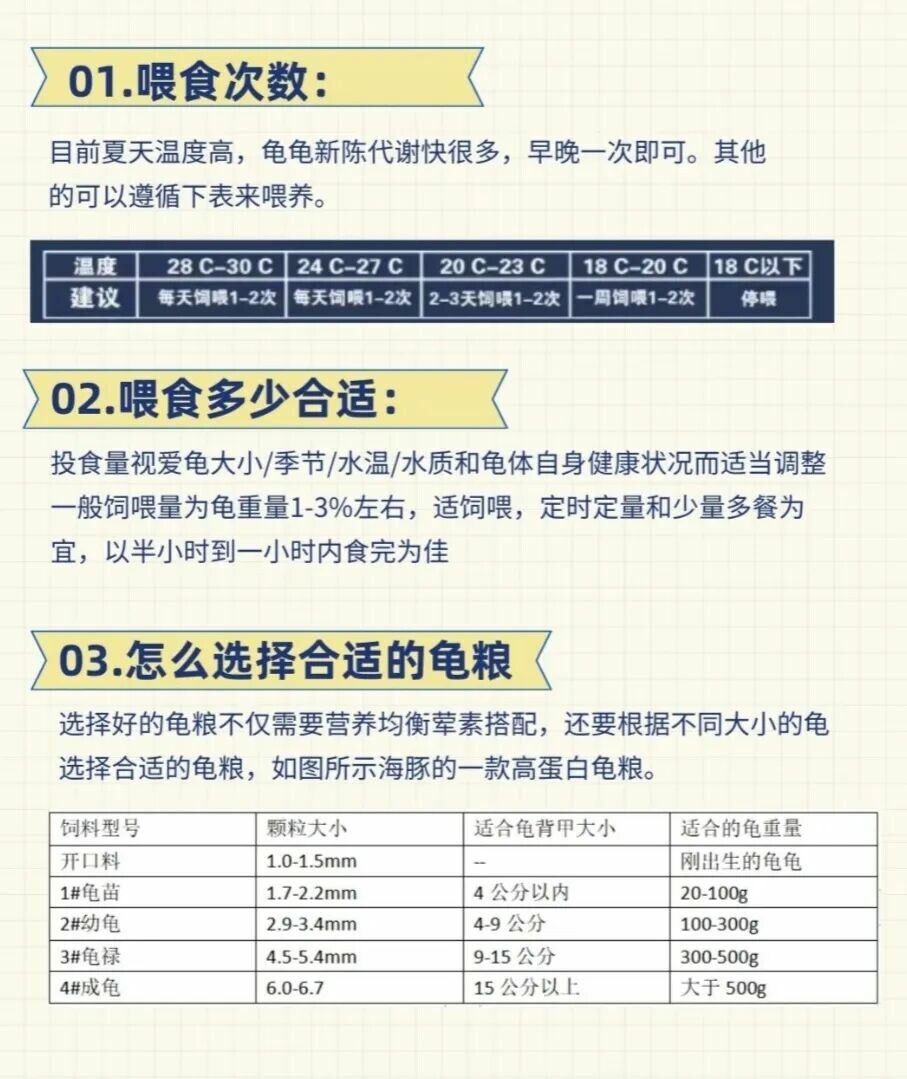
First, let’s talk about turtle pellets. Objectively speaking, commercial turtle food is indeed a very convenient and fast way to feed turtles. Qualified turtle pellets have relatively comprehensive nutritional components. We basically don’t need to worry about food combinations; buying a qualified turtle food basically satisfies the growth needs of the turtle. In our fast-paced modern society, this makes keeping turtles very convenient and efficient, so beginners who find it troublesome can directly choose a qualified turtle food.
Foods Other Than Pellets That Can Be Fed to Turtles
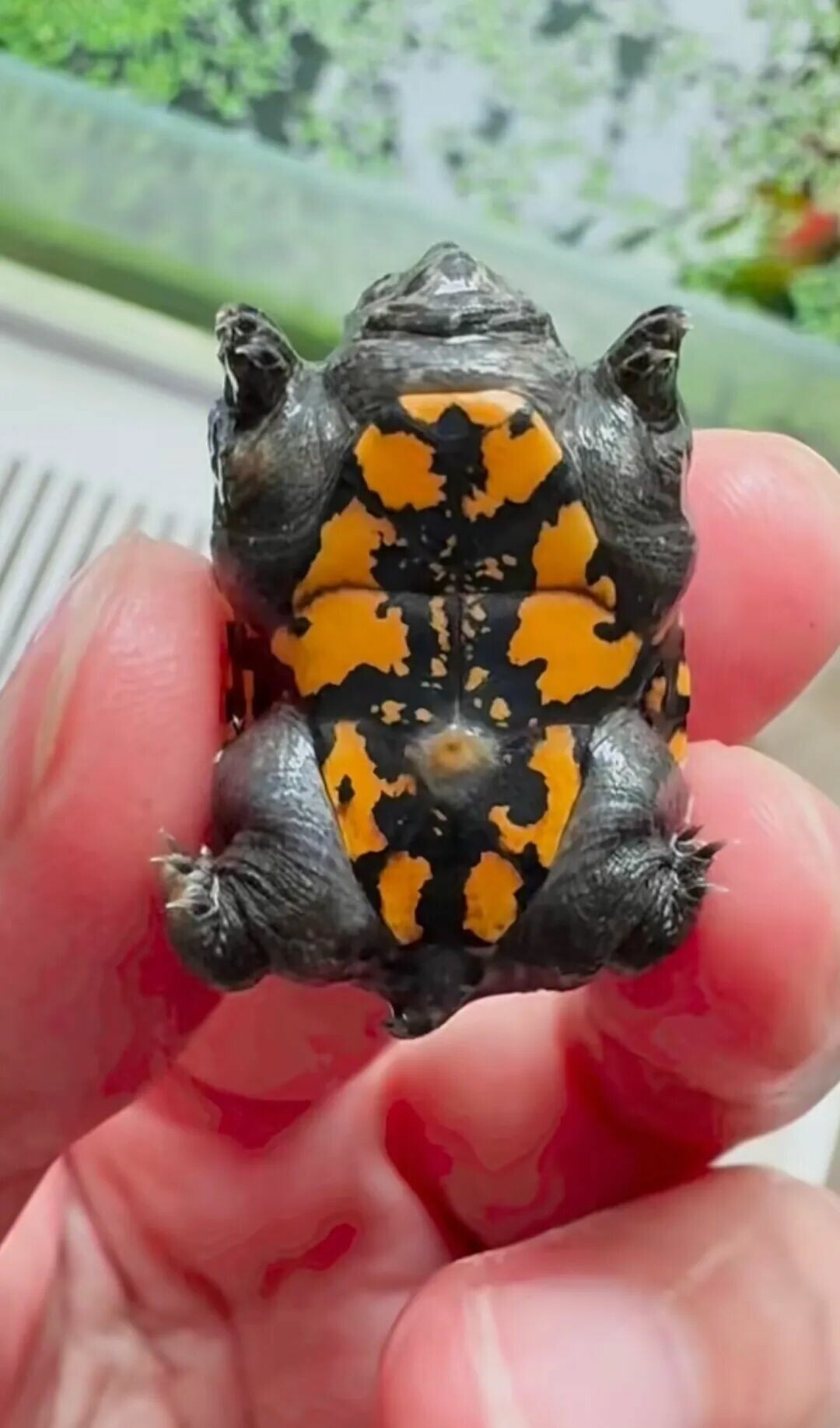
Turtles are omnivores. Common species like the Reeves’ Turtle, Chinese Striped-neck Turtle, and Yellow Pond Turtle tend to be carnivorous during the hatchling stage and gradually become vegetarian after reaching the sub-adult stage. However, whether they are hatchlings, sub-adults, or adult turtles, when small fish, shrimp, and aquatic plants or vegetable leaves are placed in front of them simultaneously, they will usually choose the small fish and shrimp without hesitation. Turtles living in water still have a preference for meat.
Referencing the natural diet of these turtles, items like freshwater unsalted small fish and shrimp, snails, freshwater mussels, Asian clams, various aquatic insects, and aquatic plants can all actually be used to feed turtles. I personally use unsalted dried small fish as the staple food for my turtles, with dried daphnia, aquatic plants, and duckweed as supplements, and occasionally feed some wild-collected small fish and shrimp or home-bred apple snails. In reality, as long as the food is salt-free and oil-free, it can be used to feed turtles; it is just a question of whether it can be fed in large quantities or only occasionally. For example, rice, chicken, duck, pork, beef, and animal liver are all used by some people to feed turtles. If they are oil-free, salt-free, and lack large amounts of seasonings and additives, it is actually not a big problem, as turtles are inherently omnivorous.

Foods That Cannot Be Fed to Turtles
Salty Foods
Salty foods cannot be used to feed turtles. This includes but is not limited to salted dried shrimp, salted fish and shrimp, ham sausages, pork ribs cooked with salt, etc. Turtles have a poor ability to metabolize salt. High salinity causes significant damage to the turtle’s kidneys. Long-term feeding of high-salt foods is a very important reason for causing edema in turtles.
High-Fat Foods
High-fat foods include but are not limited to fatty meat, etc. Turtles also have poor metabolic capacity for fat. If the fat content in food is high, it will continuously accumulate in the internal organs. This not only causes the turtle to become overly obese but also causes fatty degeneration of internal organs, making the turtle prone to disease, death, and sudden death. It is suggested not to raise turtles to be too fat; a turtle full of fatty meat is not a good phenomenon. Foods that are too fatty are not suitable for feeding turtles.
Foods That Need Controlled Usage When Feeding Turtles
Lean Pork and Mealworms
Lean pork! Many people like to use it to feed turtles. Actually, although it is called "lean," its fat content is not low. If you observe closely, after feeding lean pork, there is usually a layer of thick oil film on the water surface. Feeding too much lean pork makes it easy for turtles to get fat, creating problems where being too fat makes the turtle prone to disease and death. On the other hand, pork is hard to digest, especially during low temperatures or when there is a large temperature difference. It can easily cause problems in the turtle’s intestines, such as white feces, refusal to eat, avoiding water, and other morbid conditions. Thirdly, the oil film produced on the water surface can easily cause White Eye Disease in "Brazilian-face Turtles" (Red-eared Sliders, named because the red patch behind their eyes resembles a Peking Opera facial mask). Therefore, the suggestion for lean pork is to try not to feed it, or feed it occasionally when the temperature is relatively high and the temperature difference is small. At this time, the turtle’s digestive ability is strong, so it is usually not a big problem.
Mealworms are also high in fat content, so you should feed less or simply don’t feed them.
High-Protein Foods
High-protein foods include but are not limited to river shrimp, crayfish and other freshwater shrimp, Antarctic krill, mealworms, etc. Protein is a macronutrient essential for turtles, and a selling point for many commercial turtle foods is high protein content. However, in reality, protein content that is too high is not good either. Long-term feeding of high-protein foods puts significant pressure on the turtle’s liver and kidneys. Once these two areas have problems, the turtle is not far from death. At the same time, high protein is also an important cause of edema in turtles. Therefore, as a protein supplement, high-protein foods can be fed occasionally, but do not use them as a staple food. Long-term high-protein food is harmful, and the harm is significant.
Foods with Many Parasites and Bacteria
Foods with many parasites and bacteria, such as various wild snails, freshwater mussels, crayfish, and other scavengers, have relatively high levels of internal parasites and bacteria. It is suggested not to feed or feed less, or you can sun-dry them into dried goods before feeding to try to reduce the harm. If you want to use snails to feed turtles, it is best to breed them yourself, for example, apple snails and bladder snails (big-ear radix), etc. Breeding is very simple, and using artificially bred snails to feed turtles is very safe.
Farm-Raised Animal Meat
For farm-raised animal meat, such as chicken, duck, and goose meat, beef, etc., many people use chicken breast and beef to feed turtles. These two types of meats are low in fat content, so they aren’t a big problem in themselves, but it is also suggested to feed them occasionally. One reason is cost; the second is that because they are farm-raised, there may be some issues with excessive substances, such as excessive antibiotics, which is not news. Long-term feeding in large quantities may not be a good thing.
Animal Organs
Animal organs, such as pork liver, chicken and duck liver, etc., are rich in minerals, trace elements, and vitamins. However, since they are animal detoxification organs, there may be some residue of toxic and harmful substances inside, such as heavy metals. So, it is also suggested to feed occasionally, and long-term feeding in large quantities is not recommended.

Summary of Principles for Feeding Turtles
Overall, whether it is commercial turtle food, various natural foods, or farm-raised meat, every type of food has its own characteristics. As long as they are used correctly, they can all be used to feed turtles. There is no such thing as saying shrimp or raw meat cannot be fed to turtles; the key is to use them correctly. Feeding shrimp or raw meat to turtles during low temperatures or when there is a large temperature difference causing intestinal problems for the turtle is not the fault of the food, but rather the person feeding the turtle has a problem. For turtle food, we just need to grasp the following points:
- Salty foods must strictly not be fed.
- Avoid feeding high-fat foods.
- Control feeding of high-protein foods.
- Foods with many parasites and bacteria should be treated before feeding.
- Feed animal organs occasionally.
- At the same time, pay attention not to feed when temperatures are low or when there is a large temperature difference.
As long as you grasp these points, whether feeding turtle pellets or natural foods, you can raise your turtles well. Follow me! I’ll take you to learn more practical turtle-keeping tips~
Original article by 搬运工, if reproduced, please cite the source: https://www.kaipet.com/en/feed-shrimp-raw-meat-turtles-professional-analysis-turtle-dietary-taboos-correct-feeding-methods






Comments(1)
Fantastic guide! Given their meat preference, how do you encourage turtles to eat enough beneficial aquatic plants for a truly balanced diet?