

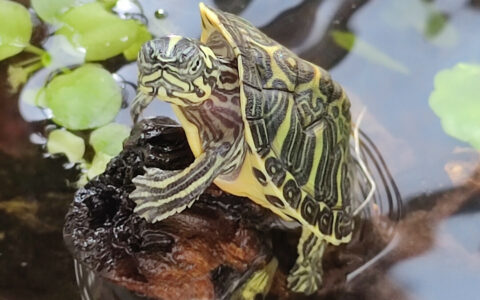
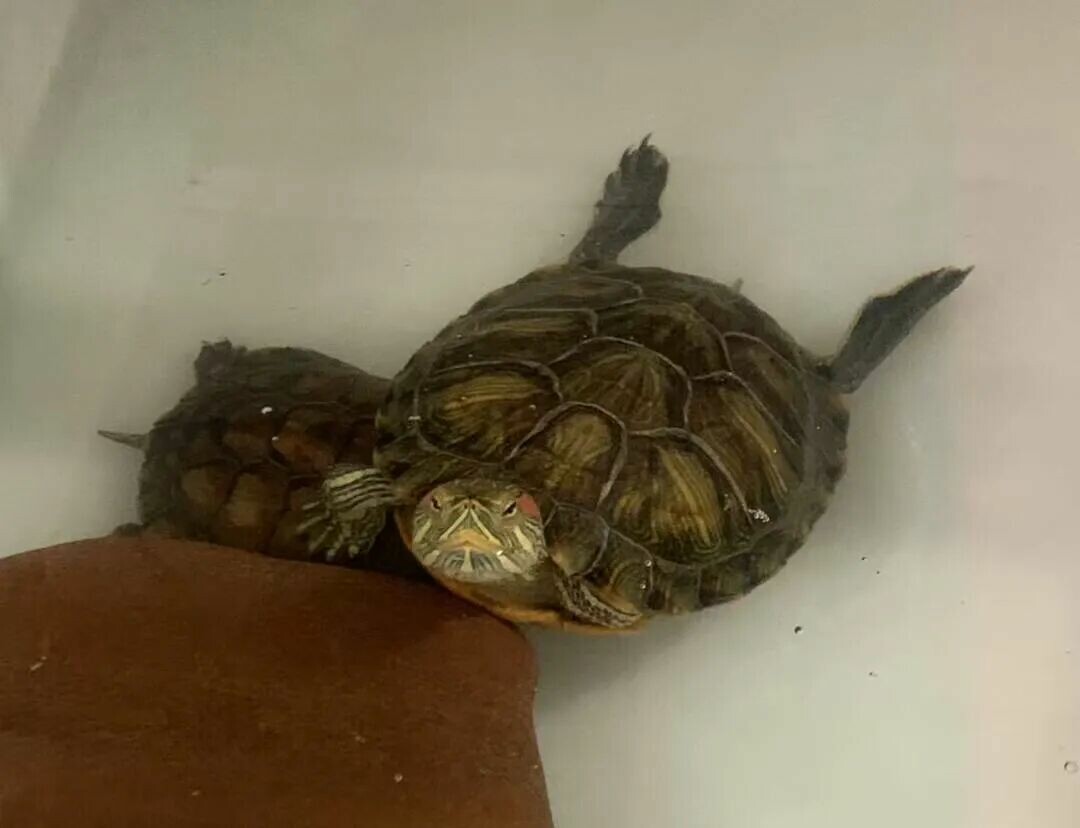
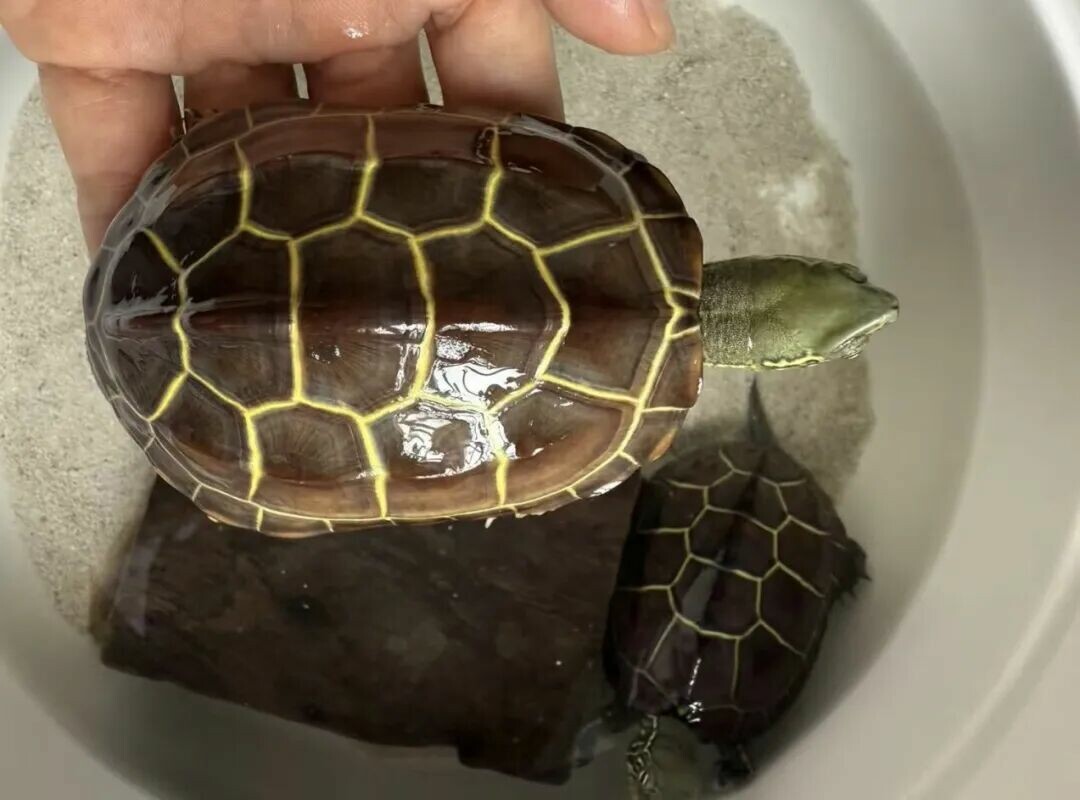
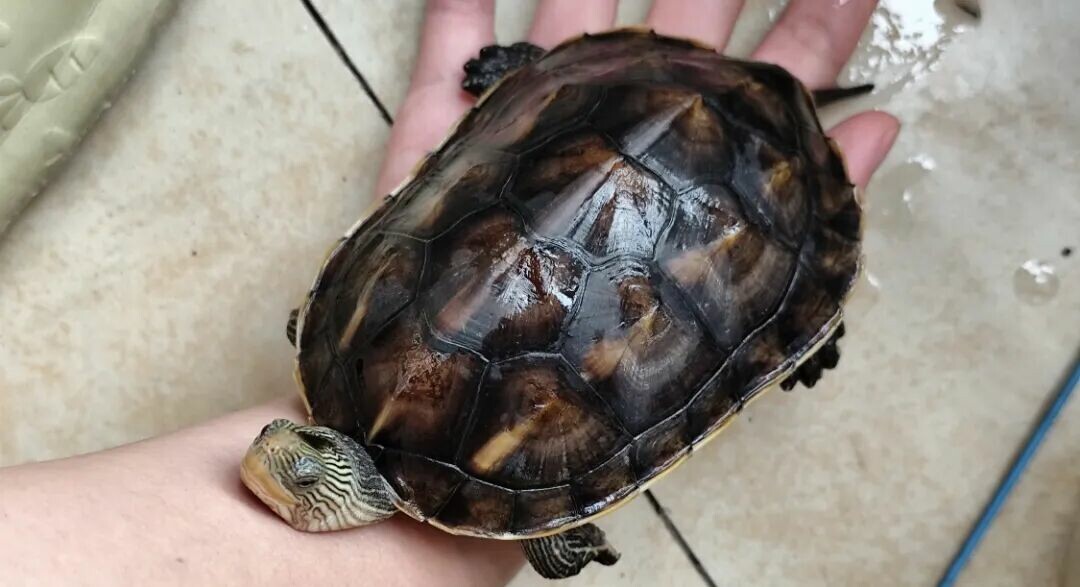
Among turtles used for mercy release, apart from Red-eared Sliders, the number of Chinese Pond Turtles is the largest, but actually, when speaking of released turtles, the Yellow-headed Temple Turtle (Siebenrockiella crassicollis) absolutely cannot be ignored.
The Temple Turtle is also a species that receives much attention. The name "Temple Turtle" originates from the custom in certain countries of placing them in temple ponds; over time, they were named after this.
Characteristics of the Yellow-headed Temple Turtle
The Yellow-headed Temple Turtle belongs to the genus Siebenrockiella of the family Geoemydidae. Its appearance is particularly striking; the eye-catching yellow stripes on its head are its distinguishing mark, forming a sharp contrast with large turtles like the Giant Asian Pond Turtle. The head and individual appear in yellow-brown tones, beautiful and mysterious. In terms of size, the Temple Turtle’s body length can reach over 50 centimeters, and its weight can exceed 20 kilograms, making it a "behemoth" among turtles.

Habitat and Habits
The Yellow-headed Temple Turtle is native to Thailand, Cambodia, Malaysia, and other places, mainly living in rivers and streams, and can also adapt to seawater environments for short periods. Its native environment is close to the tropics, with a warm climate. In terms of habits, the Temple Turtle has strong swimming abilities; although it is a semi-aquatic turtle, it is more adapted to water areas. During the day, they like to gather in groups, while at night they love to soak in the water. They have a docile and timid personality; when first arriving in a new environment, they will retract their heads and not show themselves, but will gradually relax after adapting. They have none of the domineering personality of a big guy.
Diet and Reproduction
Regarding diet, the Temple Turtle is omnivorous but leans towards being herbivorous, loving flowers, fruits, and vegetables, such as sweet potato vines, pumpkins, and papayas, and occasionally eating fish and shrimp. Regarding reproduction, they mature in 6 to 8 years in the wild, and faster under artificial breeding. They lay eggs annually from September to November, 1 to 2 times, with 4 to 10 eggs each time. The incubation period is 90 to 150 days, influenced by temperature and humidity.
Conservation Status and Rearing Suggestions
Because the climate of the native environment is warm, the Temple Turtle’s hibernation period is very short. Except for Guangdong and Guangxi, Hainan, Yunnan, and southern Fujian, heating is recommended for rearing in other regions. Regarding conservation status, the Temple Turtle has been listed in Appendix II of the Convention on International Trade in Endangered Species of Wild Fauna and Flora (CITES) and has been approved by China as a National Class II Protected Wild Animal (restricted to wild populations only). Breeding requires purchasing from legal channels.
The Temple Turtle is loved by turtle enthusiasts for its unique appearance and docile personality, but in the rearing process, attention must also be paid to its habits and conservation status. It’s just that for enthusiasts, the adult form might become a "nightmare"; it is truly big!
Original article by 搬运工, if reproduced, please cite the source: https://www.kaipet.com/en/yellow-headed-temple-turtle-national-protected-animal-revealing-care-guide-giant-temple-turtle



Comments(1)
Knowing it’s a protected species is key. What are the main challenges in ensuring legal sourcing for enthusiasts?