

Worried about your turtle having problems during hibernation in winter? First, understand the hibernation methods, then follow the setup instructions. Even beginners can help their turtles overwinter safely!
Common Turtle Hibernation Methods, Choose According to Your Needs
Shallow Water Hibernation (Top choice for beginners, simplicity is key)
The water level should be 1 – 2 cm above the turtle’s carapace, allowing it to breathe air by simply raising its neck. Place it in a quiet, dark corner (if it’s too cold and you’re worried about the water freezing, you can place it next to a refrigerator, as refrigerators release heat). Changing the water 1 – 2 times a month is sufficient; if it’s not dirty, you don’t need to change it. If the water evaporates too quickly, replenish it with water of the same temperature in a timely manner. Avoid disturbing it frequently throughout the process.
Note: Regardless of the hibernation method, you must let the turtle empty its digestive tract beforehand (stop feeding when the temperature drops to around 10°C and keep it in shallow water for 1 week) before setting up for hibernation to prevent gut rot during hibernation.

Moss Hibernation (Moss and coco coir are more suitable for semi-aquatic turtles)
It’s best to use sterile dry moss (wild-collected moss must be disinfected with potassium permanganate first). Soak the dry moss in warm water for 10-15 minutes until it is fully saturated. Then, take it out and squeeze out the excess water (it’s ideal if the moss holds its shape in a ball without dripping when squeezed tightly) to avoid it being too wet, which can cause skin rot. Lay it down to a thickness twice that of the turtle (about 10 cm), and the turtle will burrow into it on its own. Check the moss humidity every 3 – 5 days, remoisten it periodically, disturb it as little as possible, and avoid temperature fluctuations (coco coir needs to be soaked first; other steps are the same as for moss hibernation).
Note: If the moss becomes moldy or develops an odor, replace all of it immediately. At the same time, check the turtle’s skin. If there are signs of skin rot, disinfect the area with povidone-iodine and then set up a new hibernation environment with clean moss.
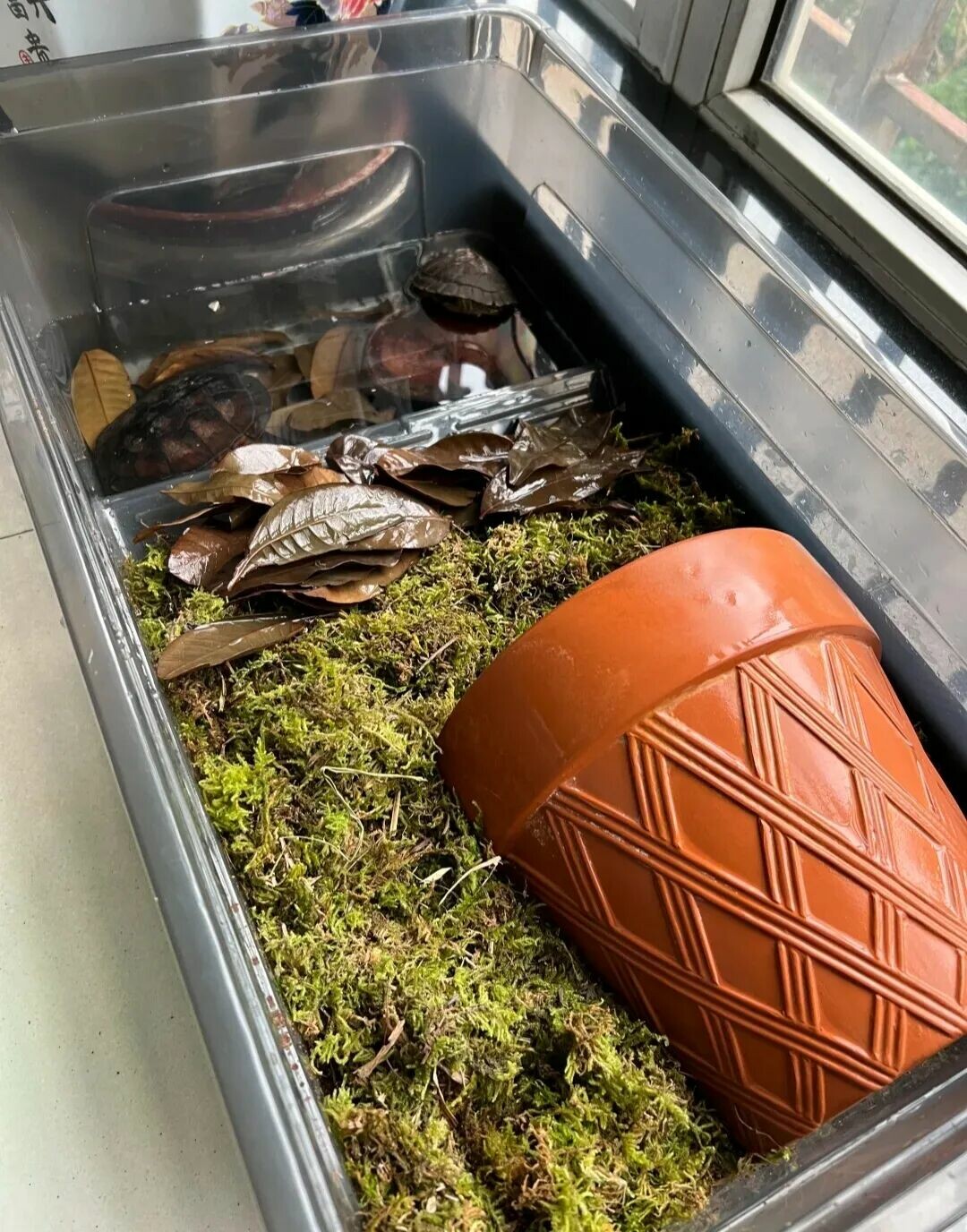
Mud Hibernation (Closer to the hibernation environment in natural conditions)
Prepare soil (it is recommended to buy sterile soil online to avoid wild parasites or pesticide residues). The particles should be relatively small. A soil depth twice the height of the turtle is sufficient. After removing impurities, mix the soil thoroughly with water. The water level should be 2 cm above the soil. You can add longan leaves or camphor tree leaves to prevent the soil from compacting and to replicate a wild environment.
Note: Mud hibernation has higher requirements for the turtle’s physical condition. Beginners are advised to choose shallow water or moss hibernation first. If the turtle is small or weak (such as a newly hatched turtle), mud hibernation is not recommended, as it can easily lead to suffocation or skin rot issues.

Turtle Hibernation with Water-Absorbent Resin
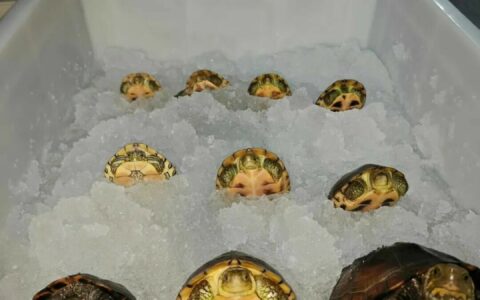
Prepare pet-specific water-absorbent resin. Avoid using industrial-grade resin, which may contain irritating ingredients. Soak it in warm water of about 20°C according to the package instructions. After stirring, let it sit for 10-15 minutes until the resin fully expands into a “jelly-like gel” with no hard core and no dripping water. Spread it to a thickness of 5 – 8 cm. Place the turtle on the surface of the resin; it will burrow in or lie on top on its own (no extra covering is needed, as the softness of the resin provides sufficient insulation and will not cause suffocation).
Note: Water-absorbent resin is a hibernation material that provides insulation, retains moisture, offers a sense of security, and is not prone to mold, rot, or fungal growth. Although it is safe, young turtles (weighing less than 50 g) are weaker, and it is recommended to prioritize moss hibernation, which is easier for them to adapt to.

Follow this tutorial, and no matter which hibernation method you choose, you’ll be able to build a great “overwintering shelter” for your turtle. Follow for more tips, and your turtle is sure to be full of energy when spring arrives!
Original article by 搬运工, if reproduced, please cite the source: https://www.kaipet.com/en/hibernate-turtle-winter-beginners-easily-set-shelter





Comments(2)
The water-absorbent resin method sounds very innovative! What’s the ideal ambient temperature range for the room where it’s used?
@CriticX:Thank you for your insightful question about the water-absorbent resin method! This method is indeed innovative. While the article emphasizes the resin’s insulation, a general guideline for turtle hibernation is to maintain a stable ambient temperature, typically between 5-10°C (40-50°F). The resin helps keep this stable.