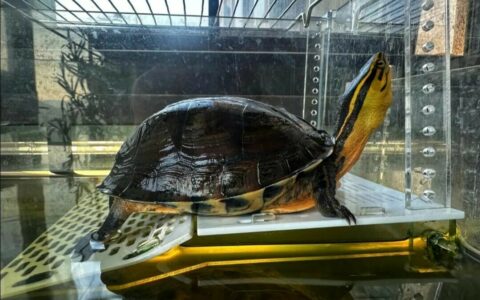
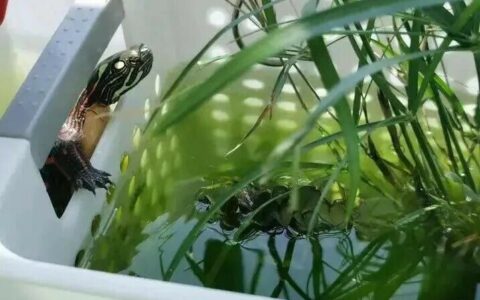
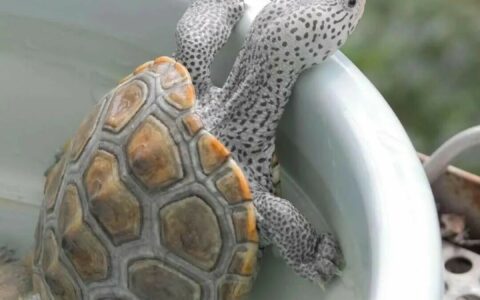
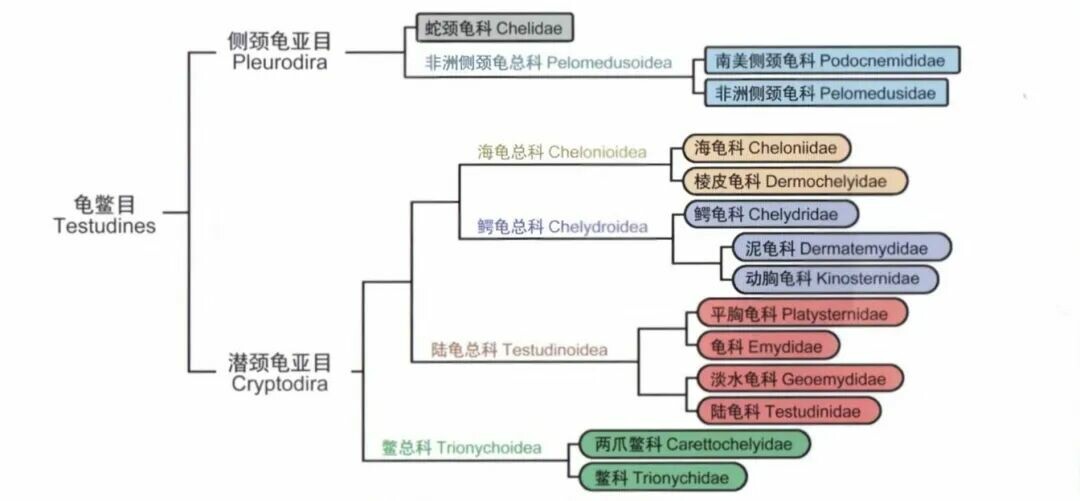
There is a vast quantity of turtles sold in the market; some are native Chinese turtles, while others are introduced from abroad. This article will introduce 15 species of native Chinese turtles.
Chinese Pond Turtle (Reeves’ Turtle)
When speaking of native turtles, the first one that comes to mind is the Chinese Pond Turtle (often called the Grass Turtle). They have a relatively long lifespan, reaching 20-50 years, or even a century, earning them the title of “Longevity Turtle.” Adult turtles generally grow to 15-25 centimeters.
Male turtles are generally smaller than females. Adult male turtles also have the possibility of melanism, which means turning completely black; they look very majestic and cool.

Chinese Stripe-necked Turtle
The body size of the Chinese Stripe-necked Turtle is usually larger than that of the Chinese Pond Turtle. Adults can reach a length of over 20 centimeters, with females being even larger; some individuals can even exceed 25 centimeters. Their lifespan is generally 20-30 years.

Yellow Pond Turtle
They are further divided into Daqing (Big Green), Xiaoqing (Little Green), and Nanshi (Southern Stone). They are medium-sized, about 15-20 centimeters, with a distinct ridge down the center of the back. After growing up, they become brownish-yellow or olive-colored.
They are omnivorous, feeding mainly on animal matter such as small fish, shrimp, snails, and tadpoles, but also eating plant matter like aquatic plants, vegetables, and fruits. When raised in captivity, they can be fed turtle pellets, lean meat, mealworms, etc.
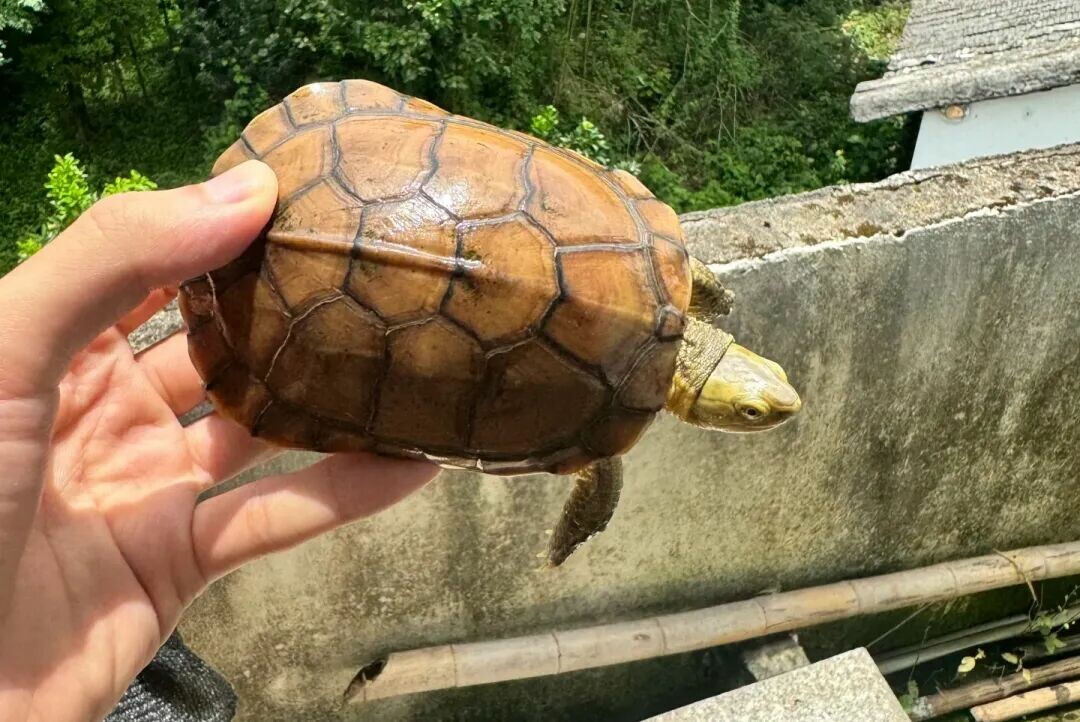
Black-necked Pond Turtle
Mainly distributed in Guangdong, Guangxi, and Hainan. They used to be very expensive, but as breeding quantities increased, the price came down. In terms of size, they belong to the larger species among native water turtles, with some individuals even exceeding 30 centimeters.

Yellow-margined Box Turtle
A little bit of knowledge:
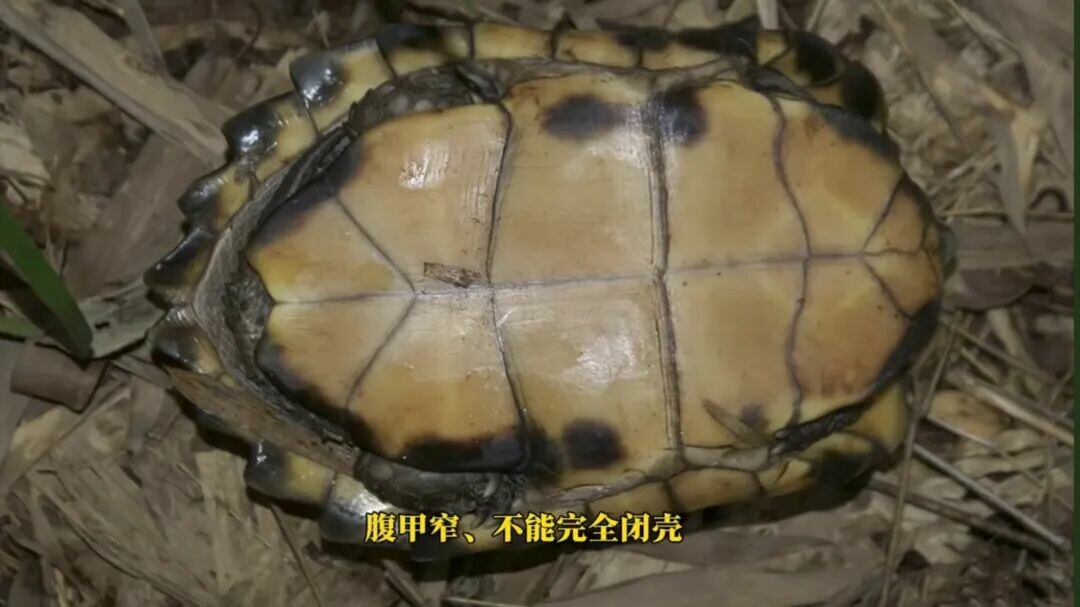
Box Turtle: Can completely retract its head, limbs, and tail into the shell and close it. Ordinary turtles cannot do this.
It is a relatively popular semi-aquatic turtle in China. It can eat on land and has very good interactivity.
The length is usually 15-20 centimeters, with males being relatively smaller. The mountainous areas of southern Anhui and the Dabie Mountains, as well as parts of Henan, are suitable for the growth of Yellow-margined Box Turtles.
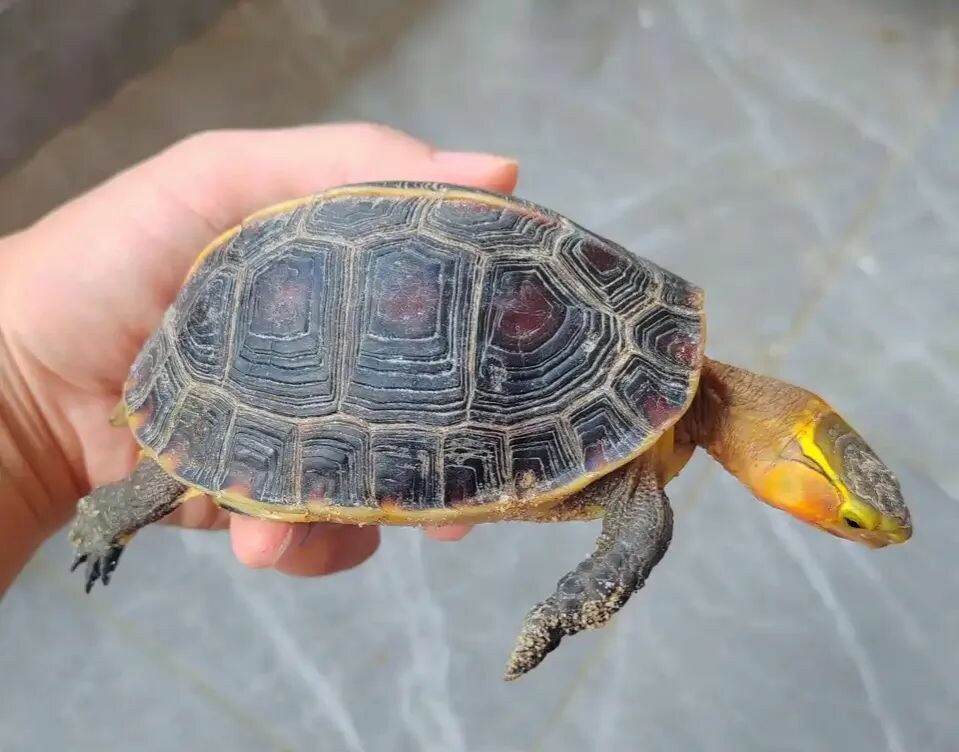
Golden Coin Turtle (Three-striped Box Turtle)
Also known as the Three-striped Box Turtle, it is distributed domestically in Hainan, Guangxi, Fujian, Guangdong, and other places.
The Golden Coin Turtle has always been regarded as a “symbol of wealth,” and keeping one at home symbolizes rolling in money.
This turtle species is omnivorous. In the water, it preys on small fish, small shrimp, and tadpoles. On shore, it eats snails, earthworms, and various insects. Occasionally, it will also eat some fruits and vegetable leaves for a change of taste. For artificial breeding, feeding fish, shrimp, vegetables, and fruits is sufficient.
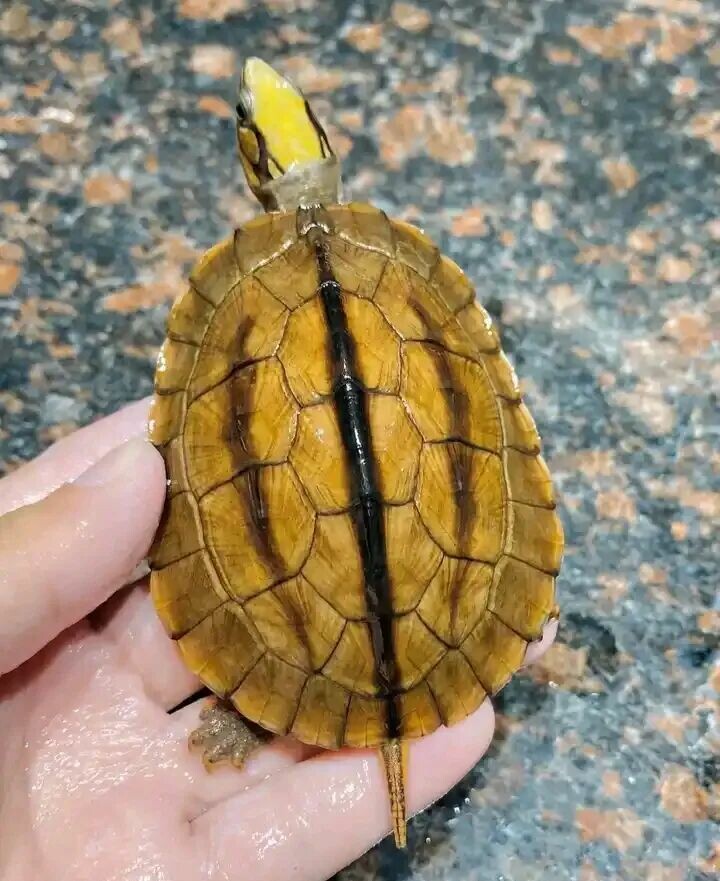
Golden-headed Box Turtle
A species unique to Anhui. The head is pure gold, and the color deepens with age.
They inhabit mountain streams with clear water, relatively slow currents, dense vegetation on both sides, or plenty of rock crevices at the foot of the hill on one side.
The price of a hatchling can reach 50,000 to 100,000 RMB. Be careful to distinguish it from the Golden Coin Turtle. The price of Golden Coin Turtle hatchlings ranges from several thousand to tens of thousands of RMB.
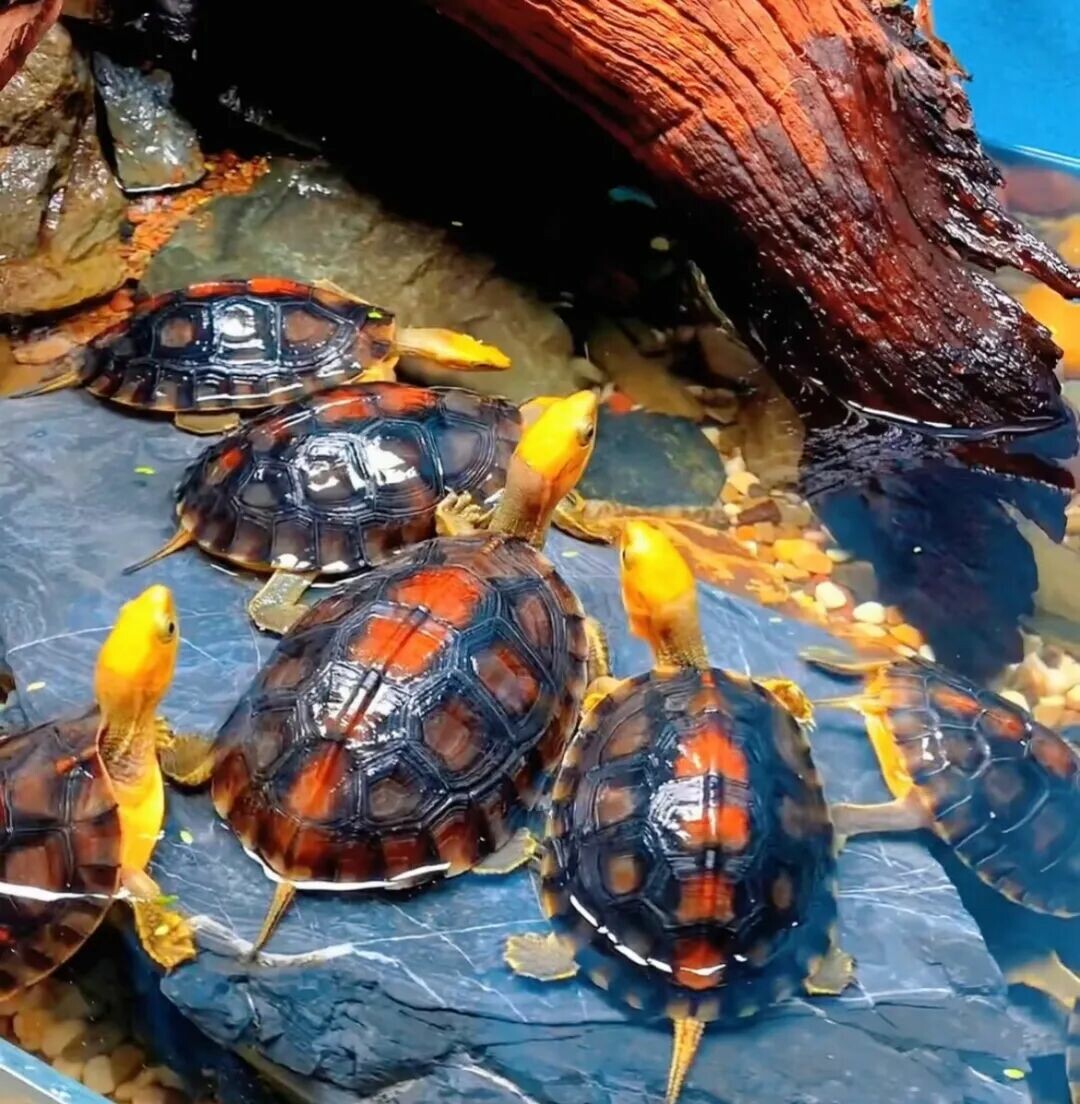
Amboina Box Turtle
In China, it is mainly distributed in Guangxi; abroad, it is found in many places in Southeast Asia. It often inhabits rivers, swamps, wetlands, and other areas near water.
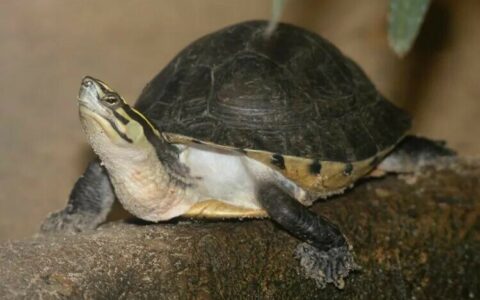
This turtle species is a relatively cheaper box turtle. It belongs to the semi-aquatic turtles and can be kept in a terrarium setup. Some people like to use the Amboina Box Turtle as an “affordable alternative” to the Yellow-margined Box Turtle, but unfortunately, the Amboina Box Turtle’s interactivity is not very good; it is a bit timid and not very easy to raise.
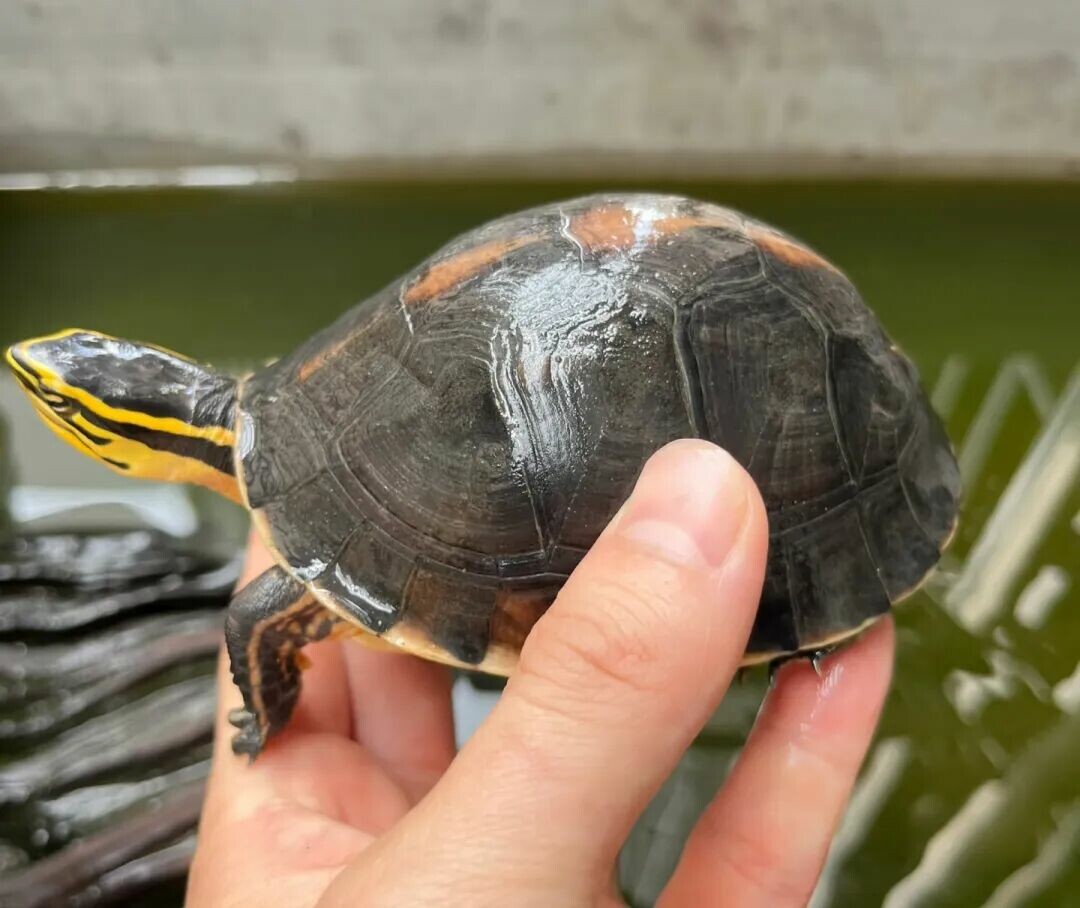
McCord’s Box Turtle
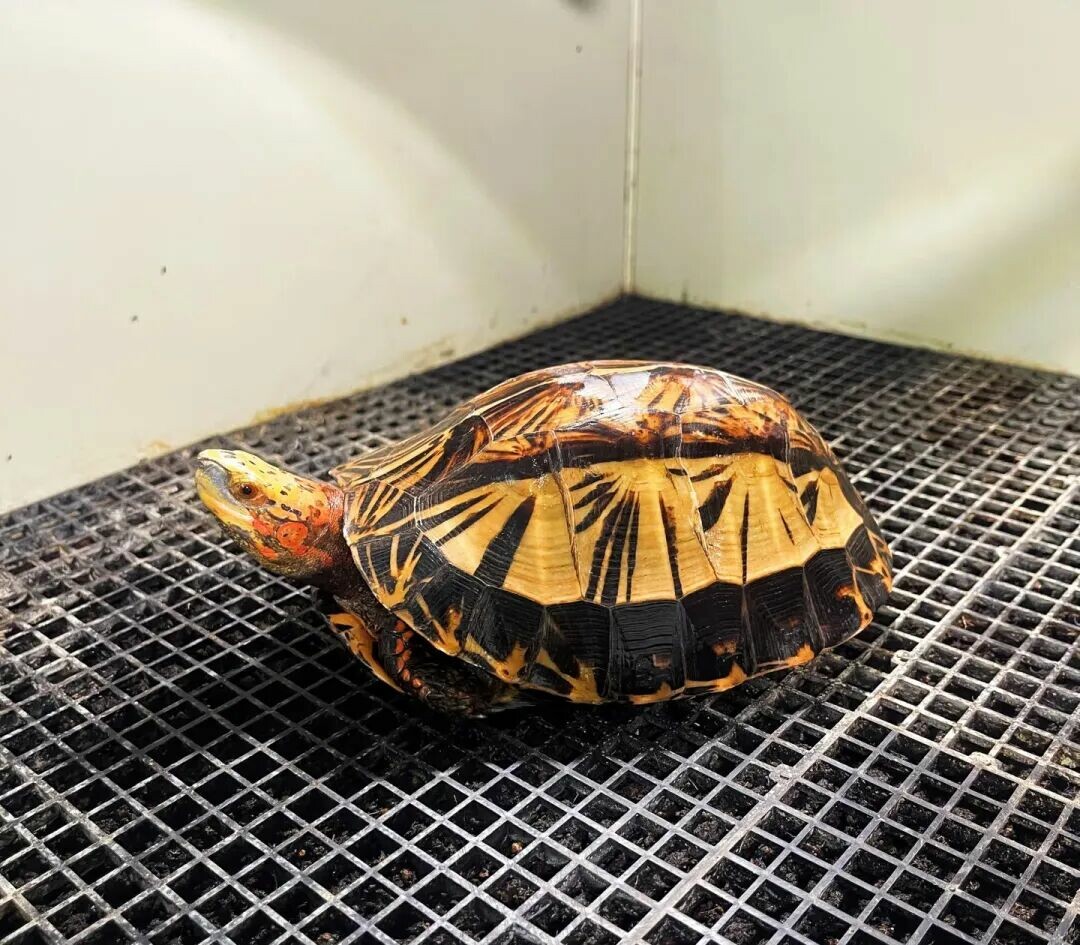
Distributed in Baise, Guangxi. It has a flame pattern and lives in environments with lots of bamboo, so locals also call it the “Yellow Bamboo Turtle.”
Indochinese Box Turtle
Distributed in Hainan, Guangxi, Guangdong, and other places. In addition, this species is also distributed in Vietnam, Laos, and other regions.
They inhabit hill and mountain streams and shallow water areas, liking to hide in the fallen leaves under the forest. They have strong terrestrial tendencies. This species is an omnivorous animal, feeding on insects, fish, shrimp, green vegetables, fruits, etc.
Keeled Box Turtle
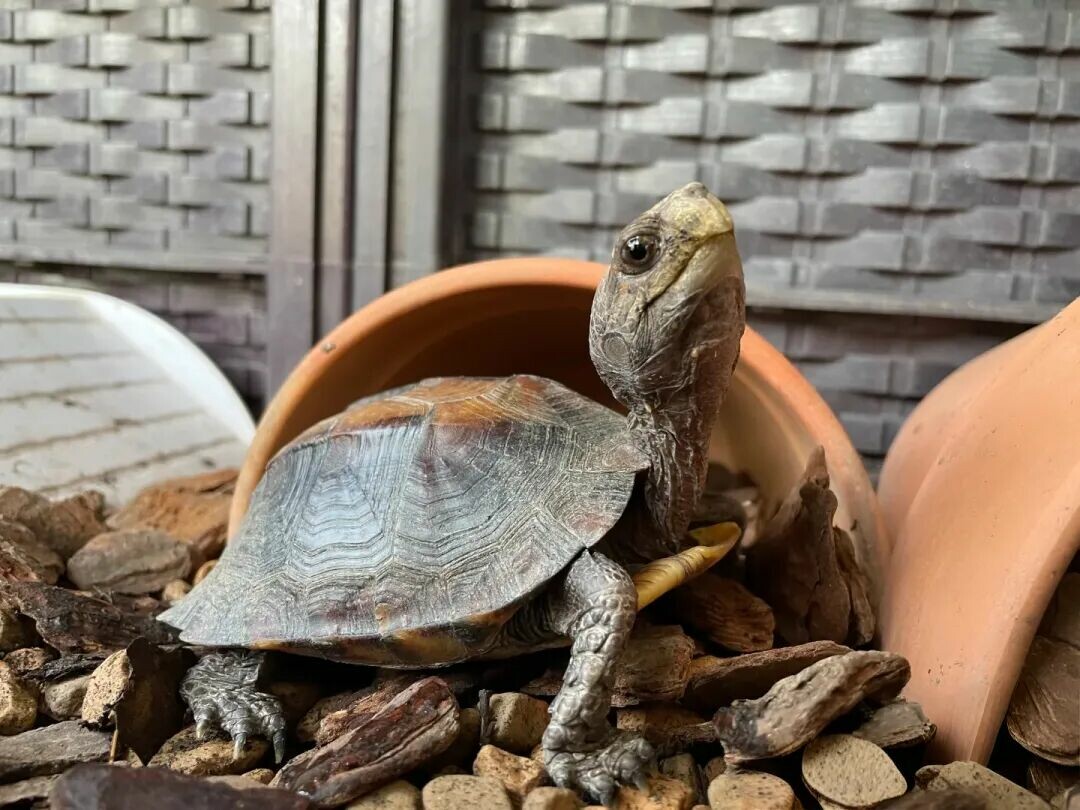
This turtle species looks relatively ancient and belongs to the semi-aquatic turtles. The breeding environment for the Keeled Box Turtle is basically similar to that of the Yellow-margined Box Turtle; arranging a land area, a water area, and a hiding area will suffice. It is relatively timid and its interactivity is not very high.
The carapace is arched in the middle a bit like a Chinese Pond Turtle, but with 3 additional ridges, and the back of the shell is serrated. It lives in mountainous areas, likes to be active in humid environments, has a varied diet, and feeds on insects, earthworms, fish, shrimp, plant fruits, etc.
Russian Tortoise (Four-clawed Tortoise)
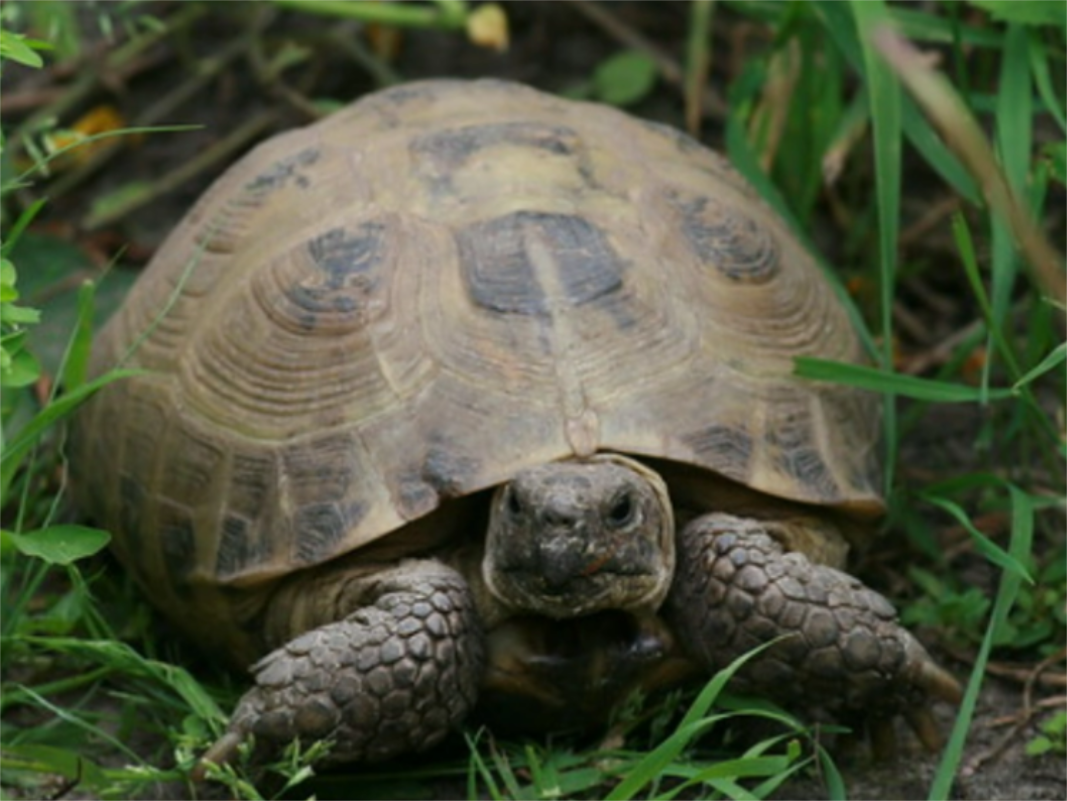
Mainly inhabiting the desert areas of Xinjiang, this turtle species has the characteristic of being resistant to both high and low temperatures. It can withstand low temperatures of -15℃ and can hibernate for half a year. It feeds on the leaves, flowers, and fruits of herbaceous plants, and also eats a small amount of insects and animal carcasses.
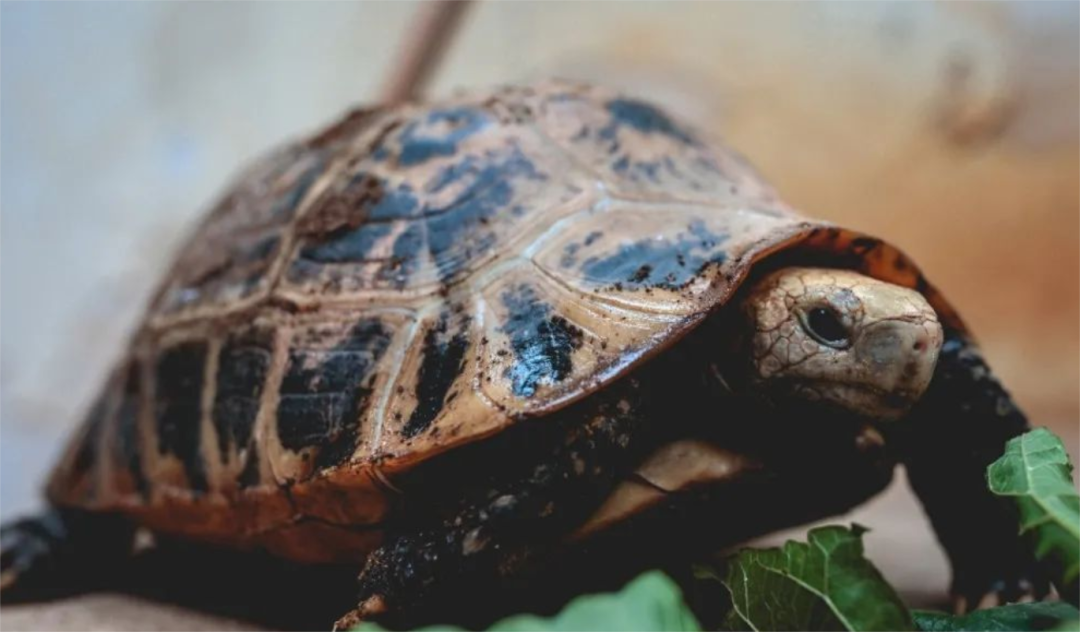
Elongated Tortoise
In China, it is mainly distributed in Guangxi, Yunnan, and other places. Its size is moderate, the middle of the carapace is highly domed, appearing brown or black-brown. It is omnivorous and easy to raise.
This turtle species is medium-sized, with a body length of about 15-20 centimeters. It is a relatively common tortoise variety on the market, feeding mainly on plants. Its adaptability to the environment is relatively strong, making it suitable for people with some experience in raising tortoises.
Impressed Tortoise
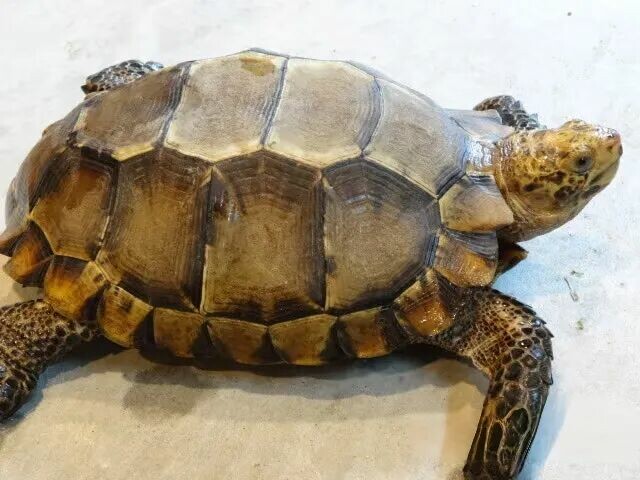
In China, the Impressed Tortoise is mainly distributed in Hainan, Yunnan, Guangxi, Hunan, and other places. Abroad, this species is distributed in Thailand, Vietnam, Malaysia, and other countries.
It belongs to the national first-class protected animals. They generally live in forest mountain areas, and the difficulty of raising them is quite high.
Big-headed Turtle
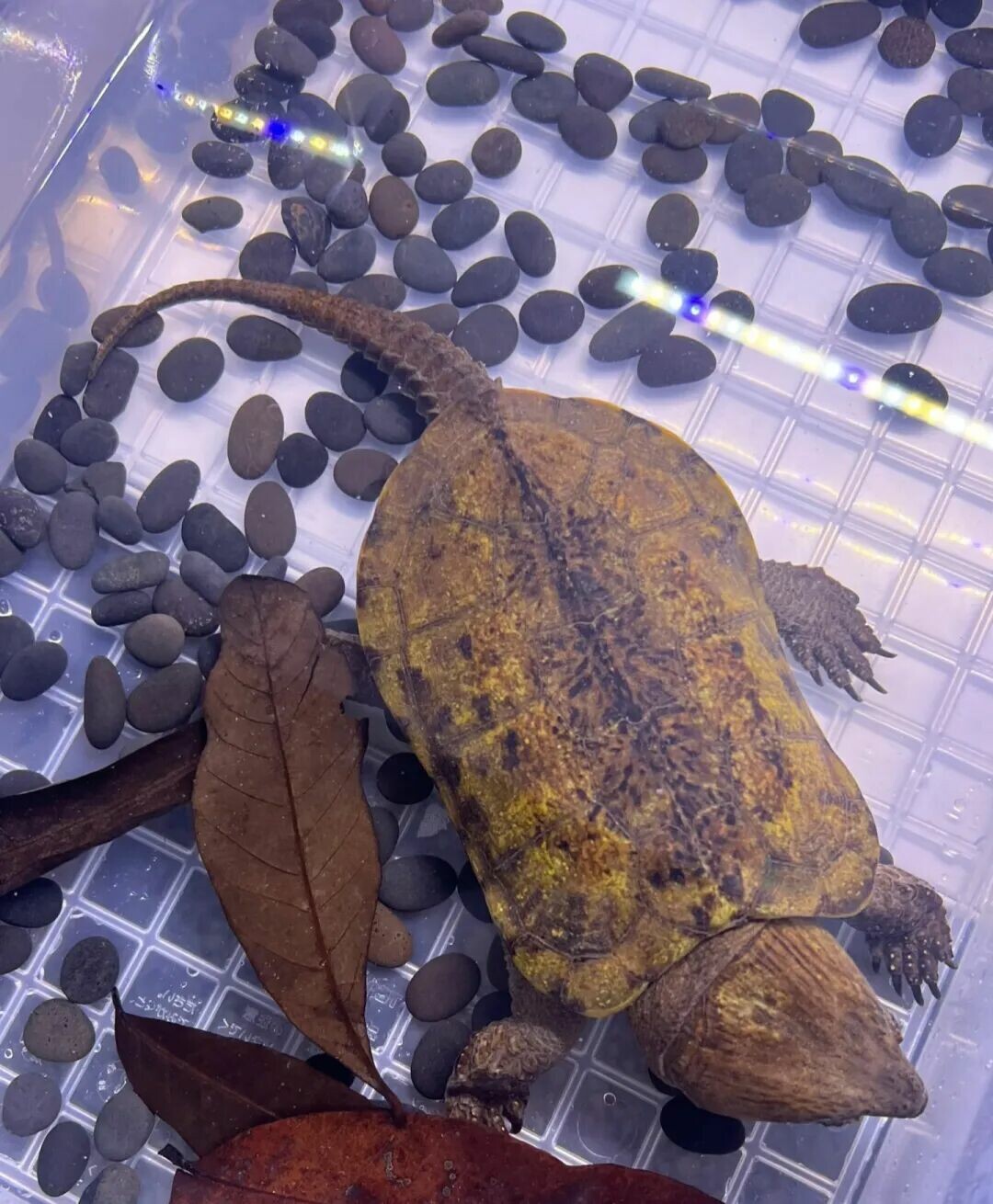
The Big-headed Turtle is also known as the Eagle-beaked Turtle. This turtle species has a very distinctive appearance, being long, elliptical, and flat.
It is a carnivorous animal with a wide diet, feeding on swamp eels, fish, snails, shrimp, worms, earthworms, frogs, etc. In summer, it also likes to eat fruits.
The above is an introduction to some of China’s native turtles.
Original article by 搬运工, if reproduced, please cite the source: https://www.kaipet.com/en/native-chinese-turtle-varieties-complete-illustrated-guide-15-national-turtles