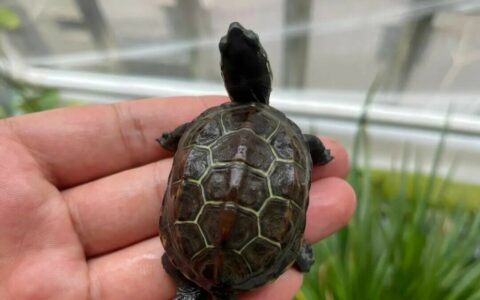
In 1852, a French biologist named a small turtle living in North America Sternadorous cararintus, which is the Fruit Pit Mud Turtle (Striped Mud Turtle). The carapace of the Striped Mud Turtle is elliptical, brownish-yellow with 3 yellow lines, closely resembling the “pit” of a fruit; thus, clever Chinese people call it the Fruit Pit Mud Turtle.
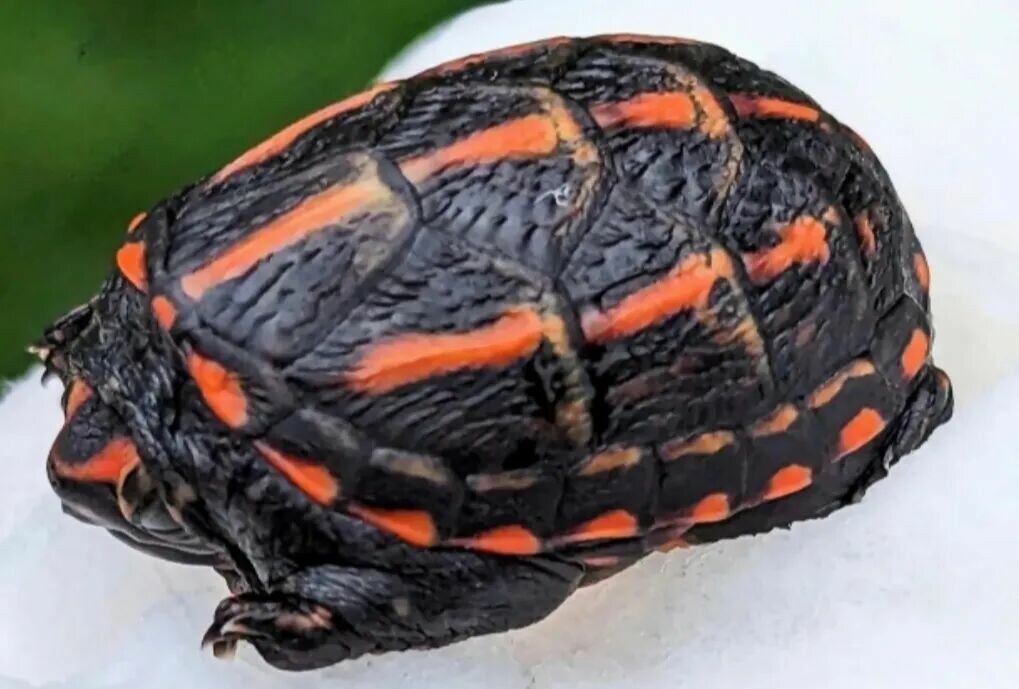
Biology of the Striped Mud Turtle
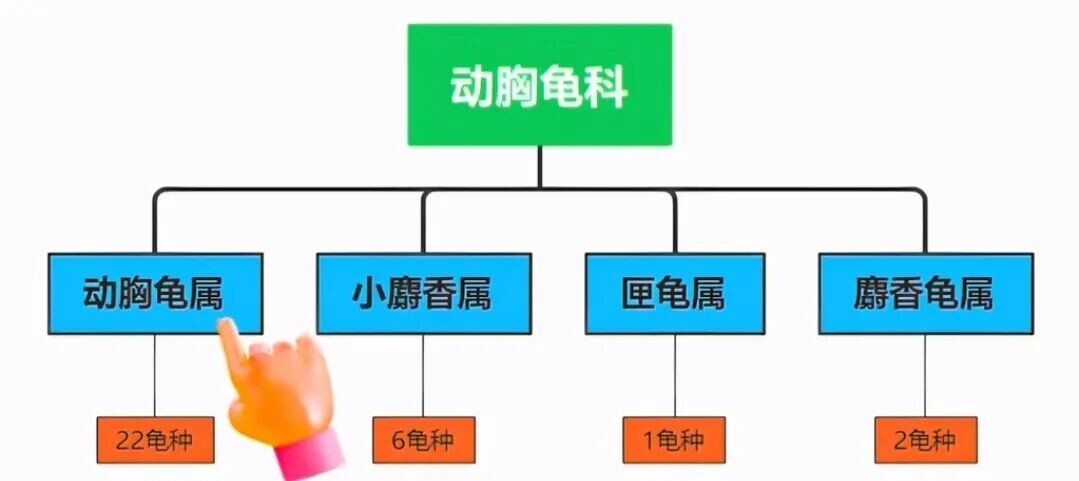
The scientific name of the Striped Mud Turtle is Kinosternon baurii. Biologically, it belongs to the family Kinosternidae — genus Kinosternon. It is a small aquatic freshwater turtle. Male turtles can reach a maximum straight carapace length of 11.5 cm, and females can reach a maximum of 12.7 cm.
They are naturally distributed in the southeastern United States, extending south from southern Virginia, through North Carolina, South Carolina, and Georgia, all the way past Florida to the Keys (Archipelago).
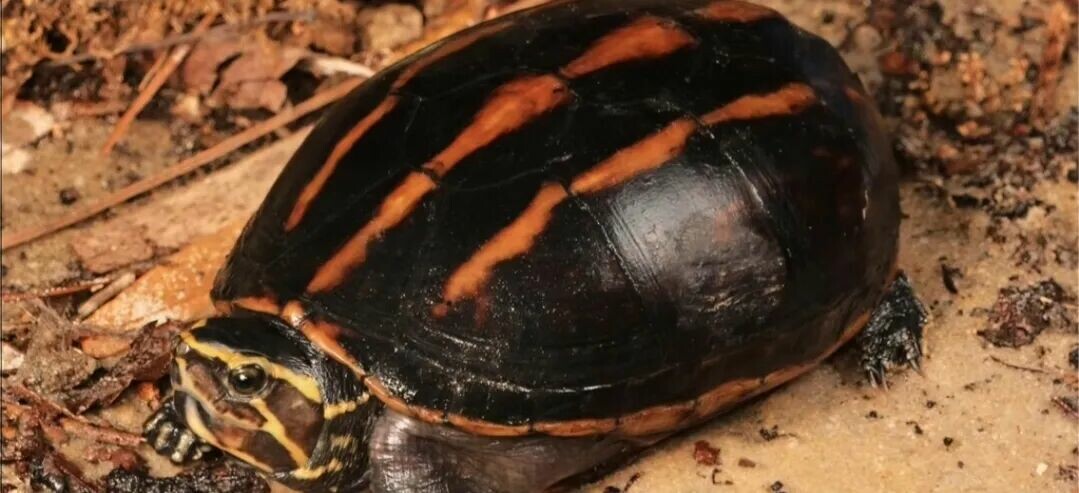
North-South Differences
The turtle community divides them by north and south regions: Southern Fruit Pits and Northern Fruit Pits. The Northern ones have a darker body color, while the Southern ones are lighter. It is not easy to distinguish them at the hatchling stage.
Their diet mainly consists of insects, worms, snails, algae, seeds, and invertebrate remains. They are naturally slow and clumsy, preferring to be active during the day and usually resting underwater at night.
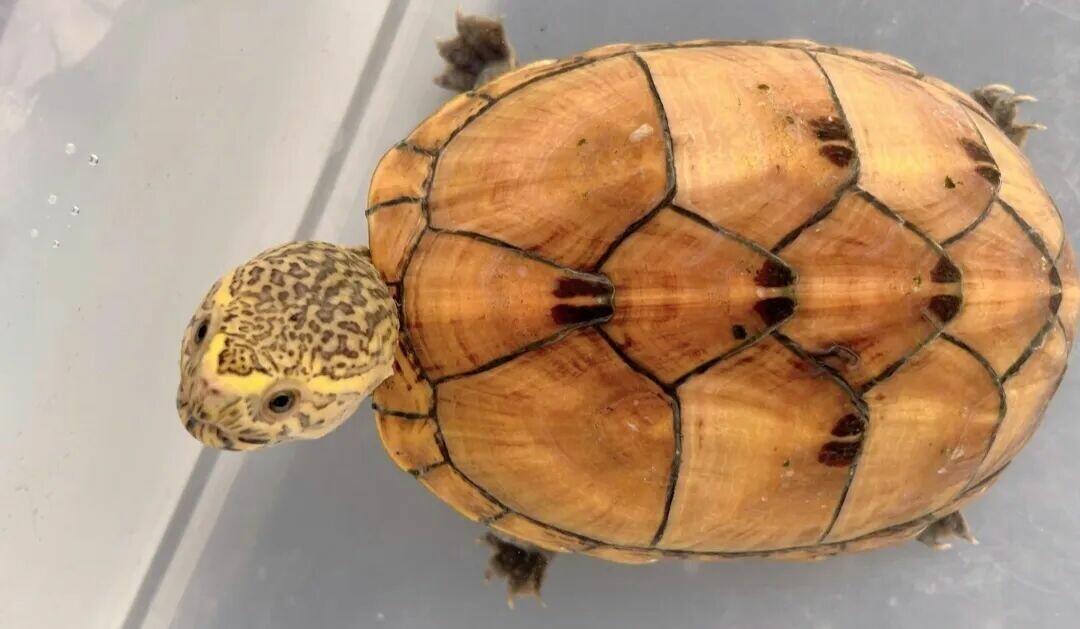
“Egg Turtle” is a common name for some small aquatic turtles in the family Kinosternidae. The Striped Mud Turtle (alias Kinosternon baurii) belongs to the genus Kinosternon in the family Kinosternidae. Therefore, it is both a Striped Mud Turtle and falls under the “Egg Turtle” category. This is just a different categorical expression for the same turtle (“Mud Turtle” refers to the family/genus category, while “Egg Turtle” is a colloquial nickname).
Husbandry
Striped Mud Turtles are worry-free and easy to keep. Breeding is not difficult, and they have low environmental requirements. They can hibernate or not; heating through the winter will contribute an extra season of eggs, but if you want to save trouble, let them hibernate.
Husbandry requires attention to the following points:
Sunlight Requirements
The Striped Mud Turtle is a turtle that needs to come ashore. They have a strong preference for morning and evening sunlight, and they often sleep on land at night. It is best to provide a platform where they can bask in the sun. If there is no sunlight, you need to use a full-spectrum “sun lamp” to simulate the sun.
Water Quality Requirements
Their water quality requirements are average. On one hand, they like to go ashore; on the other, as “Egg Turtles,” they are not very sensitive to water quality. However, hatchlings have higher requirements; if the water quality is too poor, they are prone to skin rot.
Water Depth
Judging by the semi-webbed toes of the Striped Mud Turtle, it is not a turtle particularly suited for deep water. Generally, for large sub-adults or breeders, the water depth is 20 cm. A basking platform must also be provided for them to rest.
Temperature Control
These turtles are distributed in North America from tropical Florida to northern New York (roughly equivalent to the distribution from Fujian to Heilongjiang in China), so they have strong adaptability. Generally, they start eating above 18 degrees, estivate above 32 degrees, and the optimal temperature is between 20 and 30 degrees.
Breeding
Growth and Sexual Maturity
Striped Mud Turtles grow very fast. Under heated conditions, hatchlings can grow to 7- 8 cm in about 12 months. In the wild, it usually takes 3 – 5 years to reach sexual maturity. Individually, males with a carapace larger than 6 cm and females larger than 9 cm can lay eggs. Under artificial breeding conditions, the sexual maturity cycle can be advanced by 2 to 3 years.
Breeding Group Configuration
Under artificial breeding conditions, breeding groups can generally be arranged as 1 male to 1 – 4 females. It is best to keep males separate usually and only mix them during the breeding season; this reduces fighting or damage to the male turtle.
Breeding Cycle
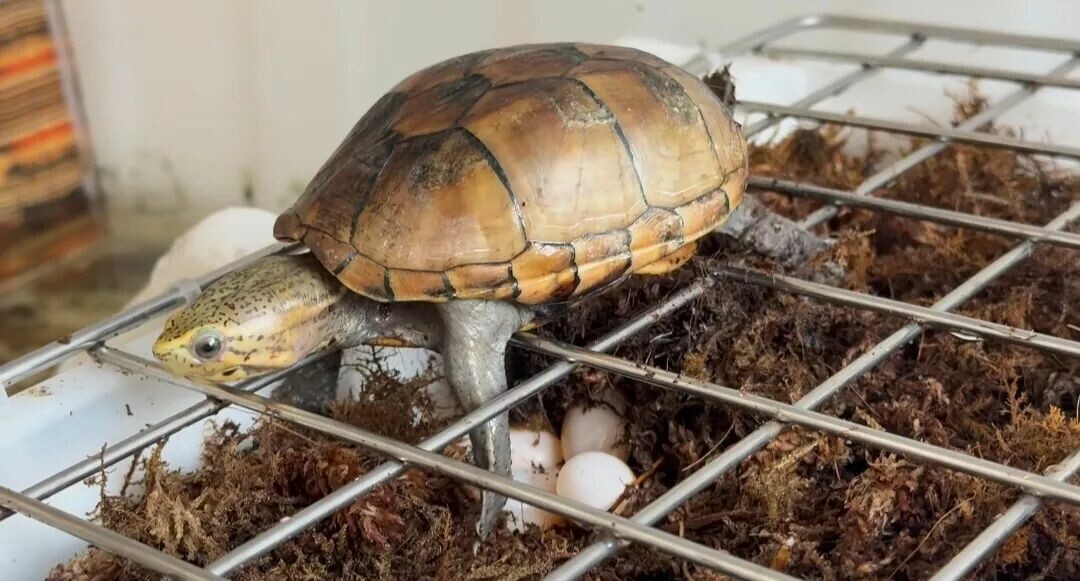
In the wild, breeding activity occurs throughout the year. The female’s ovarian cycle is continuous, peaking between September and November. Females can lay 6 clutches of eggs per year, with an average of 4 eggs per clutch. Online, some turtle hobbyists report females laying up to 7 eggs in a clutch. In more northern areas of their native habitat, the number of eggs laid is lower due to the cold climate.
Original article by 搬运工, if reproduced, please cite the source: https://www.kaipet.com/en/care-guide-striped-mud-turtles-habitat-setup-producing-6-clutches-eggs-year