

In the journey of turtle keeping, nothing is more heartbreaking than watching your beloved turtle pass away. You start keeping turtles full of confidence, but your enthusiasm is often dampened along the way. Having a turtle die on you is an experience many of us fellow keepers have had. Eventually, you might even become somewhat emotionally numb to it.
Fellow keepers are often perplexed: despite providing meticulous care, why do their turtles still seem unable to escape their fate? In reality, a turtle’s illness often stems from easily overlooked details. Here’s an in-depth analysis of the 4 major pitfalls in “turtle life” to help you become an expert turtle keeper! Of course, these are factors that we, as owners, can control, aside from the turtle’s own physical constitution. If the turtle you buy is of poor quality to begin with, it’s truly beyond saving. This brings up the topic: on the importance of a good seller. But let’s first look at what we should do on our end.

Temperature Difference: The Turtle’s “Invisible Killer”
As cold-blooded animals, a turtle’s body temperature fluctuates with its environment. Whether you agree or disagree, I personally believe that temperature differences have a significant impact on turtles.
Temperature differences, especially between different media, can be called the “number one enemy” of a turtle’s health. Sudden changes in water temperature or large day-night temperature swings can disrupt a turtle’s metabolism, leading to illness in mild cases, or sudden death in severe ones.
Guide to Avoiding Pitfalls
When changing water, ensure the new water is the same temperature as the water in the tank; you can use a thermometer to measure it. Avoid placing the turtle tank near air conditioning vents, radiators, or other areas with large temperature fluctuations.
Water Quality: Stability is Key
Water quality issues are also a “potential threat” to a turtle’s health. However, it’s worth noting that turtles are quite adaptable to water quality. As long as it’s stable, they can gradually adapt to tap water, green water, or even fecal water. What’s truly terrible is unstable water quality! Constantly changing the water source—today it’s green water, but you find it unsightly; tomorrow you switch to fecal water, but the smell is too strong and unpleasant; then you change to tap water. This repetitive cycle of trial and error will wear the turtle out from constant adaptation, ultimately leading to a stress response and triggering a series of health problems.
Guide to Avoiding Pitfalls
Choose a suitable water source and keep it stable, avoiding frequent changes. Clean the turtle tank regularly to maintain water cleanliness, but there’s no need for excessive water changes. Observe the water; if there are no obvious odors or excessive oil film, there is no need to change it.
Stress: The Challenge for a New Turtle in its Tank
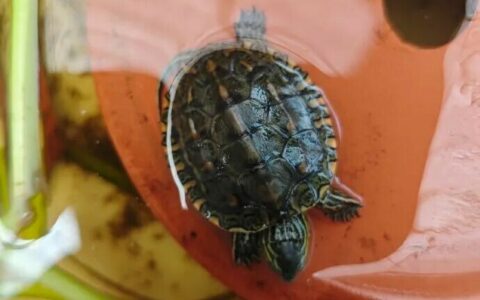
When a new turtle is introduced to a tank, it will inevitably experience a stress response to the unfamiliar environment, manifested as frantic paddling, refusing food, skin rot, floating, etc. At this time, the turtle’s immune system is compromised, making it more susceptible to disease.
Guide to Avoiding Pitfalls
After a new turtle arrives home, first rehydrate it and let it rest in a quiet environment, avoiding excessive disturbance. Place the turtle tank in a dimly lit, quiet location to help the turtle adapt as quickly as possible. Under normal circumstances, a healthy turtle will show signs of relief in 3-5 days. As for how long it takes to fully adapt, it varies for each turtle. But if it starts eating, can sink properly, and basks, it’s developing in the right direction.
Water Volume: Big Space, Big Health
The volume of water directly affects the stability of water temperature and quality. In a body of water that is too small, the temperature fluctuates greatly, the water quality deteriorates easily, and the turtle is more likely to get sick from temperature differences during water changes.
Guide to Avoiding Pitfalls
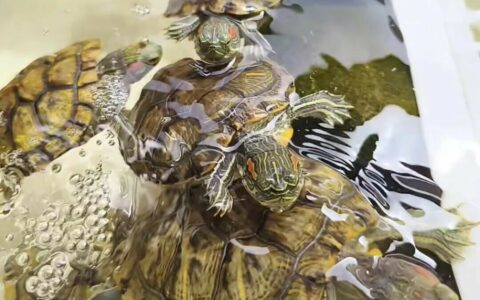
Choose a sufficiently large tank based on the size and number of your turtles. A larger volume of water makes it easier to maintain stable water temperature and quality, providing a healthier living environment for the turtle. Therefore, if you lack sufficient space, don’t be greedy and keep too many turtles. Having just 1 to 2 can bring a lot of joy. More turtles will only add to your troubles.
Keeping turtles is a science that requires patience and meticulous care. Avoid the 4 major pitfalls mentioned above, and I believe your turtle will surely grow up healthy and happy, accompanying you for many long years! This excludes cases where you receive a sick turtle to begin with!
Original article by 搬运工, if reproduced, please cite the source: https://www.kaipet.com/en/major-pitfalls-turtle-keeping-read-beginners-avoid-mistakes-raise-turtle-thrives


Comments(1)
Great points, especially on water volume! I’m curious, does having a larger volume also significantly help with maintaining stable temperatures?