

Get to know a turtle a day. Today, I’m introducing a turtle species endemic to Japan, the Japanese Pond Turtle.
First, let’s start with a simple introduction to the Japanese Pond Turtle.
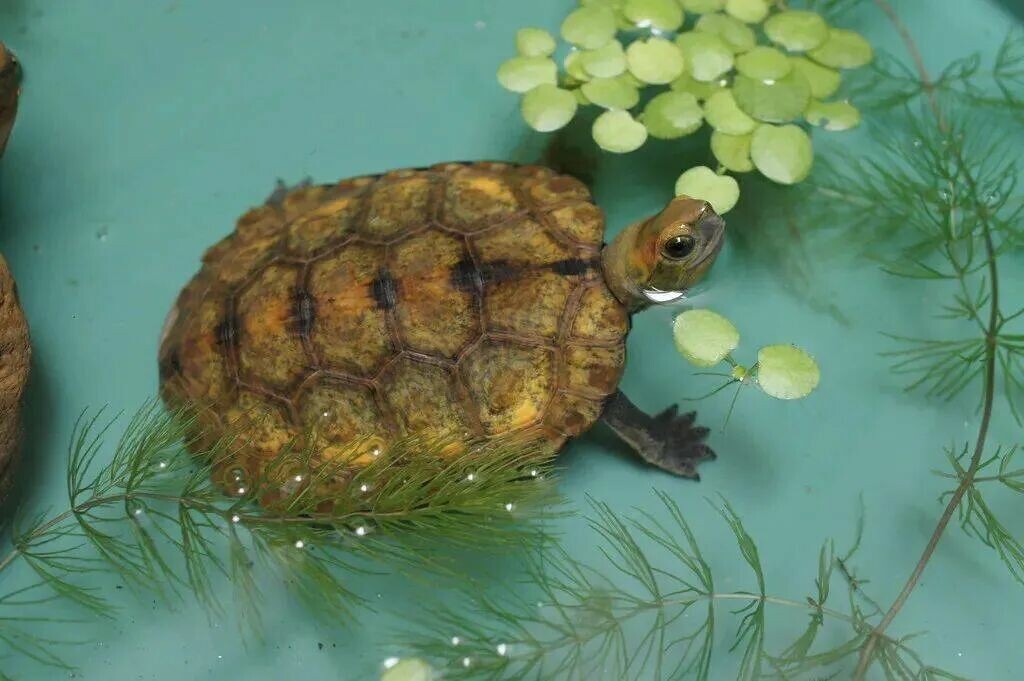
The Japanese Pond Turtle, also known as *Mauremys japonica*, is a species of the family Geoemydidae and genus *Mauremys* endemic to Japan. It is somewhat similar to China’s Chinese Pond Turtle (*Mauremys mutica*), but in terms of appearance, the difference is like heaven and earth.
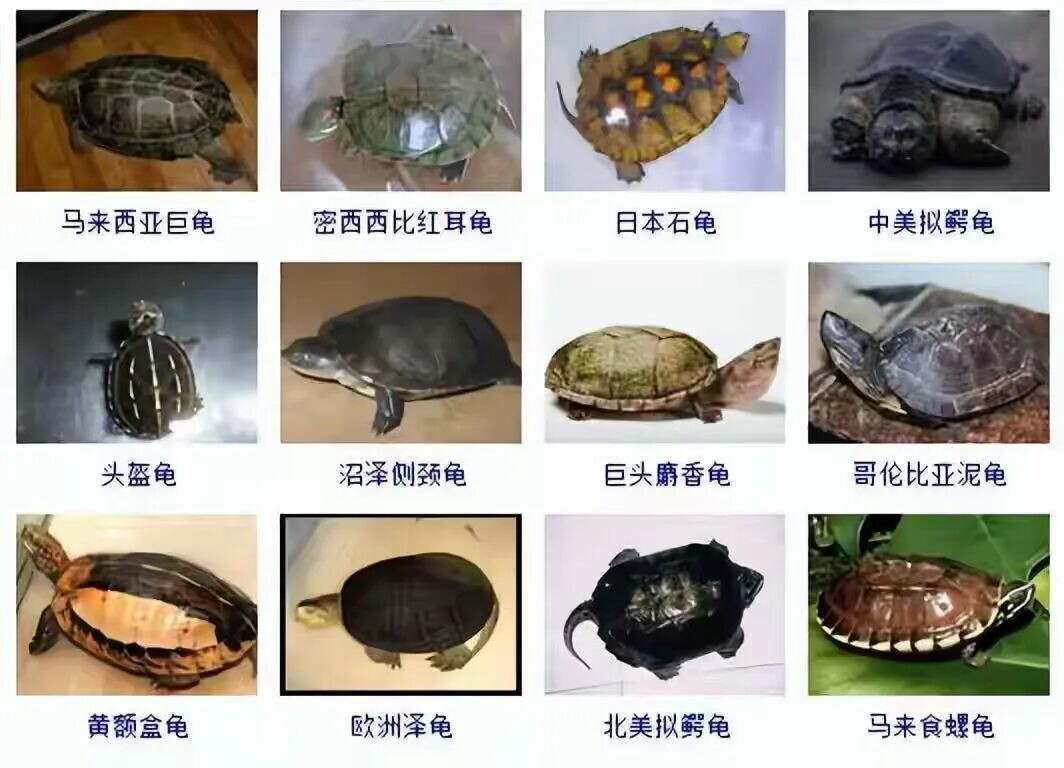
The carapace length of an adult Japanese Pond Turtle is generally 13-18 centimeters, with females being larger than males. It is generally brown overall, with a slightly lighter head color and small black spots on the sides and around the neck. The back has only 1 black keel, with light yellow stripes along the raised ridge. The rear edge of the carapace is serrated, featuring exquisite patterns formed by clear growth rings and radiating grooves. The limbs and tail have chrysanthemum-colored or dark orange stripes on the sides. Its overall appearance, which resembles a mottled, yellowish-brown stone after developing its coloration, is how it got the name “Stone Turtle.”
However, due to the unique appearance of the Stone Turtle, the color of its carapace changes with age. For instance, juveniles are dark bluish-black with yellow markings, while adults may develop a transition of multiple colors such as brownish-yellow, orange, yellow, and brownish-green. The patterns on the Stone Turtle are also magnificent and varied, possessing a charm reminiscent of the glaze-like sheen on oriental porcelain, which has earned it the nickname “Five-Colored Stone.”
But according to my (Lao Wu’s) aesthetic sense, although the Stone Turtle’s shell is distinctive, the adult’s shell shape is rather flat and elongated, somewhat like a flattened rock, which quite fits the physique of a “xiao baga.”

Cohabitation Adaptability and Hybridization Value of the Japanese Pond Turtle
Although the Stone Turtle has a peculiar shape and appearance, curiosity gets the better of many, and quite a few hobbyists in the turtle pet community have acquired them. Even I (Lao Wu) once considered raising one. But my interest in the Stone Turtle primarily stemmed from searching for turtle options that could be cohabitated with the Yellow-margined Box Turtle.
That’s right, like China’s Chinese Pond Turtle, the Japanese Pond Turtle is a *Mauremys* species. However, while Japanese Pond Turtle hatchlings are more aquatic, sub-adults can gradually adapt to a semi-terrestrial, semi-aquatic environment. Therefore, for hobbyists looking to cohabitate them with Yellow-margined Box Turtles, I (Lao Wu) would recommend considering the Japanese Pond Turtle. Besides the fact that Japanese Pond Turtles won’t eat a Yellow-margined Box Turtle’s head for food like a Keeled Box Turtle might, they also share the same level of interactivity as the Yellow-margined Box Turtle. Furthermore, Japanese Pond Turtles can breed and hybridize with Yellow-margined Box Turtles. Many “JPT x YMBT” hybrids (offspring of Japanese Pond Turtles and Yellow-margined Box Turtles) are currently on the market, and their prices are often even higher than an “Anhui-strain Yellow-margined Box Turtle” with “strongly connected” head stripes. Interested hobbyists can give it a try for a different kind of keeping experience.
Sensitive Constitution and the Dilemma of a Keeping Environment
And speaking of the Japanese Pond Turtle being a *Mauremys* species, when compared to the constitution of China’s Chinese Pond Turtle, not only are its looks inferior, but its health also gives many beginner keepers a headache. This is because, in terms of its constitution in an aquatic setup, the Japanese Pond Turtle is on par with China’s Chinese Grass Turtle—a veritable “King of Skin Rot.”
It’s hard to believe that a turtle species with an appearance as rough as a stone actually has a sensitive constitution. The slightest fluctuation in water quality can easily cause a stress response (a non-specific reaction of an organism to harmful stimuli) and lead to skin rot. Unfortunately, compared to the affordable and widely available Chinese Grass Turtle, the price of a Japanese Pond Turtle is still around 50 yuan. Therefore, switching to terrestrial keeping after the turtle reaches the sub-adult stage might be a choice made out of necessity.
Original article by 搬运工, if reproduced, please cite the source: https://www.kaipet.com/en/japanese-pond-turtle-mauremys-species-endemic-japan





Comments(2)
Cohabiting JPTs with Yellow-margined Box Turtles sounds intriguing! For a successful semi-terrestrial setup, what are some key environmental considerations?
@CriticX:Excellent question! For JPTs and YMBTs in a semi-terrestrial setup, prioritize stable water quality to prevent skin rot in JPTs. Ensure ample, diverse land and water areas, proper basking spots, and suitable substrate. Monitoring individual needs is key for their well-being.