

Hello everyone. When we talk about wood turtles, we know they are a type of freshwater turtle living in Latin America. The genus Rhinoclemmys is also the only genus of the family Geoemydidae distributed in the Americas. Therefore, despite being an ocean apart, wood turtles are still more closely related phylogenetically to species we are familiar with, like the Chinese pond turtle and the yellow-ponded turtle. Wood turtles also enjoy a high profile within China’s semi-aquatic turtle hobbyist community. The ones we are most familiar with are certainly the Painted Wood Turtle (Rhinoclemmys pulcherrima), the Black Wood Turtle (Rhinoclemmys funerea), and other Central American wood turtles. Of course, their popularity certainly can’t match that of the ‘evergreen’ of semi-aquatic turtles, the Yellow-ponded Turtle (Mauremys mutica), or the various musk turtles that are currently in high demand. However, the wood turtle we’re discussing in this video manages to ‘outshine the rest’ among the many semi-aquatic turtles, and is even known as the King of Semi-Aquatic Turtles. I won’t keep you in suspense. Give us a ‘like’, and let’s get started.

The Mexican Wood Turtle: The Gorgeous ‘Spotted Wood Turtle’
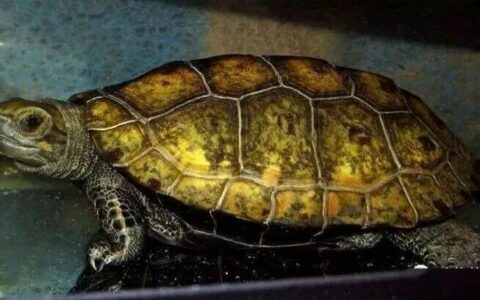
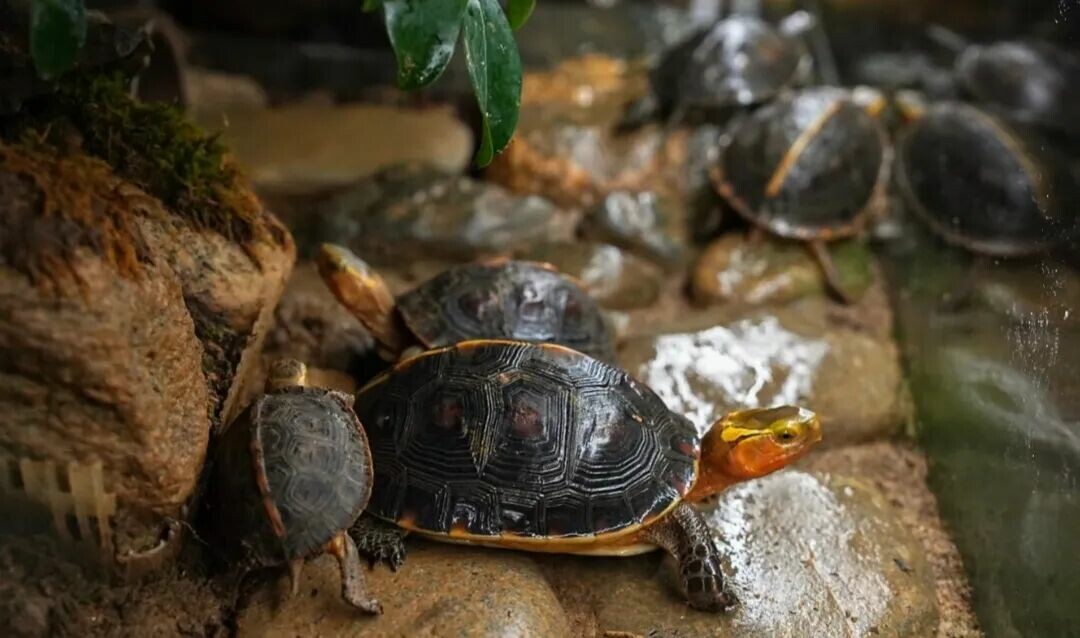
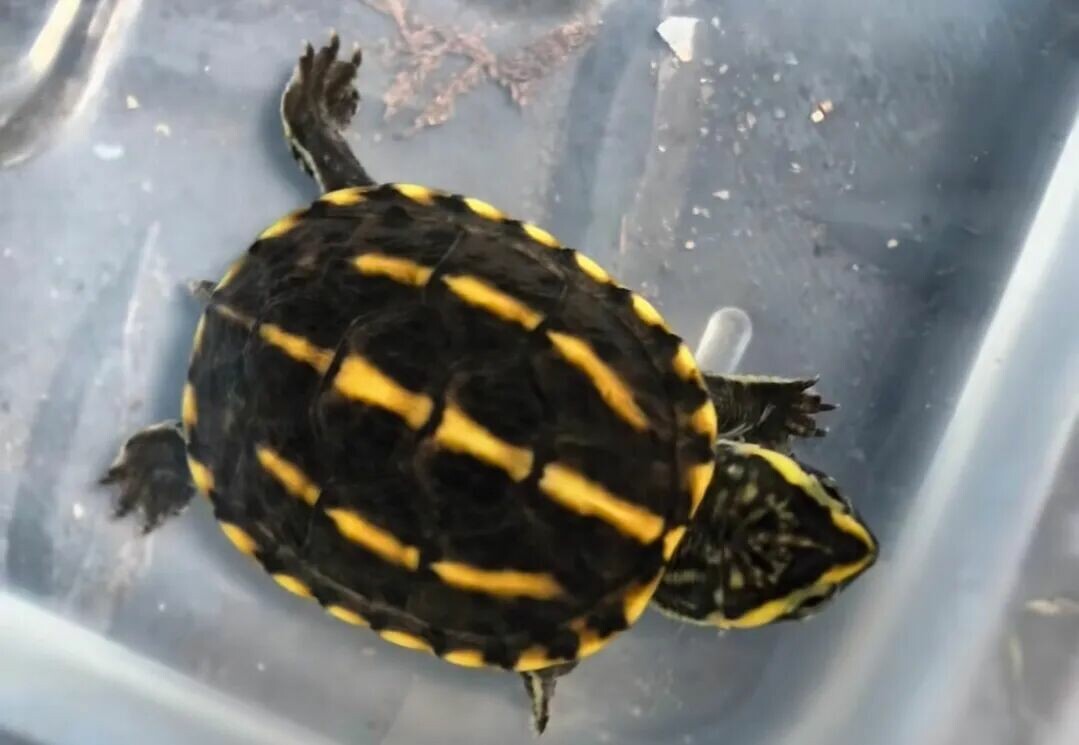
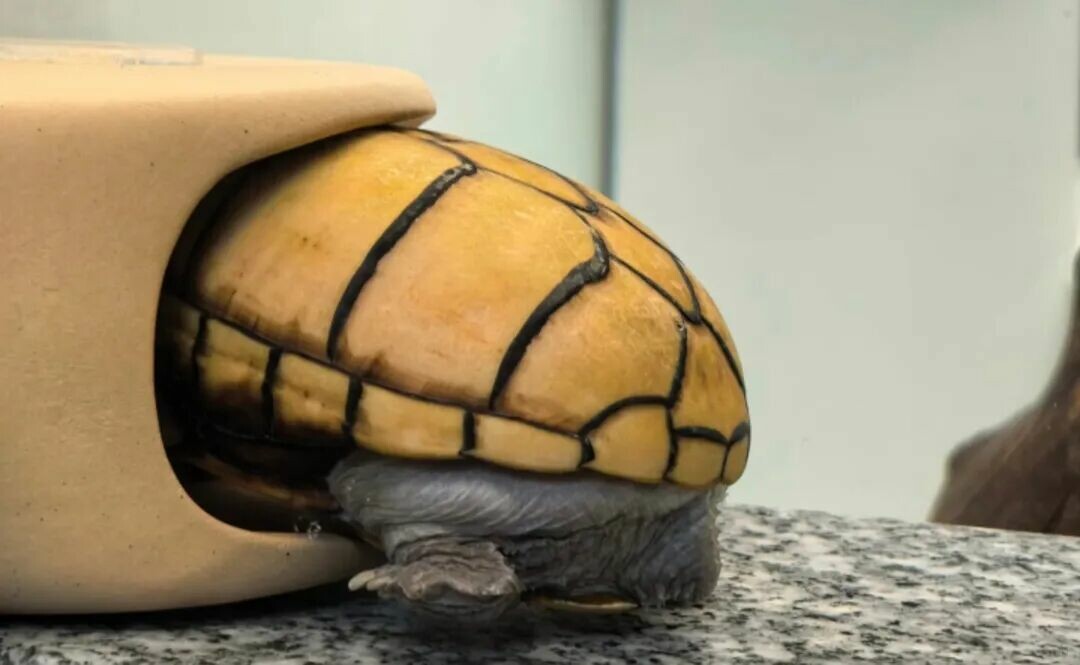
The Mexican Wood Turtle (Rhinoclemmys rubida), more familiarly known to us as the Rubida Mountain Turtle (Note: a transliteration of its specific epithet, rubida). Rubida means ‘red’. The Rubida Mountain Turtle has a reddish-brown carapace, and on some individuals, the red on the carapace is very vivid. The costal scutes (Note: the paired, symmetrical plates on the carapace) of the Rubida Mountain Turtle are lined with light yellow spots, which is how it also got the name Spotted Wood Turtle.
The most attractive physical feature of the Rubida Wood Turtle is undoubtedly its magnificent head markings. On its head are horseshoe-shaped patterns that can be thick or thin, rounded or sharp. Some individuals even have a large color patch plastered on top of their heads. In short, the head markings of each individual vary.

Identifying Features of the Two Subspecies
The Rubida Wood Turtle has 2 subspecies, namely the nominotypical subspecies, the Oaxaca Wood Turtle (Rhinoclemmys rubida rubida), found in the Mexican states of Oaxaca and Chiapas—these 2 places are famous for their turtle species. The Oaxaca Wood Turtle typically has head markings with interweaving yellow and red tones, and an extended ‘temporal blotch’ (Note: refers to the marking in the area on the sides of the head, behind the eyes). In plain English, there’s a U-shaped marking behind the eyes. The other subspecies is the Colima Wood Turtle (Rhinoclemmys rubida perixantha), mainly found in the Mexican state of Colima. The head markings of the Colima Wood Turtle are generally predominantly yellow, appearing relatively clean and neat, and the temporal blotch is more rounded. Again, in plain English, there’s an O-shaped marking behind the eyes. Of course, the appearance of turtles can be highly variable, and nothing is absolute. To be 100% certain of an individual’s subspecies, one must rely on modern biotechnology.

The Commercial Logic Behind the ‘King of Semi-Aquatic Turtles’
The Rubida Mountain Turtle has a narrow natural distribution range, existing in small, localized populations. My own abilities are limited, and I couldn’t find any footage of wild Rubida Mountain Turtles. However, from its classification as a semi-aquatic turtle and its ‘mountain turtle’ name, we can get a glimpse of its habits in the wild. Living in the leaf litter on mountain forest floors, being highly omnivorous—it surely shares these common keywords of a typical semi-aquatic turtle.
Next is what everyone is most interested in: let’s talk about this title, the ‘King of Semi-Aquatic Turtles’. I know many of you are not convinced: ‘Even the Yellow-margined Box Turtle (Cuora flavomarginata) doesn’t dare call itself the king of semi-aquatic turtles, so what gives this one the right?’ As we’ve said before, the ‘king’of pet turtles isn’t judged by fame or its popularity among average hobbyists, but rather by considering its commercial attributes. To put it bluntly, it’s a marketing tactic that precisely targets the mindset of high-end consumers.
Furthermore, unlike most ‘king’ pet turtles that are hyped up in China, the Rubida Mountain Turtle already has a great reputation abroad. The Rubida Mountain Turtle is moderately sized, with large individuals having a carapace length of only about 20 cm. It’s good-looking, highly interactive, relatively easy to keep, can brumate, and, being from a small population and pricey, is positioned as a high-end reptile. No wonder foreigners hold it in such high regard.
Original article by 搬运工, if reproduced, please cite the source: https://www.kaipet.com/en/rubida-mountain-turtle-called-king-semi-aquatic-turtles



Comments(2)
That’s fascinating how its ‘King’ title is purely commercial! I’m curious, what makes its interactivity so special compared to other turtles?
@CriticX:You’ve hit on key points from the article! It’s true the ‘King’ title has a commercial angle. Regarding interactivity, the Rubida Mountain Turtle is indeed highly regarded by hobbyists for its responsiveness and engagement compared to many other species.