

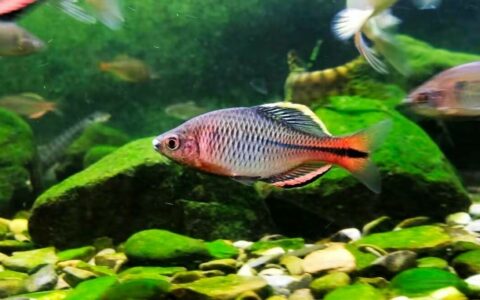
Fish infected with ichthyophthiriasis appear as if coated with a layer of wax, with a slightly whitish hue. Upon closer inspection, numerous tiny white spots are visible on their bodies, much smaller than those seen in white spot disease, resembling the sprinkling of white pepper powder. White spot disease typically manifests on the fish’s fins, whereas ichthyophthiriasis can spread throughout the entire body.

Causes of Ichthyophthiriasis
Ichthyophthiriasis is a disease caused by external parasites. Infected fish suddenly exhibit unusually active swimming, as if frantic, primarily due to intense itching on their bodies. If you notice that your home aquarium fish have become unusually active, observe them closely to see if they exhibit symptoms of ichthyophthiriasis.
Treatment Methods for Ichthyophthiriasis
Required Materials
Treating this disease is straightforward. You will need two items:
- Non-iodized salt
- Baking soda
You can use fish salt or Toyota shrimp hatching salt. Baking soda can be purchased from any supermarket.
Treatment Steps
- Maintain the aquarium water temperature around 30°C. In cooler regions, it is advisable to use a heater rod or heating pad to maintain the water temperature.
- Add 1 gram of salt and 1 gram of baking soda per liter of water. Salt increases osmotic pressure, facilitating the entry of baking soda into the parasites’ bodies, while high osmotic pressure also kills other bacteria and microorganisms in the water.
- Baking soda is alkaline, and the parasites causing ichthyophthiriasis cannot survive in an alkaline environment. After adding baking soda, the parasites will die within 24 to 48 hours. Fish can tolerate this environment, so there is no need to worry.
Water Change and Recovery
Once the fish’s skin has fully recovered and their fins are fully extended, proceed with a water change. Prepare treated water in advance, use a thermometer to measure the water temperature, ensuring the temperature difference does not exceed 2°C. Then, gently transfer the fish into the new water to complete the water change.
Original article by KPTer, if reproduced, please cite the source: https://www.kaipet.com/en/symptoms-treatment-fish-ichthyophthiriasis




Comments(2)
Thanks for the detailed guide! I’m curious, are there specific preventative measures I can take to avoid Ich in my aquarium?
@CriticX:We’re glad you found the guide helpful! While this article primarily focuses on treating Ich, excellent preventative measures include maintaining good water quality, quarantining new fish, and avoiding overstocking. We recommend further research on these important aspects.