

The term “resting at the bottom of the tank” refers to fish staying motionless at the bottom of the tank, similar to how people might stay in bed when they are sick, which can be considered a fish’s “bed rest.” The issue is mainly reflected in these two aspects.
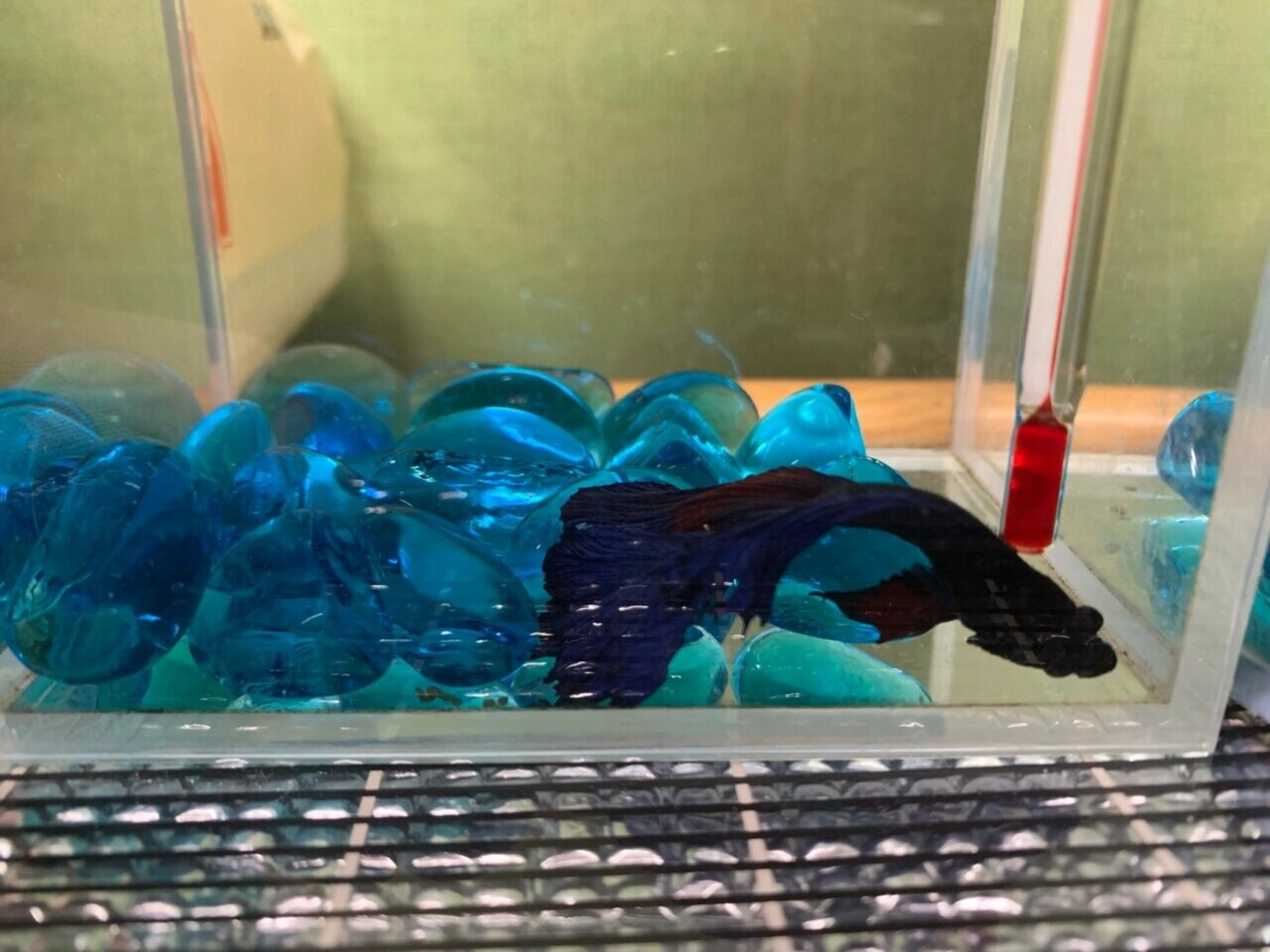
Water Quality Issues
The reason fish may rest at the bottom of the tank in a new environment could be due to new fish just arriving home and suddenly facing environmental changes, significant differences in water quality, or stress responses due to tension, all of which can lead to fish resting at the bottom of the tank. However, this situation usually does not require excessive worry, as after one to two days, the fish will gradually adapt to the new environment, and the condition will improve.
Excessive Water Quality Fluctuations or Temperature Changes
Excessive water quality fluctuations mean that there are issues with the water quality, or there have been abnormal temperature changes. For example, in my fish tank today, the water temperature is maintained at around 29 to 30 degrees Celsius by a heater. But if there is a sudden power outage, the water temperature could drop sharply to 17, 18 degrees Celsius, or even 15, 16 degrees Celsius, and in such cases, fish may also exhibit the phenomenon of resting at the bottom of the tank.
Stabilizing Water Quality
At this time, we need to quickly stabilize the water body to maintain its relative stability. Allowing the water to rest for two to three days can usually help it recover.
Possibility of Illness
Additionally, there is a possibility that the fish is genuinely sick. If this is the case, we need to quickly determine the cause of the illness and administer the appropriate treatment to help the fish return to a normal state as soon as possible. We can also try “the three essential fishkeeping practices” to address the issue.
Original article by KPTer, if reproduced, please cite the source: https://www.kaipet.com/en/fish-rest-bottom-tank-understanding-impact-water-quality-environmental






Comments(2)
The ‘three essential fishkeeping practices’ sound crucial! I’m curious, what exactly do those practices involve for diagnosis?
@CriticX:That’s an excellent question, CriticX! The ‘three essential fishkeeping practices’ are indeed vital for diagnosing and addressing fish health issues. While this article mentions them as a solution, we understand the need for more detail on what they involve. We’ll consider a dedicated piece on this topic. Thank you for your engagement!