

The phenomenon of aquarium water turning whitish and cloudy can generally be categorized into physical turbidity and biological turbidity. Regardless of the type, the visible “white fog” can be referred to as suspended solids, which are solid materials suspended in the water, including insoluble inorganic substances, organic matter, sand, clay, and microorganisms.
Causes and Solutions of Physical Turbidity
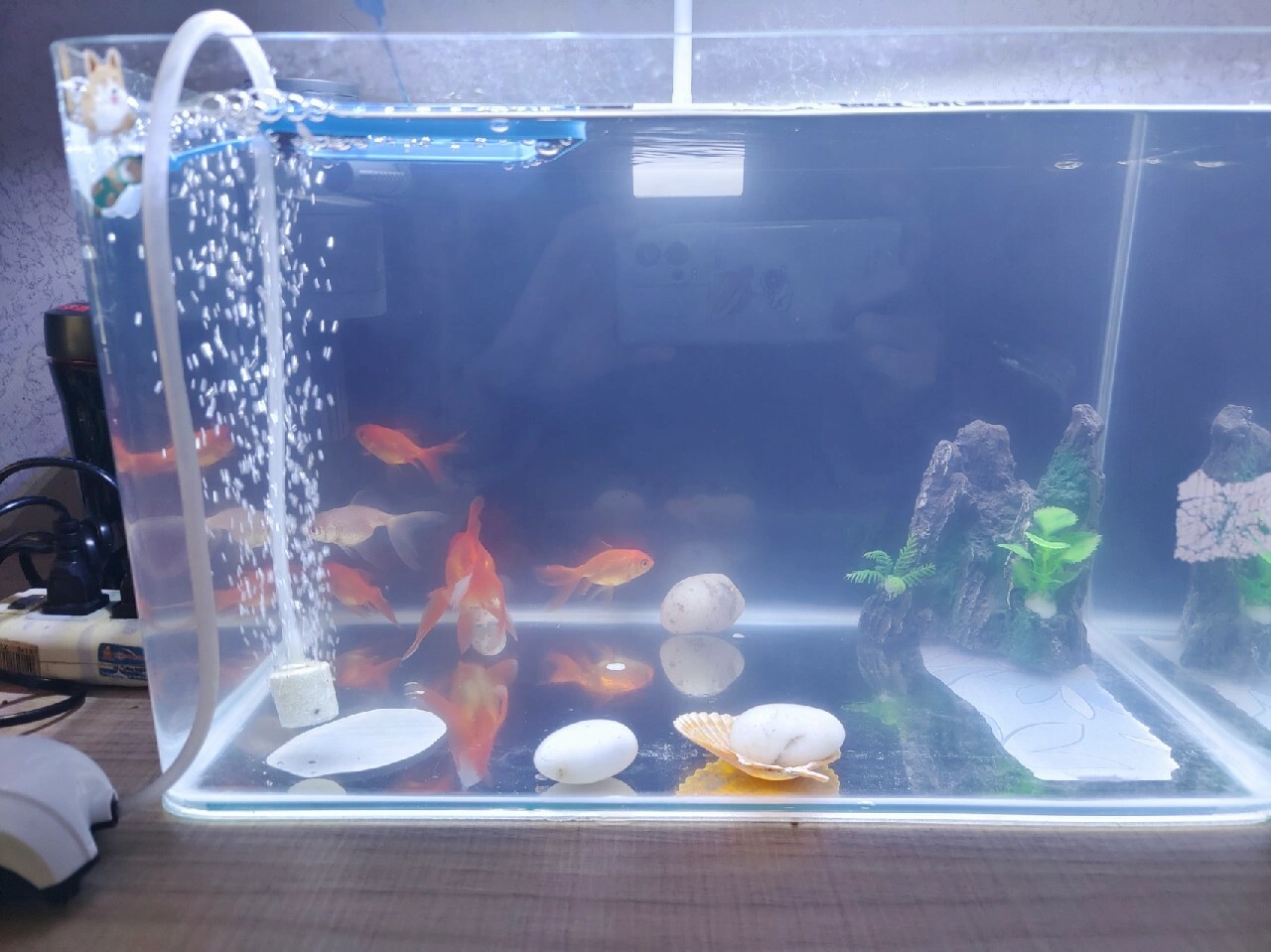
Physical turbidity usually occurs on the first day of setting up an aquarium. When water is added, suspended solids such as sand and clay can cause the water to become cloudy. To address this, we can enhance the interception capacity of physical filtration or allow these suspended solids to settle naturally.
Analysis of the Causes of Biological Turbidity
Generally, within a few days of setting up an aquarium, the water may suddenly turn cloudy and whitish, appearing misty. This phenomenon is known as biological turbidity.
Classification and Functions of Aquarium Bacteria
Bacteria in the aquarium are mainly divided into decomposer bacteria and nitrifying bacteria. Decomposer bacteria are responsible for breaking down all organic matter, including fish feces, leftover food, and decaying plant materials. After decomposition, these organic substances are converted into smaller molecules and ammonia nitrogen. Ammonia nitrogen is then transformed into nitrite and nitrate by nitrifying bacteria.
Causes of Sudden Water Turbidity and Whitish Appearance
Sudden whitish and cloudy water usually occurs due to a significant increase in organic matter in the water. This can be caused by overfeeding during the initial setup or an excessively high fish density, which prevents the timely decomposition of organic matter. Additionally, there is a theory that heterotrophic bacteria may proliferate to a visible extent, causing the water to appear whitish and misty.
Other Factors Related to Organic Matter
- Using large doses of algaecide can lead to the mass death of bacteria in the tank, and their dead bodies are also considered organic matter.
- Stirring the substrate can bring up all the deposited organic matter from the soil.
- When certain bacterial strains are added, competition among them can lead to cloudy and whitish water.

Misconceptions and Correct Practices of Water Changes
Some novice hobbyists, upon seeing cloudy and whitish water, may rush to perform a water change. The act of changing water is not inherently right or wrong, but if too much water is changed at once, and the new water contains chlorine, it will introduce a large amount of chlorine gas into the tank. This not only kills beneficial bacteria but also creates a vicious cycle, where the water quality does not improve and may even lead to the proliferation of more organic matter.
Key Factors in Solving Water Turbidity
- Patience: When decomposer bacteria break down organic matter, they consume a large amount of oxygen. With sufficient oxygen, decomposer bacteria will reproduce rapidly and effectively break down all organic matter in the water. You need to continuously aerate the water for twenty-four hours. Under normal circumstances, the water will naturally become clear after about two to three days.
- Role of Nitrifying Bacteria: Nitrifying bacteria also thrive in the presence of oxygen. Increasing oxygen supply can accelerate the establishment of the nitrification system. The reproduction cycle of decomposer bacteria is approximately thirty minutes to one hour, allowing for one generation of reproduction. However, the reproduction cycle of nitrifying bacteria may take over twenty hours to complete one generation. The nitrification system typically takes about fifteen days to reach a stable state.
Therefore, novice hobbyists must be patient when setting up an aquarium. Do not perform frequent operations. Cloudy and whitish water is a normal phenomenon. With patience and a few days of waiting, the water quality will naturally improve.
Original article by KPTer, if reproduced, please cite the source: https://www.kaipet.com/en/improve-cloudy-whitish-aquarium-water-detailed-analysis-biological-turbidity






Comments(2)
I’m curious, what’s everyone’s go-to aeration method for new tanks to ensure enough oxygen for beneficial bacteria?
@CriticX:That’s a very relevant question, CriticX! The article highlights the crucial role of continuous aeration for beneficial bacteria in new tanks to prevent and resolve biological turbidity. We encourage our community to share their trusted methods and tips!