

To teach parrots to speak human language, humans also need to understand the parrot’s language in order to interact at the optimal time and timely detect possible pathological changes through their calls.
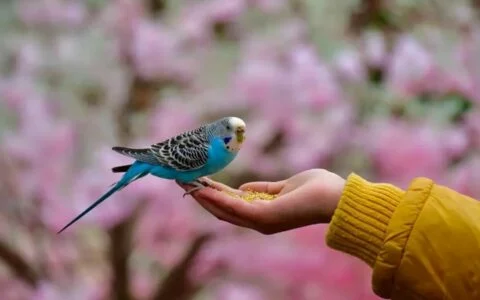
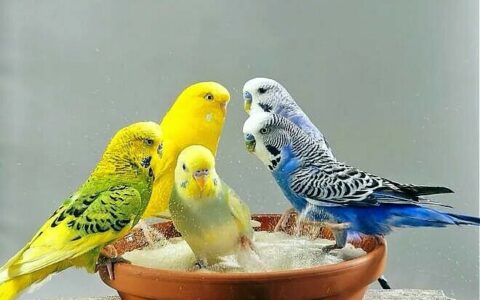
When Budgerigars (Melopsittacus undulatus) are kept in a flock, they chirp non-stop. This is actually a large "group chat," and their language is divided into body language and vocal language.

Vocal Language
Parrot sounds are generally categorized into 4 main meanings.
Long Call
A crisp and loud long call: "Cheep!" (Jiu!). This is a signal for them to report their situation to each other, look for partners, and determine their location; it is also a warning signal to a certain extent. If a stranger approaches, you can see their feathers sleeked down against their body, wings slightly open, and necks stretched, ready to take off at any moment.
Warbling
Male birds often "mumble and chirp" beside female birds. The sound is melodious, expressing affection, which can be understood as "sweet nothings." Do not get hung up on the specific meaning of each syllable; their language only expresses emotions. Similarly, their learning of human language is based on this habit. The fact that they speak Chinese does not mean they understand the meaning of Chinese itself; they are merely repeating the catchphrases of their object of affection when they are happy to "cozy up" to them (with the exception of the African Grey Parrot (Psittacus erithacus)). At the same time, this is not a privilege of male birds; female birds also warble, but the volume, frequency, and length are much smaller than those of males. For example, after eating, a female bird may hold the last few grains in her mouth and whisper "mumble mumble," which is also a sign of a happy mood.
Cha Cha Cha!
"Cha cha cha!" (Raspy male duck voice/cricket sound). This sound expresses extreme emotions. If a male bird intersperses these few phrases in a series of warbling, it signifies extreme liking, similar to solemn pledges of love following "sweet nothings." If this sound is suddenly emitted during a calm period or in other noisy environments, it expresses resentment. If a stranger approaches, it expresses nervousness. If it calls like this often for no reason, you should check for parasites.
Ji Ji Ji Ji Ji……
"Ji ji ji ji ji……" (Short and high frequency). This sound expresses fear and nervousness, and it usually happens when they are being caught. When raised in a flock, if one bird calls like this, it will cause other birds to fly away or emit the 1st type of call.
Body Language
Accompanied by nodding or "mumbling," it means happiness, and it is the very happy kind, like a child who has just received New Year’s money.
Gently nibbling and preening feathers is a sign of goodwill, especially towards the opposite sex of the same species. Parrots that are raised to be close to people will preen humans’ fine hairs, hair, and eyebrows, and pick away dandruff to express friendship. You can touch its beak with the tip of your nose to express a friendly response.
If the parrot tilts its head and looks at you with one eye, either you are standing too high, or it is full of curiosity about you.
If the whole body’s feathers are sleek and tight, and the feet are standing straight, it indicates nervousness; if it is fluffy and the legs are not visible, it indicates relaxation.
One foot disappearing into the belly indicates very relaxed sleep; burying the head behind the back may mean it is sleeping but finds the environment too bright.
Long-term puffing up of the whole body’s feathers indicates internal discomfort; it is best to check immediately.
Original article by 搬运工, if reproduced, please cite the source: https://www.kaipet.com/en/budgerigar-sound-meanings-4-key-sounds-understand-emotions-health





Comments(1)
I’m curious, what’s a common mistake new owners make when interpreting budgie vocalizations? This guide is so useful!