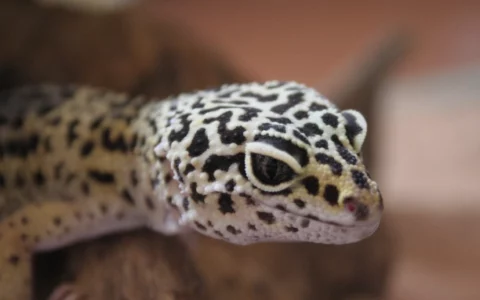
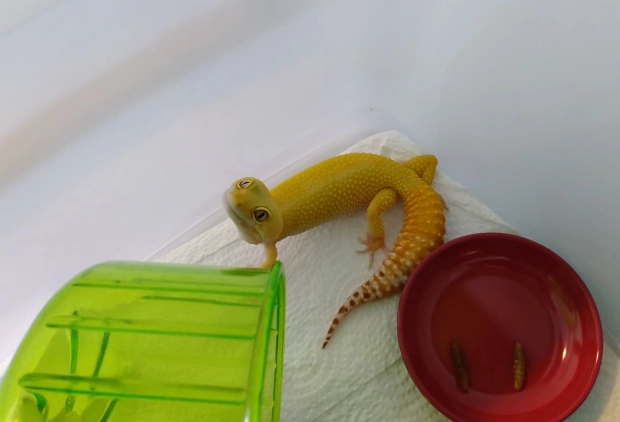
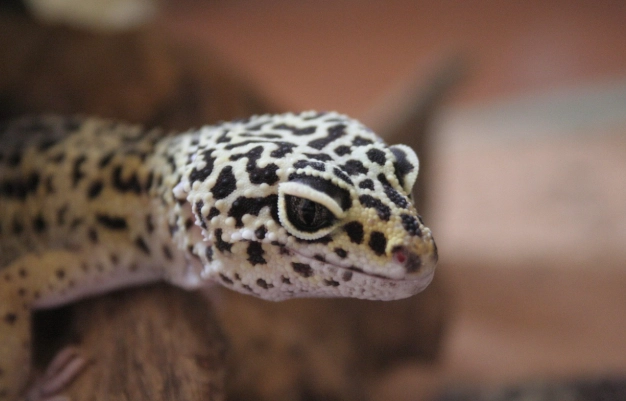
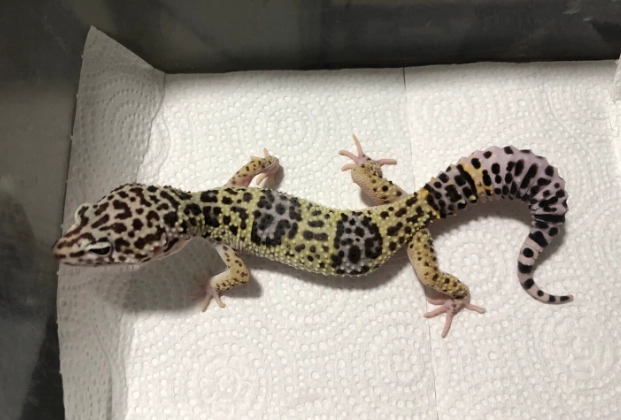
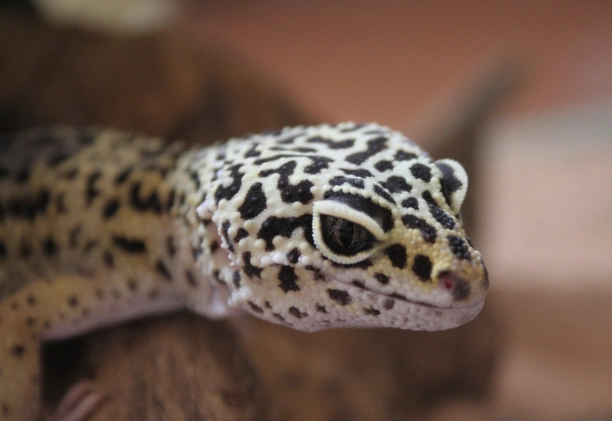
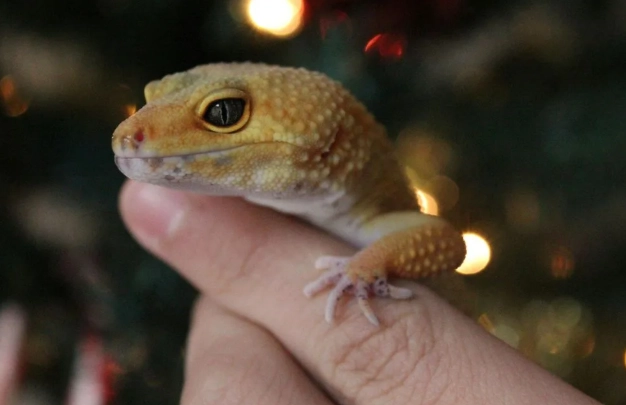
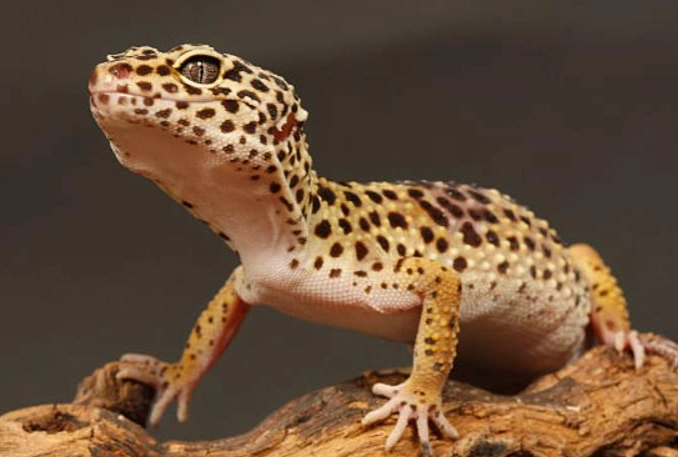
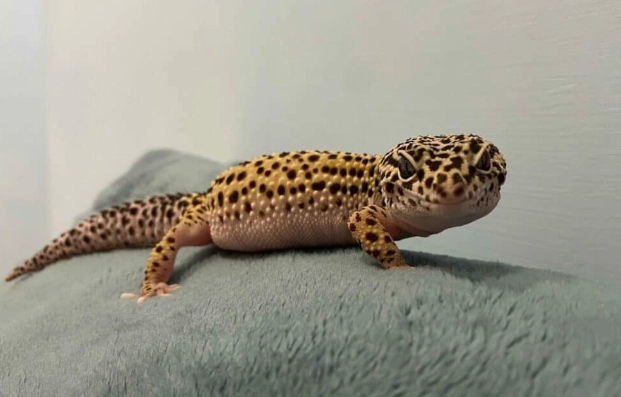
Can geckos understand human speech? Behind this question actually lies an owner’s desire for communication with their pet. We always hope that the daily interactive routines of feeding and cleaning the enclosure can bring a little response. When a gecko stares at you with those “big eyes,” it sometimes really makes you wonder if they have understood something.
But the truth is often more complex than imagined. A gecko’s auditory system is completely different from that of us humans. They live in a world dominated by the perception of vibration and temperature. To them, sound might just be vibrations in the air.
But this does not mean we cannot communicate with geckos. It’s just that we need to switch to a different way of understanding.
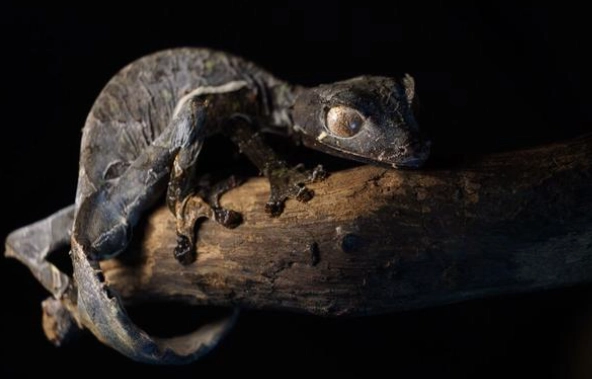
Analysis of the Gecko’s Auditory System
To answer whether geckos can understand human speech, we must first figure out how their ears work. Geckos, especially leopard geckos, are nocturnal reptiles. Their hearing evolved to catch prey and evade predators at night.
Scientific research indicates that the frequency range geckos can perceive partially overlaps with that of humans, but it is primarily concentrated in low-frequency vibrations. This means that the sound of our voices might just be a series of vibrational changes to them.
I have kept my leopard gecko, “Aban,” for nearly 10 years, and even now when I call its name, it will still turn its head to look at me. But is it understanding the word “Aban,” or is it merely reacting to my voice? I asked a veterinarian friend this question, and he just laughed and said, “Maybe it is just used to your voice frequency.”
Gecko Cognitive Abilities
Using the word “IQ” on geckos seems a bit too “anthropocentric.” We might as well think about it from another angle: how smart are geckos?
The intelligence of geckos is reflected in their rapid learning and adaptation to the environment. According to my observations, geckos can learn fixed feeding times, recognize their owner’s scent (or sound vibrations), and even establish simple “conditioned reflexes.”
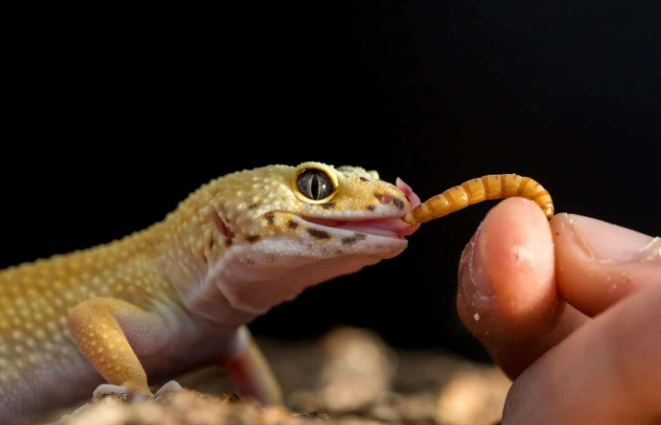
For example, Aban knows that the vibration of me opening the enclosure every morning means food is appearing. This counts as a form of predictive learning regarding time. It will also actively crawl over when I approach holding a mealworm with tweezers, rather than waiting for the bug to drop in front of it.
But does this prove that it “understands” my words?

Gecko Communication Skills
I must first dispel a misconception: geckos do not understand “human speech,” but they do understand “you.”
The “you” here refers to a set of communication patterns established by the owner over a long period. This pattern includes the frequency of your voice, the vibrational rhythm of your movements, and even subtle changes in your scent.
To make a gecko understand commands, the key lies in “consistency” and “association.” You have to bind the command you want to convey with a “physical signal” that they can directly perceive.
For instance, you want to call the gecko over to eat. You can gently tap the enclosure’s glass 2 times (in a fixed location) before every feeding. Over time, the gecko will associate the vibration of “tapping the glass 2 times”with the fact that “there is food.” It is not that it understood the phrase “come eat,”but rather it learned that “the appearance of this vibration pattern means something good is about to happen.”
Commands must be simple, clear, and executed in the exact same way every time. One command corresponds to only one action. Too many complex commands will only confuse the gecko.
Common Misconceptions in Gecko Communication
The most common mistake beginners make is using the logic of “human language” to communicate with geckos. We unconsciously raise our volume, repeat the same word, and even add hand gestures.
But the world geckos hear is completely different from ours. To them, the “pitch” and “rhythm” of sound might be more important than the “meaning” of words. Yelling a command at a high pitch versus saying it at a low pitch might be two completely unrelated things to a gecko’s ears.
Another common mistake is ignoring the gecko’s “emotional state.” When a gecko is nervous, hungry, or wanting to sleep, its ability to react to the outside world drops significantly. No matter how much you call it at these times, it might completely ignore you. This is not because it is disobedient, but because its physiological state prevents it from processing information effectively.
I once impatiently wanted Aban to climb onto my finger right after it woke up. As a result, it just stared at me blankly, motionless. Only later did I learn that geckos need a period of time to “warm up” after waking up, just like we need a little time to fully clear our heads in the morning.
Take these details into consideration, and you will find that communicating with a gecko is actually an art that requires patience and observation.
Scientific Evidence and Personal Experience
From a scientific perspective, is there evidence showing that geckos can understand human speech? Current research mostly focuses on the structure and function of the auditory system. As for the advanced cognitive ability of “understanding language,” research among reptiles is still very limited.
But this does not mean geckos are completely incapable of learning language-related stimuli. Some experiments show that geckos can learn to associate specific “sound patterns” (such as 1 short whistle) with the “appearance of food.” This is a classic “conditioned reflex.”
My personal experience is that Aban indeed can distinguish the sound of me calling its name from other background noises. When I call “Aban,” the probability of it turning its head is much higher than when I call other names. This might just be a habit, but the establishment of this habit itself illustrates that geckos possess the ability to recognize and react to specific sound patterns.
What’s even more interesting is that Aban seems able to distinguish the “emotions”in my voice. When I call it in a happy, high-pitched voice, it crawls over more actively; when I call it in a low, exhausted voice, it sometimes gives me the cold shoulder. This might just be my “imagination,”but this observation makes me believe even more that geckos’ sensitivity to sound might far exceed our imagination.

Future Outlook
In the future, is it possible to further our communication with geckos through technology?
I have asked many developers of reptile communication devices this question. Most of them shake their heads, stating that current technology still finds it difficult to “real-time translate” what a gecko is thinking. But they also admit that through more precise vibration sensors, perhaps we can understand geckos’ reactions to different vibration patterns more deeply.
My thought is that rather than pursuing “making geckos understand human speech,” it is better to inversely learn to “understand the gecko’s speech.” Through subtle body color changes, the rhythm of tail wagging, and even the frequency of blinking, geckos are conveying their emotions and needs.
What we need is perhaps not a translator, but a more detailed “dictionary of gecko behavior.”
Finally, I want to say that whether geckos can understand human speech may never have a standard answer. But the process of exploring this question itself can bring us more inspiration and joy regarding communication between living beings.
Original article by 搬运工, if reproduced, please cite the source: https://www.kaipet.com/en/geckos-understand-human-speech-master-3-communication-details-recognize-owners