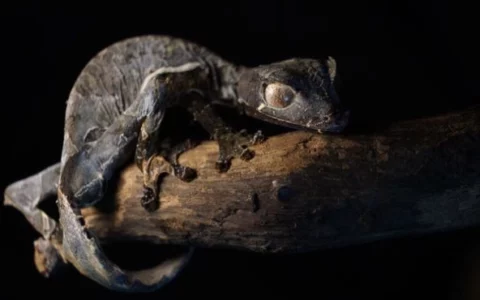
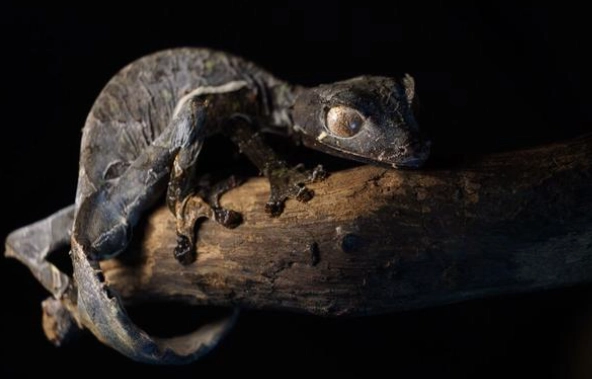
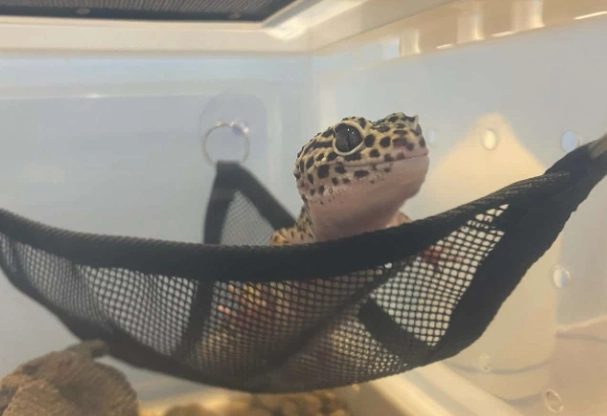
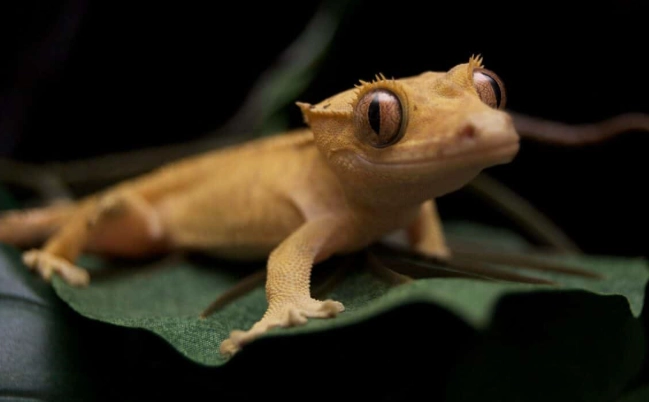
When I kept my first leopard gecko, “Spotty”, I always pondered this question in my mind. Every day, as I fed it, cleaned its enclosure, and watched it move around, I couldn’t help but wonder: Does this “little guy” know who I am? Can it distinguish me from other noises and vibrations? Behind this question actually lies our expectation for this cross-species relationship, as well as our desire to understand the inner world of this quiet little life in our hands.
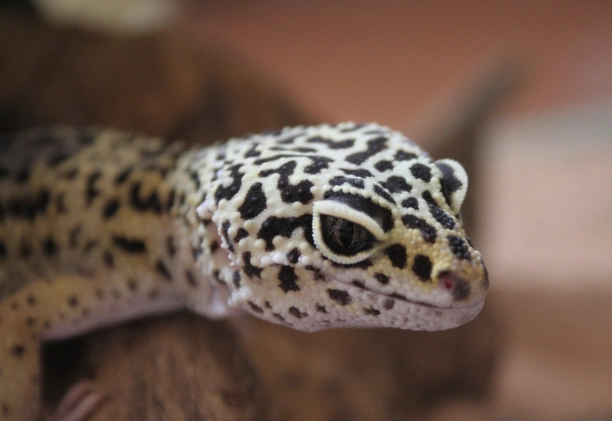
Do Geckos Really Recognize People? From the Perspective of Science and Behavioral Observation
To give you the conclusion right away: Geckos do not “recognize people” like humans or dogs do. Their brain structure is not complex enough to remember a specific human face or understand the abstract concept of an “owner”. If you expect them to run up to you wagging their tails like a puppy, you will definitely be disappointed. However, this does not mean they have no perception of you at all.
A gecko’s cognition is based on associative learning and habituation. Simply put, what they remember is a series of “event combinations” and their outcomes. For example:
- A shadow of a certain size approaching + the specific sound of the lid opening = Food is coming.
- A gentle touch + no threat = Safe to relax.
- Huge, fast movements + loud noises = Danger, hide quickly.
Your image, scent, movement patterns, and even your habitual way of opening the enclosure gradually combine into a unique “stimulus package” for the gecko. When this “stimulus package” consistently brings positive results (food, safety), it will develop a positive reaction to this combination. This is not recognizing a “person”, but rather recognizing “a fixed, predictable, and generally harmless set of environmental changes”.
After observing Spotty for about 2 months, I noticed an obvious change. Previously, any movement I made would cause it to shrink back alertly. Later, it would only remain relaxed—and occasionally even actively sniff my finger—if I reached into the enclosure at a steady speed and let my finger stay within its line of sight for a few seconds first. This wasn’t because it recognized my face, but because it had become familiar with my “standardized safe operating procedure”.
According to research data from reptile conservation organizations, the learning capacity of reptiles is often underestimated; they can establish stable behavioral patterns through conditioning. Therefore, instead of asking “Does my gecko recognize me?”, it is better to ask “Has my gecko associated me with a sense of security or good things?”.
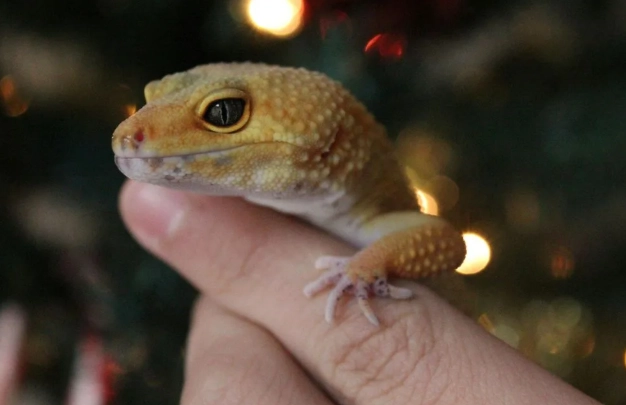
How to Tell if Your Gecko Recognizes You? Analyzing Key Behavioral Signals
Since they rely on associative learning, we can judge whether they categorize you as a “safe source” from some subtle behaviors. Note that these are positive signals, but the degree of expression varies from individual to individual.
Positive Behavioral Signals (Your “stimulus package” is categorized as safe or beneficial)
Not hiding immediately: When you approach the enclosure or open the lid, it does not quickly dart into its hide box or show an obvious defensive posture (like arching its body or rapidly waving its tail). This is the most basic threshold of trust.
Actively exploring and approaching: When your hand is in the enclosure, it actively approaches, gently touching it with its nose or licking it with its tongue (this is how they explore their environment, especially sensing scents). This indicates that it is curious, rather than fearful, about your “combination”.
Relaxing in your hands: When you hold it in your hands, its body is soft, its belly is flush against your palm, and there is no stiffness or intention to eagerly escape. It might even close its eyes and rest in your warm palm. This is a sign of high trust.
Reacting differently to you than to others: This requires comparison. If family or friends approach in the same way and the gecko appears more nervous or withdrawn, but remains relatively stable with you, this strongly implies that it can distinguish the difference between your “stimulus package” and others’.
Negative or Neutral Behaviors (Do Not Misinterpret)
Staring at you: This is usually alertness or curiosity, and does not directly equate to recognizing you. Geckos have good eyesight and will watch moving objects.
Licking you: Primarily sniffing to collect environmental information.
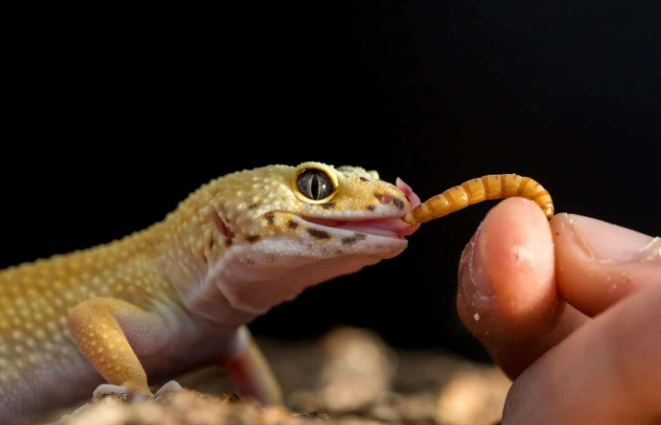
Eating from your hand: This is a very strong positive association (hand = food), but it recognizes the “feeding tool”, not necessarily the holistic concept of “you”.
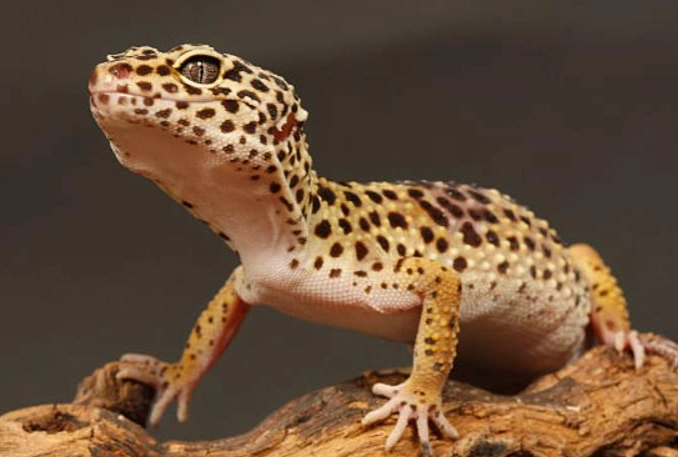
A common misconception: Your gecko has its eyes closed while in your hand. This is sometimes interpreted as being “comfortable enough to fall asleep,” but more often than not, it means it is “stiff with stress” or “giving up the struggle”. To determine which case it is, you must look at its overall muscle tone (relaxed or tense) and its subsequent behavior (calmly crawling away or rapidly fleeing).
What if Your Gecko is Not Tame? Practical Tips for Building Trust
If your gecko hides whenever it sees you, don’t be discouraged. Building associations requires time and consistency. Here are the actionable steps, which I call the “4-Stage Low-Stress Interaction”:
| Stage | Goal | Specific Actions | Important Notes |
|---|---|---|---|
| Stage 1: Environmental Adaptation (approx. 1 – 2 weeks) | Allow the gecko to get used to your presence, viewing you as environmental background. | Sit by the enclosure at a fixed time every day, speaking softly or doing your own thing (reading, scrolling on the phone). Avoid direct eye contact; use your peripheral vision to observe. 15-20 minutes per session. | Absolutely do not attempt to touch or catch it during this stage. Your presence must pose “zero threat”. |
| Stage 2: Scent and Hand Association (approx. 1 – 3 weeks) | Link your hand to positive things (food). | 1. When feeding, use tongs for the insects, but rest your hand at the far end inside the enclosure. 2. After a few times, try offering food in a dish held by your hand. 3. Eventually try offering feeders (like mealworms) with bare hands, letting it take the food from your fingertips. | Hand movements must be extremely slow. If it flinches, step back to the previous stage. |
| Stage 3: Limited Contact (approx. 2 – 4 weeks) | Establish the connection that “touch equals safety”. | 1. When the gecko is calm, use 1 finger to very lightly touch its back or chin from the side or below. 2. Immediately give 1 small feeder as a reward after touching (positive reinforcement: increasing behavior frequency through rewards). 3. Gradually increase the duration of the touch. | Always avoid sudden touches from above, which mimics predators. Avoid the tip of the tail. If it dodges, stop immediately and try again another day. |
| Stage 4: Handling and Exploration (Long-term) | Make handling a regular activity. | 1. Smoothly “scoop” the gecko up from underneath its body with both hands, rather than grabbing it. 2. Initially, limit handling time to under 5 minutes, done over a safe, low, soft cushion. 3. A small food reward can be given afterwards. | Ensure the environment is safe (no crevices, no other pets). Observe its condition; if it breathes heavily or tries to jump, gently put it back immediately. |
This process cannot be rushed. Some individuals make progress in a few weeks, while others take months or may never like being touched at all. This has a lot to do with their innate personality, just like people.
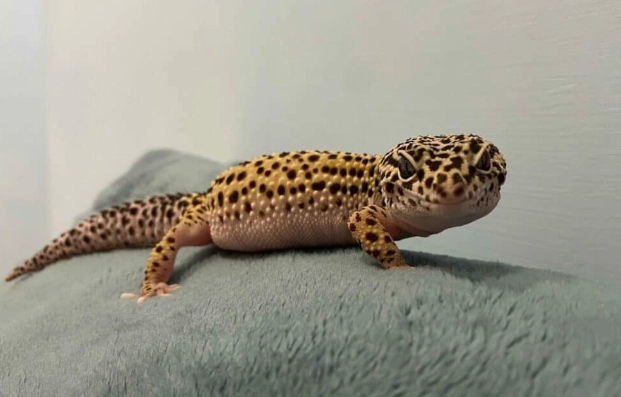
Common Interaction Mistakes by Beginners: Rushing it Will Only Scare Them
Through observing many online discussions and questions from beginners in communities, I’ve found several subtle mistakes that frequently occur. These mistakes can severely compromise the trust-building process.
Mistake 1: Treating “handling” as a daily task. Some people feel that they have to pick up and play with their gecko every day to count as interacting. For many geckos, this is a constant source of stress. Interaction should prioritize quality over quantity; a successful, calm, brief handling session 2 – 3 times a week is far better than a stressful capture once a day.
Mistake 2: Disturbing the gecko while it sleeps. Geckos are active during dusk and the night. Daytime is their primary resting time. Forcibly digging them out of a deep sleep will only make them associate your hand with “sweet dreams being interrupted,” which is an absolute negative association.
Mistake 3: Ignoring the “shedding period” and “digestion period”. A gecko’s vision worsens before and after shedding, making it exceptionally sensitive and irritable. They should also not be disturbed within a few hours of eating a full meal to avoid causing regurgitation. Forcing interaction during these 2 special periods is a major taboo in building trust.
Mistake 4: Unsafe interaction environments. Interacting on high tables or beds means a nervous jump could result in a fall injury. Alternatively, having curious cats or dogs watching nearby will put the gecko in a highly stressed state, making it impossible to relax.
I once made Mistake 1, and during that time, Spotty would visibly step back whenever it saw my hand. I later paused handling for a week, only doing feeding and environmental companionship, before it slowly returned to its previous state.
In-Depth Q&A on Gecko Recognition and Interaction
It’s almost certainly not that it “hates you”. Reptiles don’t have such complex emotions. Hiding is their first instinctive reaction to uncertain stimuli; it’s a survival mechanism. This merely indicates that it has not yet equated your presence with “absolute safety”. Please return to the basic steps of building trust, starting over from the “Environmental Adaptation Stage,”and check if your movements are too fast or too sudden.
Hand-feeding is a potent tool for positive association, but the method is crucial. The key is to “keep the hand still first and let it actively come to take it”. If you are always chasing it to feed it, the hand will instead become a terrifying object chasing after it. As for “only recognizing food,”this is precisely the nature of gecko cognition—they learn through association. When the hand (your scent, your shape) is stably linked to the “appearance of food,”over time, the hand itself becomes a neutral or even slightly positive signal, which achieves our interaction goal.
Not at all. This is as unreasonable as demanding an introvert become a social butterfly. Some geckos have naturally cautious and independent personalities with a low tolerance for physical contact. The primary standard for successful husbandry is whether it is healthy, eating normally, and has a normal diurnal rhythm. Being able to calmly tolerate your daily care (cleaning, changing water) is a form of trust in itself. Accepting its personality and enjoying the pleasure of observing from a distance is also a great mode of companionship. Forced interaction is the true failure.
Yes, and usually it’s a negative impact. Geckos (especially leopard geckos) are fundamentally solitary animals. Cohabitation creates competitive stress, which is a continuous source of tension. Animals under stress find it much harder to build new trusting relationships with the outside world (you). Its attention will be mostly focused on its conspecific “roommates.” For their welfare and the quality of interaction, keeping them separately is highly recommended.
The basic principles are universal: building trust through low-stress, positive associations. However, the details vary. Crested geckos are better jumpers, so you need to pay more attention to safety in the interaction environment; Fat-tailed geckos might be a bit more timid and require more patience. The most important thing is to observe the reactions of the specific individual in your hands. There is no rigid formula; your gecko is your best teacher, and its behavior will tell you what is right and what is wrong.
Back to the initial question: Do geckos recognize their owners? By our human emotional standards, no. But understanding through their worldview, they learn to identify a unique, comprehensive set of signals representing safety and resources, and that set of signals is you. This relationship is built on patience, respect, and careful observation; though quiet, it is equally real. When your gecko can comfortably stretch out its body in your hands, that is the most beautiful answer to this cross-species friendship.
Original article by 搬运工, if reproduced, please cite the source: https://www.kaipet.com/en/geckos-recognize-owners-4-stage-guide-building-trust-interaction