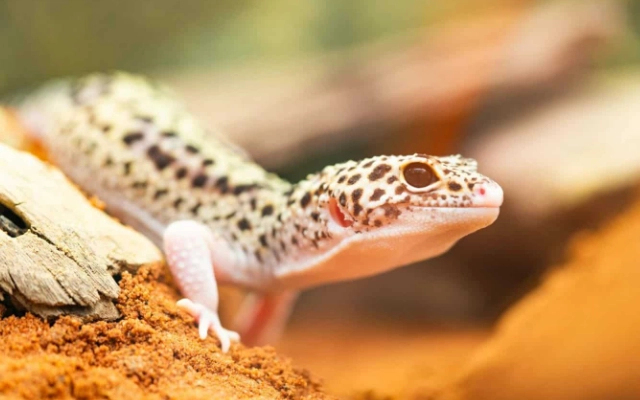
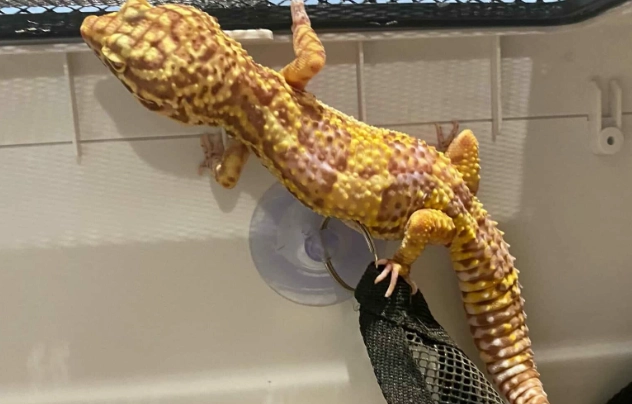
I have been keeping leopard geckos for 5 years. When I first heard a leopard gecko vocalize, I thought it was environmental noise, until I was woken up in the middle of the night once and realized it was the gecko expressing dissatisfaction. If you are also confused about leopard gecko sounds, this article is written for you. Let’s get straight to the point: vocalizations are the gecko’s communication tool. If you don’t understand their sounds, keeping them is like speaking completely different languages.

Types and Meanings of Leopard Gecko Vocalizations
Leopard gecko sounds are not random noises; each sound has its specific purpose. Beginners often mistakenly believe that all sounds are warnings, but this is not the case. I have categorized the 3 main types to help everyone identify them quickly.
Warning Sounds: When the Gecko Feels Threatened
This is the most common vocalization, sounding short and sharp, similar to a “squeak” or “chirp.” It usually occurs when you suddenly reach into the enclosure, when there is a loud noise in the environment, or when other pets approach. The gecko uses this sound to express “stay away.” I was once too rough when changing the substrate, and my gecko Leo chirped more than 10 times in a row. After I slowed down my movements, the chirping stopped.
A warning sound does not necessarily indicate aggression; it is more often out of fear. If you ignore this signal, the gecko may resort to hiding or refusing food.
Mating Calls: Signals of the Breeding Season
During the breeding season, male geckos will emit longer, rhythmic sounds, similar to a low “clicking or purring.” This sound is meant to attract females, and females will sometimes respond with gentle vocalizations. Many keepers mistakenly think this is a sign of illness, but it is actually normal behavior.
With a pair of geckos I keep, the male calls continuously in the evenings every spring, lasting for about 2 weeks. At this time, you just need to keep the environment stable; no interference is needed.
Discomfort Sounds: Warnings of Health Issues
This type of sound is less common; it is weak or has a trill, and may be accompanied by sluggish movement. Causes include indigestion, difficult shedding, or infection. For example, my gecko once made a sound similar to a groan due to the temperature being too low, and the situation improved after adjusting the heat mat.
Discomfort sounds require immediate attention because geckos are very good at hiding illness and pain, and the sound might be the only clue.

How to Correctly Interpret Leopard Gecko Sounds
Interpreting sounds cannot rely solely on listening; it must also be combined with context and body language. Here is a simple comparison table, but please remember that actual situations can be more subtle.
| Sound Type | Sound Characteristics | Common Scenarios | Gecko Body Language |
|---|---|---|---|
| Warning Sounds | Short and sharp, emitted repeatedly | Environmental changes, strangers approaching | Arched body, tail waving, staring |
| Mating Calls | Long and rhythmic, lower pitch | Breeding season, evening times | Males actively patrolling, females remaining still |
| Discomfort Sounds | Weak and trembling, occasionally a single sound | After eating, during shedding | Decreased activity, hiding, refusing food |
The table is just the basics; the real key lies in the details. For instance, if a warning sound is accompanied by a rapid escape, it may indicate excessive stress; if a mating call lasts for hours, it may be that the environment is too bright and has disrupted their biological clock. I recommend that keepers record the time and context of the sounds to find the patterns within.
A common mistake is overinterpreting a single sound. A gecko occasionally emitting 1 or 2 chirps might just be testing the environment, much like a human coughing. Unless the frequency increases or it is accompanied by abnormal behavior, there is no need to be too nervous.

Common Vocalization Scenarios and Keeper’s Response Guide
Sounds usually occur in specific situations, and novice keepers often react incorrectly. I will share a few real cases to help everyone “avoid pitfalls.”
Scenario 1: Suddenly vocalizing non-stop at night. The first reaction of many keepers is to turn on the light to check, which will actually startle the gecko. Leopard geckos are nocturnal animals, and may make sounds due to exploring the environment when active at night. My approach is to observe for a few minutes first; if the sound continues, then check if there are any obstacles or temperature changes. Usually, a slight adjustment can solve the problem.
Scenario 2: Vocalizing after feeding. This may indicate indigestion or unsuitable food. I once fed crickets that were too large; the gecko chirped a few times and then regurgitated the food. Now I always pre-manage the size of the live feeders, and the vocalizations have decreased.
Scenario 3: Vocalizing when cleaning the enclosure. This is a warning sound because the gecko feels its territory is being invaded. The method I learned is to clean in sections, retain the scent of some old substrate, and move the gecko to a temporary container before cleaning, in order to reduce its stress.
The core principle for responding to vocalizations is: Observe first, act later. Do not immediately reach in to intervene; this may exacerbate its fear. Here is a practical checklist of steps:
- Stay calm and avoid sudden, large movements.
- Record the frequency and duration of the vocalizations.
- Check environmental factors: temperature, humidity, and lighting.
- Observe the gecko’s behavior: whether it is hiding, refusing food, or moving abnormally.
- After making slight adjustments, give the gecko time to adapt.
These steps sound simple, but many keepers are anxious to “solve the problem,” which instead creates new ones. Patience is the key.
Advanced Techniques: Optimizing the Enclosure Environment Through Vocalizations
Vocalizations are not just problem signals; they can also help you optimize the enclosure environment. Here is a point rarely mentioned by others: changes in the pitch of vocalizations may be related to environmental temperature. Through long-term observation, I found that when the temperature is below 26°C, the gecko’s sounds are sharper; when above 30°C, the sounds decrease but may carry a sense of irritability.
Although this is not an official scientific report, based on personal experience, you can refer to environmental guidelines from authoritative reptile websites like “Reptiles Magazine”, but during actual adjustments, vocalizations are an excellent feedback tool. For example, if the vocalizations decrease after you adjust the heating equipment, it means the gecko feels more comfortable.
Another technique is to use sound to promote interaction. After my geckos became familiar with my voice, their warning sounds significantly decreased. I speak softly at a fixed time every day, and they gradually got used to my presence. Although this takes weeks, it can build trust.
Environment Optimization Checklist:
- Temperature gradient: Warm side 28-32°C, cool side 24-26°C; observe if this is suitable through their vocalizations.
- Hides: Ensure at least 2 hide boxes to reduce warning sounds caused by feeling exposed.
- Substrate selection: Avoid using overly rough materials, which may cause discomfort sounds during shedding.
- Light cycle: Simulate a natural light-dark cycle to reduce the abnormal triggering of mating calls.
After making these optimizations, the frequency of my geckos’vocalizations dropped by 70%. The vocalizations transformed from a “problem”into a “bridge of communication” between us.
In-Depth Answers to Common Keeper Questions
Not necessarily. Frequent squeaking should first rule out environmental factors, such as a sudden temperature change or the introduction of new items. Illness is usually accompanied by other signs, such as weight loss, abnormal feces, or decreased activity. I recommend checking the environmental parameters first; if it lasts for more than 1 day and the behavior is abnormal, then consult a veterinarian. Many keepers worry excessively and instead ignore simple environmental adjustments.
Nighttime vocalizations often stem from the need for activity or environmental disturbances. Ensure the enclosure is placed in a quiet area and avoid strong light exposure at night. Provide enough exploration space and hides so the gecko can expend energy naturally. In my experience, after adding some safe climbing structures to the enclosure, nighttime vocalizations will decrease because the gecko is busy exploring. If the sounds persist, check for pests or noise sources.
Yes. Juveniles vocalize less because they are more focused on growing; adults have more diverse vocalizations, especially during the breeding season. Senior geckos may make discomfort sounds due to joint problems, but the frequency is lower. The senior geckos I keep have softer vocalizations, which may be related to decreased vitality. Age change is not the main factor; health status has a greater impact. Regularly recording vocalization patterns helps to spot age-related changes.

Vocalizations are part of the leopard gecko’s language; understanding them requires time and careful observation. From my experience, the more attentively the keeper listens, the better they can build a deep emotional connection. Don’t rush to eliminate all vocalizations; some sounds are actually just the gecko saying, “I’m doing well.”
Original article by 搬运工, if reproduced, please cite the source: https://www.kaipet.com/en/leopard-gecko-vocalizes-3-behavioral-meanings-care-guide