Among the many purposes for raising parrots, besides keeping them as pets, many people enjoy the pleasure of breeding. However, how should the offspring produced be handled? Some may choose to gift them to others, while others sell them to fellow bird enthusiasts to "recoup costs." regardless of the situation, after breeding parrots, how to safely transport chicks or breeding birds becomes a major challenge, and it is also one of the skills that breeders must master. Improper transport methods can lead to stress, injury, or even death of the parrots, thereby triggering transaction disputes. The following will provide a detailed operational guide from 4 aspects: pre-transport preparation, packing process, transport details, and post-sales service, to ensure transport safety, compliance, and a pleasant transaction.
Pre-transport Preparation: Ensuring Parrot Health, Equipment Integrity, and Compliance
Conduct Health Screening
Please check the parrot’s health condition 48 hours before transport: observe whether the feces are formed, if the feathers are tight, if the claws are intact, if the mental state is active, and if there is a "prominent keel bone" (referring to the protrusion of the breastbone due to emaciation in birds). If there are abnormalities (such as diarrhea, fluffed feathers, or a prominent keel bone), transport must be postponed, and treatment provided. This is the prerequisite for guaranteeing the bird arrives healthy and safe.
Prepare Packing Equipment in Advance
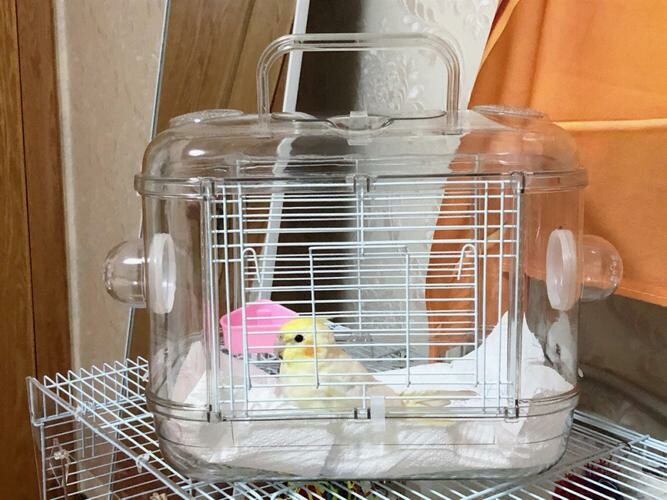
Taking domestic transport in China as an example, necessary packing equipment must be prepared before transport, including a transport cage (size determined by the bird’s body size), a matching cloth bag, a matching cardboard box, a small light, necessary vegetables and fruits, and sufficient grains. If it is winter, it is best to prepare heat packs to prevent freezing. If it is a large parrot, an air travel carrier or similar transport cage is needed. If it is an unweaned chick, a foam box needs to be prepared in advance.
Ensure Document Integrity and Compliance
Confirm the legality of transport: Domestic transport requires an "Animal Quarantine Certificate," and inter-provincial transport requires advance declaration. International transport must comply with the "Convention on International Trade in Endangered Species of Wild Fauna and Flora" (CITES), and some parrot species (such as most Cockatoos) require additional permits. Of course, currently many people in China transport "secretly" without documents; everyone understands the logic behind this without me saying more, so I won’t elaborate here.
Professional Packing Process: Shockproof, Breathable, Thermal Insulation
Selection of Transport Box
Use sturdy materials: Prioritize transport cages (plastic air travel carriers can be used for large parrots) with dimensions 1.5 times the parrot’s standing height. Secondly, choose perforated hard cardboard boxes (they must not be too soft to prevent being crushed during transport). At the same time, prepare soft, breathable cloth bags which should be elastic; these are generally sold as a set with the transport cage. If it is a small bird, also prepare foam boxes, sponges, etc. I personally do not recommend transporting unweaned chicks, as the mortality rate is too high unless there is a specially customized wooden box.
Internal processing of the transport cage: Generally, first use a zip tie to bind a small section of corn or a small head of vegetable like bok choy inside the transport cage (to provide basic moisture needs). Fix a small light at the top or side, then place the bird inside, and use the cloth bag to hold sufficient grain bird food; you can add a moderate amount of sunflower seeds to provide energy. Cover the transport cage and secure it with zip ties. If it is an air travel carrier, you can line the bottom with corn cob bedding or an old towel (for moisture absorption and anti-slip), and fix a perch with soft cloth strips around the sides for the parrot to grip.
Shockproof Reinforcement
If the cardboard box is too large, it must be padded with foam or similar materials. Fill the gaps inside the box with crumpled newspaper or bubble wrap to prevent shaking and bumps. Reinforce the box seams externally with nylon zip ties or tape, and label it with "Live Animal – Fragile" and "Do Not Invert" signs.
Ventilation and Thermal Insulation
The diameter of the holes should not exceed 1-2 cm (to prevent the parrot from drilling out). Holes are generally made at the corners, with symmetrical holes on both sides to ensure air circulation. During winter transport, stick a heat pack inside the box (avoid direct contact with the parrot); in summer, place ice packs (wrapped in a towel to prevent condensation).
Transport Execution: Timing and Monitoring
Logistics Selection
If conditions permit, prioritize direct air freight (arriving within 12 hours) or professional pet transport companies, and avoid standard couriers. If land transport is used, it is best to choose SF Express as a last resort. For other couriers, time must be controlled within 48-72 hours. If large birds are being transported by air, it is best to have the courier personnel check the temperature and humidity inside the box every 2 hours.
Stress Management
For large parrots, place the transport box next to the breeding cage 2 days before transport to let the parrot adapt to the environment. Place familiar food bowls or toys (such as small bells) inside the box to reduce the sense of unfamiliarity. Small parrots generally do not have issues.
Post-sales Service: Instructions for Buyer Processing upon Arrival
Remind the buyer: Let the box sit for 30 minutes after receipt before opening, and take a video of the unboxing. After opening, provide warm water with avian electrolytes or glucose, and sufficient bird food. Avoid bathing within 48 hours, observe eating habits, and report any issues promptly.
Key Tips
Prohibited transport situations: Chicks (feathers not fully grown), molting periods, and breeding hens (prone to fright and abandoning eggs) are not recommended for transport.
Insurance purchase: For high-value breeding birds, it is recommended to purchase live animal transport insurance (such as SF Pet Insurance), with payout ratios reaching up to 80%.
Through scientific preparation and standardized operations, the mortality rate of parrot transport can be reduced to below 1%. Details determine survival rates; ensure caution is maintained throughout the process!
Original article by 搬运工, if reproduced, please cite the source: https://www.kaipet.com/en/parrot-transport-packing-guide-4-steps-reduce-mortality-1