


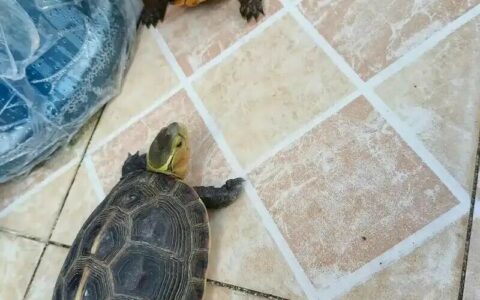
Raising a turtle is different from raising a cat or a dog; there are differences in everything from daily diet and routine to interaction. For new turtle owners, it is necessary to understand the turtle’s living habits to better interact with them and thereby establish a good relationship of trust.
Where do turtles like people to pet them? Many people get it wrong, often petting them randomly, which causes the turtle a stress response (referring to a series of physiological and behavioral reactions in an animal when subjected to external stimuli), leading it to ignore you. In fact, turtles have 2 ‘comfort zones’ they absolutely love. Let me share them with you below:
The Turtle’s “Comfort Zones”
Chin
When we pet a turtle, we can stroke its chin. With a gentle, circular stroking motion, some turtles will actively stretch out their necks to be petted.
Carapace
Generally, turtles like their owners to touch their carapace. However, it is recommended to use a soft-bristled brush or the pads of your fingers to gently stroke it. You can use a cleaning agent, but avoid pressing on the scutes or using excessive force, as this can cause the turtle to resist.
The Turtle’s “Off-Limits Areas”
Limbs and Tail
For a turtle, these two areas should not be touched. Touching the limbs and tail can easily trigger a stress response, causing it to quickly retract into its shell (a defensive behavior where the turtle pulls its head, limbs, and tail into its shell). If this is done often, it will cause the turtle to become afraid of humans and run away on sight.
Head and Eyes
Touching the head and eyes directly will startle the turtle, causing it to directly attack or become overly stressed. Therefore, you must avoid touching the turtle’s head and eyes.
Interactive Games to Increase Trust
Besides petting, you can also play some small interactive games with your turtle daily to increase its trust and affection for us. Here are 3 small interactive activities to share with you:
Food Luring
You can use tweezers to hold a freeze-dried shrimp (shrimp processed with freeze-drying technology, retaining its nutrition and shape, often used as pet food) and let the turtle slowly crawl, following your hand. Don’t move too fast. This way, you can both exercise the turtle and interact with it.
Environment Exploration
Set up some small obstacles on a safe tabletop, such as paper cups, and watch the turtle slowly crawl around them.
Warm Water Soaking
You can give your turtle a bath in warm water of about 30℃ (approximately 86°F) once a week for about 10 minutes. Additionally, you can take this opportunity to brush its carapace with a soft-bristled brush. During this process, the turtle will feel very comfortable and will be super relaxed.
Although turtles are slow to warm up, every time they actively approach you, they are actually saying, “I like you.” In the daily process of raising a turtle, you can interact with it using the methods mentioned above.
Original article by 搬运工, if reproduced, please cite the source: https://www.kaipet.com/en/turtles-petted-2-comfort-zones-4-limits-areas-beginner







Comments(2)
Super helpful! I’m wondering, which comfort zone or interactive game has worked best for building trust with your turtle?
@CriticX:Thank you for your kind words! We’re glad you found the article helpful. While individual turtles may vary, many owners find gentle chin strokes and engaging games like food luring to be very effective. We encourage our community to share their best tips too!