

Price and Cost
Common Musk Turtle: It is the most affordable entry-level species among musk/mud turtles. Currently, the price for a hatchling is starting from 80 CNY (approx. $11 USD), offering great value for money, which is very friendly for beginners with a limited budget.
Razor-backed Musk Turtle: Its price is considerably higher than the Common Musk Turtle. Currently, the price for a hatchling is starting from 230 CNY (approx. $32 USD), and the price difference for adults is even greater, resulting in a higher cost investment.
Summary and Recommendations
Choose the Common Musk Turtle if: You are a beginner with a limited budget, looking for a species that is easy to care for and highly interactive, and you don’t mind its adult appearance as much. If you just want to experience the joy of turtle keeping, the Common Musk Turtle is an excellent choice. Its “hardy” nature will help you avoid many beginner mistakes in the early stages of turtle keeping, and its active interaction will also bring a lot of joy.
Choose the Razor-backed Musk Turtle if: You place more importance on aesthetics, have a more sufficient budget, are fond of its unique “razor-like” shape, and are willing to put a bit more effort into water quality management and keeping it warm during winter. In that case, the Razor-backed Musk Turtle will be the species that better satisfies your aesthetic and husbandry needs.
Husbandry Difficulty and Cost
Husbandry Difficulty
Common Musk Turtle: It has low requirements for its environment and water quality and has strong disease resistance. As long as the water quality is relatively stable, it will basically not get sick. It has no requirement for lighting, so a basking dock is not necessary, and it can be kept in any random corner indoors. Furthermore, it is more cold-tolerant and can overwinter in cold water normally (as long as the temperature does not fall below 0°C / 32°F). The husbandry difficulty for the Common Musk Turtle is lower.
Razor-backed Musk Turtle: Its husbandry difficulty is not high either, but in comparison, it is slightly more sensitive to water quality. If water quality is not managed properly, it is more prone to issues like skin rot. It is also slightly less cold-tolerant than the Common Musk Turtle, so if the temperature is too low in winter, attention should be paid to keeping it warm.
Price and Cost
Common Musk Turtle: It is the most affordable entry-level species among musk/mud turtles. Currently, the price for a hatchling is starting from 80 CNY (approx. $11 USD), offering great value for money, which is very friendly for beginners with a limited budget.
Razor-backed Musk Turtle: Its price is considerably higher than the Common Musk Turtle. Currently, the price for a hatchling is starting from 230 CNY (approx. $32 USD), and the price difference for adults is even greater, resulting in a higher cost investment.
Summary and Recommendations
Choose the Common Musk Turtle if: You are a beginner with a limited budget, looking for a species that is easy to care for and highly interactive, and you don’t mind its adult appearance as much. If you just want to experience the joy of turtle keeping, the Common Musk Turtle is an excellent choice. Its “hardy” nature will help you avoid many beginner mistakes in the early stages of turtle keeping, and its active interaction will also bring a lot of joy.
Choose the Razor-backed Musk Turtle if: You place more importance on aesthetics, have a more sufficient budget, are fond of its unique “razor-like” shape, and are willing to put a bit more effort into water quality management and keeping it warm during winter. In that case, the Razor-backed Musk Turtle will be the species that better satisfies your aesthetic and husbandry needs.
Recently, I’ve often seen people asking whether to choose a Razor-backed Musk Turtle or a Common Musk Turtle. Below, I will provide a comparative analysis from multiple aspects to help you make a clear choice.
Aesthetic Appeal and Temperament Comparison
Appearance and Looks
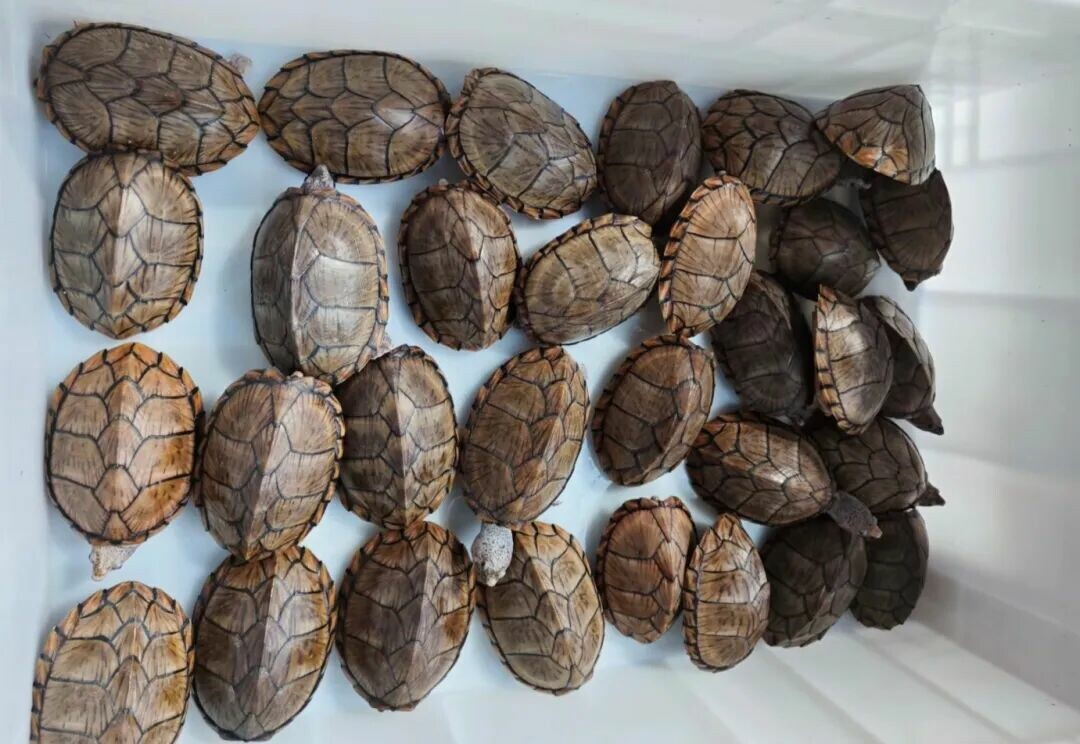
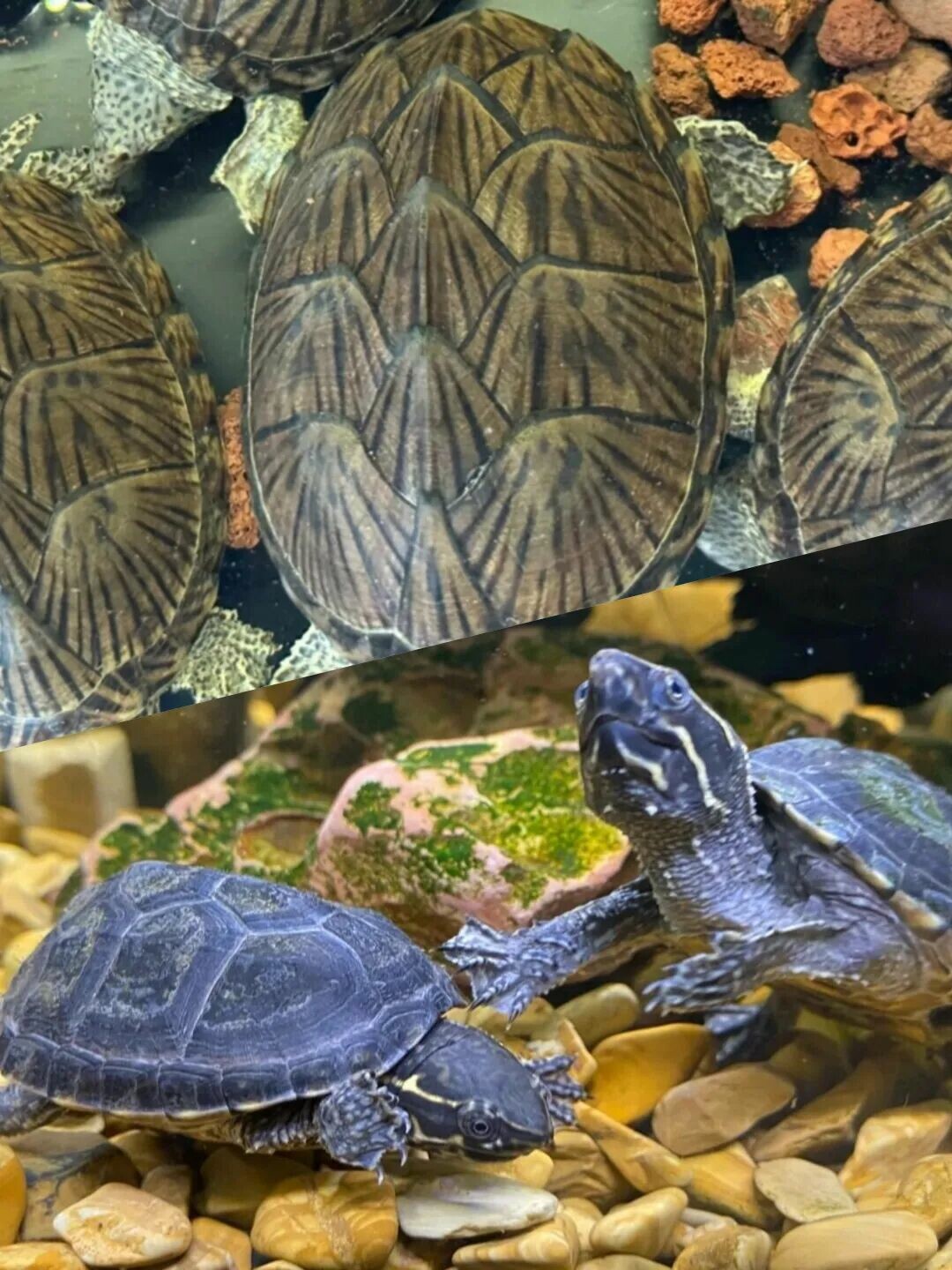
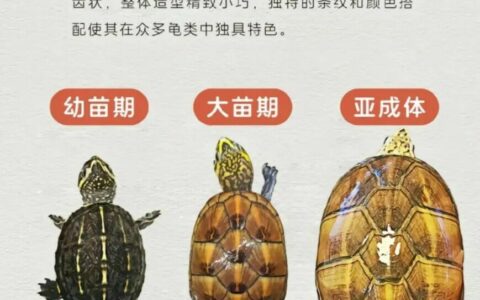
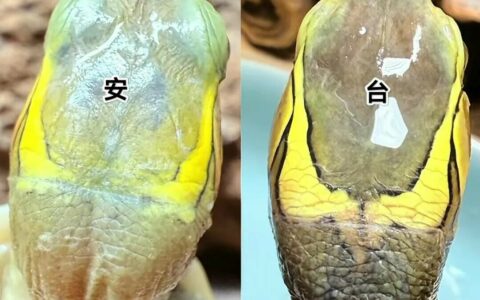
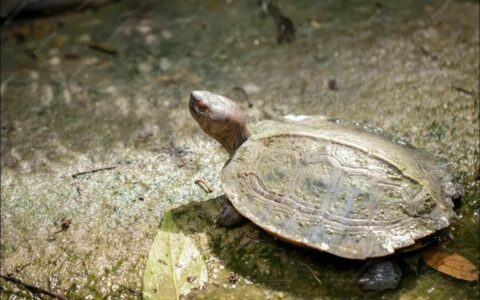
Common Musk Turtle: The carapace is mostly brown or black, with irregular geometric patterns. The head has yellow or white stripes. Its overall appearance is relatively plain, and some individuals have a slightly lower aesthetic appeal as adults, lacking a certain spirited visual impact.
Razor-backed Musk Turtle: It has a high-domed carapace with a distinct triangular, “razor-like” shape. The patterns are more intricate, and the head markings are also unique. Its overall aesthetic appeal is higher, giving it an advantage in looks. It’s easy for people to be captivated by its unique appearance at first glance.
Interactivity
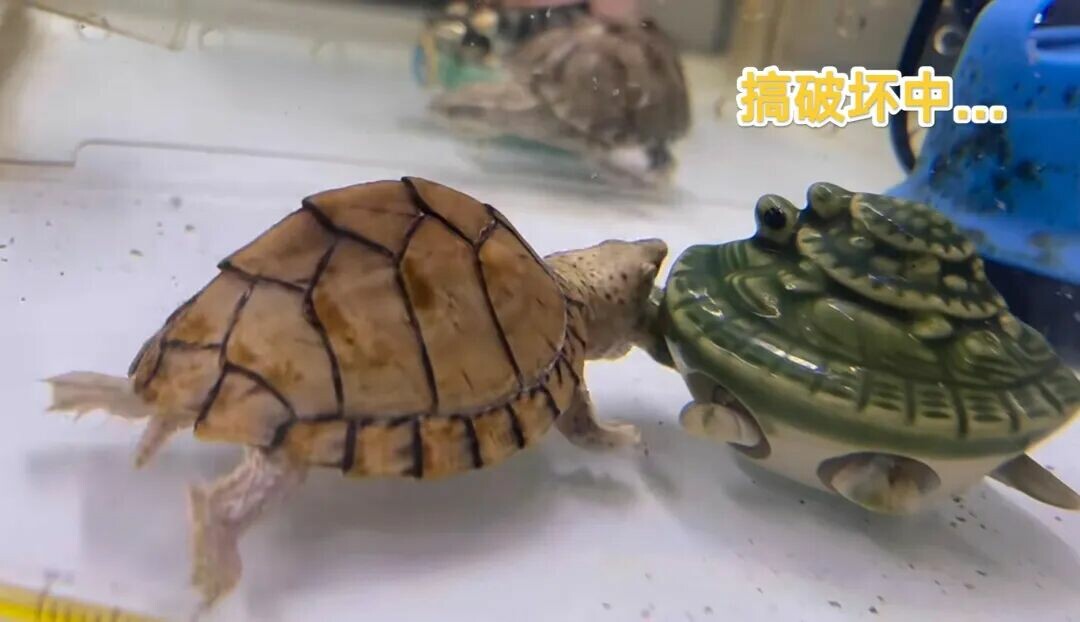
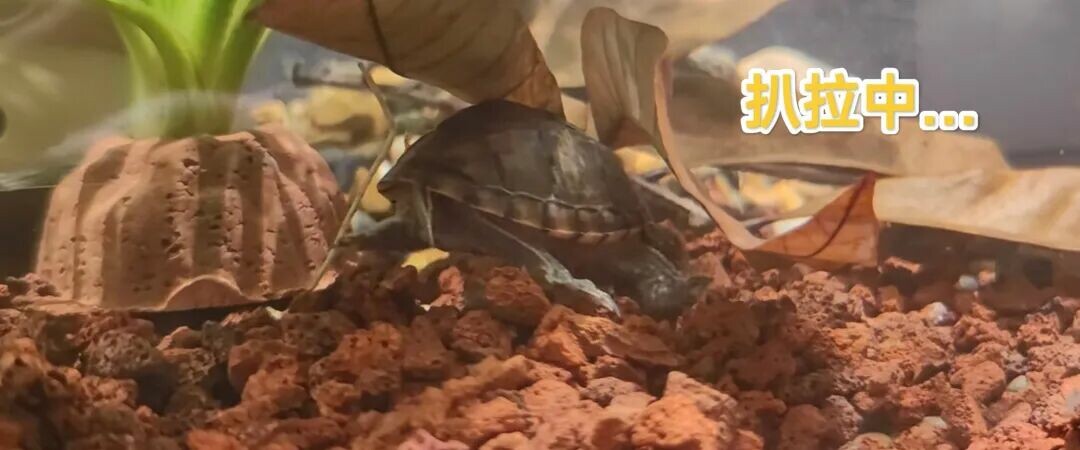
Common Musk Turtle: Once tamed, it is very active and loves to “be destructive” everywhere—catching fish and biting aquatic plants are common occurrences. It actively chases hands for food. When you feed it with tongs, they will swim around in groups, providing an emotional reward that is “maxed out.” However, when co-housed, they can be a bit “nippy” and like to fight.
Razor-backed Musk Turtle: Comparatively, its temperament is more docile and timid. Its interactivity is also good, but its overall activity level is slightly less than that of the Common Musk Turtle. However, its advantage is that it is more well-behaved when co-housed, with fewer conflicts.
Husbandry Difficulty and Cost
Husbandry Difficulty
Common Musk Turtle: It has low requirements for its environment and water quality and has strong disease resistance. As long as the water quality is relatively stable, it will basically not get sick. It has no requirement for lighting, so a basking dock is not necessary, and it can be kept in any random corner indoors. Furthermore, it is more cold-tolerant and can overwinter in cold water normally (as long as the temperature does not fall below 0°C / 32°F). The husbandry difficulty for the Common Musk Turtle is lower.
Razor-backed Musk Turtle: Its husbandry difficulty is not high either, but in comparison, it is slightly more sensitive to water quality. If water quality is not managed properly, it is more prone to issues like skin rot. It is also slightly less cold-tolerant than the Common Musk Turtle, so if the temperature is too low in winter, attention should be paid to keeping it warm.
Price and Cost
Common Musk Turtle: It is the most affordable entry-level species among musk/mud turtles. Currently, the price for a hatchling is starting from 80 CNY (approx. $11 USD), offering great value for money, which is very friendly for beginners with a limited budget.
Razor-backed Musk Turtle: Its price is considerably higher than the Common Musk Turtle. Currently, the price for a hatchling is starting from 230 CNY (approx. $32 USD), and the price difference for adults is even greater, resulting in a higher cost investment.
Summary and Recommendations
Choose the Common Musk Turtle if: You are a beginner with a limited budget, looking for a species that is easy to care for and highly interactive, and you don’t mind its adult appearance as much. If you just want to experience the joy of turtle keeping, the Common Musk Turtle is an excellent choice. Its “hardy” nature will help you avoid many beginner mistakes in the early stages of turtle keeping, and its active interaction will also bring a lot of joy.
Choose the Razor-backed Musk Turtle if: You place more importance on aesthetics, have a more sufficient budget, are fond of its unique “razor-like” shape, and are willing to put a bit more effort into water quality management and keeping it warm during winter. In that case, the Razor-backed Musk Turtle will be the species that better satisfies your aesthetic and husbandry needs.
Husbandry Difficulty and Cost
Husbandry Difficulty
Common Musk Turtle: It has low requirements for its environment and water quality and has strong disease resistance. As long as the water quality is relatively stable, it will basically not get sick. It has no requirement for lighting, so a basking dock is not necessary, and it can be kept in any random corner indoors. Furthermore, it is more cold-tolerant and can overwinter in cold water normally (as long as the temperature does not fall below 0°C / 32°F). The husbandry difficulty for the Common Musk Turtle is lower.
Razor-backed Musk Turtle: Its husbandry difficulty is not high either, but in comparison, it is slightly more sensitive to water quality. If water quality is not managed properly, it is more prone to issues like skin rot. It is also slightly less cold-tolerant than the Common Musk Turtle, so if the temperature is too low in winter, attention should be paid to keeping it warm.
Price and Cost
Common Musk Turtle: It is the most affordable entry-level species among musk/mud turtles. Currently, the price for a hatchling is starting from 80 CNY (approx. $11 USD), offering great value for money, which is very friendly for beginners with a limited budget.
Razor-backed Musk Turtle: Its price is considerably higher than the Common Musk Turtle. Currently, the price for a hatchling is starting from 230 CNY (approx. $32 USD), and the price difference for adults is even greater, resulting in a higher cost investment.
Summary and Recommendations
Choose the Common Musk Turtle if: You are a beginner with a limited budget, looking for a species that is easy to care for and highly interactive, and you don’t mind its adult appearance as much. If you just want to experience the joy of turtle keeping, the Common Musk Turtle is an excellent choice. Its “hardy” nature will help you avoid many beginner mistakes in the early stages of turtle keeping, and its active interaction will also bring a lot of joy.
Choose the Razor-backed Musk Turtle if: You place more importance on aesthetics, have a more sufficient budget, are fond of its unique “razor-like” shape, and are willing to put a bit more effort into water quality management and keeping it warm during winter. In that case, the Razor-backed Musk Turtle will be the species that better satisfies your aesthetic and husbandry needs.
Recently, I’ve often seen people asking whether to choose a Razor-backed Musk Turtle or a Common Musk Turtle. Below, I will provide a comparative analysis from multiple aspects to help you make a clear choice.
Aesthetic Appeal and Temperament Comparison
Appearance and Looks
Common Musk Turtle: The carapace is mostly brown or black, with irregular geometric patterns. The head has yellow or white stripes. Its overall appearance is relatively plain, and some individuals have a slightly lower aesthetic appeal as adults, lacking a certain spirited visual impact.
Razor-backed Musk Turtle: It has a high-domed carapace with a distinct triangular, “razor-like” shape. The patterns are more intricate, and the head markings are also unique. Its overall aesthetic appeal is higher, giving it an advantage in looks. It’s easy for people to be captivated by its unique appearance at first glance.
Interactivity
Common Musk Turtle: Once tamed, it is very active and loves to “be destructive” everywhere—catching fish and biting aquatic plants are common occurrences. It actively chases hands for food. When you feed it with tongs, they will swim around in groups, providing an emotional reward that is “maxed out.” However, when co-housed, they can be a bit “nippy” and like to fight.
Razor-backed Musk Turtle: Comparatively, its temperament is more docile and timid. Its interactivity is also good, but its overall activity level is slightly less than that of the Common Musk Turtle. However, its advantage is that it is more well-behaved when co-housed, with fewer conflicts.
Husbandry Difficulty and Cost
Husbandry Difficulty
Common Musk Turtle: It has low requirements for its environment and water quality and has strong disease resistance. As long as the water quality is relatively stable, it will basically not get sick. It has no requirement for lighting, so a basking dock is not necessary, and it can be kept in any random corner indoors. Furthermore, it is more cold-tolerant and can overwinter in cold water normally (as long as the temperature does not fall below 0°C / 32°F). The husbandry difficulty for the Common Musk Turtle is lower.
Razor-backed Musk Turtle: Its husbandry difficulty is not high either, but in comparison, it is slightly more sensitive to water quality. If water quality is not managed properly, it is more prone to issues like skin rot. It is also slightly less cold-tolerant than the Common Musk Turtle, so if the temperature is too low in winter, attention should be paid to keeping it warm.
Price and Cost
Common Musk Turtle: It is the most affordable entry-level species among musk/mud turtles. Currently, the price for a hatchling is starting from 80 CNY (approx. $11 USD), offering great value for money, which is very friendly for beginners with a limited budget.
Razor-backed Musk Turtle: Its price is considerably higher than the Common Musk Turtle. Currently, the price for a hatchling is starting from 230 CNY (approx. $32 USD), and the price difference for adults is even greater, resulting in a higher cost investment.
Summary and Recommendations
Choose the Common Musk Turtle if: You are a beginner with a limited budget, looking for a species that is easy to care for and highly interactive, and you don’t mind its adult appearance as much. If you just want to experience the joy of turtle keeping, the Common Musk Turtle is an excellent choice. Its “hardy” nature will help you avoid many beginner mistakes in the early stages of turtle keeping, and its active interaction will also bring a lot of joy.
Choose the Razor-backed Musk Turtle if: You place more importance on aesthetics, have a more sufficient budget, are fond of its unique “razor-like” shape, and are willing to put a bit more effort into water quality management and keeping it warm during winter. In that case, the Razor-backed Musk Turtle will be the species that better satisfies your aesthetic and husbandry needs.
Original article by 搬运工, if reproduced, please cite the source: https://www.kaipet.com/en/razor-backed-common-musk-turtle-choose-showdown-interactivity-price





Comments(2)
Super helpful guide! I’m a beginner; the Common Musk seems perfect. What are your favorite interactive moments with them?
@CriticX:We’re delighted you found the guide helpful! The Common Musk Turtle is indeed a fantastic choice for beginners. Their high interactivity often includes spirited feeding sessions, chasing hands, and even playful exploration. We hope you create many wonderful memories with your new pet!