

There are many details to pay attention to when keeping turtles, and slight negligence can cause harm to them. The following 7 behaviors are harmful to turtles. Come and see if you have done any of them.
Behaviors That Easily Cause Stress and Refusal to Eat
Teasing During Feeding
Some owners like to tease their turtles when feeding them. You might think you are playing with the turtle, but it is actually a behavior that harms it, and can easily lead to the turtle’s stress response (referring to a series of physiological and behavioral responses produced by an animal when subjected to external stimuli) and refusal to eat. It is recommended to step back about 50 cm when feeding your turtle, wait for 10 minutes, and give the turtle a relaxed feeding time to let it slowly enjoy its food.

Excessive Handling
Excessively handling a turtle will keep it in a prolonged state of tension, leading to a decrease in immunity and increasing the risk of illness. In severe cases, it can cause difficulty in eating and easily lead to death.
Incorrect Cleaning and Water Changing Methods
Forcibly Scrubbing the Shell
Although a turtle’s shell looks very hard, for the turtle, brushing and scraping its shell will not only cause it pain but also damage its keratin layer. In severe cases, it may even increase the risk of fungal infection. The correct cleaning method is to use a soft cloth dipped in warm water and wipe it gently. You should also avoid this during the annual shedding period and refrain from human intervention.
Sudden Water Changes
Turtles are cold-blooded animals and are very sensitive to temperature. A sudden water change is undoubtedly a sharp shock from the temperature difference for a turtle, which can easily cause it to catch a cold. In severe cases, it can lead to pneumonia or even death. The correct way to change water: the new water temperature should be 1°C higher than the old water, and only change 1/3 of the water each time, do not replace it all.
Common Mistakes in the Rearing Environment
Keeping Turtles in Round Tanks with No Hiding Space
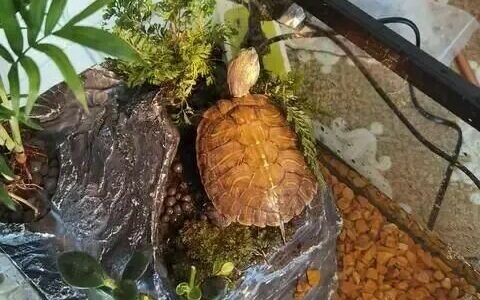
If you keep a turtle in a round tank, it will lose its sense of direction, becoming disoriented while turning in the round bowl. Coupled with the lack of a hiding place, a turtle living in such an environment for a long time is prone to stress, depression, skin rot, and shell rot. It is recommended to use a rectangular tank for turtles and add some objects for them to hide behind, such as tiles, leaves, or other forms of cover.
Water Level is Too Shallow
The water level is too shallow if the water does not cover the turtle’s back. Shallow water is very harmful to a turtle’s body. Additionally, with an out-of-water basking platform, the temperature fluctuates significantly, which can easily lead to colds and pneumonia. It is recommended to keep the water level above the shell, deeper than the turtle’s height when flipped on its side. This not only makes it easier for the turtle to right itself, preventing drowning, but also avoids creating a significant temperature difference. When letting the turtle bask, it is sufficient to place the basking platform in the water.
Too Many Decorations
Putting everything you like and find attractive into the turtle tank as decoration—firstly without disinfecting them, and secondly, colored stones are generally toxic—will accelerate the turtle’s death. When keeping turtles, do not put in colored stones, painted items, or things that mold easily. You can add some stones and longan leaves. Plants can be arranged according to the actual situation, but pay attention to the appropriate amount; do not add too many.
In the process of keeping turtles, if you engage in any of these 7 behaviors, they are likely actions that harm your turtle and must be avoided.
Original article by 搬运工, if reproduced, please cite the source: https://www.kaipet.com/en/7-common-mistakes-keeping-turtles-read-beginners-avoid-accidentally-harming-turtle





Comments(2)
This is incredibly insightful! I never realized excessive handling could decrease immunity so much. What are common signs a turtle is stressed?
@CriticX:We’re glad you found the insights helpful! Common signs of stress in turtles include refusal to eat, excessive hiding, lethargy, or agitated behavior. Prolonged stress can lead to health issues like weakened immunity. Ensuring a proper environment with hiding spots and gentle handling is key.