I have been keeping Crested Geckos for over 8 years, and the question I get asked most often is: “Does it recognize me?” Every time you see a Crested Gecko’s large eyes staring quietly at you, it’s hard not to have such expectations. Online opinions are polarized; some say they don’t at all, while others claim their geckos chase after their hands. Today, we won’t talk about feelings. Instead, starting from animal behavior and practical husbandry experience, we will explain this matter thoroughly.
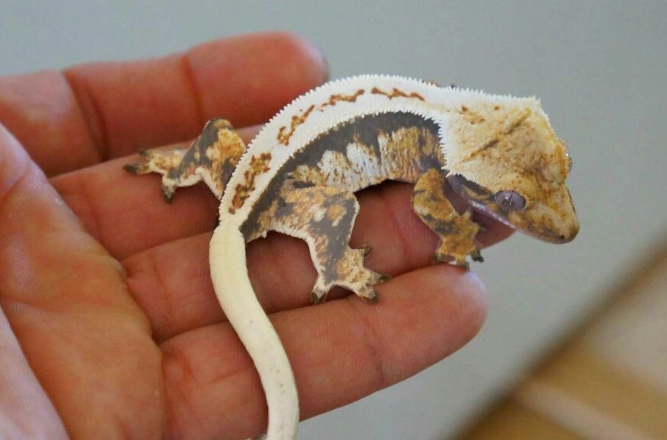
To give you the core answer directly: Crested Geckos do not develop emotional attachments or loyalty to an “owner” identity in the way cats and dogs do. However, through excellent classical conditioning (the learning process of establishing a link between a specific stimulus and a response through experience) and habituation (the behavior of gradually decreasing the response to a repeated and harmless stimulus), they can associate you with positive things like “safety” and “food,” thereby exhibiting interactive behaviors that resemble “recognizing you.” This isn’t love, but pragmatic survival wisdom.
Conclusion: Their “Recognition” is Not Emotional Attachment
Many people keep Crested Geckos with the same mindset they have for keeping cats or dogs, which is the root of all disappointment. Mammalian brains have a developed limbic system (the brain region responsible for emotions and social bonding) that handles emotional and social connections. The brain structure of reptiles is much older; its core tasks are survival: foraging, evading predators, and reproduction. Their behavior is driven more by instinct and direct experience.
Therefore, when your Crested Gecko no longer flees in panic upon seeing you and even proactively climbs onto your hand, it doesn’t mean it “loves you.”A more reasonable explanation is: it has recognized “you”as a specific large organism and has formed a solid association between you and two things: “no threat”and “possible food.” This is already a quite refined manifestation of reptilian cognitive ability.
The first Crested Gecko I kept was named “Pudding.” For the first 2 months, it would jump away whenever a shadow passed by. Now that I’ve had it for 5 years, it walks over slowly when I open the enclosure. Not because it misses me, but because it knows the “sound of the enclosure door opening” has a high probability of being accompanied by fruit mash. This is how it recognizes me.
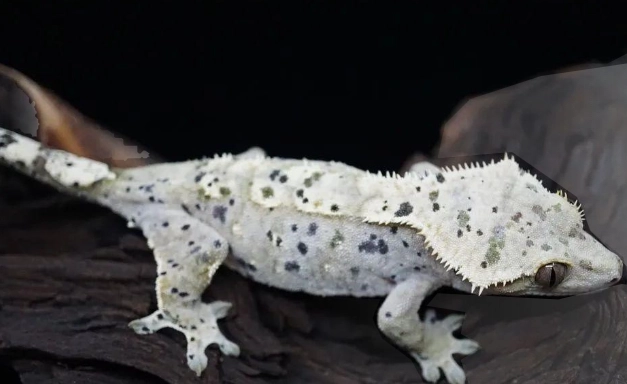
The Reptilian Brain vs. The Mammalian Brain: How Does Science View Owner Recognition?
According to views in “Reptile Ethology,” reptiles possess basic learning and memory abilities, especially associative learning (a way of learning that links different events or stimuli). You can imagine their brains as an efficient recorder of conditioned reflexes.
For a species like the Crested Gecko, which has a relatively large brain capacity and keen senses, they are capable of:
- Distinguishing individuals: Using vision (perhaps distinguishing body outlines or movement patterns) and smell (your scent is unique) to remember the difference between you and others.
- Linking events: Binding “your appearance” together with positive experiences like “feeding” and “gentle touching.”
- Habituation: Gradually reducing the fear response toward stimuli that appear repeatedly and do not cause harm (such as your hand moving in the environment).
This is very similar to the logic of “rabbits recognizing people” often promoted by rabbit welfare associations—both are based on the association of safety and resource supply, rather than emotional identification. The difference is that a rabbit’s social nature is still higher than a gecko’s.
Does that mean we can’t establish a relationship with them? Of course not. This trust-based interaction is precisely the most charming part of keeping reptiles; we just need to adjust our expectations and use the right methods.
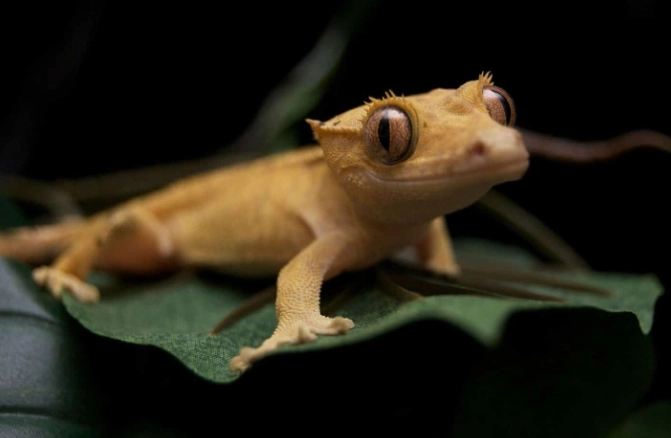
I must be honest: expecting a Crested Gecko to pounce on you like a puppy is unrealistic. But when you find that a previously timid gecko is willing to peacefully lick fruit mash from your hand, or even fall asleep, that sense of accomplishment is unique. This is a quiet, mutually respectful partnership.
How to Make a Crested Gecko “Recognize” You: 4 Steps to Building Trust
Instead of asking “will it recognize its owner,” it’s better to ask “how can I become someone it trusts.” Here are effective steps verified over time; being impatient will only be counterproductive.
Step 1: Create a Home with a Sense of Security (Environmental Setup)
A gecko in a constant state of stress has no interest in learning to “recognize people.” Please ensure the enclosure has:
- Ample cover: Multiple hiding spots (tree hollows, plants) so it can hide completely.
- Vertical activity space: Crested Geckos are arboreal; vertical space is more important than floor area.
- Stable temperature and humidity: Violent fluctuations cause stress.
If the environment isn’t settled, everything else is for nothing. This is a basic foundation that many beginners tend to overlook.
Step 2: Establish Positive Associations Through “Feeding Interaction”
This is the most powerful method for building a connection. Don’t just leave the food and walk away.
- Feed at a fixed time: Let it anticipate your appearance.
- Hand-feed fruit mash: Use a small soft spoon or your finger with a bit of fruit mash and let it lick it. Let your hand and delicious food appear at the same time.
- Wait patiently: Initially, it may not dare to approach. Place the spoon near it, stay still, and let it decide when to come forward.
After repeating this for several weeks, you will find it reacts as soon as it sees you holding the spoon.
Step 3: Progressive “Hand Desensitization” Practice
The goal is to turn your hand from a “scary intruder” into “part of the environment” or even a “mobile platform.” Desensitization (reducing fear or negative reactions to a stimulus through gradual exposure).
- Static Phase: Open the enclosure door and place your hand quietly at the bottom for a few minutes without making any movements. Repeat daily.
- Movement Phase: When it no longer immediately flees from your hand’s presence, try using the back of your hand or a finger to approach it at a very slow speed and let it sniff.
- Contact Phase: Start by gently touching its chin or the side of its body, avoiding a sudden strike from above (which is the movement of a natural predator).
- Handling Phase: Guide it to proactively climb onto your hand. You can lure it with food or place your hand in front of it and let it decide whether to climb up.
The entire process may take weeks or even months, depending entirely on the individual’s personality. Never grab it by force.
Step 4: Establish a Sense of Ritual in Daily Interaction
Reptiles respond to regularity. Try to establish simple rituals, such as: tapping the enclosure door twice before opening it, calling it with a fixed sound (even though it doesn’t understand the meaning, it can remember the sound pattern), and interacting at a fixed time. This helps it predict what will happen next, reducing the stress brought by uncertainty.
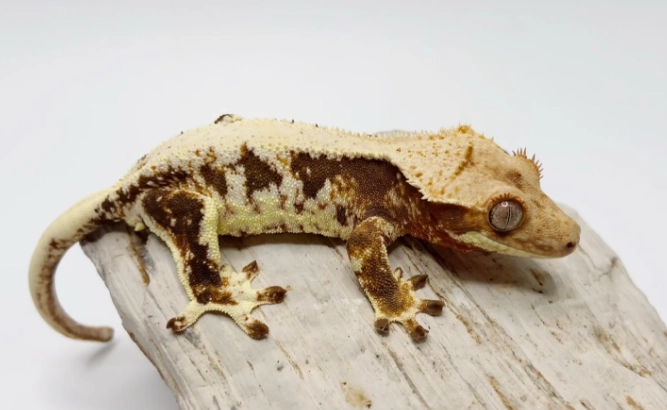
Reading the Signals: These Behaviors Mean It Is Starting to Trust You
When your efforts bear fruit, you will observe the following behavioral changes. These can be said to be the evidence that it “recognizes you”:
| Behavioral Manifestation | Possible Meaning | Common Beginner Misunderstanding |
|---|---|---|
| Does not immediately hide or freeze up upon seeing you | Basic habituation is complete; it does not view you as a direct threat. | Mistaken for being “cold” or “not interactive.” |
| Proactively approaches the enclosure door or the direction of your hand | It associates you with positive events (feeding, exploring outside the enclosure) and develops expectations. | Mistaken for “asking for pets” or “being cuddly.” |
| Maintains a relaxed posture in your hand (doesn’t grip tightly, belly is flat against you) | Feels safe and views your hand as a solid support. | —— |
| Eats or cleans its body in front of you | A sign of letting down its guard. Animals only perform these activities when they feel safe. | —— |
| Gently licks or sniffs your finger | Exploring and identifying your scent; a sign of familiarity. | Mistaken for “kissing.” |
Note: If a Crested Gecko makes a “chirping” sound, rapidly wiggles the tip of its tail, or opens its mouth wide in a threat display, these are clear “please back off” signals. Stop the interaction immediately and give it space.
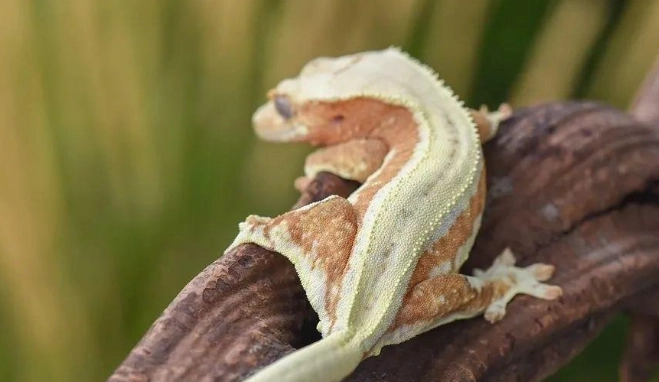
Common Mistakes for Beginners: Debunking 3 Myths About Crested Geckos Recognizing Owners
Some claims online easily mislead keepers, which can actually damage the trust relationship.
Myth 1: “The more you grab and interact, the more familiar you’ll get”
This is the worst advice. For a gecko that hasn’t adapted yet, being grabbed by force is an extremely terrifying “predator experience.”This will only strengthen the “your hand = danger” association, making it fear you more. Trust must be built voluntarily by the gecko; you can only provide the opportunity.
Myth 2: “It is enjoying itself if its eyes are closed”
Reptiles closing their eyes is sometimes a manifestation of excessive pressure or a state of stress (eyelid closure response), especially when being touched. A truly relaxed gecko usually has its eyes open, with a soft gaze and relaxed body muscles. Don’t apply human expressions to them.
Myth 3: “Every Crested Gecko will eventually become friendly”
Individual differences are enormous. Just like humans, some are extroverted and others are introverted. Some geckos are naturally timid, and reaching the point of “not being afraid” is already the limit. Respecting its personality and accepting differences in the degree of interaction is what makes a responsible keeper. Forcing an introverted gecko to become a social butterfly is torture for both parties.
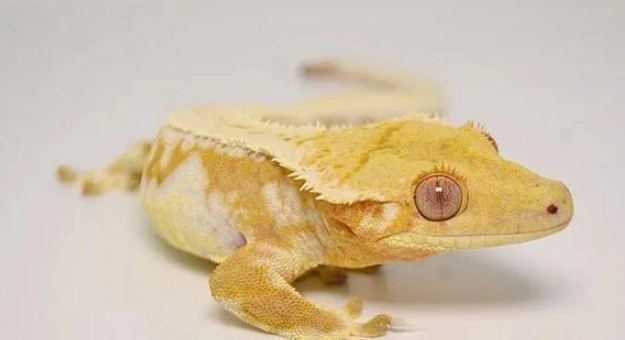
Keeper Q&A: Answering Interaction Questions
Don’t lose heart; this is very common. Please go back and review a few key points: Does the husbandry environment provide enough of a sense of security? (Are there enough hiding spots?) Is your interaction style too impatient? (Have you ever accidentally scared it?) Is its health condition good? (Individuals that are sick or have parasites are more prone to stress). Sometimes the issue isn’t the length of time, but the “quality” of interaction. Try going back to basics, slowing down all movements, or even pausing direct interaction for 1 or 2 weeks, only performing static hand placement and fixed-point feeding to rebuild purely positive associations.
This is a very good sign! It shows that it is curious about your finger’s movement rather than fearful. This “tracking”behavior might stem from two reasons: first, associating the moving object with “possible food”(like fruit mash); second, pure exploratory interest in moving objects in the environment. Whichever it is, it represents that its wariness toward you as an “environmental factor”is very low, making it an excellent starting point for building a deeper connection. You can use this behavior to guide it to climb to your desired position.
Very much not recommended. Its trust in you is based on specific environment (the enclosure) and a specific person (you). Unfamiliar environments are full of unknown smells, sounds, and vibrations, which will cause it immense stress. The scents, body temperatures, and gripping styles of different people are all foreign to it, which could potentially ruin the trust that was so hard to build. So-called “friendliness”is usually limited to the space familiar to both you and it. If you want to share, just let your friend watch quietly from the side; do not pass it around for others to take turns handling.
Crested Geckos are not truly social animals, but when sharing a space (provided there is enough space and resources), they can distinguish between “roommates”and “strangers”through scent. Long-term cohabiting individuals might form a stable “non-aggression”understanding, reducing unnecessary conflict. However, this is a different matter from the “companion emotions”of social animals. Please note that unless it is for breeding purposes or a special large-scale enclosure design, it is not recommended to cohabitate multiple adults (especially males) long-term to avoid causing stress or even leading to fights.
Not at all! This is actually physiological evidence that it feels “relaxed” in your hand. When tense or afraid, animals tighten their muscles, making it difficult to defecate. Defecation is a normal physiological need, just as people do not go to the bathroom when in extreme panic. Think of this as a helpless but interesting little trust interlude (just clean it up). It precisely indicates that its body is in a relatively non-defensive state.
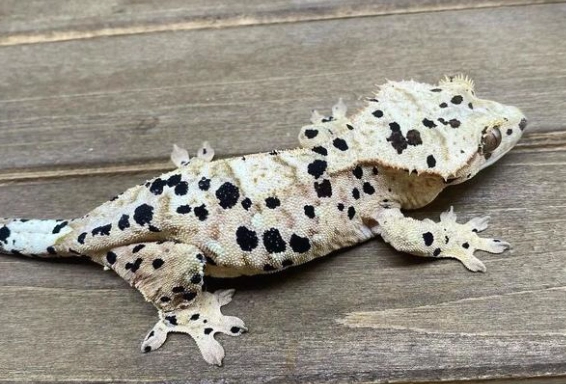
Overall, a Crested Gecko’s “recognition of its owner”is a lesson in patience, observation, and respect for natural instincts. They will not give you intense emotional feedback, but that feeling of trust—earned through bit-by-bit effort—when it rests peacefully in your palm is an irreplaceable joy in keeping reptiles. Let go of romantic imaginations about “recognizing masters,” understand it with a scientific eye, and treat it with a respectful attitude; you will only find that a more authentic and stable relationship is being built.
Original article by 搬运工, if reproduced, please cite the source: https://www.kaipet.com/en/crested-geckos-recognize-people-4-steps-establishing-interactive-relationship