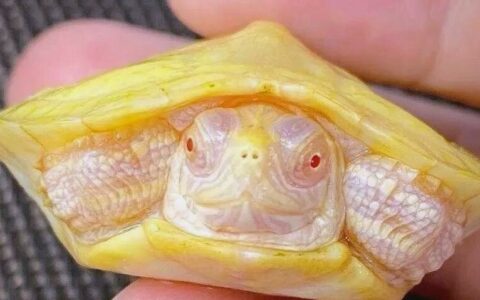
Previously, a turtle enthusiast shared his painful experience. A hatchling he had cared for meticulously had been eating well, but suddenly one day, it stopped eating. At first, this enthusiast thought it was just a temporary loss of appetite, so he stopped feeding it for 2 days. However, when he tried to feed it again, although the hatchling started eating, the good times didn’t last long; within a few days, this hatchling passed away suddenly.
After speculation and analysis by the community, it is believed that the death of this hatchling might be related to intestinal obstruction caused by underdevelopment. This event **aroused the vigilance and reflection of a vast number of turtle enthusiasts**.
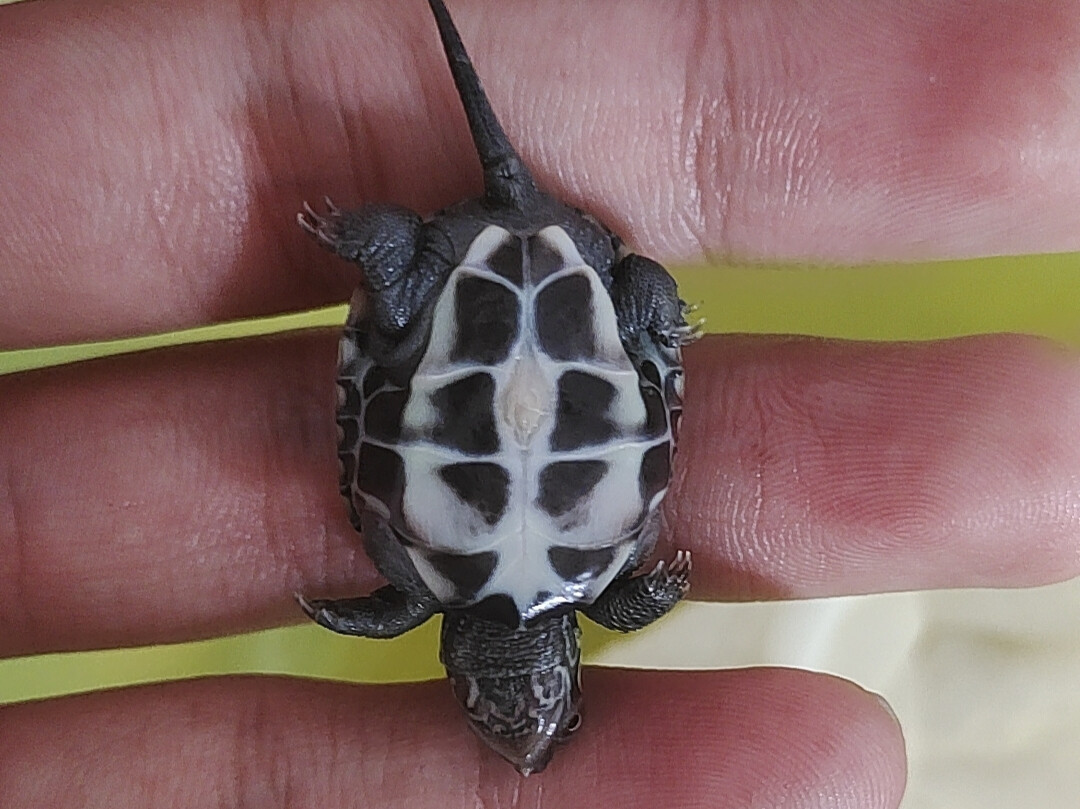
Signals of Underdevelopment
In fact, if enthusiasts observe carefully in their daily routine, they can detect some signals of hatchling underdevelopment. For aquatic turtles, if they frequently “flip over” for no reason and cannot turn themselves back over, this may be a signal of underdevelopment. If they frequently stand upright against the wall in shallow water, it may also imply developmental problems. For deep-water turtles, body imbalance or even abnormal behaviors like “head wobbling” can also be signs of underdevelopment.
Coping Strategies and Suggestions
Once these signals are discovered, how should enthusiasts respond? Some experienced keepers suggest that **resolutely stopping feeding is an effective method**. It is necessary to observe the hatchling’s defecation until normal feces appear or the symptoms disappear completely.
Taking that hatchling standing upright against the wall as an example, only when it recovers to a normal state, defecating normally or behaving normally, can one begin to cautiously feed it in small amounts. In this process, using turtle pellets as the choice for resuming feeding might be safer.
In addition, for underdeveloped hatchlings, besides fasting and observation, attention should also be paid to providing a suitable living environment and nutritional support. For example, adjusting the water level to suit the needs of different species and hatchlings, and providing nutritionally balanced food. Meanwhile, taking the hatchling for regular check-ups is also an important measure to prevent diseases and ensure its healthy growth.
Summary and Reminders
Underdevelopment in hatchlings is a problem that cannot be ignored. Some hatchlings provided by merchants are forced to hatch early to break their shells, so it is inevitable that some are not well-developed. As turtle enthusiasts, we should **observe carefully, detect and respond to these signals in time, to ensure our pet turtles can grow healthily**.
Original article by 搬运工, if reproduced, please cite the source: https://www.kaipet.com/en/turtle-underdevelopment-identify-3-red-flags-prevent-intestinal-obstruction