

As turtle enthusiasts, we always think about how to keep our turtles alive and well, never about how to kill them quickly. But actually, by performing a round of \”reverse operations,\” we might see certain issues more clearly.
While exploring how to raise turtles well, we might as well think from the opposite perspective and understand which behaviors can lead to a turtle’s death. By avoiding these erroneous operations, we might gain a deeper understanding of the art of turtle keeping. What are the quick \”ways to seek death\” when keeping turtles?
Death by Temperature Shock Stress
When a new turtle arrives home, do not rush to put it in water. Many owners believe that after a long journey, the turtle must be incredibly thirsty, so they place it directly into water. However, this practice easily leads to temperature shock stress. Due to the temperature difference between the new environment and the original one, the turtle may fall ill; mild cases involve refusal to eat or skin rot, while severe cases result in death. By quickly quenching its thirst, you have already embarked on the turtle’s \”path to death.\”
The correct approach is to let the turtle adapt in a dry environment for a period of time, preferably measured in hours, and wait until its condition is stable before slowly placing it in water.
Death by Gastrointestinal Issues
After a new turtle arrives home, having traveled a long distance, it feels like it must be starving, but in reality, its gastrointestinal function has not yet recovered. Feeding at this time is very likely to trigger gastrointestinal issues. It is recommended to feed only after the turtle has adapted to the environment for 2 to 3 days; this can greatly reduce the risk of gastrointestinal diseases.
Death by Drowning
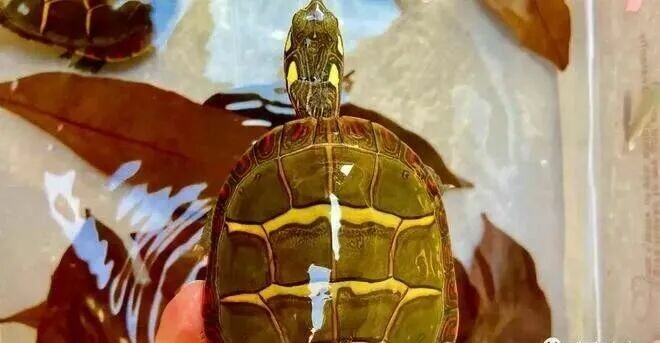
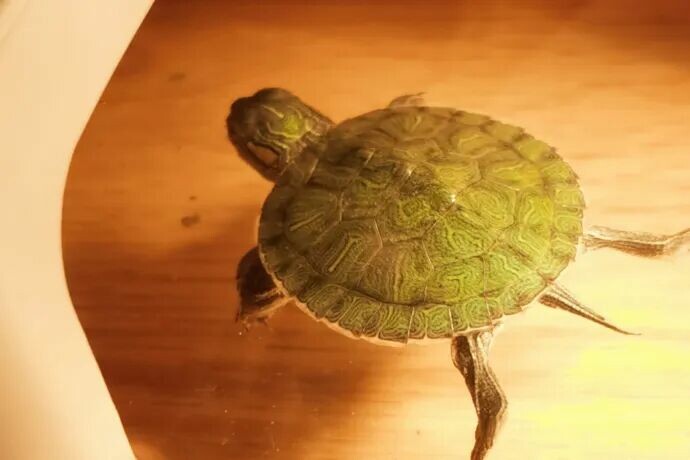
Ordinary drowning is sometimes just \”fate\”—an accident that cannot be avoided. But what about water level issues? Improper water level settings are also a major cause of turtle death. While an excessively low water level won’t cause immediate death, over the long term, it may lead to shell deformity. A water level that just barely covers the back (carapace) may make it impossible for the turtle to flip itself over, leading to death by drowning after a prolonged period.
Therefore, the water level should be set at a height of 3 to 5 times the turtle’s carapace to ensure the turtle’s comfort and safety.
Death by Cold due to Temperature Difference
In summer, isn’t it delightful to keep the turtle in an air-conditioned room to enjoy the coolness together?
Due to the excessive temperature difference, it is very easy to cause a cold or even pneumonia in the turtle. Once it contracts pneumonia, as long as you don’t treat it, you can let it suffer a few days less before it goes to reincarnate.
Death by Stress from Frequent Water Changes
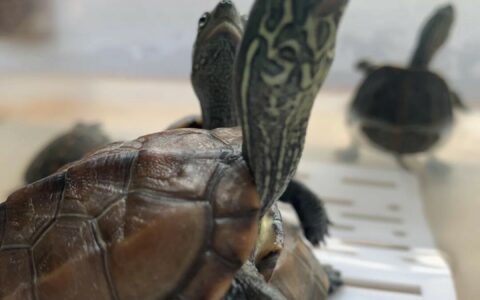
Frequent water changes can also cause stress to the turtle. Especially for turtles with weaker constitutions, such as Reeves’ Turtles (Chinese Pond Turtles), it is easier to contract diseases like skin rot and white eye because of this. It is recommended that owners maintain moderation when changing water and avoid being overly diligent.
Death by Overfeeding
My turtle needs to grow \”white and plump,\” so it needs to eat more! 3 meals a day, 4 meals, or even feeding it whenever I see it.
Overfeeding is also one of the causes of turtle death. Frequent and excessive feeding not only increases the burden on the turtle’s stomach and intestines but may also lead to body deformities and even liver damage. For turtles, feeding frequency should be controlled to avoid overfeeding.
Death by Sun Exposure
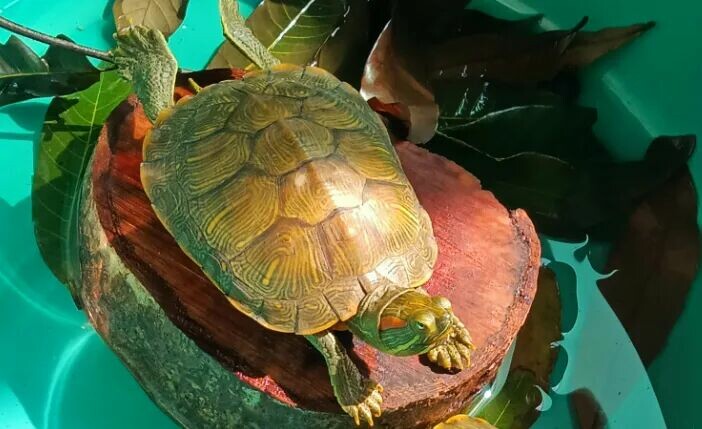
Although turtles need to bask in the sun to promote calcium absorption and kill bacteria, prolonged exposure to the scorching sun can lead to heatstroke or even death. This is especially true for \”dry basking.\” Therefore, when sunbathing, appropriate times and intensities should be chosen, or a shaded area should be provided. Otherwise, you might end up with a \”turtle specimen.\”
In summary, if you want your turtle to die faster, or if you want to \”collect the shell\” or \”collect a specimen,\” then \”reverse operations\” are the way to go. It guarantees your turtle will die quickly and precisely; there is no turtle that cannot be \”tormented\” to death. Only when \”tormented\” within a reasonable range will a settled turtle not die easily, but this does not mean the turtle is truly a \”Xiaoqiang\” (cockroach, implying extreme hardiness). A turtle’s longevity, especially in an artificial environment, requires your meticulous care and management.
Original article by 搬运工, if reproduced, please cite the source: https://www.kaipet.com/en/common-turtle-death-avoid-7-deadly-operations





Comments(1)
Love this ‘reverse operations’ approach! It really highlights key mistakes. I wonder, what are some subtle signs of stress that we might easily miss in turtles?