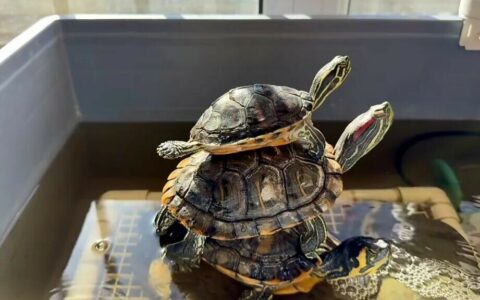
Recently, I keep seeing people in the comments section asking: How big must a turtle be to count as a “stable producer”? So today, I will introduce this to everyone.
My Breeding Example
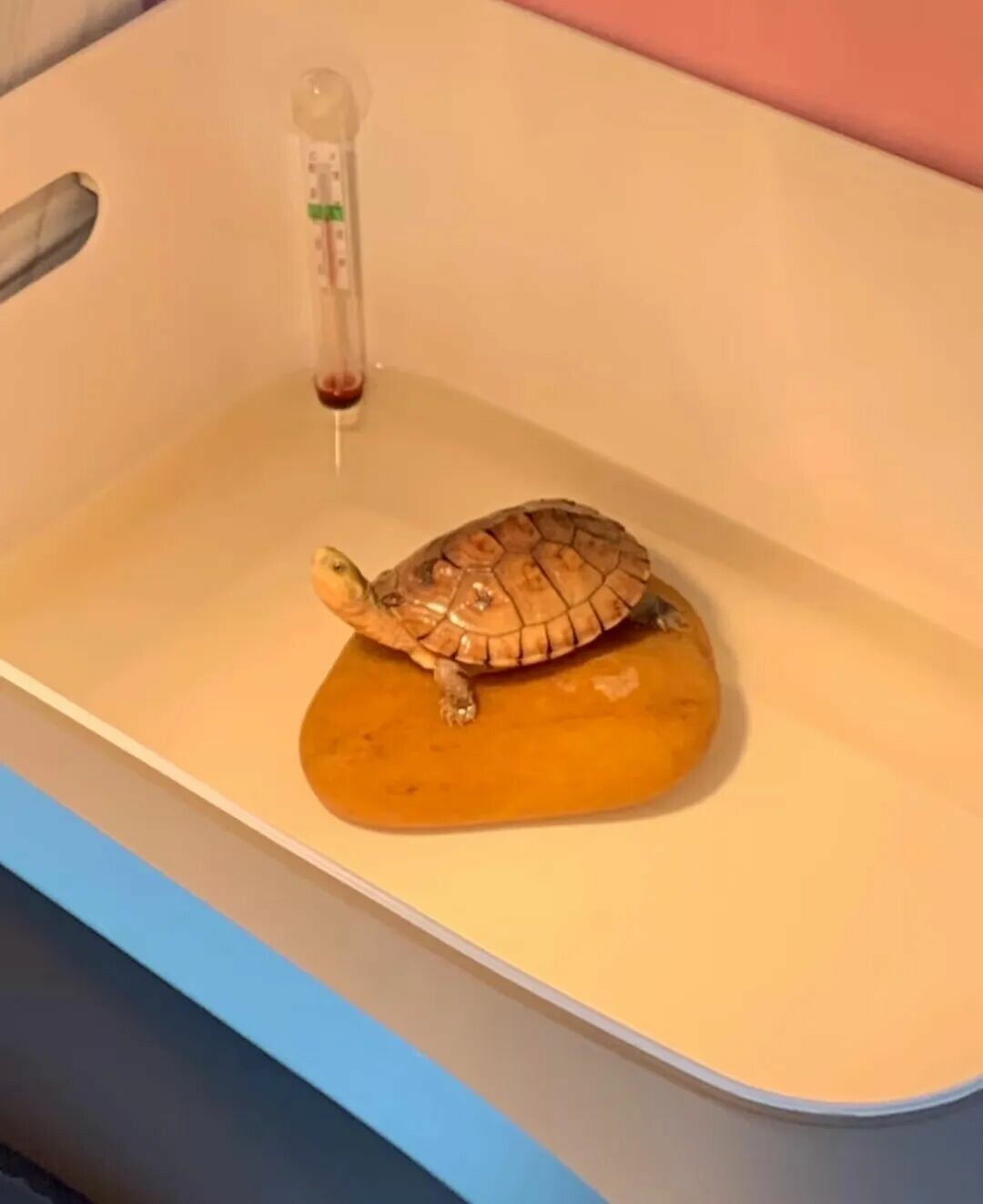
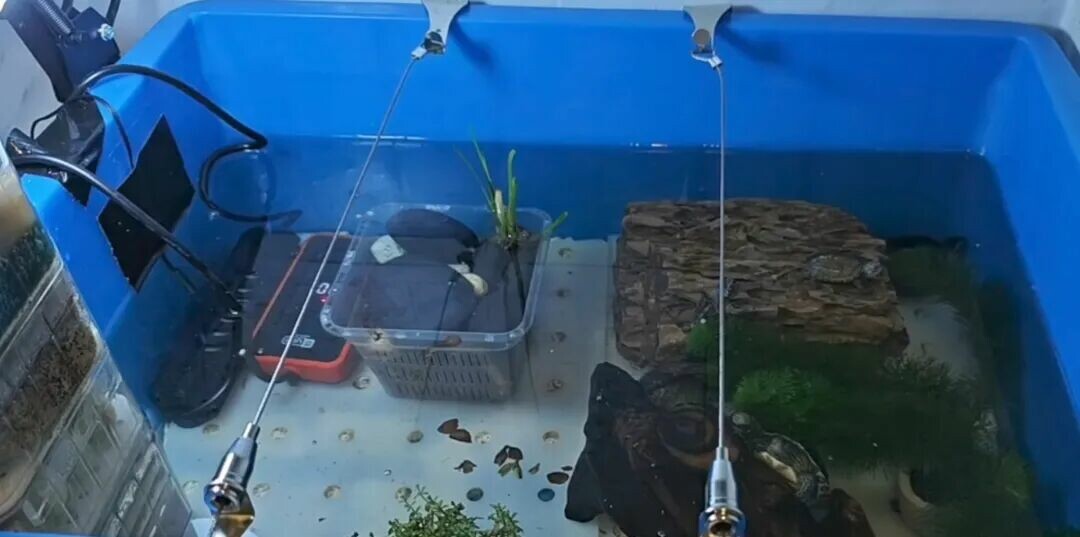
My turtle tank has 2 layers. The first layer tank houses 4 female “Razorbacks” (Note: Razorback, refers to a common name for a turtle appearance, which can be understood as “Razor-backed Musk Turtle”) and 1 male “Razorback”. Among them, 2 female “Razorbacks” have a carapace length of around 14 cm, and their weight reaches 500 grams. So for novices who want to get into breeding, you must acquire “Razorbacks” of large size and sufficient weight; this is the guarantee of its stable production.
Normally speaking, if we are doing breeding, the appearance quality of the turtles won’t be too good; bite marks and missing shell pieces are very common. If you are doing selective breeding, then you must prioritize those with “radiating patterns” on the head and carapace (Note: Radiating patterns, refer to radial textures on the carapace, including radial stripes, etc.). This kind of turtle with good radiating patterns is hard to come by.
However, as a novice, we prioritize guaranteeing that they can breed; for selective breeding, we can slowly select good varieties from their offspring to raise.
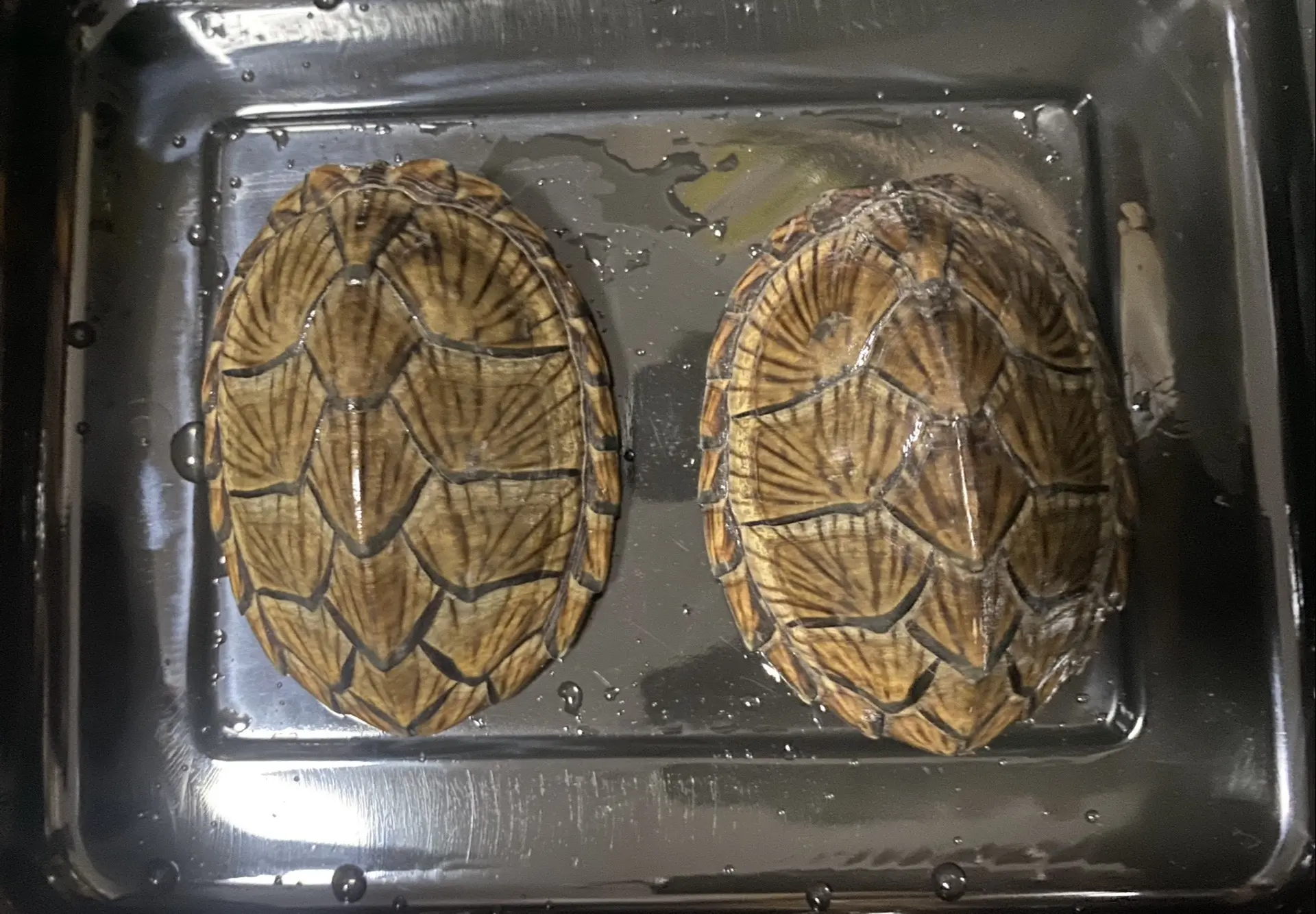
Key Points for Judging “Stable Production” and Maturity
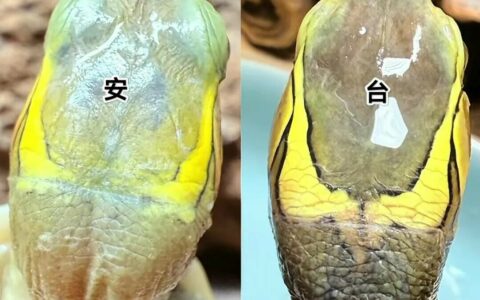
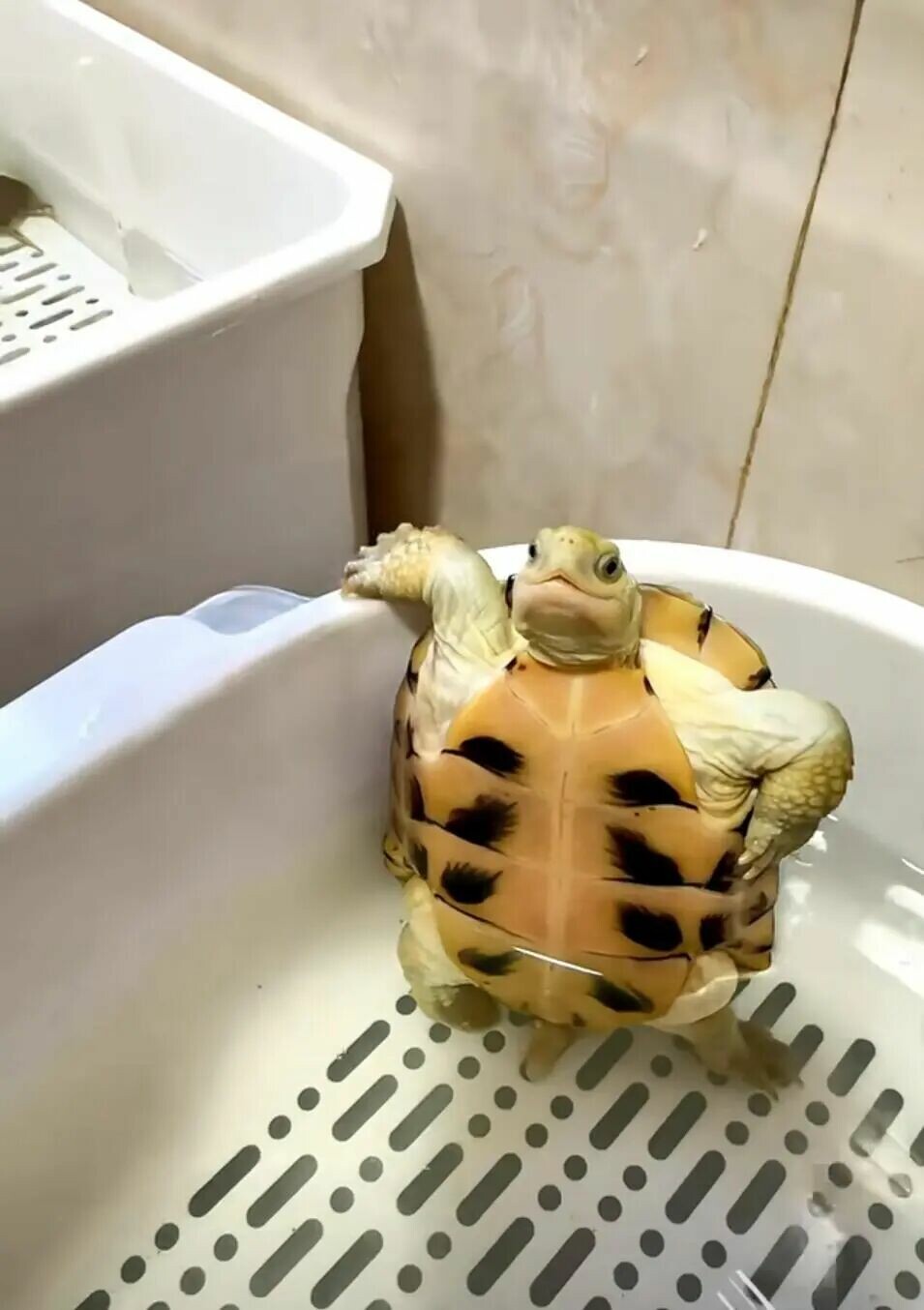
Besides judging whether it is a “stable producer” based on the turtle’s carapace length and weight, we can also judge whether it has reached egg-laying age based on the degree of “opening lines”(growth line separation) on the turtle’s “plastron” (Note: Plastron, refers to the shell plate of the turtle’s abdomen). The older the turtle, the wider the interval of the lines below will be, so the separation of growth lines is also an important standard for us to judge a turtle’s age, please remember this.
In addition, although it is said that bigger is better for female turtles, we cannot ignore another issue, which is the male turtle. If your female turtle is too huge and the gap between the male turtle’s size and hers is too big, the male turtle cannot match (mate). So when we choose a female turtle, we must take the male turtle’s size into consideration.
Selective Breeding Arrangement
My second layer tank also houses “Razorbacks”, totaling 4 female “Razorbacks” and 1 male “Razorback”. Inside, there are 4 “Razorbacks” with sizes over 12 cm, but their overall egg production cannot compare to the layer above. I raise this layer for selective breeding, so the carapace radiation of the “Razorbacks” on this layer is much, much better than the layer above, but it can be clearly seen from the annual egg quantity that it is much less than the layer above. How to make the trade-off depends on each person’s choice.
Of course, I also saw some netizens replying to me saying: 9 cm “Razorbacks” can also lay eggs. This situation definitely exists, it is just a very rare individual case. Normally, for stable producing turtles, the size won’t be too small, though there are exceptions.
Original article by KPTer, if reproduced, please cite the source: https://www.kaipet.com/en/select-stable-producer-turtle-lays-eggs-consistently-carapace-weight-standards