

Turtles, as ancient reptiles, their living habits have always aroused great interest. One question that receives much attention is: do turtles sleep? The answer is yes. Turtles do indeed sleep, and their sleep patterns are quite unique.
A turtle’s daily routine is similar to that of humans; they are active during the day and rest at night. During the day, turtles are active, foraging and moving about, while at night, they will choose a quiet, warm place to rest. Although turtles do not experience deep sleep like humans and other mammals, they do need sleep to restore their energy and maintain their health.
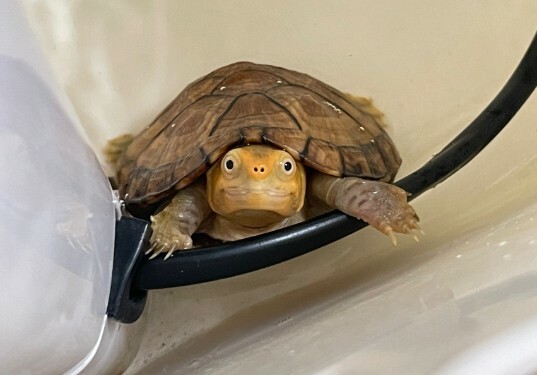
Turtles generally sleep for about 15 hours, which takes up a large part of their day. During sleep, a turtle will retract its head, tail, and limbs into its shell, appearing motionless. This sleeping posture not only helps protect the turtle from attacks by natural predators but also reduces water evaporation and energy consumption.
Dormancy States in Extreme Environments
It is worth noting that a turtle’s sleep is not always fixed. The sleep duration of a turtle is affected by the ambient temperature. In winter, when the temperature drops to a certain level, turtles will enter a state known as “hibernation”. During hibernation, a turtle’s metabolic rate will decrease significantly, and it will engage in almost no activity. This state of hibernation can last for several months until the turtle reawakens when the temperature rises in spring.
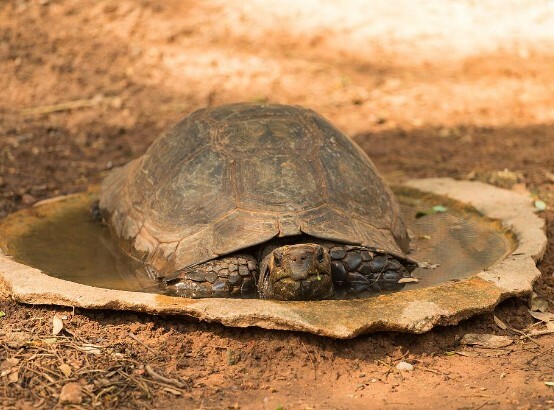
In addition to hibernation, turtles also exhibit a similar phenomenon in summer called “estivation”. When temperatures are too high, turtles will choose to hide in shady places and reduce their activity to avoid excessive body heat and water loss. Although this state of estivation is not as deep as hibernation, it also demonstrates the high adaptability of turtles to environmental changes.
Sleeping Postures and Environmental Needs
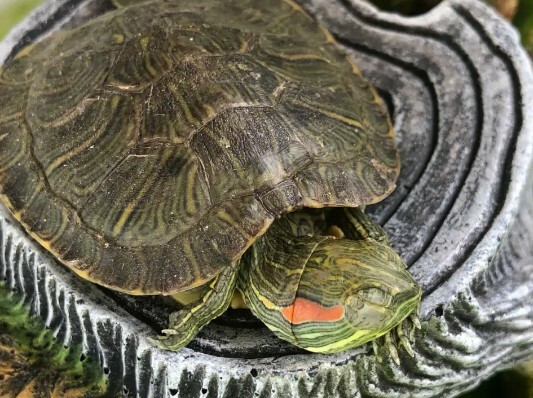
Turtles also have a variety of sleeping postures. Some turtles will choose to rest by lying on a rock or sinking to the bottom of the water, while others will dig burrows and bury their bodies in the soil. These different sleeping postures reflect the turtles’ ability to adapt to different environments.
Although turtles’sleep patterns differ from humans’, they also require a quiet, warm, and dry environment to rest. As owners of pet turtles, we should do our best to provide a suitable sleeping environment for our turtles and avoid disturbing them while they are resting. Furthermore, turtles are easily startled during their sleep, so we need to be extra careful not to affect their sleep quality.

In summary, the sleeping habits of turtles are a complex and interesting topic. By understanding the sleep patterns of turtles, we can not only take better care of our turtles but also appreciate the wonders of nature. Whether it is resting at night, hibernating, or estivating, turtles demonstrate their high adaptability to the environment and their wisdom for survival.
Original article by 搬运工, if reproduced, please cite the source: https://www.kaipet.com/en/long-turtles-sleep-scientific-interpretation-daily-routine-dormancy









Comments(2)
It’s fascinating how turtles adapt to extreme temperatures! I’m curious if pet turtles also exhibit hibernation or estivation in our homes.
@CriticX:Thank you for your excellent question, CriticX! Yes, pet turtles can exhibit hibernation or estivation in homes if environmental conditions, particularly temperature, trigger these natural responses. Owners play a crucial role in managing their environment for healthy dormancy or activity.