

Many people now enjoy keeping turtles because turtles symbolize longevity and are believed to attract wealth. Although the way turtles express emotions is not as strong as that of cats and dogs, if a turtle dislikes you, it can send signals through these behaviors.
Persistent Avoidance Behavior
If you’ve had the turtle for a long time and are very familiar with each other, but suddenly for a period, whenever you approach the turtle tank, the turtle immediately retracts its head and hides among the aquatic plants, not coming out for a long time, as if to say, “Don’t bother me.”
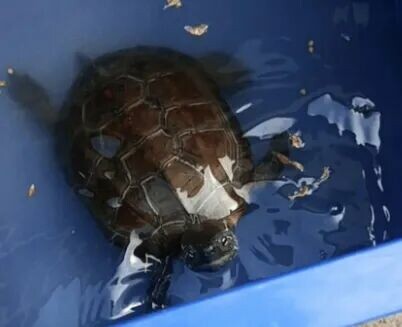
Refusing Interaction and Feeding
Normally, it would chase after you for food whenever it sees you feeding it. But suddenly, it shows no reaction to the food on your fingers or tweezers, even turning its head to the other side, completely ignoring you.
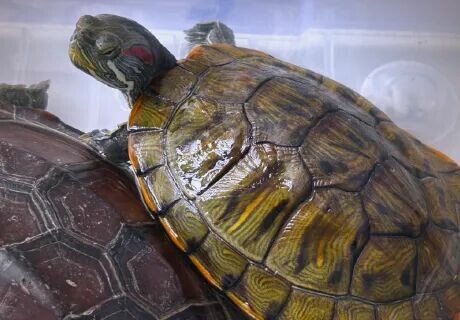
When you are near this turtle’s tank, it will frantically paw at the tank walls and constantly try to climb out, likely wanting to escape your line of sight and find a place to hide.
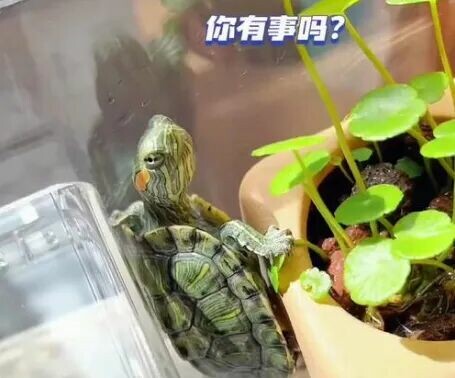
Previously, this turtle would eat whatever food you gave it, but now it turns its head away when it sees you bringing food and refuses to eat what you offer. If it eats heartily when someone else feeds it, your turtle might be in a tiff with you and is angry.
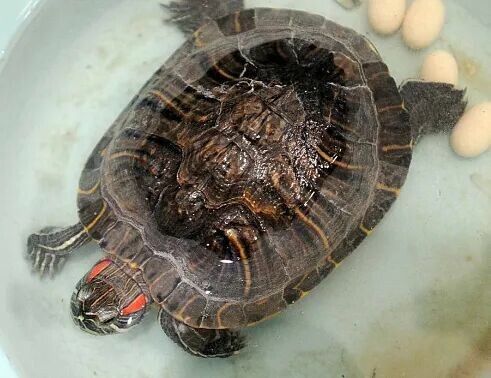
Usually, it would lift its head and interact with you upon hearing you tap the tank. Now, no matter how you call it or shake the food in your hand, this turtle will pretend not to hear, remaining completely aloof and ignoring you. Many people encounter this situation while raising turtles and usually feel quite frustrated.
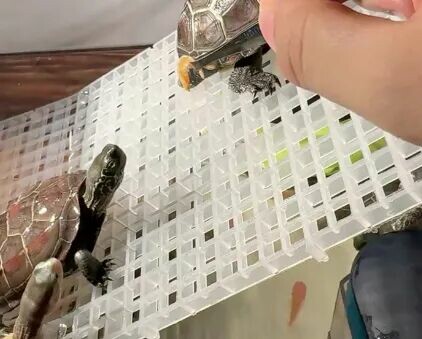
Aggressive Behavior as a Warning
Under normal circumstances, when you pick up this turtle to interact with it, it would be quite happy. If it dislikes you, when you pick it up, this turtle will give you a bite (a light one), more like a “nip” as a warning, meaning “Stay away from me, don’t touch me.” The turtle is very angry at this point.
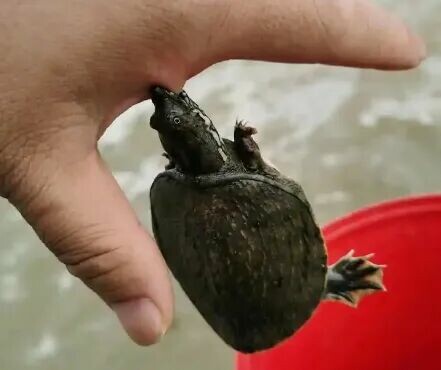
If your turtle also exhibits the 6 behaviors mentioned above, it likely means the turtle dislikes you a bit right now and is in a huff with you. At this time, we need to reflect on whether we’ve done something to offend it. Additionally, in our daily lives, we should accompany our turtles, interact with this turtle more, and not ignore its feelings. Only with care and patience can we look after this turtle well and allow it to grow up healthy.
Original article by 搬运工, if reproduced, please cite the source: https://www.kaipet.com/en/6-major-signs-turtle-hates-behaviors-rejecting




Comments(2)
Great tips! What can owners do to mend the relationship if their turtle starts showing these rejection signs?
@CriticX:感谢提问!修复关系需耐心。建议反思是否无意冒犯,多陪伴、温和互动,提供舒适环境,并给予它空间和时间,是重建信任的关键。希望您的乌龟早日开心!