

Can you buy a turtle in the fall? Of course, you can. You can actually buy a turtle in any season, but the survival rate varies with each one. Buying a turtle in the fall is naturally not the best time; if things go wrong, it might not make it through the winter.
The 4 Deadly Pitfalls of Buying a Turtle in the Fall
The Hibernation Challenge: A “Hell Mode” Start
Turtles in the fall are about to enter their hibernation period, and their physical condition and state are already fragile. If it’s a new turtle that has just arrived at your home, and you happen to be new to the hobby (meaning you’ve just started to get into a particular field of interest), you’ll have to directly deal with high-difficulty operations like “gut clearing, temperature control, and maintaining humidity”without being familiar with its basic health, eating habits, and personality. This is equivalent to running before you’ve learned to walk, and it is extremely prone to problems.
Fattening Up: “There’s Simply Not Enough Time”
A new turtle needs to stop eating, rest quietly, and adapt to its environment…… after going through this whole process, the prime period for fattening up in the fall has long passed. By the time it’s willing to start eating, the temperature has already dropped. It will lack sufficient energy reserves and may even refuse food altogether—the result is: not enough fat to survive the winter.

Gut Clearing: “Simply Impossible to Perform”
Safe hibernation requires emptying the intestinal tract beforehand. But if the temperature is already below 20°C when your new turtle arrives, you have no way of knowing if there is still undigested food inside its body. If it enters hibernation with food in its gut, the intestinal putrefaction will cause enteritis, and the mortality rate is extremely high.
Potential Illnesses: “A Full-Blown Outbreak During Hibernation”
A new turtle might carry hidden diseases like pneumonia or enteritis. These are not easily detectable under normal circumstances, but during hibernation, its immunity will decrease, and the illness can suddenly worsen, or even infect other turtles—this isn’t buying a turtle; it’s ‘inviting a source of infection home’.
5 “Life-Saving Rules” for Buying a Turtle in the Fall
If you absolutely must buy a turtle in the fall, you need to follow these 5 “life-saving rules”:
- Only choose turtles that have a “carapace over 6cm, are healthy and active, and eat readily.” Refuse hatchlings (meaning very young turtles), sick or lethargic turtles (meaning sick or listless turtles), and turtles that refuse to eat.
- Prioritize purchasing from reputable sources. It’s best if you can ask the seller to provide recent feeding videos and a description of its health status.
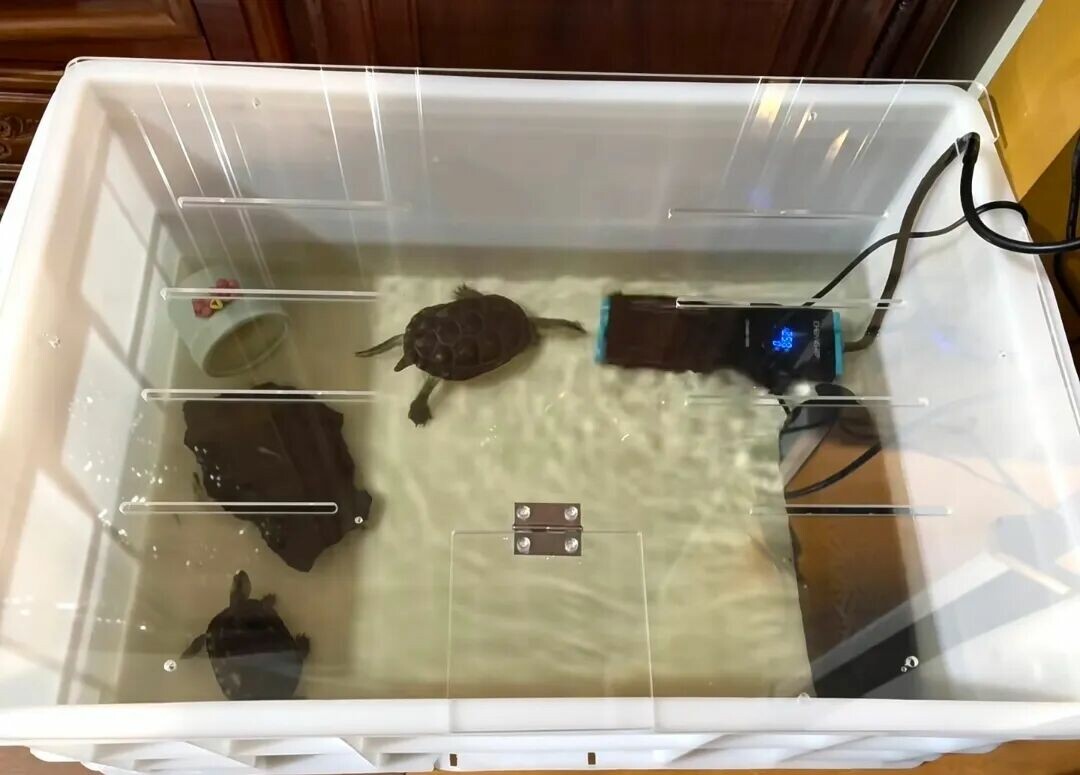
- Once it arrives, house it separately immediately. Let it rest quietly in warm water, avoid disturbances, and try to feed it easily digestible food (like turtle pellets).
- Strictly control temperature differences. Use a heating rod to maintain a water temperature above 25°C to extend the feeding window and try to ensure the turtle’s physical condition is secured. If you want it to hibernate later, you can gradually lower the temperature.
- Once the temperature consistently stays below 15°C, do not force it to hibernate, regardless of whether it is eating or not. It is recommended to overwinter with heating and try natural hibernation next year. If you determine on your own that it is healthy, you can still try hibernation. It’s just that the risk is relatively high, and it doesn’t necessarily mean it won’t wake up from sleep.
The Optimal Solution for Newbies Keeping Turtles in the Fall
The optimal solution for newbies keeping turtles in the fall is: you can actually use a “counter-seasonal strategy”!
Smart novice keepers often choose the strategy of “studying up first, then buying equipment, and finally buying a turtle next spring.” Use the entire fall and winter season to:
- Learn about hibernation and disease treatment.
- Prepare the tank, heating rod, thermometer, hibernation substrate, etc.
- Wait until next April–May when the temperature is stable to bring a turtle home—this allows you to get it settled calmly and help it overwinter smoothly.
Keeping a turtle isn’t like clearing levels and fighting monsters in a game; there’s no need to specifically choose “hard mode.” Avoiding high-risk periods is the true way to be responsible for a life.
Original article by 搬运工, if reproduced, please cite the source: https://www.kaipet.com/en/buying-turtle-fall-beginners-ensure-safe-overwintering-avoiding-4-major-pitfalls-key



Comments(2)
This guide is fantastic! I’m definitely considering the ‘counter-seasonal strategy.’ What are your top recommended beginner resources for learning this fall/winter?
@CriticX:We’re delighted you found the guide helpful! The ‘counter-seasonal strategy’ is indeed a wise approach. For fall/winter learning, we recommend exploring topics like turtle species-specific care, proper hibernation techniques, diet, and common health issues. Our site features many articles, and reputable pet forums are also excellent resources!