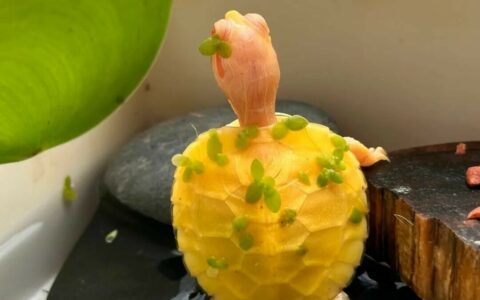
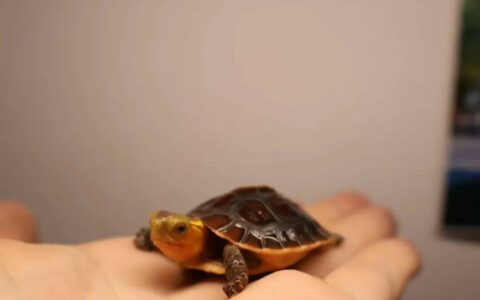
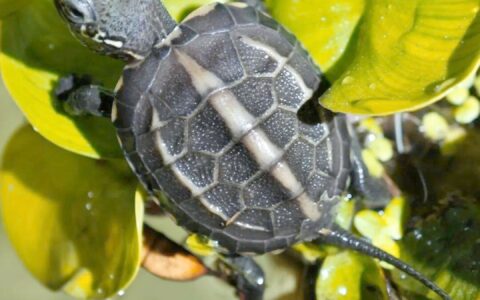
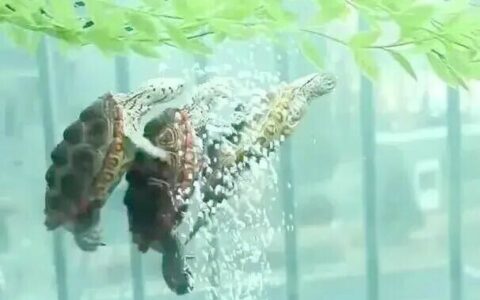
Recently, I experienced an incident that left me feeling guilty. At the beginning of last month, I published a tutorial on pure mud water turtle keeping, stating that this method, when raising young turtles, would ensure survival as long as they weren’t diseased upon purchase.
A reader commented, expressing their enthusiasm after reading my article and mentioned they had started trying the method. I only noticed this comment a couple of days ago and inquired about the current situation, expecting the usual affirmation. I am quite confident in the mud water method for raising young turtles; however, the reader informed me that one of their turtles had already died suddenly due to temperature differences.

I was shocked to hear this, as my method, developed over three to four years, has significantly improved the survival rate of young turtles to the point where it’s almost guaranteed—one turtle in, one turtle thrives. Otherwise, I wouldn’t have confidently recommended it to others. Moreover, this reader’s IP address is from the same region as mine, indicating they could withstand the outdoor temperature differences we experience here.
Yet, the fact remains that this reader did lose a turtle using my recommended method. What went wrong? After much contemplation, I realized I had overlooked a crucial point: there is a vacuum period before turtles can effectively utilize the mud water environment when they are adapting to a new environment or going through a stress period.
My outdoor mud water tanks are populated with turtles in the summer, and by the time the temperature differences become significant in the fall, several months have passed. By then, the turtles have already adapted to the mud water environment, comfortably controlling their body temperature by burrowing into the mud, adjusting the depth based on temperature changes. During hibernation, they burrow very deeply, making it quite an effort to dig them up. This allows them to be kept outdoors year-round, only needing to be moved indoors during the coldest part of winter to prevent the turtle tank from freezing.

The new mud water tank I started, although it was in the spring when temperature differences were still significant, contained young Eastern 锦 (Dongjin) and grass turtles that had previously been raised in mud water and adapted quickly. Moreover, the new tank was indoors. Turtles that are not adapting well to the new environment often fail to utilize the functional objects you meticulously arrange in the turtle tank, only tirelessly paddling, clumsily climbing, exhaustedly floating, or motionlessly shrinking into a corner, failing to take advantage of the mud water’s benefits.
During this vacuum period, their temperature control ability doesn’t differ much from that of a bare tank. If there is a significant temperature drop, the turtles can still be affected and die, just as everyone knows that deep water is good for raising turtles, but those stressed turtles who haven’t adapted to the deep water environment will not obediently stay in the shallow water area you have carefully arranged and may still risk drowning. If you want to try mud water turtle keeping, it’s best to introduce turtles to the tank in the summer, initially care for them as if in a bare tank, and in the spring, you can start the tank to allow plants to grow, which is also good for conditioning the tank and water.

Regarding mud water turtle keeping, I would like to add a few more points. For mosquito prevention, it’s best to raise small loaches in the tank. I have also tried stone patterned fish and grass fish; these swimming fish do not have a high survival rate in shallow mud ponds, which seems to be due to oxygen deficiency. If the water volume is large enough, the effect might be better. Additionally, mud water turtle keeping is certainly not my original idea; I learned it from others, and it’s not something that can be claimed as an original invention. To put it simply, what is an external pond but an oversized mud water tank?
Finally, I want to say that no turtle-keeping method is absolutely perfect. The purpose of my mud water turtle keeping tutorial is merely to provide a new perspective for those who love grass turtles but have difficulty keeping them alive. That’s all.
Original article by KPTer, if reproduced, please cite the source: https://www.kaipet.com/en/mud-water-turtle-keeping-precautions-guide-temperature-difference-adaptation-turtle-tank-environment-arrangement